

DwarfLab Dwarf mini - Observations with Filter
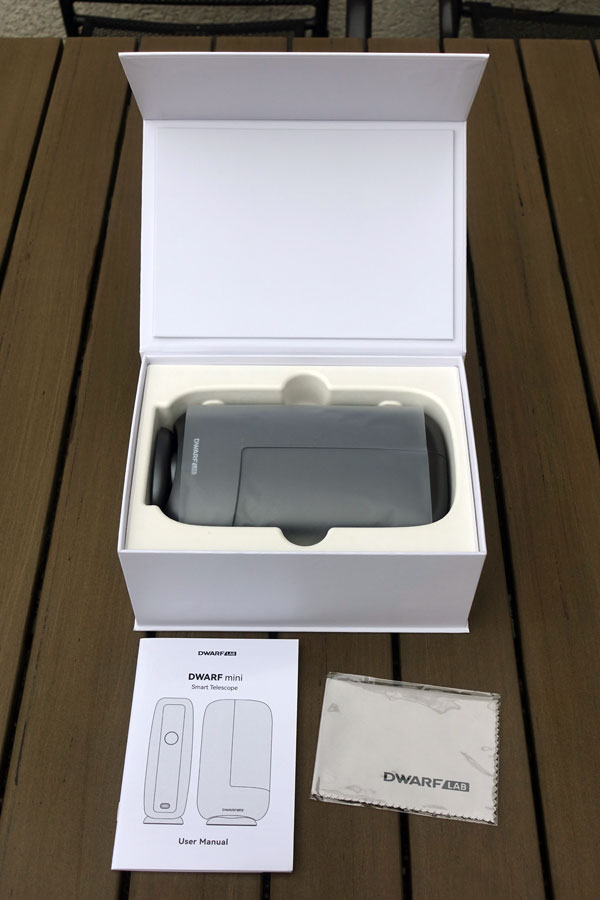
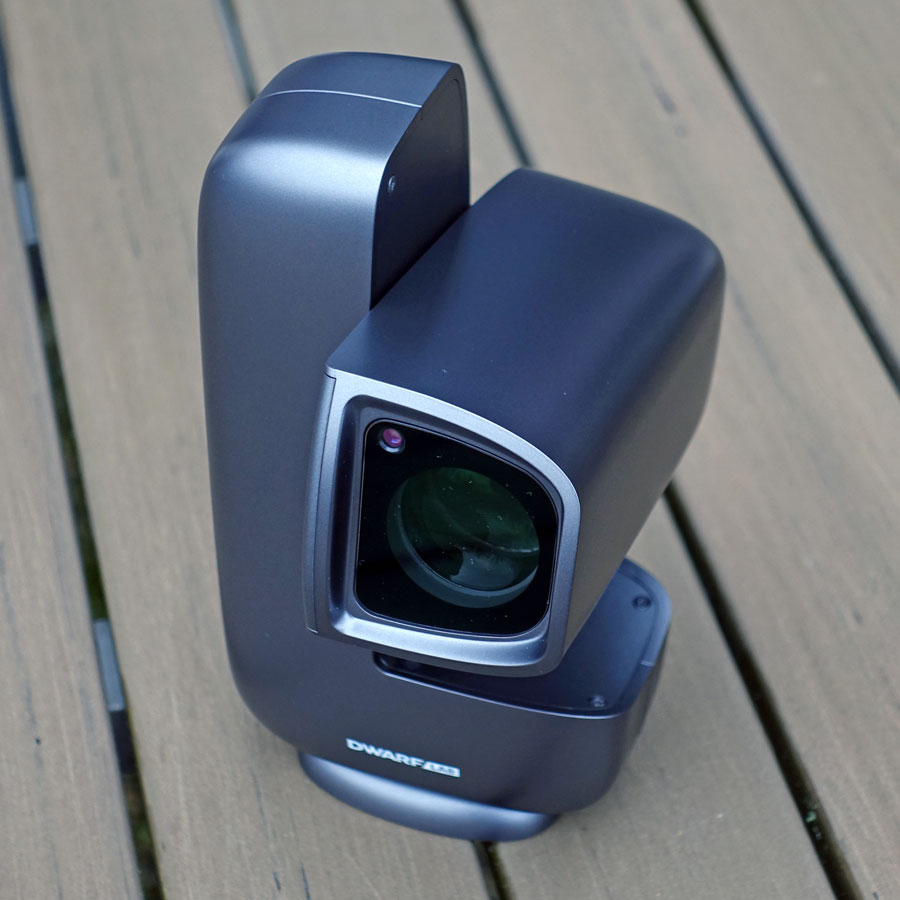
On this page, I describe my first experiences with my electronic refractor telescope DwarfLab Dwarf mini 30 mm/150 mm (f/5) when observing with filters.
See also:
- Information
- Tripod
- Bag
- EQ Mode
- First Experiences
- Mosaic Mode
- Observations of the Sun
- Observations of the Moon
- Observations with Filter (this page)
- >> My Deep Sky Observations with the Dwarf mini (Complete List of Observed DSO)
- Photo Gallery (Messier) - Photo Gallery (Other) - Galaxies - Nebulae - Open Star Clusters
- Photo Comparison (with Vaonis Vespera)
Introduction
 |
 |
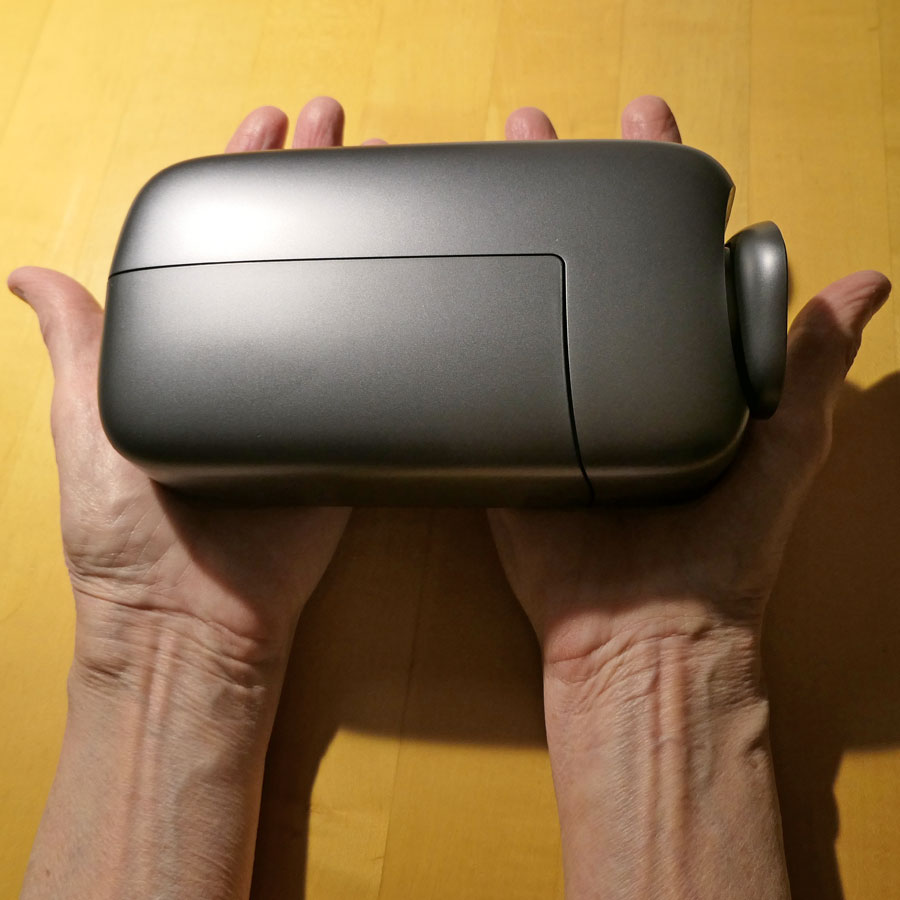 |
Photo: My Dwarf mini (Jan 2026)
Inbuilt Filtes
The following three filters are built into the Dwarf min (text from DwarfLab)i:
- Dark Frame Filter: For automatically capturing darks to suppress thermal noise (not yet used)
- Astro Filter: Boosts nebula contrast by enhancing infrared (430-690 nm)
- DuoBand Filter: Optimized to capture Halpha (656.3 nm), Hbeta (486 nm) and O III (500.7 nm) to cut moonlight and city glow
As a default, the Astro filter is used. However, for some objects, the DuoBand filter is suggested and (not always...) used automatically. It is still unclear to me how this works; somtimes even the Duo filter is proposed in the Atlas, and then when doing the observation the Astro filter is used automatically. I therefore propose to check which filter is actually used (I already had problems with this...).
From what I know, a DuoBand filter is primarily suitable for emission nebulae. Otherwise it should not be used because it also distorts the colors. Of course, it also reduces light pollution, because is transmits only small sections of the light spectrum.
Included Filter
In addition to the inbuilt filters, anexternal magnetic sun filter is included in the Dwarf mini package. See page Observations of the Sun for more information.
First Experiences with Observations with Filters
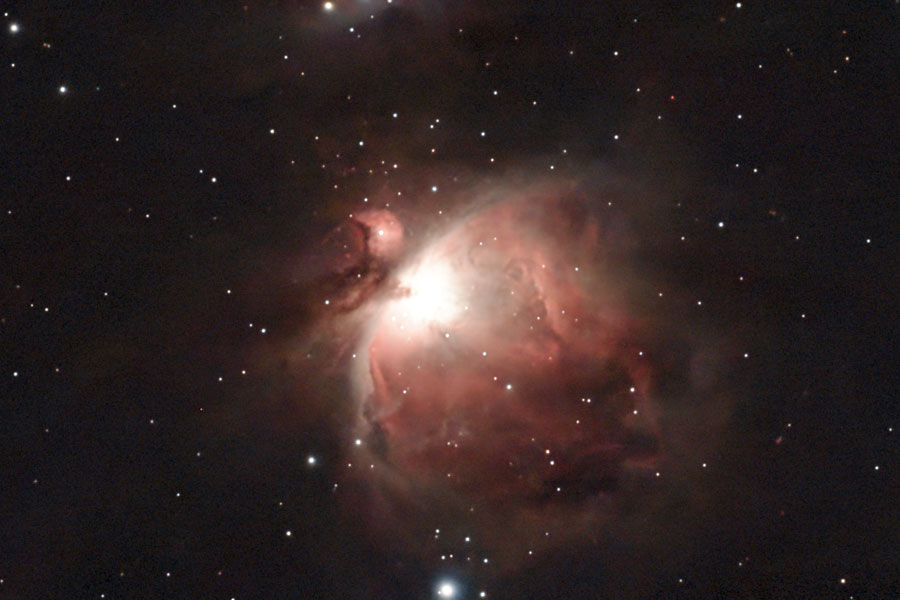
Below I present some DSO that I observed with both the Astro filter and the DuoBand filter for comparison purposes.
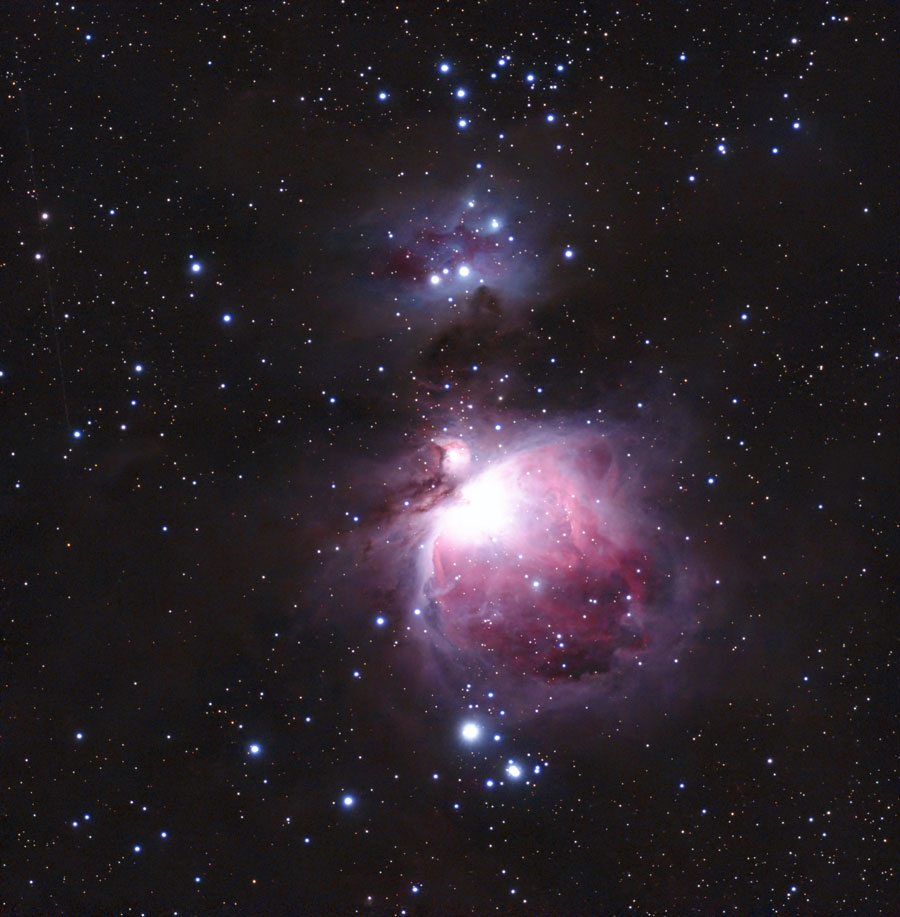
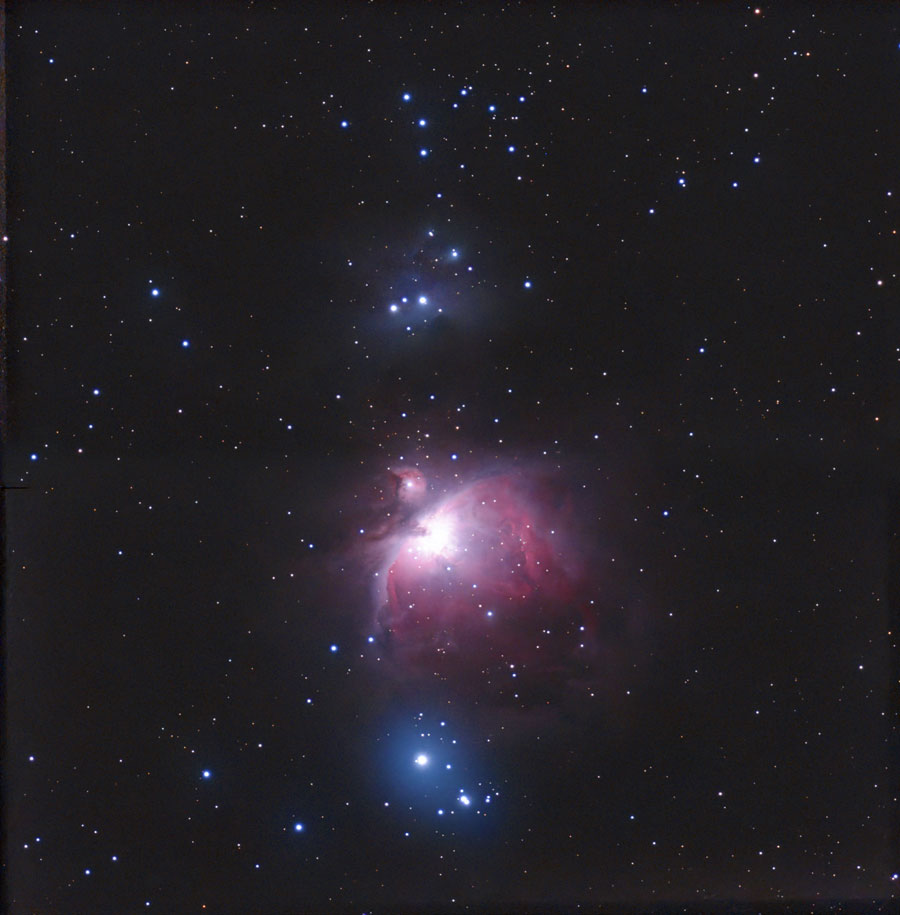
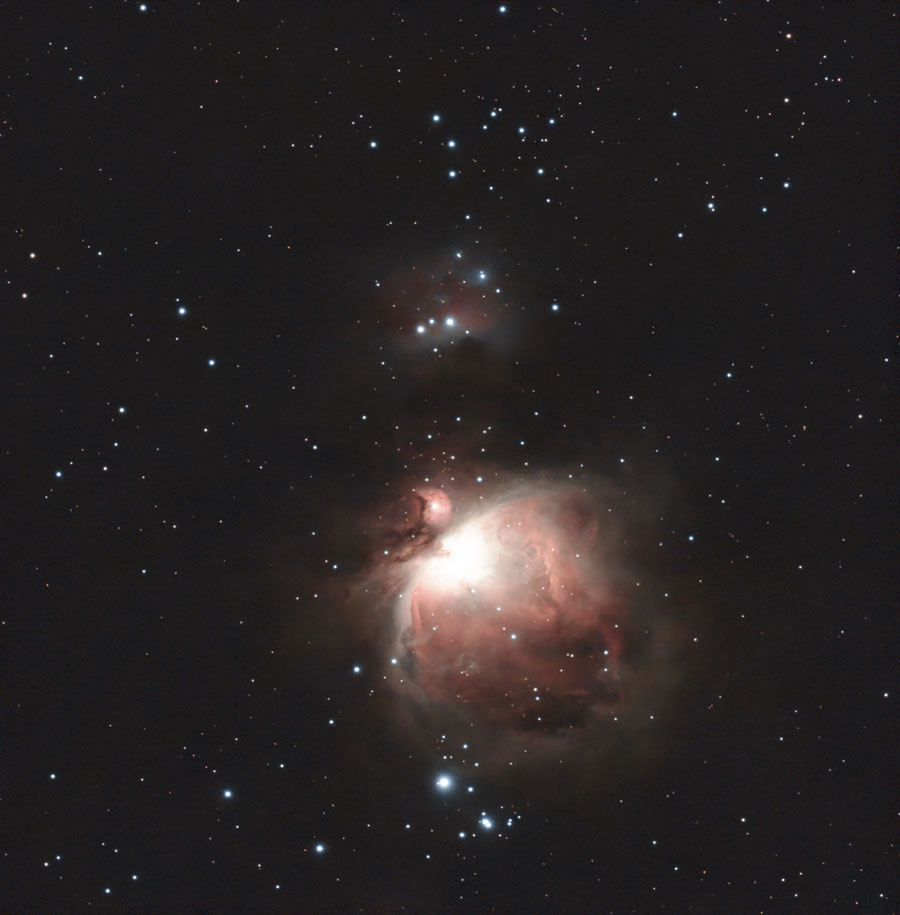
M 42/43 (Orion Nebula; Orion)
 |
 |
|
M 42/43, Jan 19, 2026 - 34.5 min, DB filter, section, processed with Stellar Studio and further processed, large |
M 42/43, Feb 7, 2026 - 50 min, mosaic, processed with Stellar Studio, original |
|
|
|
|
M 42/43, Feb 25, 2026 - 25 min, mosaic, processed with Stellar Studio, original |
M 42/43, Feb 26, 2026 - 50 min, mosaic, processed with Stellar Studio, DB filter, original |
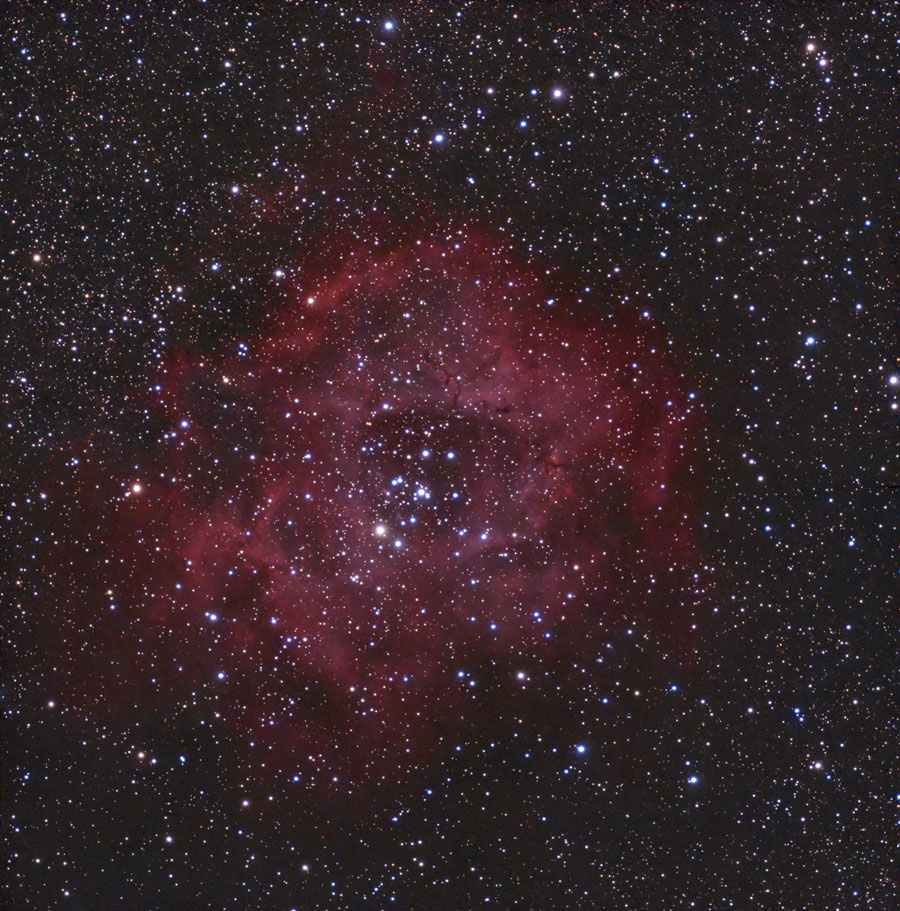
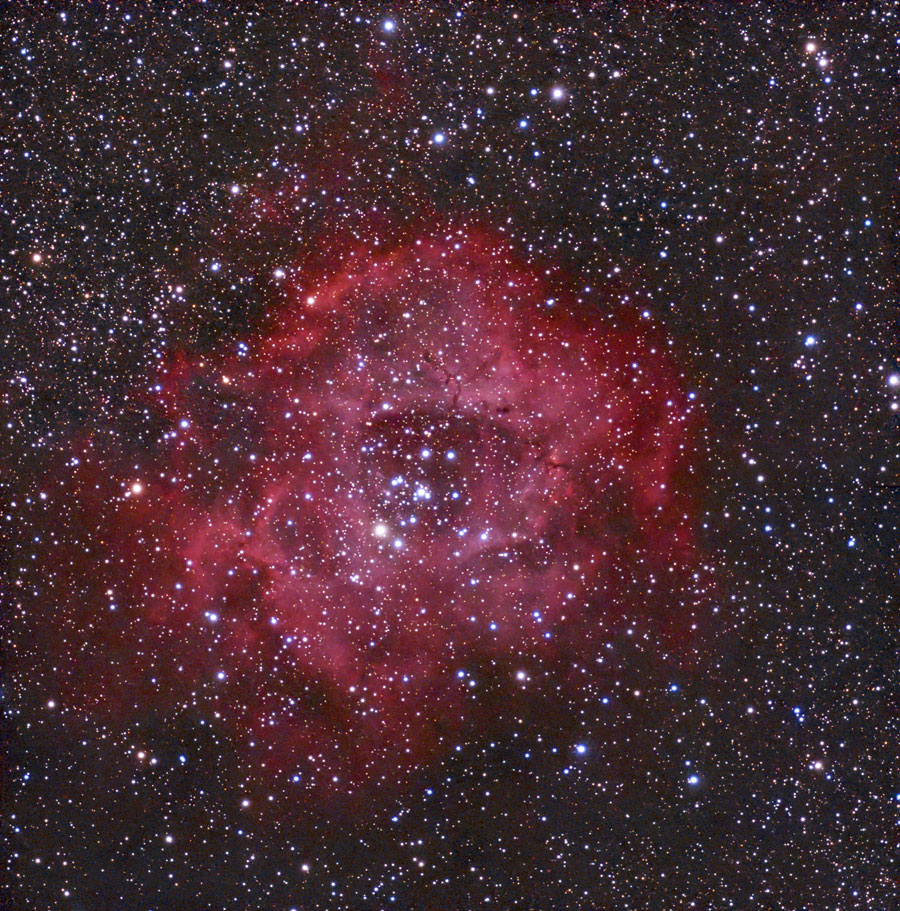
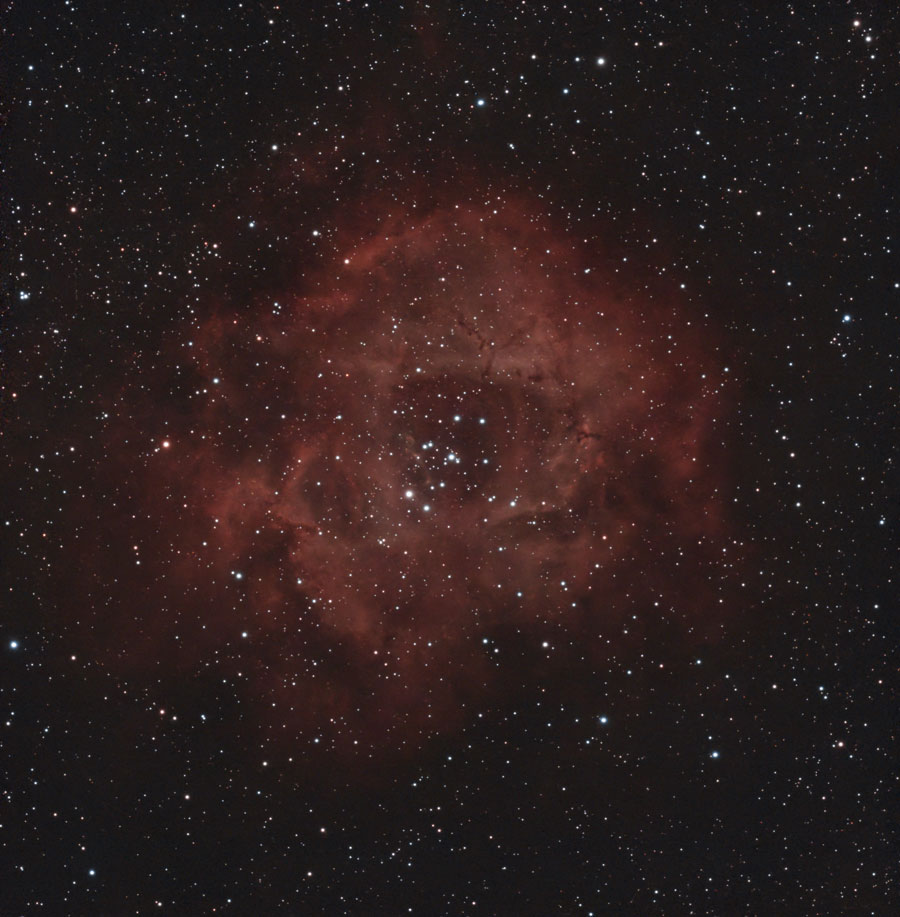
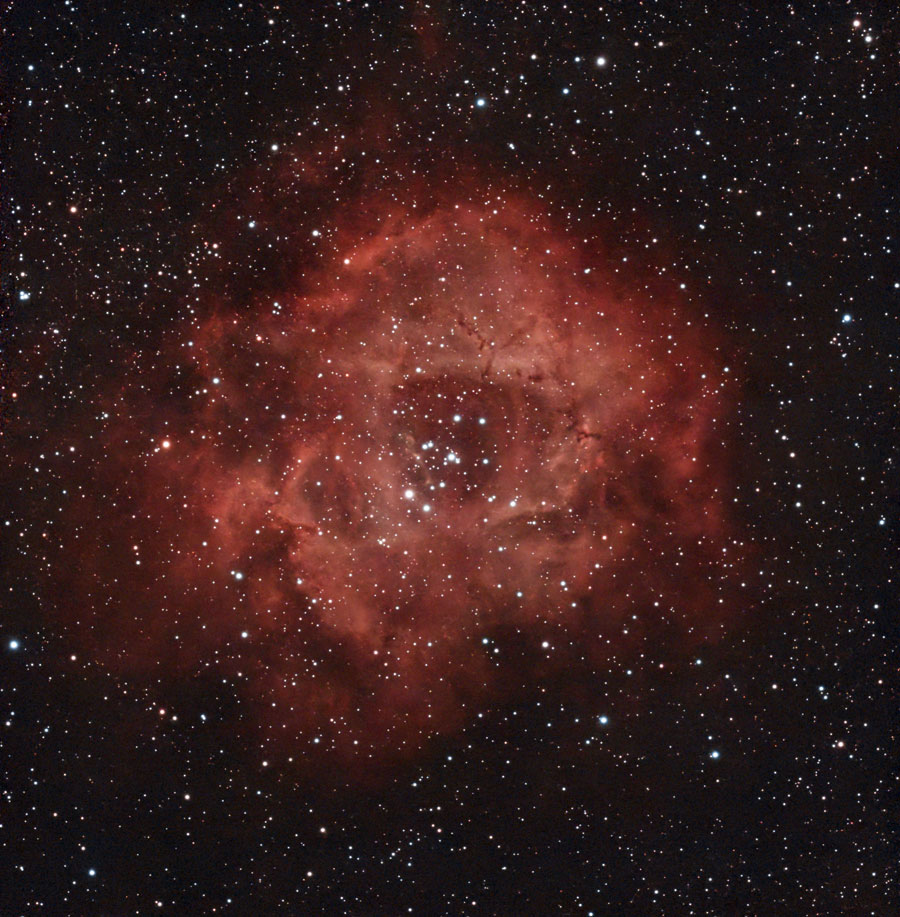
NGC 2237/2244 (Rosette Nebula, Monoceros)
 |
 |
|
NGC 2237/2244, Feb 7, 2026 - 50 min, processed with Stellar Studio, original |
NGC 2237/2244, Feb 7, 2026 - 50 min, processed with Stellar Studio and additionally strongly processed, original |
|
 |
 |
|
NGC 2237/2244, Feb 9, 2026 - 50 min, DuoBand filter, mosaic, gain 120, processed with Stellar Studio, original |
NGC 2237/2244, Feb 9, 2026 - 50 min, mosaic, gain 120, processed with Stellar Studio and further post-processed, original |
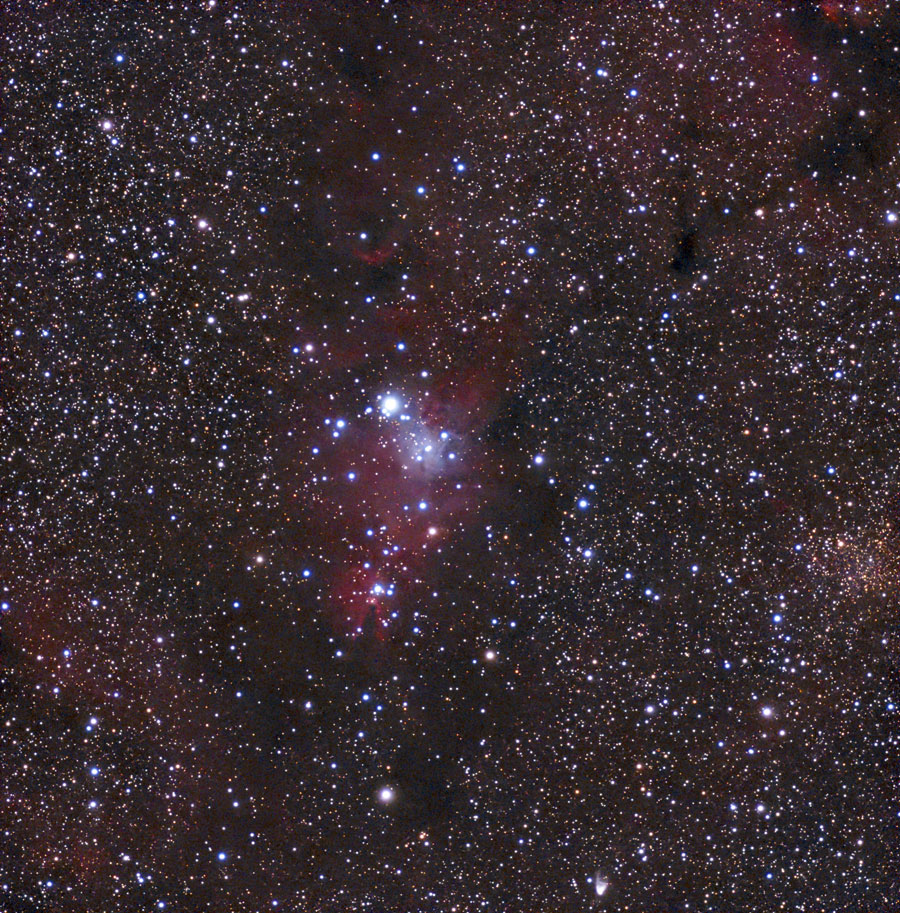
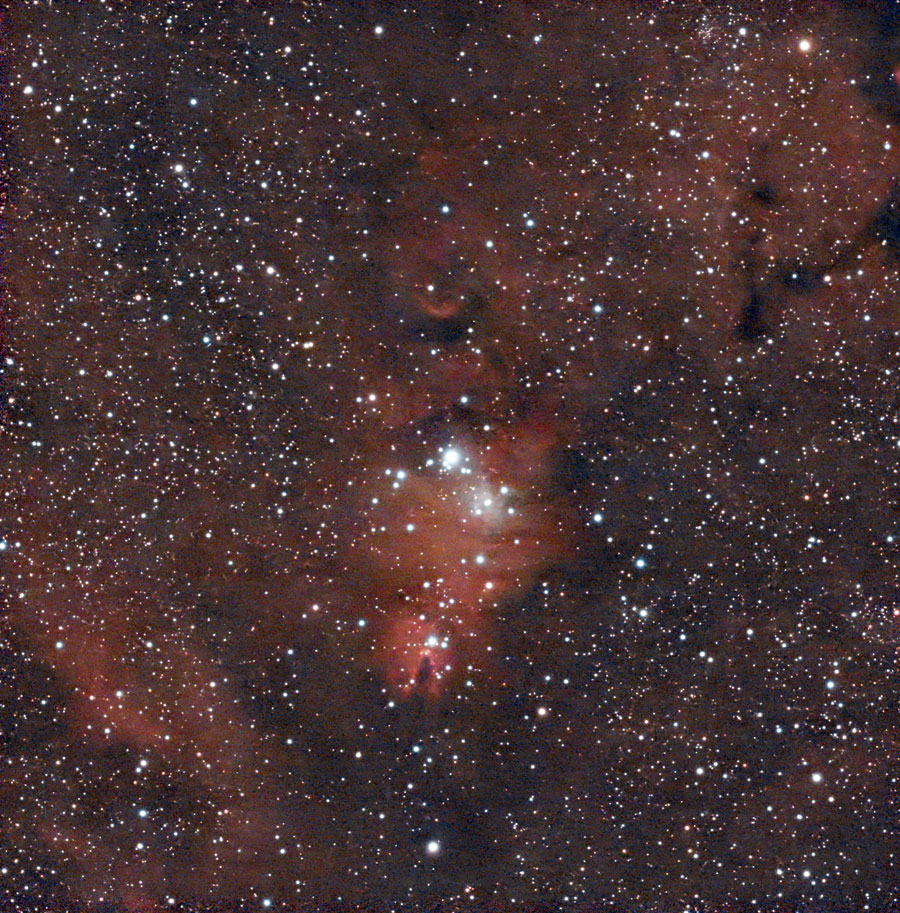
NGC 2264 (Christmas Tree Cluster and Cone Nebula; Monoceros), NGC 2261 (Hubble's Variable Nebula, Monoceros)
 |
 |
|
NGC 2064 mit NGC 2261, 7.2.2026 - 50 min, mit Stellar Studio bearbeitet und nachbearbeitet, Original |
NGC 2264, Feb 9, 2026 - 50 min, DuoBand filter, mosaic, gain 120, processed with Stellar Studio and even further post-processed, original |
First Conclusions
It is still far too early for an initial conclusion. But in general, with the DuoBand filter, the nebulae come out more like what I am used to. In addition, as observed with the Vespera Pro, the DuoBand filter suppresses fainter stars, so these images show considerably fewer stars. This is often a desired effect to make nebulae stand out better.
Note that the DuoBand filter changes the colors of the photo. It is up to you, whether you like that or not...
Links
- Dwarf Mini Smart Telescope – Review & Tutorial (Wido's Astroforum): astroforumspace.com/dwarf-mini-smart-telescope-review-tutorial/ - YouTube-Video dazu: www.youtube.com/watch?v=4SoaQqLWR0s
- Dwarf Mini im Test: Das Technik-Wunder und Spaßgerät für die Hosentasche (Dimitrios Georgomanos): www.blickohnegrenzen.de/2026/02/06/dwarf-mini-im-test-das-technik-wunder-und-spassgeraet-fuer-die-hosentasche (in German)
- Dwarf mini documentation (DwarfLab): help.dwarflab.com/en/docs/dwarf-mini-smart-telescope
- DWARF mini User Manual: help.dwarflab.com/en/docs/DWARF-mini-Smart-Telescope-User-Manual
- Get to Know the Files Stored in DWARF mini: help.dwarflab.com/en/docs/help-doc
- DWARF mini Lighting Effects: help.dwarflab.com/en/docs/help-doc-mini-lighting-effects
- How to View DWARF mini Files Wirelessly Using a Computer: help.dwarflab.com/en/docs/help-doc-1
- FAQ & Troubleshooting Guide for DWARF Users: help.dwarflab.com/en/docs/help-doc-2
- Mini Tripod with hydraulic Head (DwarfLab): dwarflab.com/products/tripod-for-dwarf-3 (shown for Dwarf 3)
- The Tripod Setup and Usage (DwarfLab video): help.dwarflab.com/en/docs/tripod-setup-and-usage?product=dwarf-3 (shown for Dwarf 3)
- DWARF mini EQ Mode Setup Guide (DwarfLab video): https://help.dwarflab.com/en/docs/dwarf-mini-equatorial-setup-guide?product=dwarf-mini
- See also my page offering Astronomy Links.
|
made by  on a mac! on a mac! |


| 13.09.2026 |  |