

DwarfLab Dwarf mini - Information (30 mm Refractor)
Introduction | About the Dwarf mini | Look | Sensor, Pixel Data, Field of View, Image Size (Pixels) | Visited Sky Objects | First Experiences | First Conclusions | Links || Appendix: Technical Data | Appendix: Comparison of the Vaonis Vespera, Vespera Pro, and the Dwarf mini
On this page, I provide some information about my electronic refractor telescope Dwarf mini 30 mm/150 mm (f/5). I ordered it at the end of November 2025 (pre-order) together with a tripod and received it on January 14, 2026 and the tripod on January 16, 2026.
See also:
- Information (this page)
- Tripod
- Bag
- EQ Mode
- First Experiences
- Mosaic Mode
- Observations of the Sun
- Observations of the Moon
- Observations with Filter
- >> My Deep Sky Observations with the Dwarf mini (Complete List of Observed DSO)
- Photo Gallery (Messier) - Photo Gallery (Other) - Photo Gallery (Favorites) - Galaxies - Nebulae - Open Star Clusters
- Photo Comparison (with Vaonis Vespera)
Introduction
 |
 |
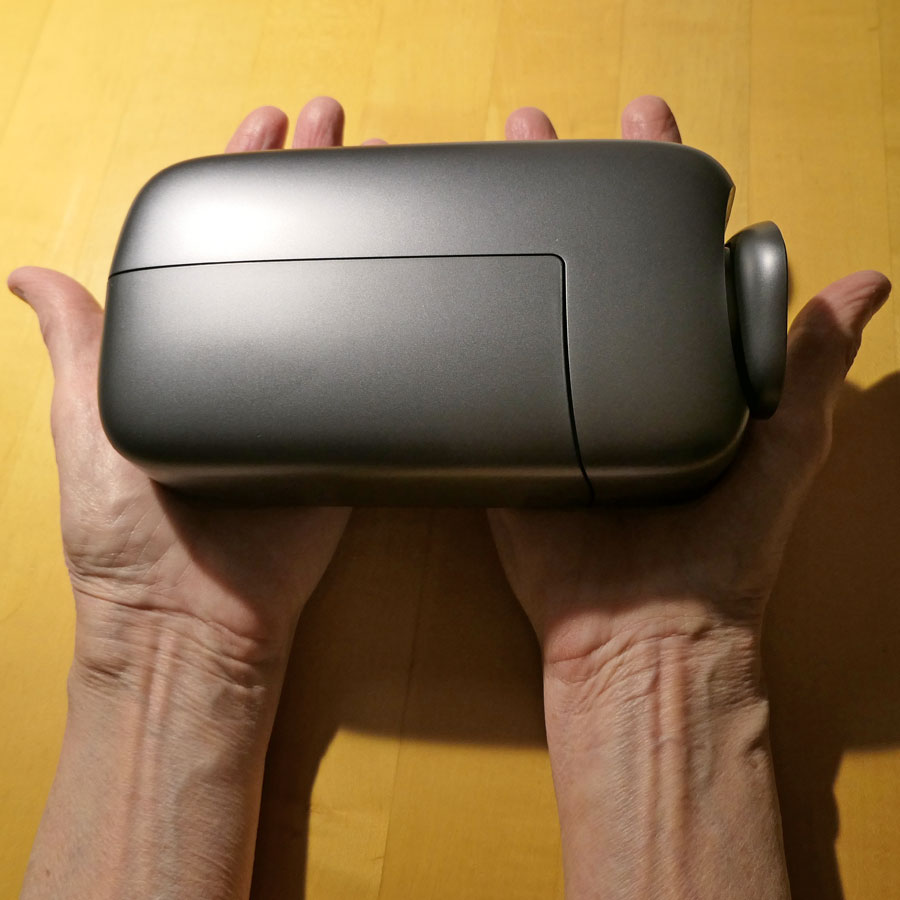 |
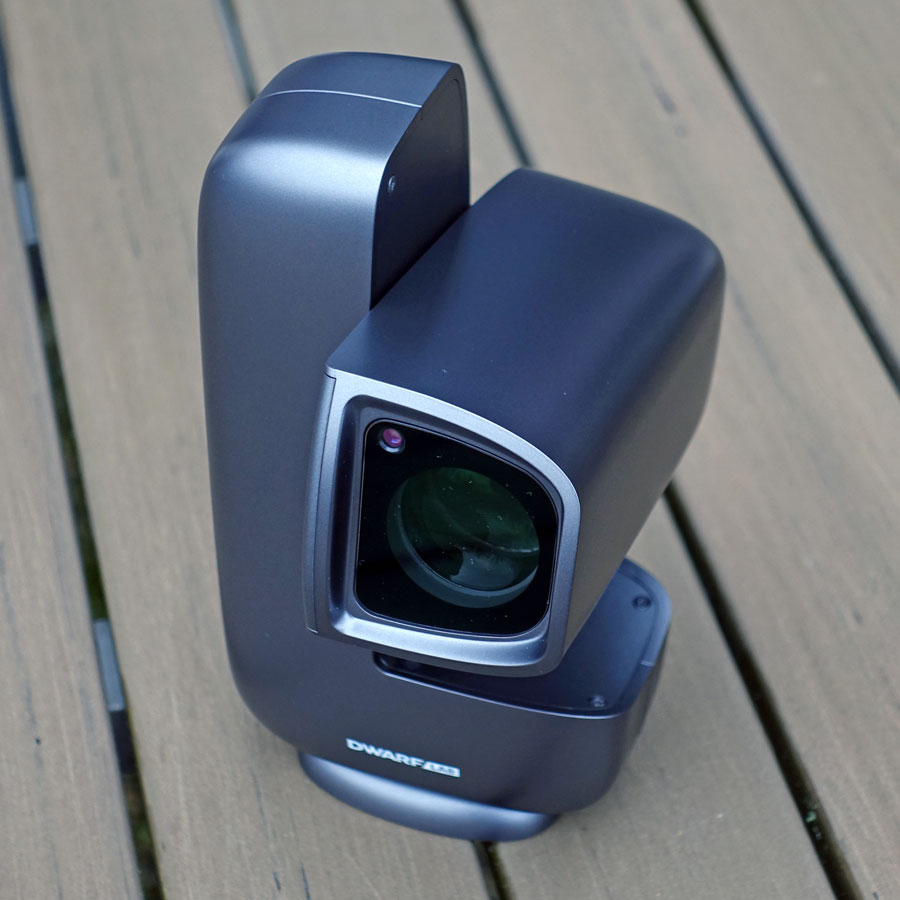
Photo: My Dwarf mini (Jan 2026)
The Dwarf mini seems to be the fourth smart telescope that was developped by a chinese company called DwarfLab. In terms of design, it is reminiscent of the Vaonis Vesperas and the ZWO Seestar telescopes developed afterwards – and thus stands in stark contrast to the telescopes previously developed by DwarLab.
About the Dwarf mini
What is the Dwarf mini?
The Dwarf mini from Chinese manufacturer DwarfLab is currently the smallest "smart telescope" on the market (as of January 2026). Weighing just under 850 g and measuring less than 20 cm in height, you can almost fit it in your pocket ;) The Dwarf mini is similar in design to the Vaonis Vesperas and the ZWO smart telescopes that came later. Like all Dwarf telescopes, it has a second camera with a wide-angle focal length that can be used for various purposes. Among other things, it offers a preview during observation. And like all DwarfLab telescopes, the Dwarf mini offers a variety of photo options, even during the day, which I will probably never use. Maybe I will try taking a photo of the Milky Way with the wide-angle camera...
Why Did I Opt for the Dwarf mini?
I have always had a soft spot for small devices. And so I was particularly interested in the Dwarf mini because it is so small and light (see technical data). It was clear from the outset that it cannot compete with my Vesperas in terms of quality. On the other hand, I had not bought anything new for a long time, so I wanted to explore something new again. And indeed, the Dwarf mini's software is significantly different from what I was used to with Vaonis and Unistellar. I will write more on this on my "experience page".
Look
Dwarf mini
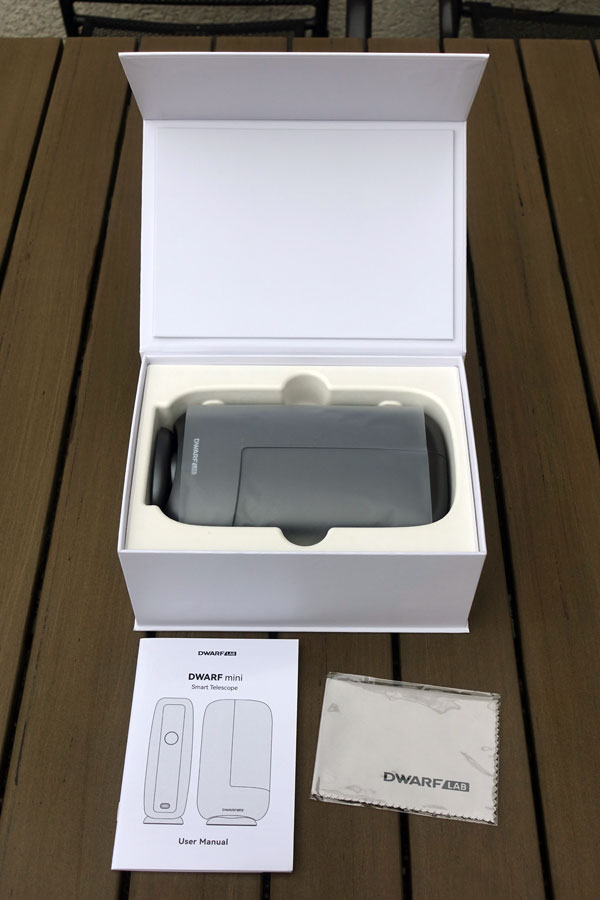
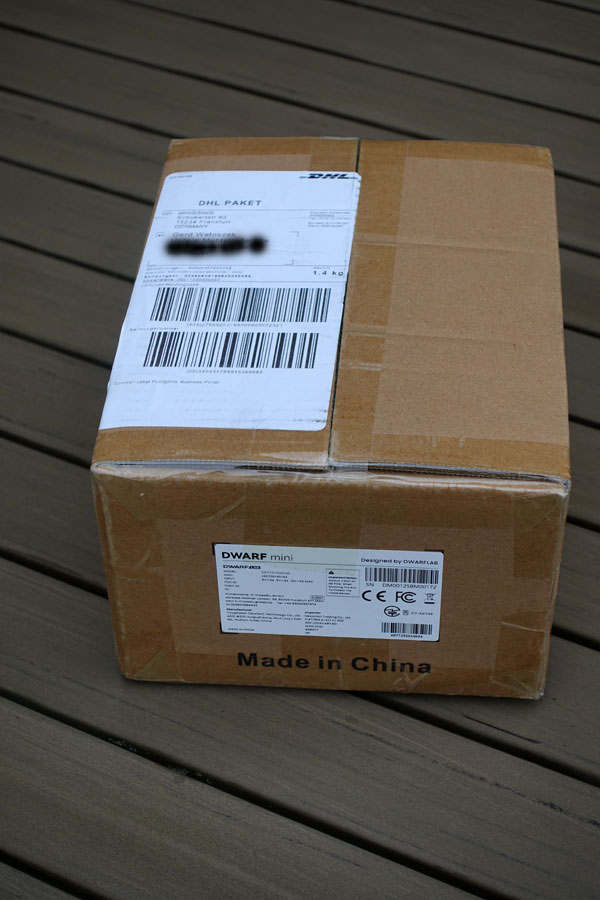
Here I present photos of the unboxing and the telescope itself.
 |
 |
 |
||
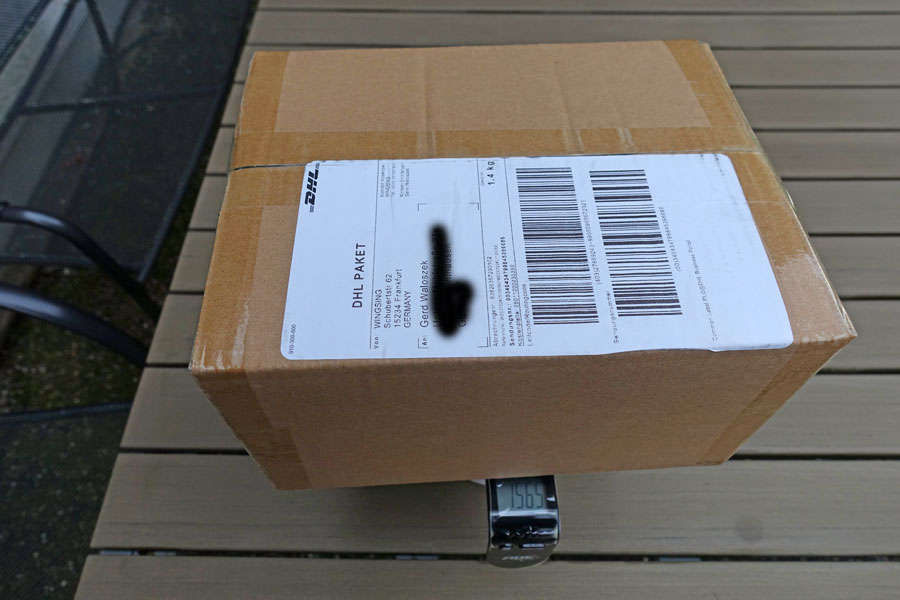
The Dwarf mini has arrived! |
The parcel on the scales: 1.565 g |
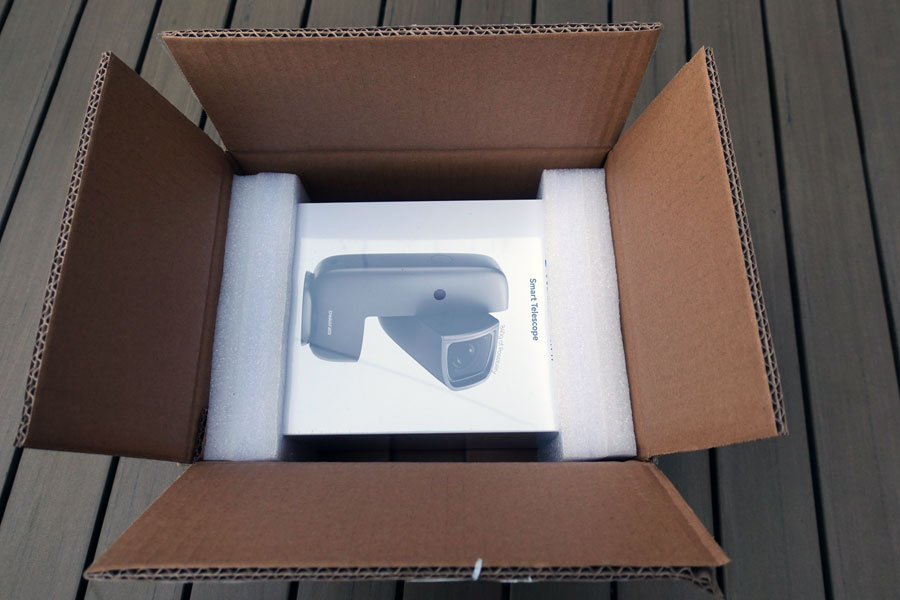
Parcel opened |
||
 |
 |
 |
||
Technical data |
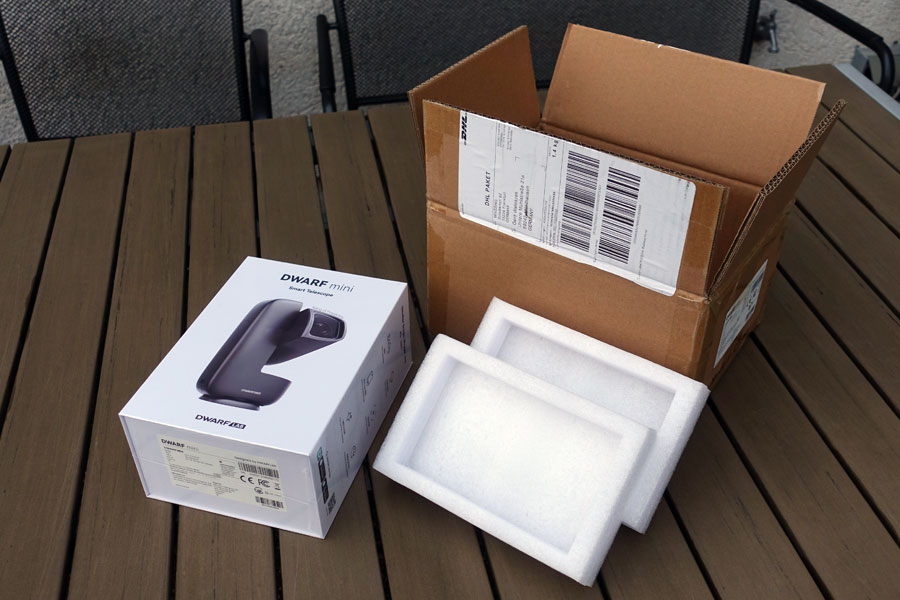
The mini box taken out |
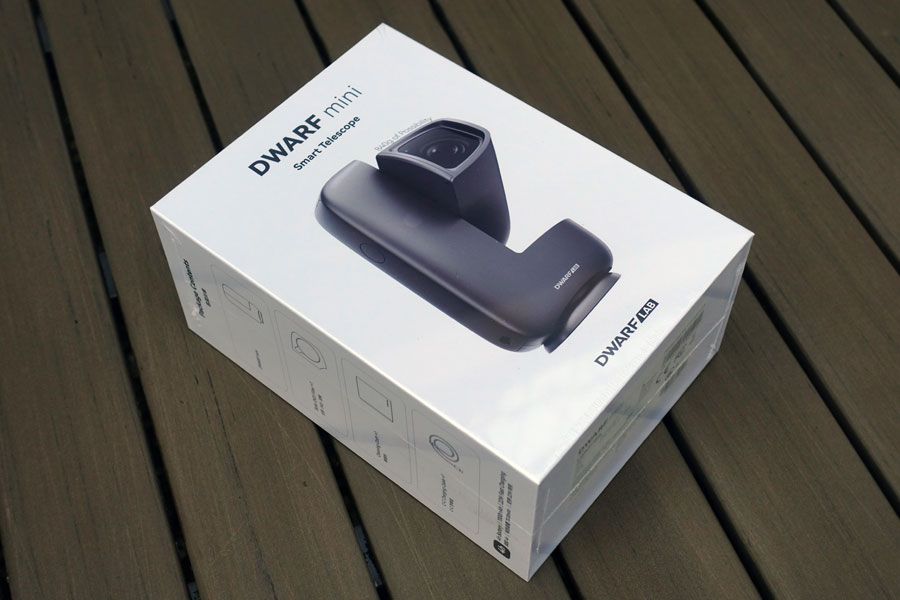
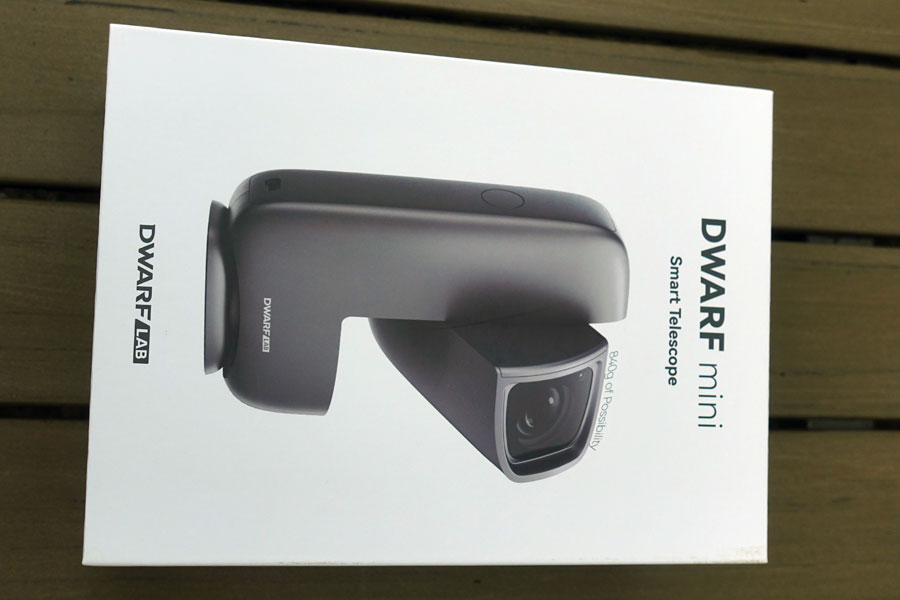
The unopened Dwarf mini box (1.290 g, useful for storing) |
||
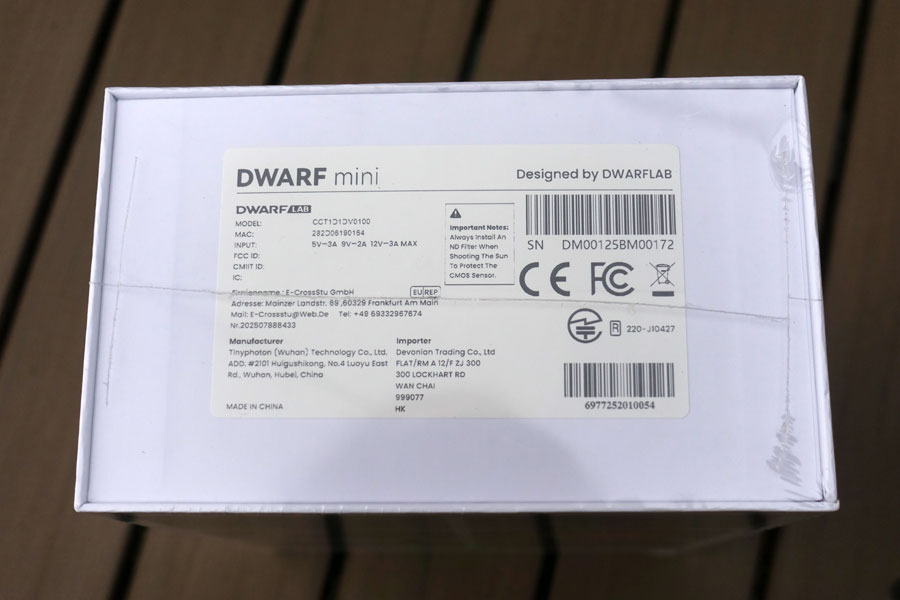 |
 |
 |
||
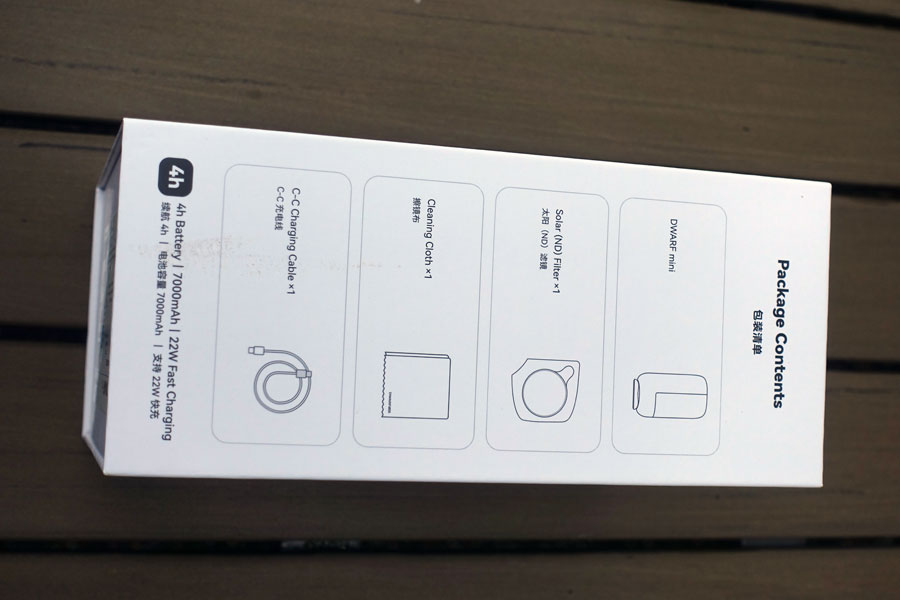
Technical data once again... |
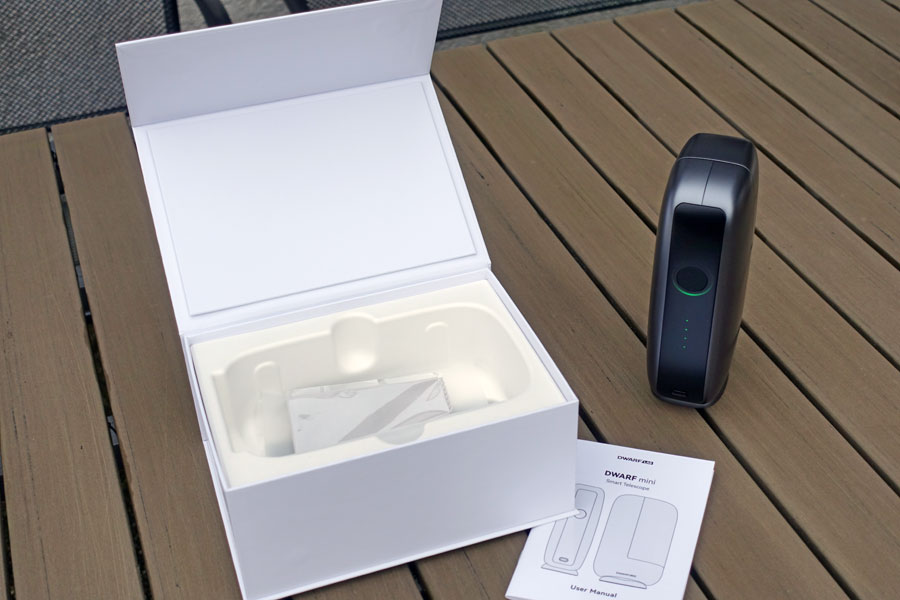
The package contents on the box |
Box from above |
||
 |
|
 |
||
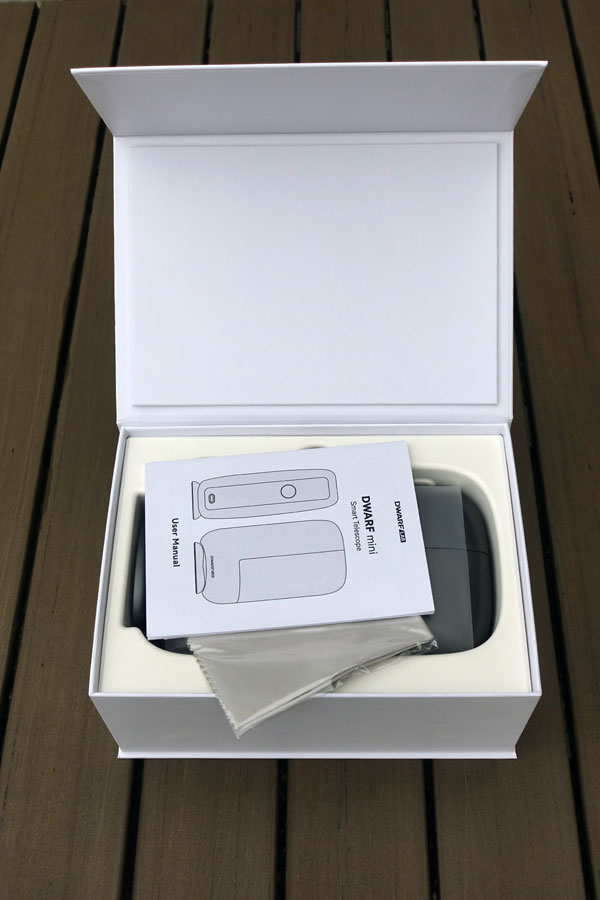
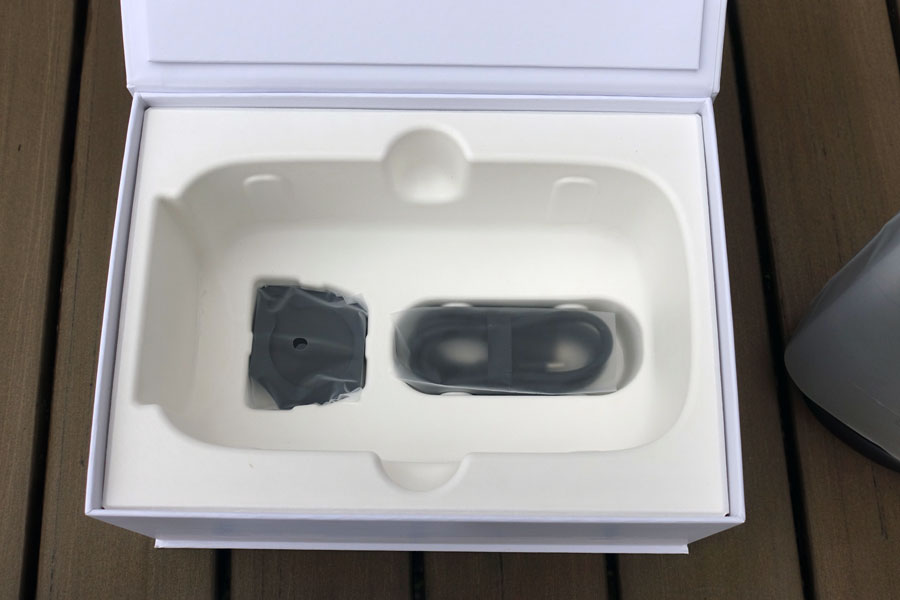
Box opened ... |
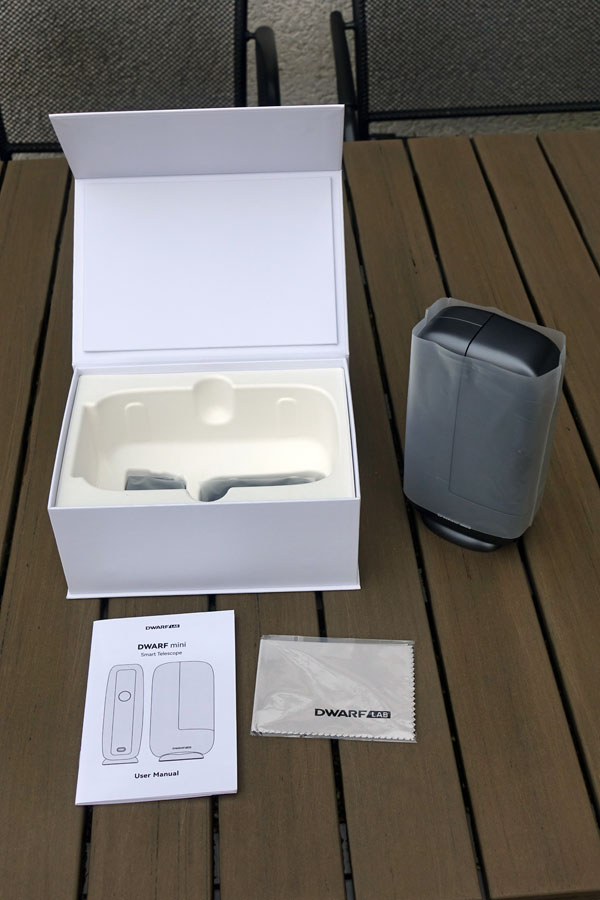
... and the Dwarf mini made visible |
Accessories: Sun filter and USB-C cable |
||
 |
 |
 |
||
Dwarf mini taken out of the box... |
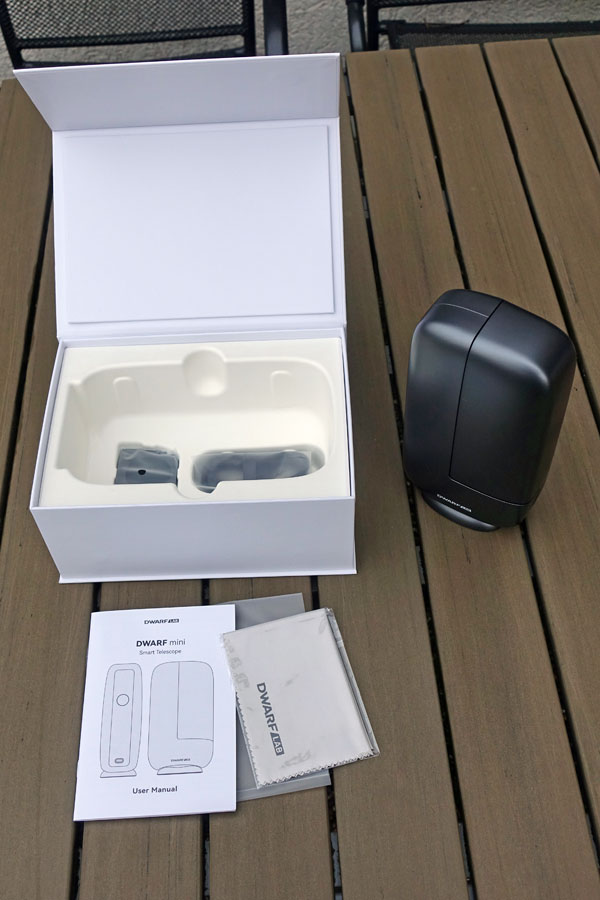
...and plastic cover removed |
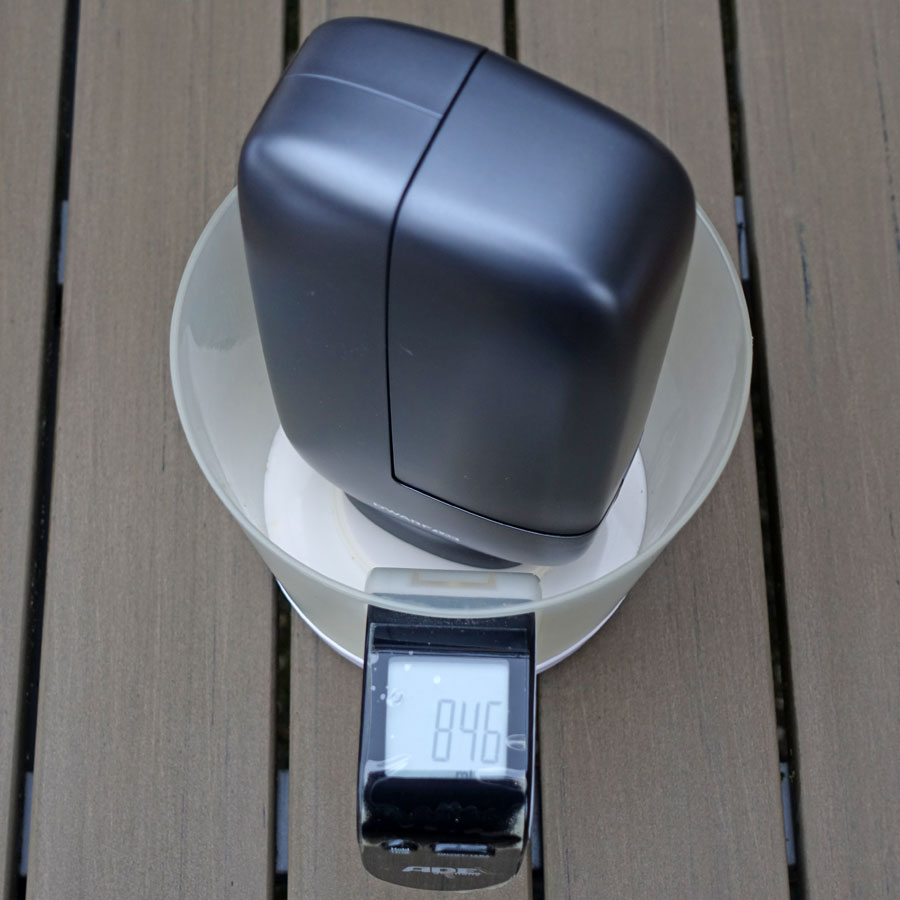
Weight of my Dwarf mini: 846 g (officially 840 g) |
||
 |
|
 |
||
Dwarf mini turned on (green LEDs glow) |
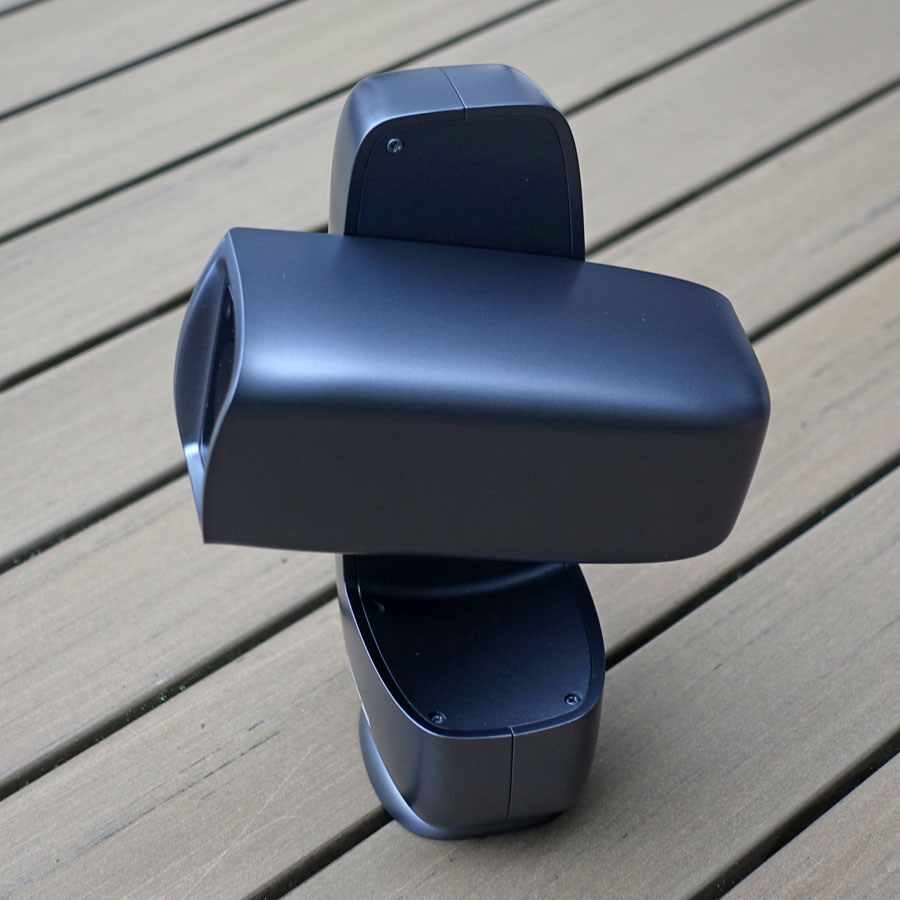
Telescope arm turned by hand |
Dito |
||
 |
 |
|
||
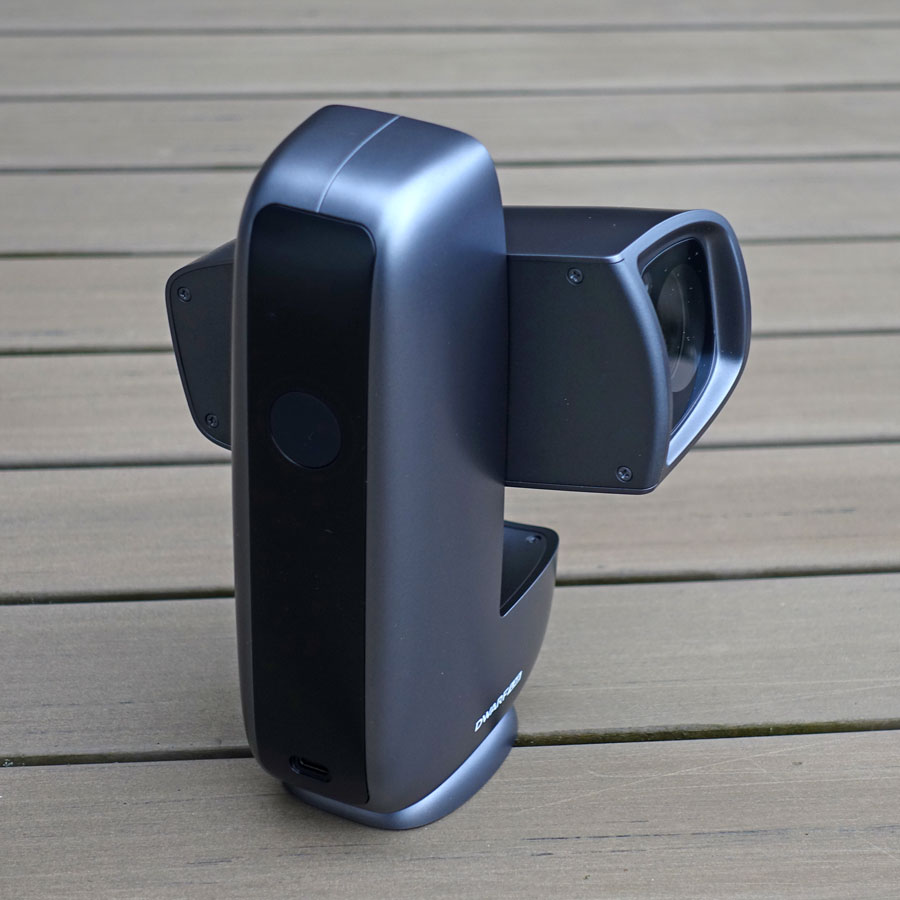
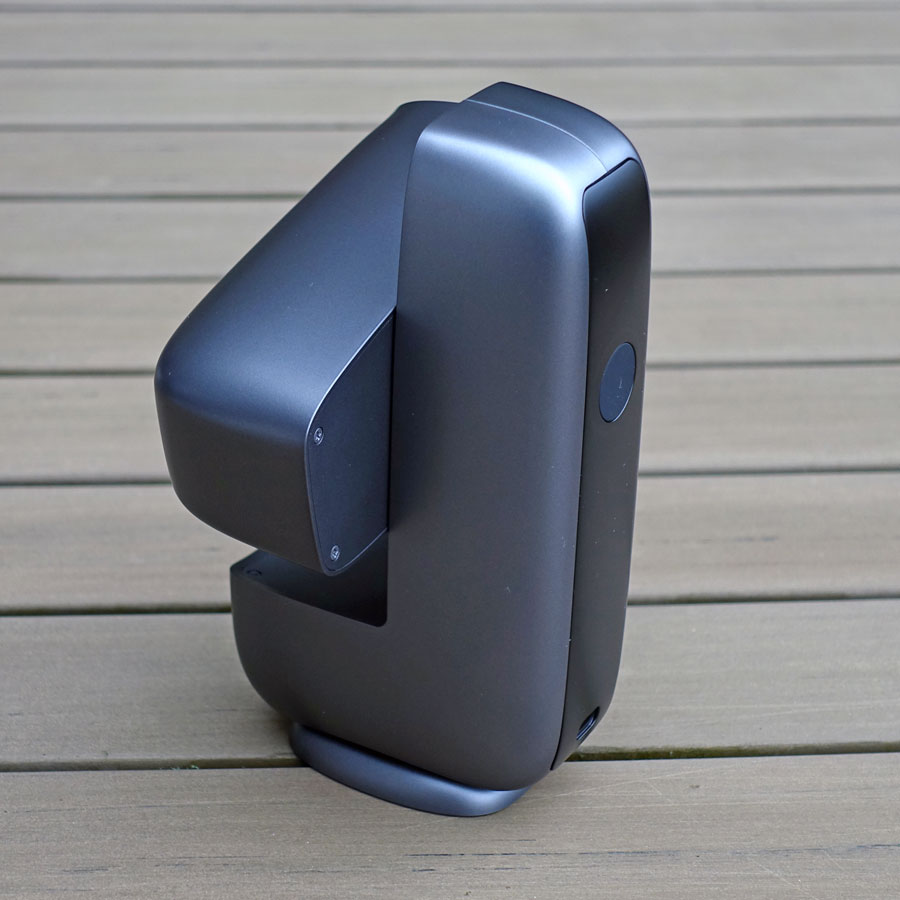
Ditto |
Dtito |
Dwarf Mini in hands |
Tripod, Dwarf mini on the Tripod
Here I present photos of the unboxing, the tripod and the tripod with mounted Dwarf mini. More on the tripod on page Tripod!
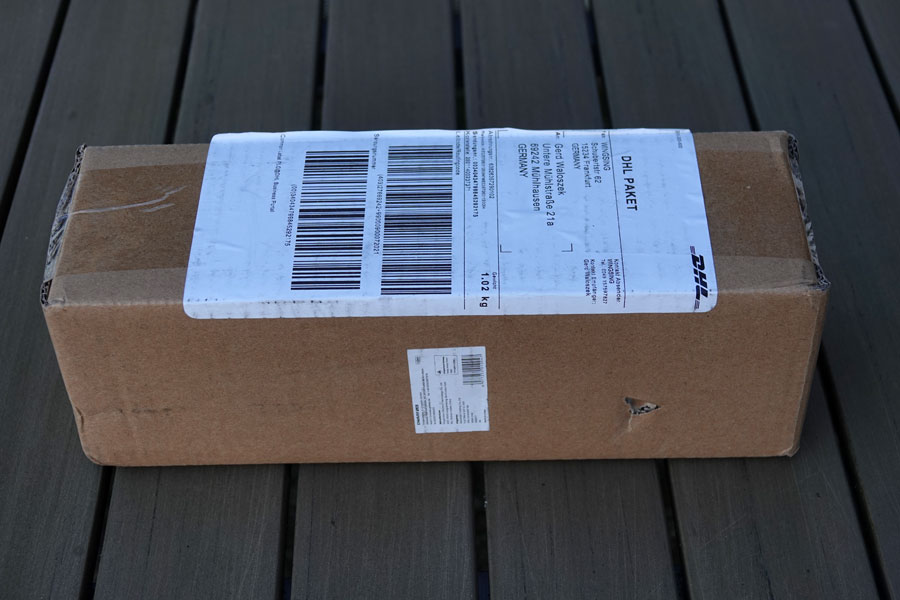 |
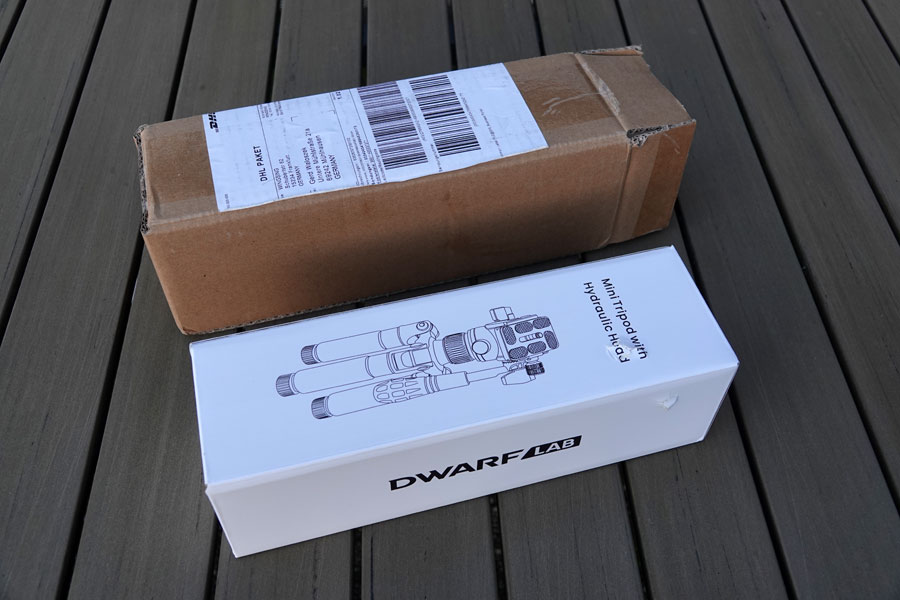 |
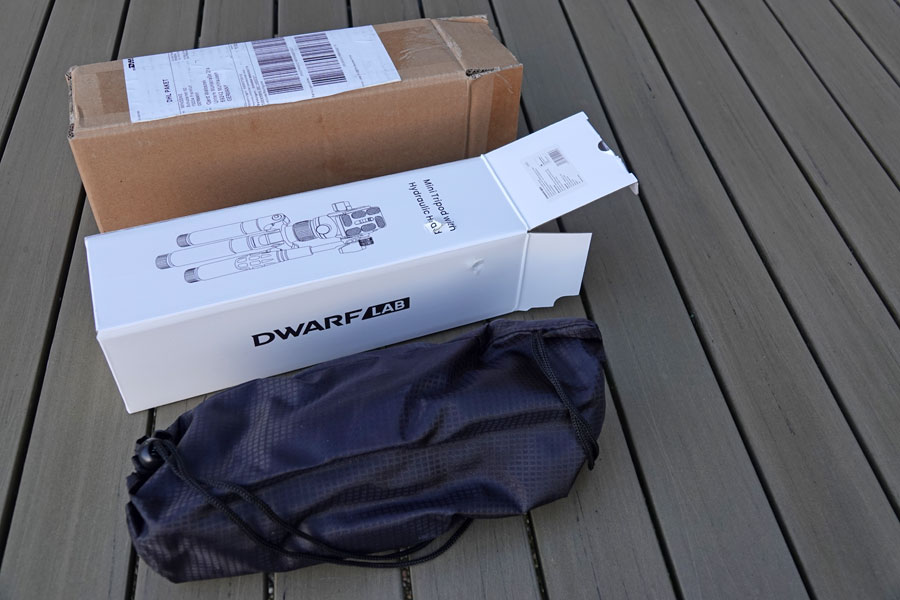 |
||
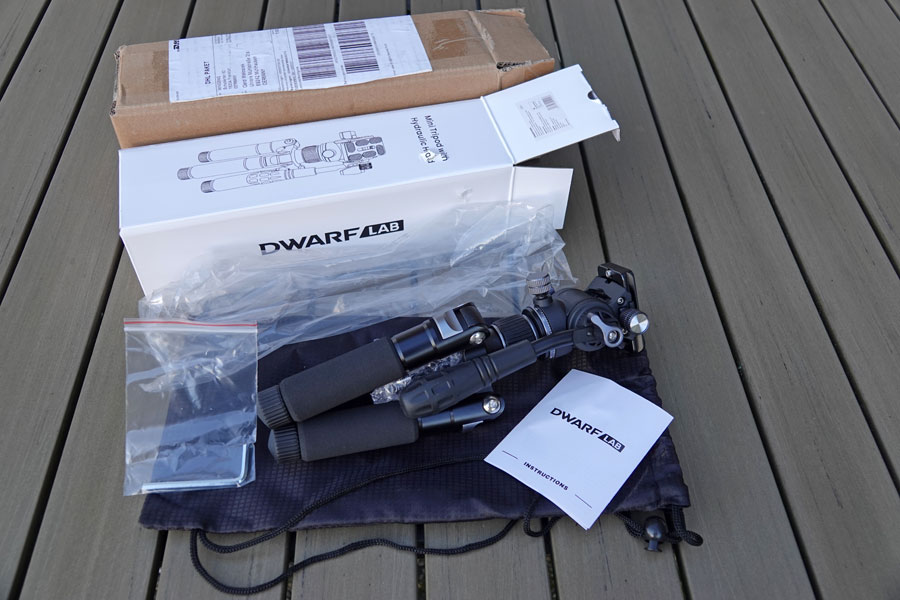
The tripod for the Dwarf mini has arrived! The parcel is damaged |
Inner box removed - it even has two damages |
Tripod in its bag taken out (no damages) |
||
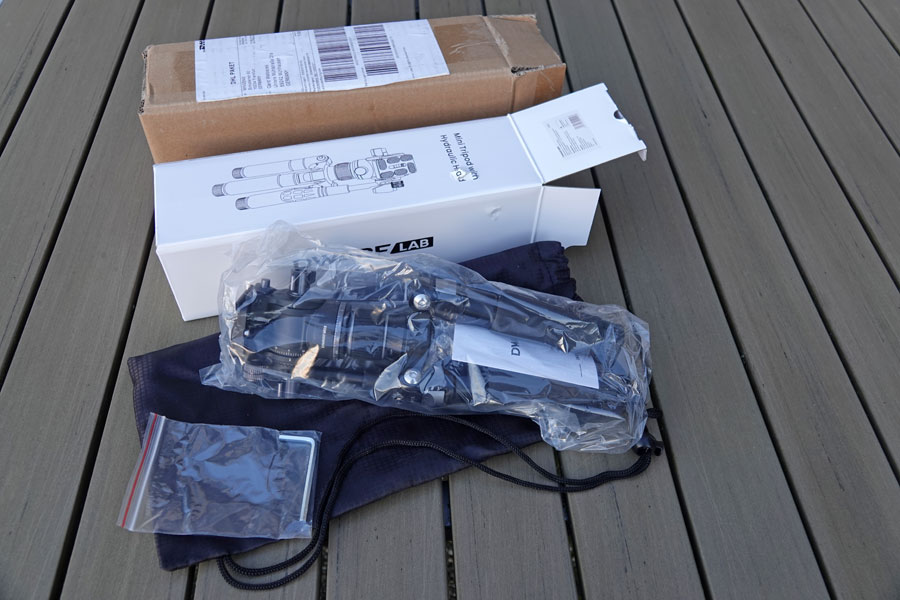 |
 |
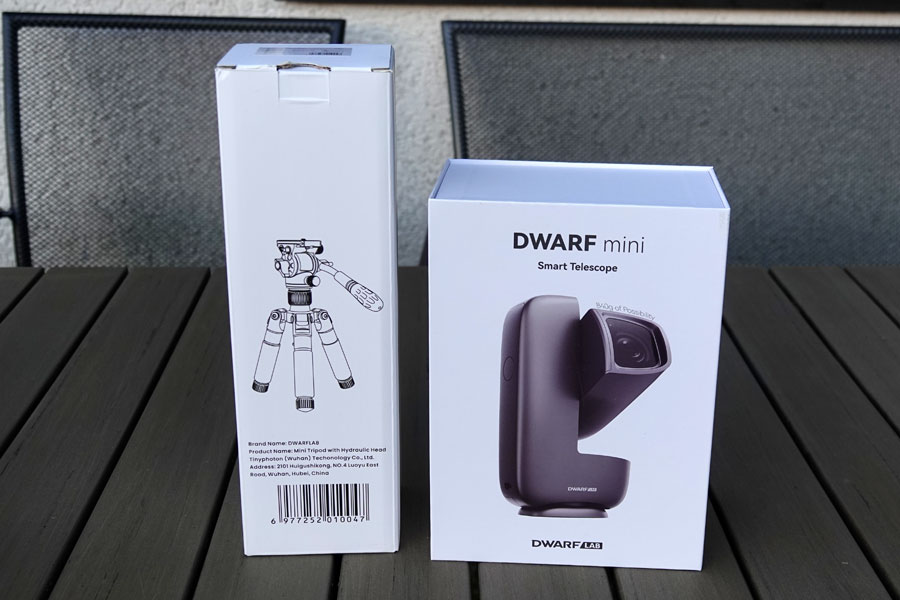 |
||
Tripod taken out of its bag |
Plastic cover removed |
This would be the travel equipment (without charger and iPad) |
||
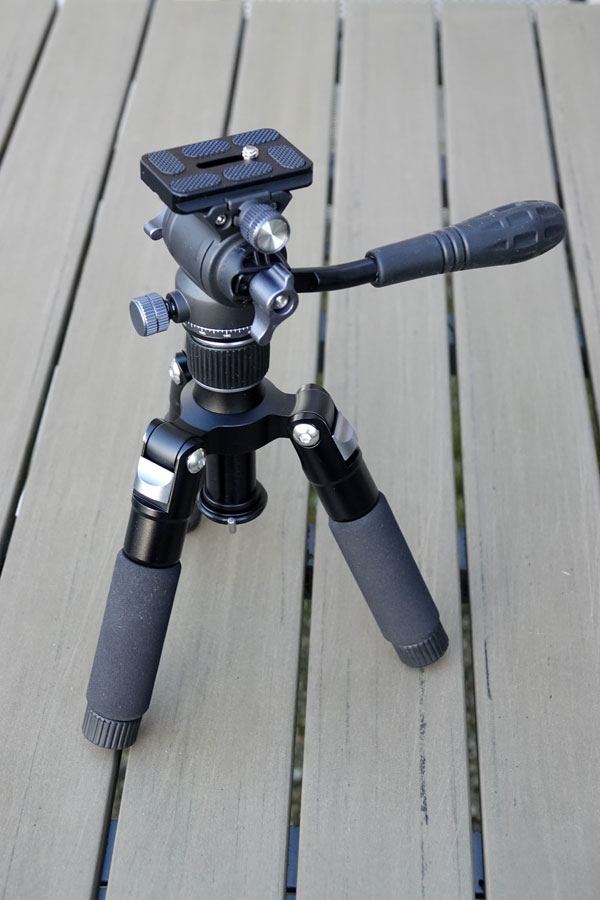 |
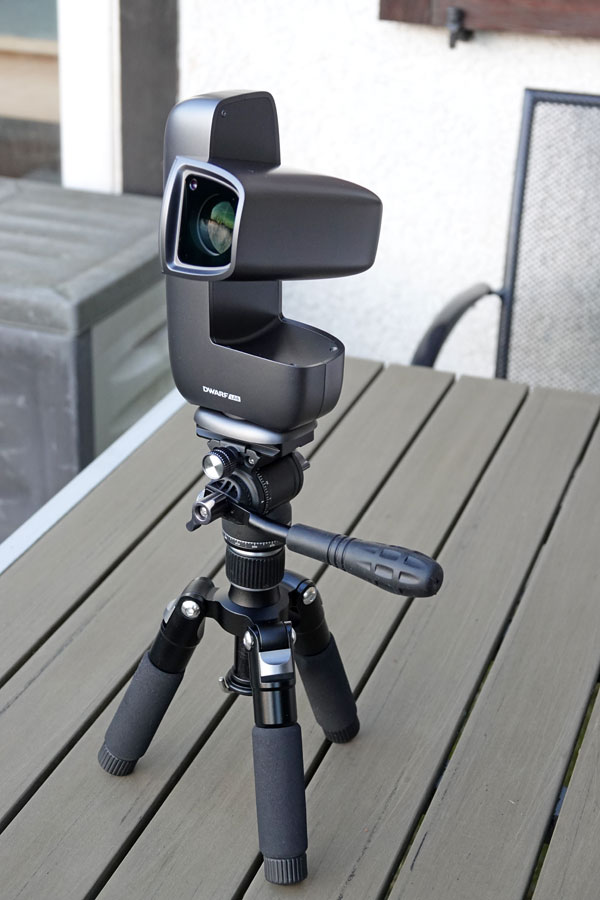 |
 |
||
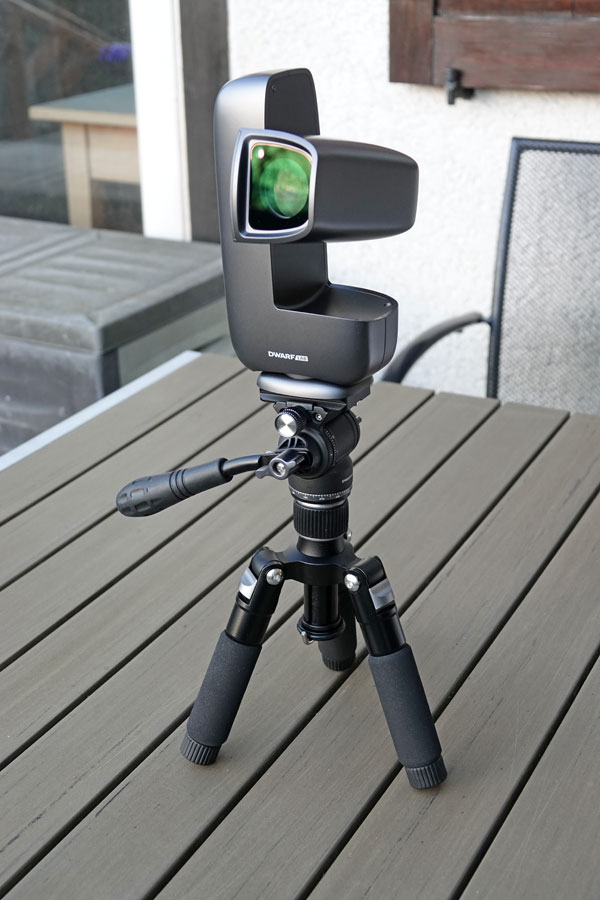
The tripod, lever pointing upwards |
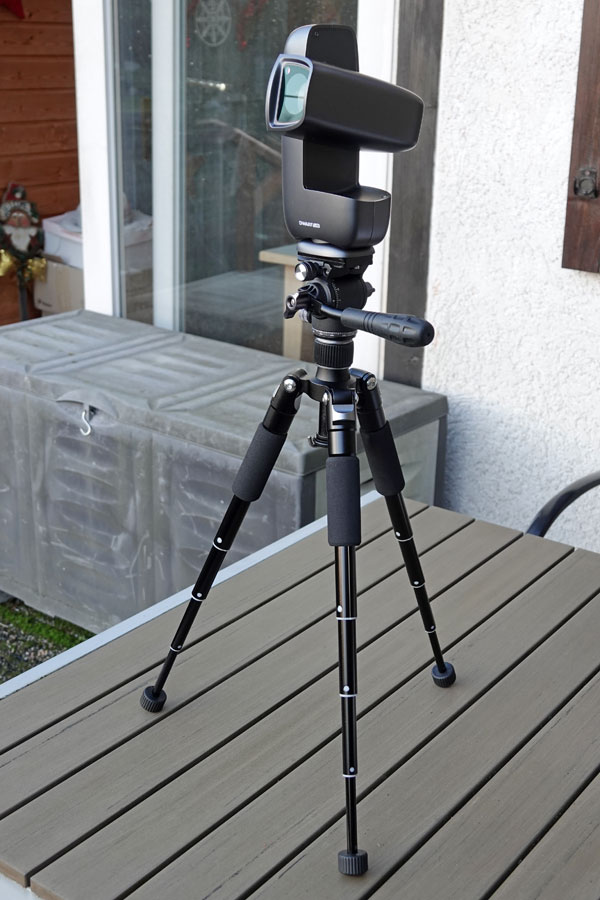
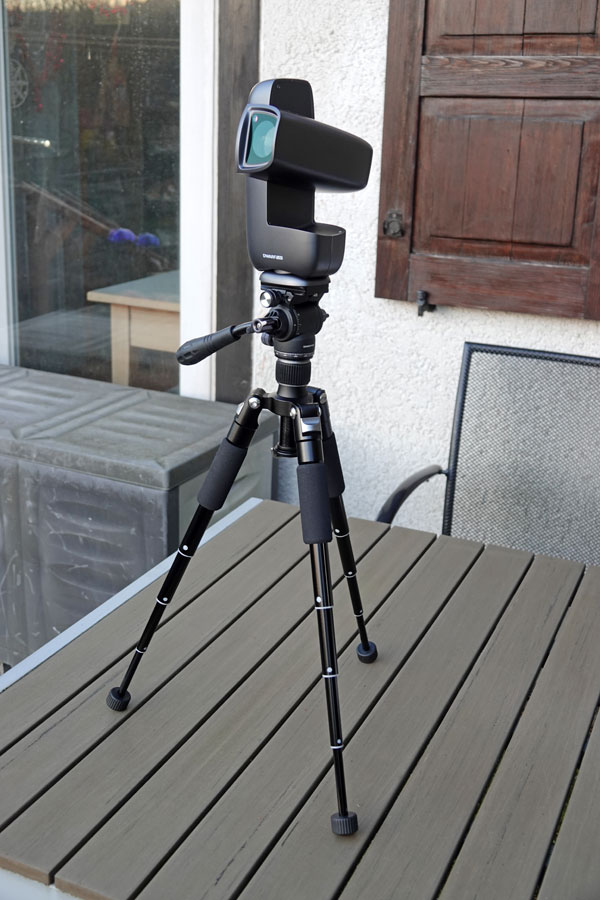
Dwarf mini on the tripod, lever pointing upwards | Ditto, lever pointing downwards |
||
 |
 |
 |
||
Dwarf mini on the tripod, legs fully extended |
Ditto, leverrpointing downwards |
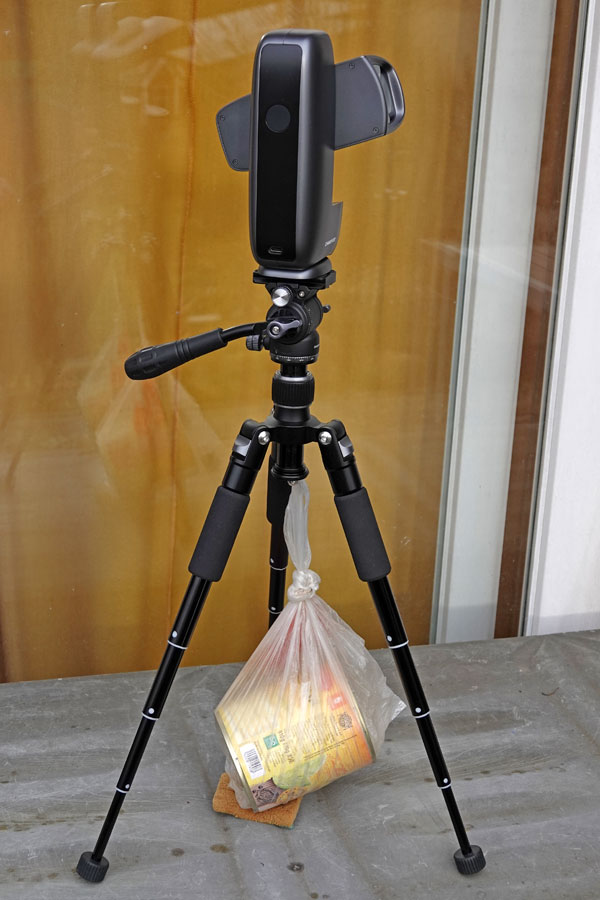
DwarfLab recommends, to add a weight to the center column when the legs are fully extended (normal angle of the legs) |
Note: The center column can carry a weight. DwarfLab recommends this for fully extended legs. The legs can be made flat. This can increase the stability in EQ mode. More on this on the special page on the tripod!
Sensor, Pixel Data, Field of View, Image Size (Pixels)
For its tele lens, which is used for telescope use, the Dwarf mini uses the sensor Sony IMX662 (CMOS), with a used pixel size of about 2 megapixels, or 1920 x 1080 pixels (H/V). The pixel size is 2.9µm (quadratic pixels).
The following table shows the Vespera, Vespera Pro, eVscope, and eVscope 2 in comparison with the Dwarf mini:
| Telescope | Focal Length | Aperture | f | FOV in Degrees | FOV in Minutes | IS* | Sensor |
| eVscope* | 450 mm | 114 mm | 4 | 0.61° x 0.46° | 36.7' x 27.6' | 1.72 | Sony IMX224 |
| eVscope 2* | 450 mm | 114 mm | 4 | 0.78° x 0.57° | 47' x 34' | 1.33 | Sony IMX347 |
| Vespera* | 200 mm | 50 mm | 4 | 1.6° x 0.9° | 96' x 54' (ca.) | 2.99 | Sony IMX462 |
| Vespera Pro | 250 mm | 50 mm | 5 | 1.6° x 1.6° | 96' x 96' (ca.) | 1.65 | Sony IMX676 |
| Dwarf mini | 150 mm | 30 mm | 5 | 2.14° x 1.20° | 128' x 72' (ca.) | 3.99 | Sony IMX 662 (successor of IMX462) |
*) No longer in my possession
*) IS = image scale: describes the relative sizes of objects at 1:1 pixels (the larger the number, the smaller the objects)
Visited Sky Objects
Here I list the deep sky objects that I observed and photographed during the first weeks with the Dwarf mini:
- Jan 15, 2026: M 33, M 42/43
- Jan 16, 2026: IC 1396, M 31/32/110
- Jan 18, 2026: NGC 7000, NGC 1499
- Jan 19, 2026: M 45, M 78, M 42/43
- Jan 21, 2026: NGC 1499 (EQ), B 33, NGC 2024, (EQ)
- Jan 22, 2026: Crescent of the moon
- Jan 23, 2026: Crescent of the moon
- Jan 24, 2026: Crescent of the moon, M 15, M 34, NGC 752, NGC 891
- Feb 5, 2026: Sun, M 31/32/110 (EQ), M 45 (EQ)
- Feb 7, 2026: M 42/43 (EQ), NGC 2237/2244 (EQ), NGC 2264/2261 (EQ)
- Feb 9, 2026: IC 410/405 (EQ), NGC 2237/2244 (EQ), NGC 2264 (EQ)
PageFirst Experiences presents my photos of the objects that I list above (my very first observations with the Dwarf mini).
For a list of all observed sky objects see page My Deep Sky Observations with the Dwarf mini (Complete List of Observed DSO).
First Experiences and Photos
On page First Experiences, I describe my very first experiences with the Dwarf mini. For space reasons, I created a new page for this. This page also presents my photos of the objects that I list in "Visited Sky Objects" above (my very first observations with the Dwarf mini).
First Conclusions
It is still too early to draw any conclusions. However, I have already noticed that it is only suitable for large objects (nebulae, galaxies, star clusters). Thanks to the Stellar Studio software integrated into the app, the results are often very impressive, but the resolution of the photos is rather poor due to technical limitations (30 mm aperture, 150 mm focal length). The telescope is fun primarily because of the possibilities it offers for trying out things like EQ mode or mosaics. This raises the question of whether I will keep the Dwarf mini or sell it after playing around with it enough...
Links
- Dwarf Mini Smart Telescope – Review & Tutorial (Wido's Astroforum): astroforumspace.com/dwarf-mini-smart-telescope-review-tutorial/ - YouTube-Video dazu: www.youtube.com/watch?v=4SoaQqLWR0s
- Dwarf Mini im Test: Das Technik-Wunder und Spaßgerät für die Hosentasche (Dimitrios Georgomanos): www.blickohnegrenzen.de/2026/02/06/dwarf-mini-im-test-das-technik-wunder-und-spassgeraet-fuer-die-hosentasche (in German)
- Dwarf mini documentation (DwarfLab): help.dwarflab.com/en/docs/dwarf-mini-smart-telescope
- DWARF mini User Manual: help.dwarflab.com/en/docs/DWARF-mini-Smart-Telescope-User-Manual
- Get to Know the Files Stored in DWARF mini: help.dwarflab.com/en/docs/help-doc
- DWARF mini Lighting Effects: help.dwarflab.com/en/docs/help-doc-mini-lighting-effects
- How to View DWARF mini Files Wirelessly Using a Computer: help.dwarflab.com/en/docs/help-doc-1
- FAQ & Troubleshooting Guide for DWARF Users: help.dwarflab.com/en/docs/help-doc-2
- Mini Tripod with hydraulic Head (DwarfLab): dwarflab.com/products/tripod-for-dwarf-3 (shown for Dwarf 3)
- The Tripod Setup and Usage (DwarfLab video): help.dwarflab.com/en/docs/tripod-setup-and-usage?product=dwarf-3 (shown for Dwarf 3)
- DWARF mini EQ Mode Setup Guide (DwarfLab video): https://help.dwarflab.com/en/docs/dwarf-mini-equatorial-setup-guide?product=dwarf-mini
- See also my page offering Astronomy Links.
Appendix: Technical Data for the Dwarf mini and the Tripod
Dwarf mini
- Aperture: 30 mm (T) / 3.4 mm (W)
- Focal length: 150 mm (T) / 6.7 mm (W)
- Equivalent focal length: 1016 mm (T) / 45 mm (W)
- Focal ratio: 1:5 (T)
- Motorized Alt-AZ mount
- Weight: 840 g (846 g measured)
- Size: 18 x 10 x 7 cm
- Built in memory: 64 GB
- No bag
- Wireless connectivity: Wifi (2.4/5 GHz) for smartphone or computer control and GPS access (no GPS module inside); STA and AP modes
- Battery: 7.000 mAh,
- Battery life: up to 4 hours
- Sensors: Sony Exmor IMX662 color CMOS sensor - 2.1 MPixels (T) / OS02K10 (W)
- Sensor size: 1/2.8" diagonal
- Pixels: 1920 x 1080 pixels (both sensors)
- Pixel size: 2.9 µm x 2.9 µm (both sensors)
- Read noise: < 0.8e- (IMX662)
- Built-in filters: Astro, Dark, Duo-Band (T) / Astro /W)
- Included filter: Sun filter (T)
Tripod
- Model: WT-6050
- Net weight: 790g
- Material: Aluminum Alloy
- Max.LOAD capacity: 3.0 kg
- Connector: 1/4"
- Sections: 5
- Max. height: 530 mm
- Folded height: 250 mm
- Tube Dameters: 9.7/12.6/15.5/18.2/21 mm
- Color: Black
Appendix: Comparison of the Vaonis Vespera, Vespera Pro, and the Dwarf mini
| Vespera | Vespera Pro | Dwarf mini | |
| Weight | 5 kg (11 lbs) | 5 kg (11 lbs) | 840 h (846 g measured) |
| Height | 40 cm (15 in) | 40 cm (15 in) | 18.36 cm |
| Width | 20 cm (8 in) | 20 cm (8 in) | 6.7 cm |
| Depth | 9 cm (3.5 in) | 9 cm (3.5 in) | 10.4 cm |
| Telescope type | Refractor | Refractor | Refractor |
| Lens | Apochromatic Quadruplet | Apochromatic Quadruplet | unknown |
| Lens special features | Extra low dispersion S-FPL52 equivalent (ULD) with lanthanum glass | Extra low dispersion S-FPL52 equivalent (ULD) with lanthanum glass | unknown |
| Aperture | 50 mm | 50 mm | 30 mm (T) / 3.4 mm (W) |
| Focal length | 200 mm | 250 mm | 150 mm (T) / 6.7 (W) |
| Focal ratio | F/4 | F/5 | F/5 (T) |
| Field of view | 1.6° x 0.9° | 1.6° x 1.6° | 2.14° x 1.20° (T) |
| Mount | Alt-azimuth | Alt-azimuth | Alt-azimuth; EQ mode with tripod or wedge |
| Field derotator | no, done in software | no, done in software | no, done in software |
| Image sensor | Sony IMX462 | Sony IMX676 | Sony IMX662 (T); OS02K10 (W) |
| Resolution | 1920 x 1080 (2 MP) | 3536 x 3536 (12.5 MP) | 1920 x 1080 (2 MP) |
| Sensor size | 1/2.8" | 1/1.6" | 1/2.8" |
| Pixel size | 2.9 µm x 2.9 µm | 2.0 µm x 2.0µm | 2.9 µm x 2.9 µm (both sensors) |
| File formats | JPEG, TIFF, FITS (TIFF/FITS in 16 bits) | JPEG, TIFF, FITS (TIFF/FITS in 16 bits) | PNG, FITS, JPEG (and more...) |
| USB port (pictures download) | no (with Wi-Fi) | no (with Wi-Fi) | USB-C (cable included, WiFi also possible) |
| Autofocus | yes | yes | yes (plus manual focus) |
| Light pollution filter | optional | optional | yes (Astro filter, inbuilt) |
| Dual band filter | optional | optional | yes (DB filter, inbuilt) |
| Sun filter | optional | optional | included |
Dark Frames |
yes | yes, special lid included | yes, with inbuilt Dark filter |
| Dew control | yes as soon as the (optional) sensor is installed | yes | no |
| Temperature/humidity sensor | Optional | yes | no |
| Battery type | Integrated | Integrated | Integrated |
| Battery life | up to 8 h | up to 11 h | up to 4 h |
| Water resistance | IP43 | IP43??? | n.a. |
| Multi user mode | up to 8 users | up to 8 users | no |
| Number of objects in data base | 300+ (July 2023) 4000 (extended) |
300+ (July 2023) 4000 (extended) |
??? |
| Object access via coordinates | yes | yes | yes |
| Solar pointing | yes (with optional sun filter) | yes (with optional sun filter) | yes (with included sun filter) |
| Connected battery | possible | possible | possible |
| Connection to Wi-Fi hotspots | no | no | yes (STA and AP modes) |
| Scheduling of observations | yes | yes | yes |
| Expert mode (camera control) | yes | yes | ??? |
| HDR Image processing | yes | yes | ??? |
| Pictures stocking in the app | up to 200 MB | up to 200 MB | ??? |
| Mosaic mode | 3.2° x 1.8° (4 x sensor field) at maximum, up to 8 MP | 3.2° x 3.2° (4 x sensor field) at maximum, up to 50 MP | yes, in EQ mode only (up to 1:1.8 per dimension, max. 4 panels) |
|
made by  on a mac! on a mac! |


| 14.09.2026 |  |