

DwarfLab Dwarf mini - Observations of the Sun
Introduction | First Experiences with the Solar Mode | Partial Solar Eclipse on August 12, 2026 | First Conclusions | Links
On this page, I describe my first experiences with my electronic refractor telescope DwarfLab Dwarf mini 30 mm/150 mm (f/5) when observing the sun.
See also:
- Information
- Tripod
- Bag
- EQ Mode
- First Experiences
- Mosaic Mode
- Observations of the Sun (this page)
- Observations of the Moon
- Observations with Filter
- >> My Deep Sky Observations with the Dwarf mini (Complete List of Observed DSO)
- Photo Gallery (Messier) - Photo Gallery (Other) - Galaxies - Nebulae - Open Star Clusters
- Photo Comparison (with Vaonis Vespera)
Introduction
 |
 |
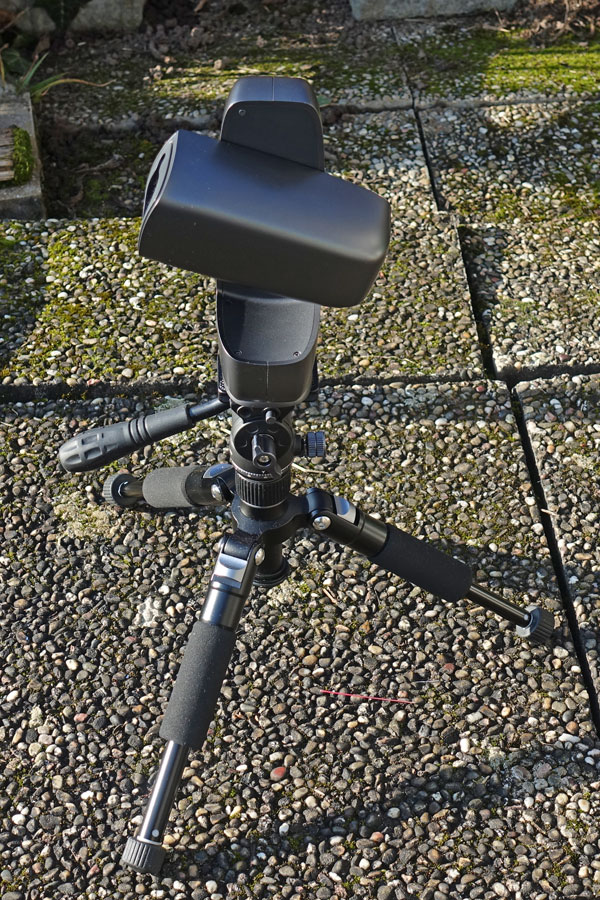 |
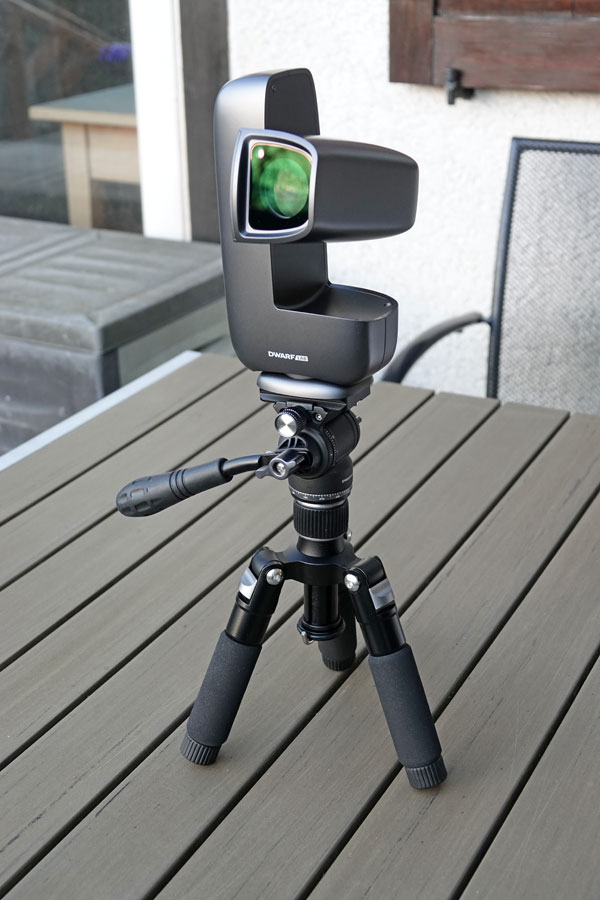
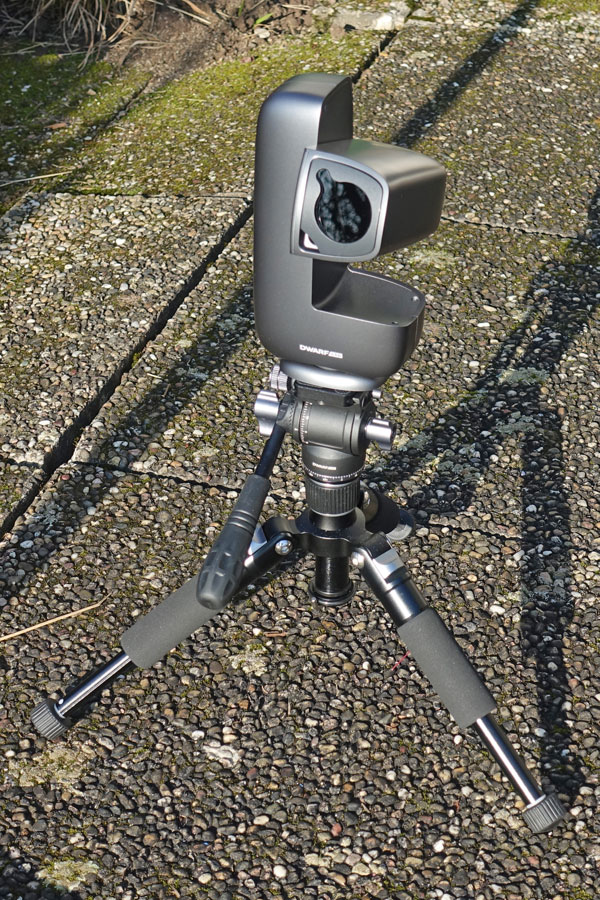
Photos: My Dwarf mini without a solar filter and twice with a solar filter and roughly pointing towards the sun.
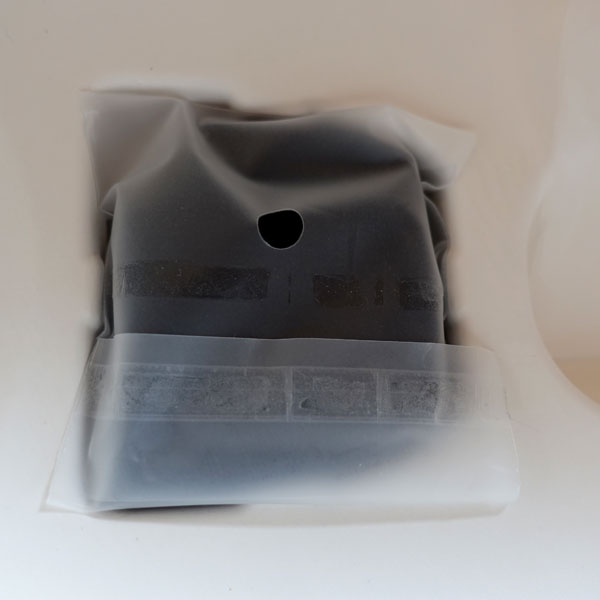
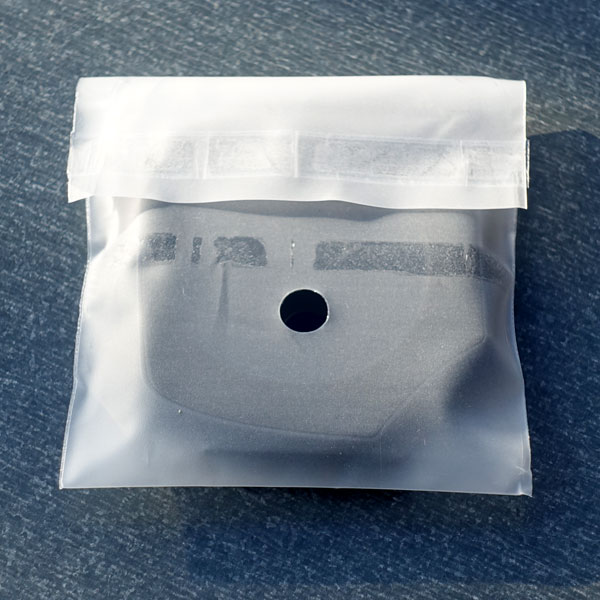
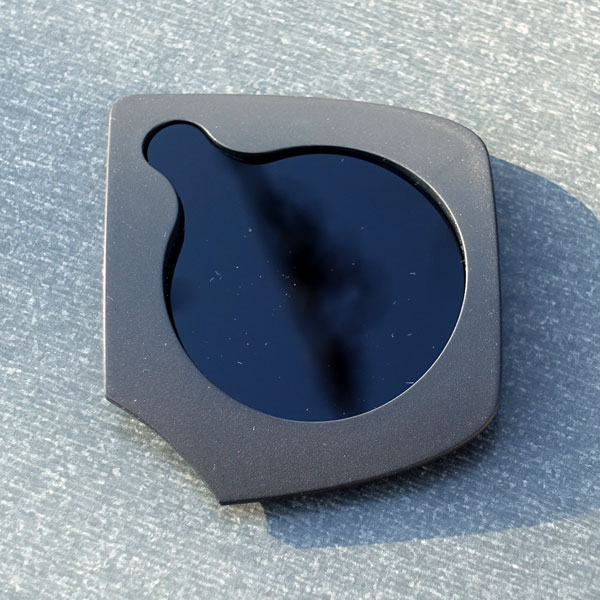
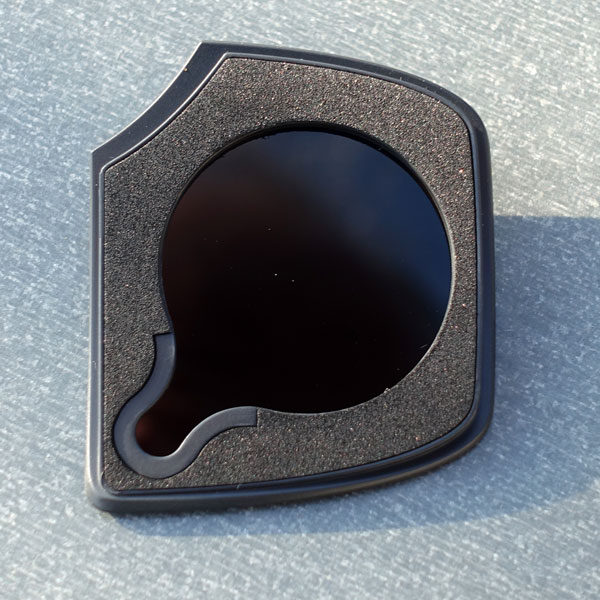
Solar Filter
 |
 |
|||
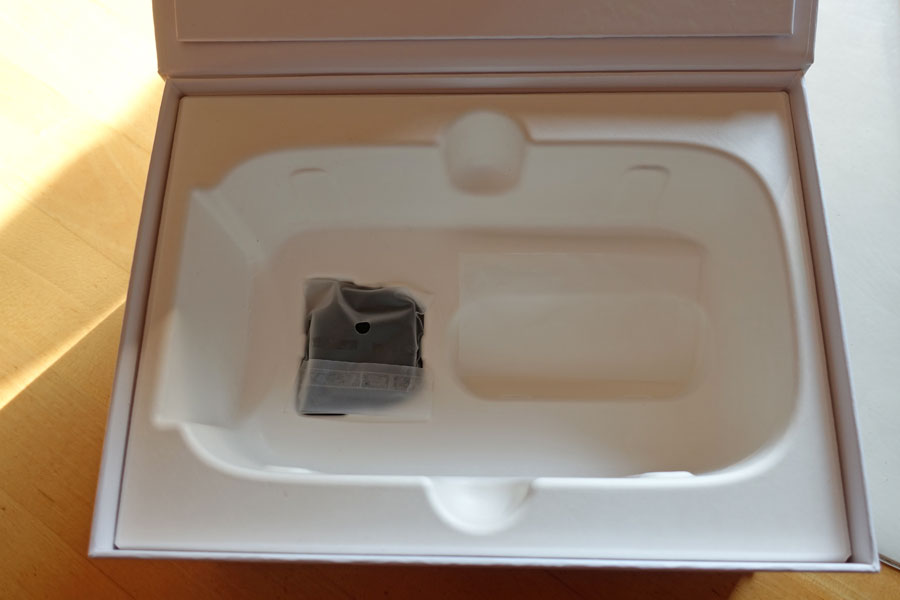
Solar Filter in the telescope box... |
Closer look... |
|||
 |
 |
 |
||
Solar filter in its plastic bag |
Solar filter front side |
Solar filter back side (magnetic material) |
||
...
First Experiences with Observations of the Sun
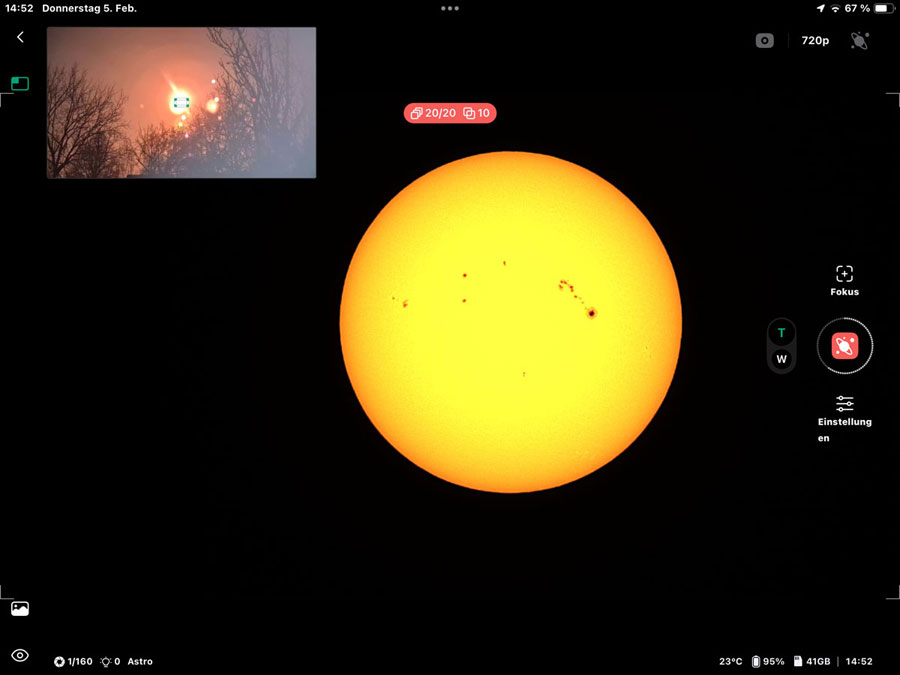
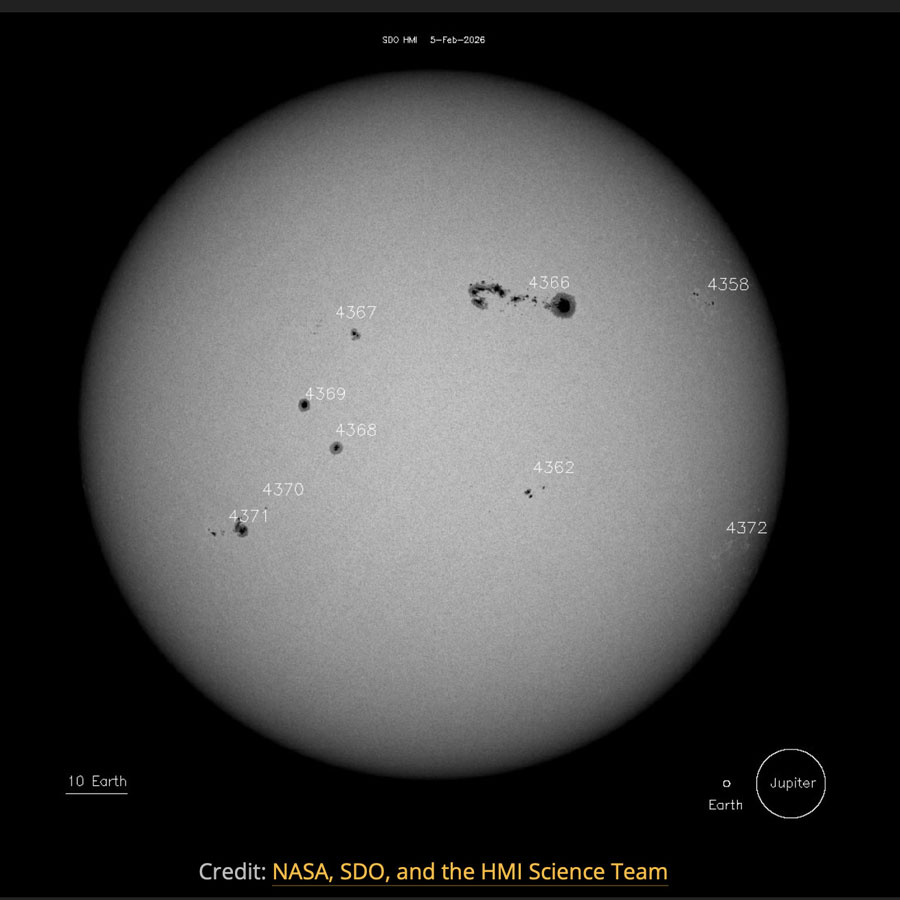
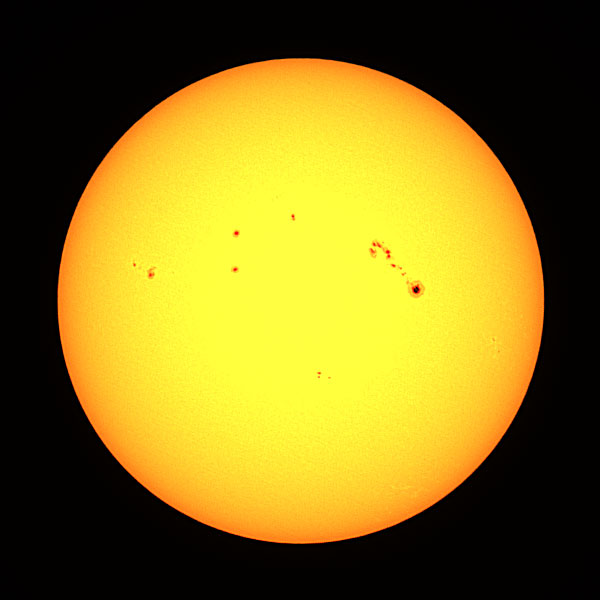
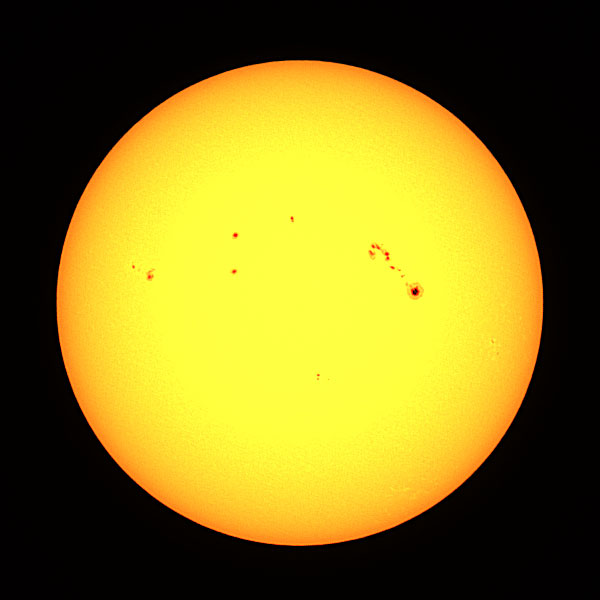
Sun Spots from February 5, 2026
The sun finally came out that day, and I had time to observe it with the Dwarf mini telescope. A magnetic solar filter, included with the telescope (see photos above), is used for the observation.
However, nothing worked at first. My iPad found the Dwarf mini's network, but it was supposedly too weak, even though I was standing right next to it. Switching to STA mode did not help either, because our home network did not reach the terrace. Eventually, it did connect, and after some initial hiccups, I was finally able to observe the sun. First, the solar filter has to be attached, and then the telescope has to be manually aligned with the sun using a joystick, which I found rather fiddly. After that, everything went smoothly thanks to the app.
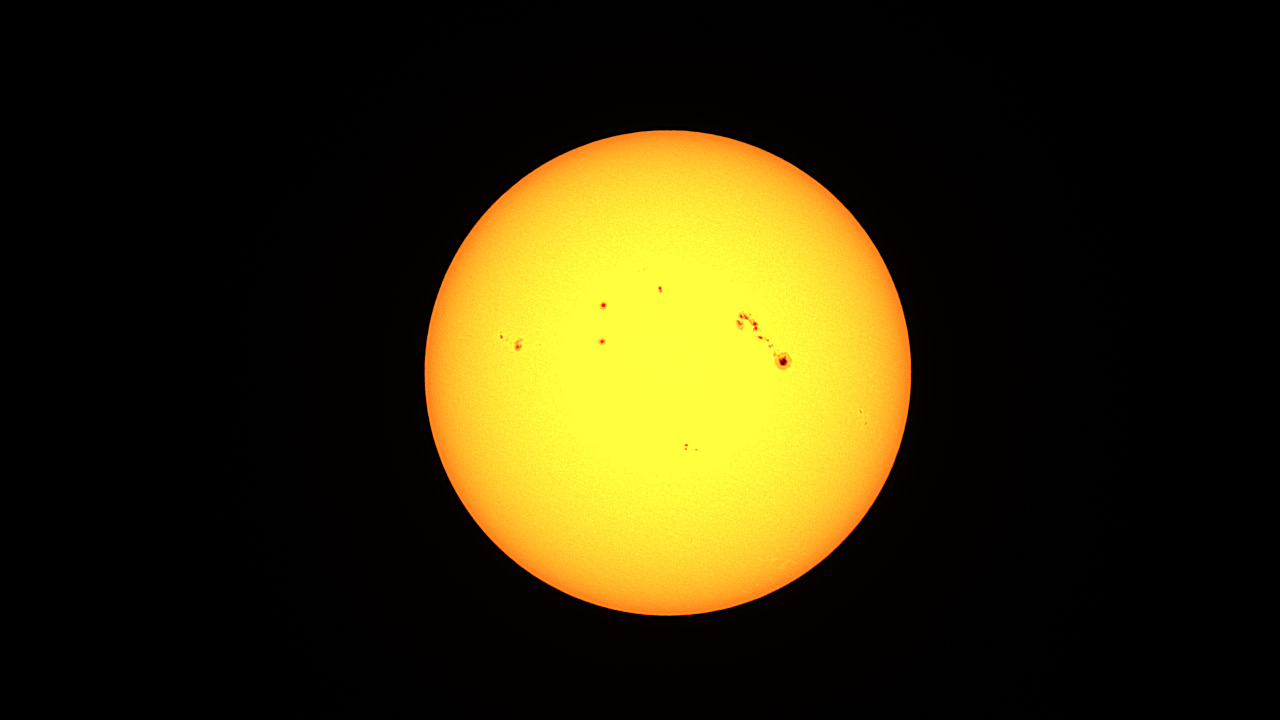
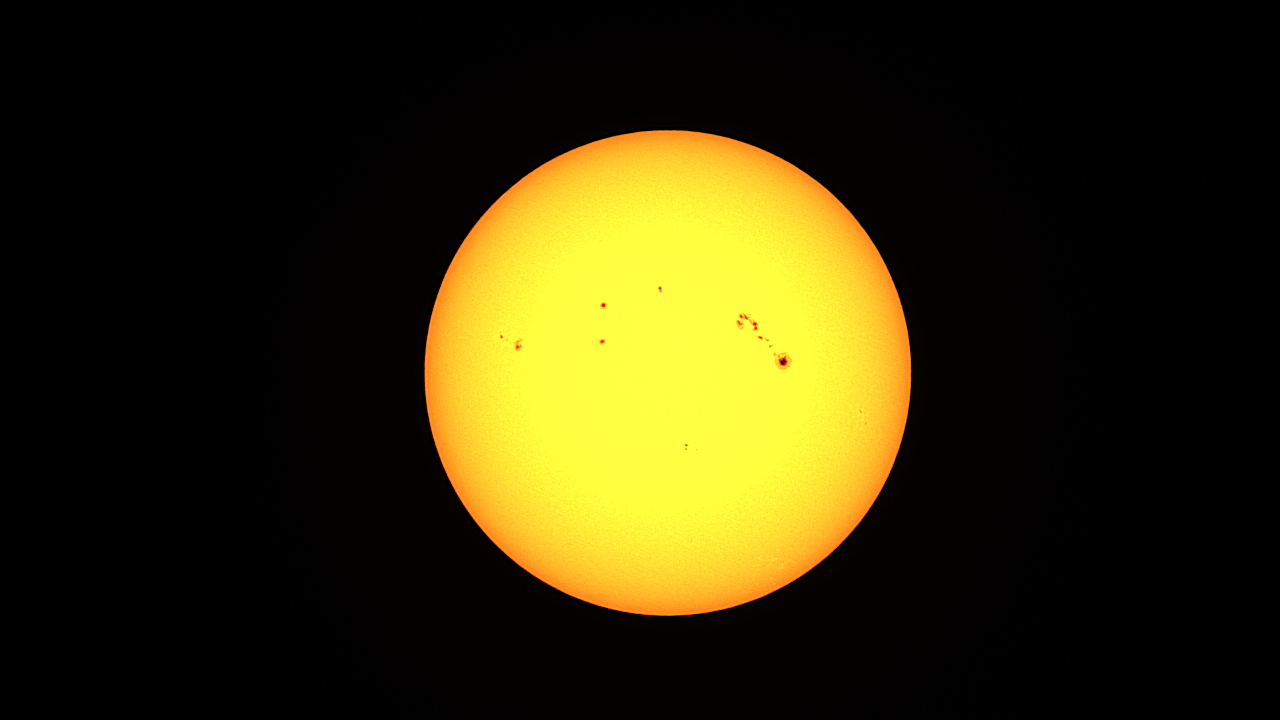
I stacked four sets of 20 images each and then processed the stack with Stellar Studio – but I could not see any improvement with the post-processing. Since all four results were very similar, I am only showing the last one.
 |
 |
|
Screenshot of the app when obserbing the sun |
Comparison photo (The Sky Live) |
|
 |
 |
|
Image of the sun as delivered by the telescope, 4th series |
Ditto, post-processed with Stellar Studio |
|
 |
 |
|
Ditto, section |
Ditto, post-processed with Stellar Studio |
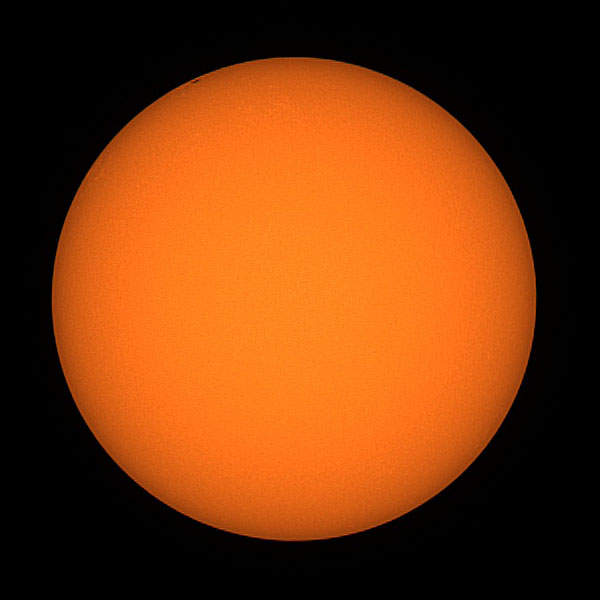
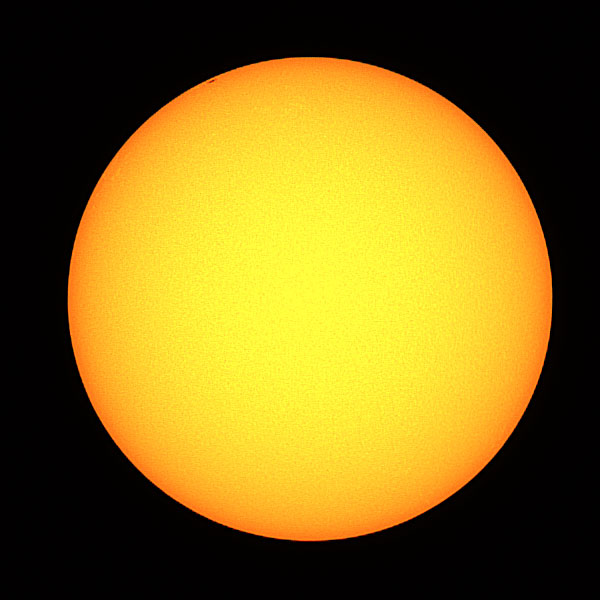
Sun Spots from February 25, 2026
Not much to see, just a spot at the rim...
 |
 |
|
20 subs stacked |
Ditto, post-processed with Stellar Studio |
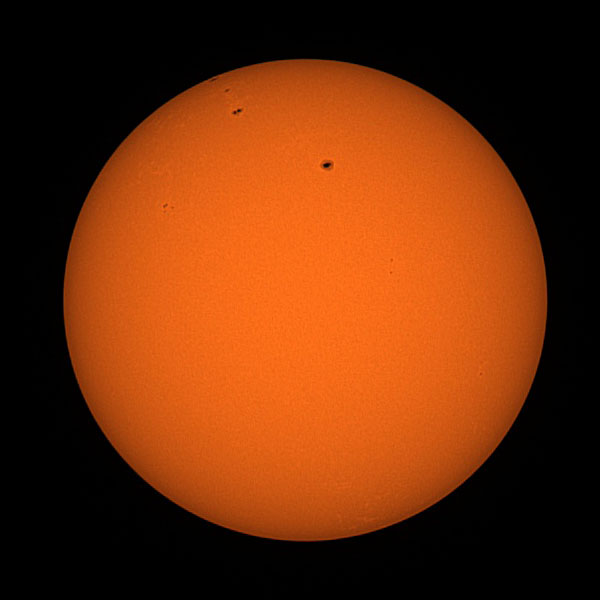
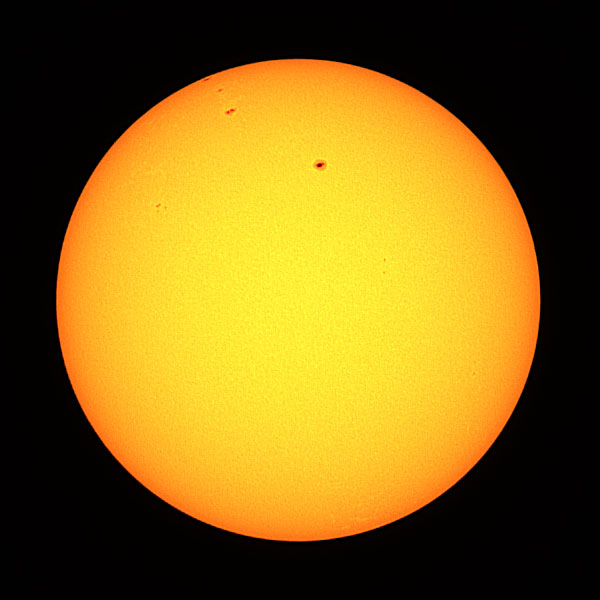
Sun Spots from March 1, 2026
A few more sun spots...
 |
 |
|
20 subs stacked |
Ditto, post-processed with Stellar Studio |
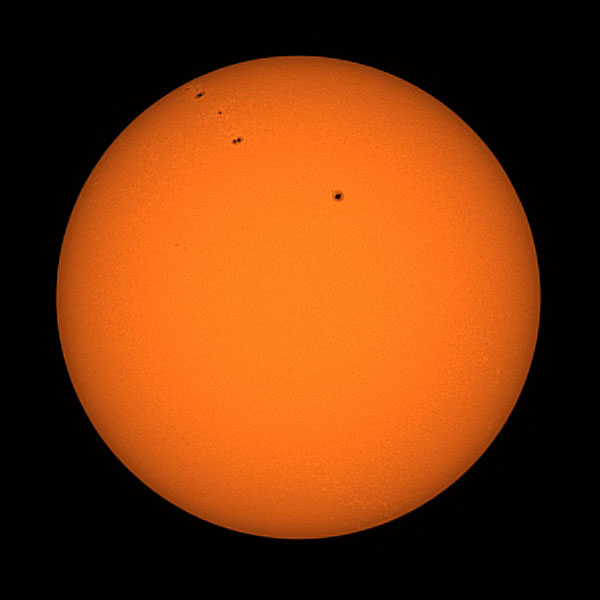
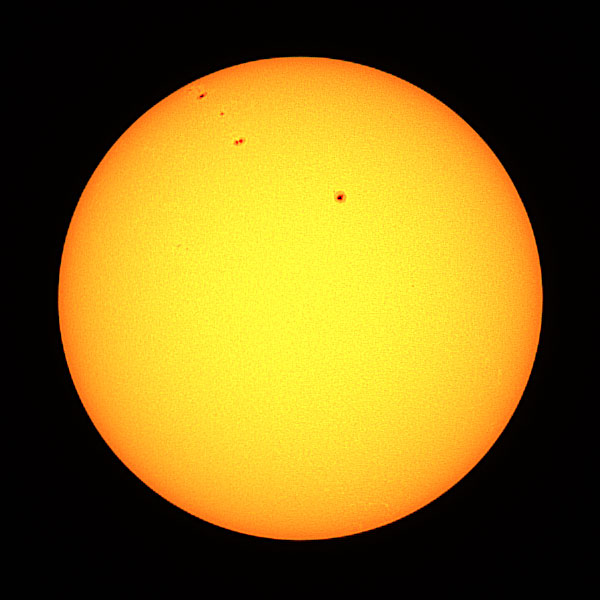
Sun Spots from March 2, 2026
And even more on the next day...
 |
 |
|
20 subs stacked |
Ditto, post-processed with Stellar Studio |
Partial Solar Eclipse on August 12, 2026
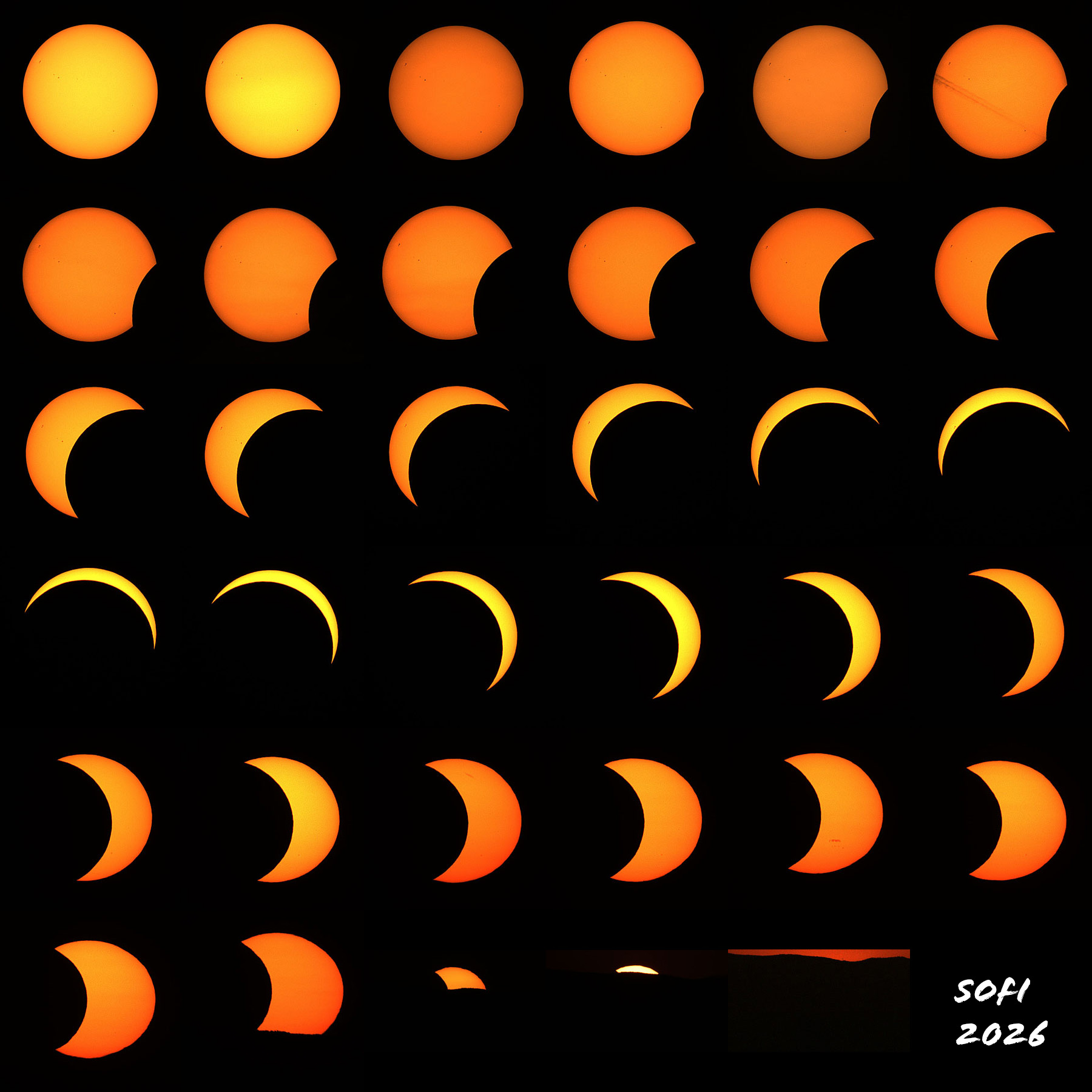
On August 10, 2026, a partial solar eclipse was visible in parts of Europe, that I observed with my DwarfLab Dwarf mini smart telescope (with a solar filter). For more information, see page Partial Eclipse 2026.
Here I just presernt a collage that I created from my photos. All in all, the Dwarf mini mastered this task very well!
First Conclusions
Observations of the sun are easily conducted with the Dwarf mini and its solar filter. As with the Vesperas, however, I am somewhat disappointed of the low sharpness of the photos/sunspots. First you first have to roughly align the telescope with the sun by hand and then by using the joystick to start the observation, of course, after the magnetic sun filter has already been attached.
In August 2026, I used the Dwarf mini for observing a partial solar eclipse, and it mastered this task very well. I tracked the sun during the complete eclipse and took now and then photos. For more information, see page Partial Eclipse 2026.
All in all, the Dwarf mini is well suited for getting a quick overview of the actual sun spots. But it is not suited to reveal any details. And it is alos suited to observe partial sun eclipses.
Links
- The Sky Live: theskylive.com
- Dwarf Mini Smart Telescope – Review & Tutorial (Wido's Astroforum): astroforumspace.com/dwarf-mini-smart-telescope-review-tutorial/ - YouTube-Video dazu: www.youtube.com/watch?v=4SoaQqLWR0s
- Dwarf Mini im Test: Das Technik-Wunder und Spaßgerät für die Hosentasche (Dimitrios Georgomanos): www.blickohnegrenzen.de/2026/02/06/dwarf-mini-im-test-das-technik-wunder-und-spassgeraet-fuer-die-hosentasche (in German)
- Dwarf mini documentation (DwarfLab): help.dwarflab.com/en/docs/dwarf-mini-smart-telescope
- DWARF mini User Manual: help.dwarflab.com/en/docs/DWARF-mini-Smart-Telescope-User-Manual
- Get to Know the Files Stored in DWARF mini: help.dwarflab.com/en/docs/help-doc
- DWARF mini Lighting Effects: help.dwarflab.com/en/docs/help-doc-mini-lighting-effects
- How to View DWARF mini Files Wirelessly Using a Computer: help.dwarflab.com/en/docs/help-doc-1
- FAQ & Troubleshooting Guide for DWARF Users: help.dwarflab.com/en/docs/help-doc-2
- Mini Tripod with hydraulic Head (DwarfLab): dwarflab.com/products/tripod-for-dwarf-3 (shown for Dwarf 3)
- The Tripod Setup and Usage (DwarfLab video): help.dwarflab.com/en/docs/tripod-setup-and-usage?product=dwarf-3 (shown for Dwarf 3)
- DWARF mini EQ Mode Setup Guide (DwarfLab video): https://help.dwarflab.com/en/docs/dwarf-mini-equatorial-setup-guide?product=dwarf-mini
- See also my page offering Astronomy Links.
|
made by  on a mac! on a mac! |


| 21.08.2026 |  |