Introduction | Map | Find/Identify | Sketch | My Best Own Photos | My Own Observations | References || Appendix: My Own Photos
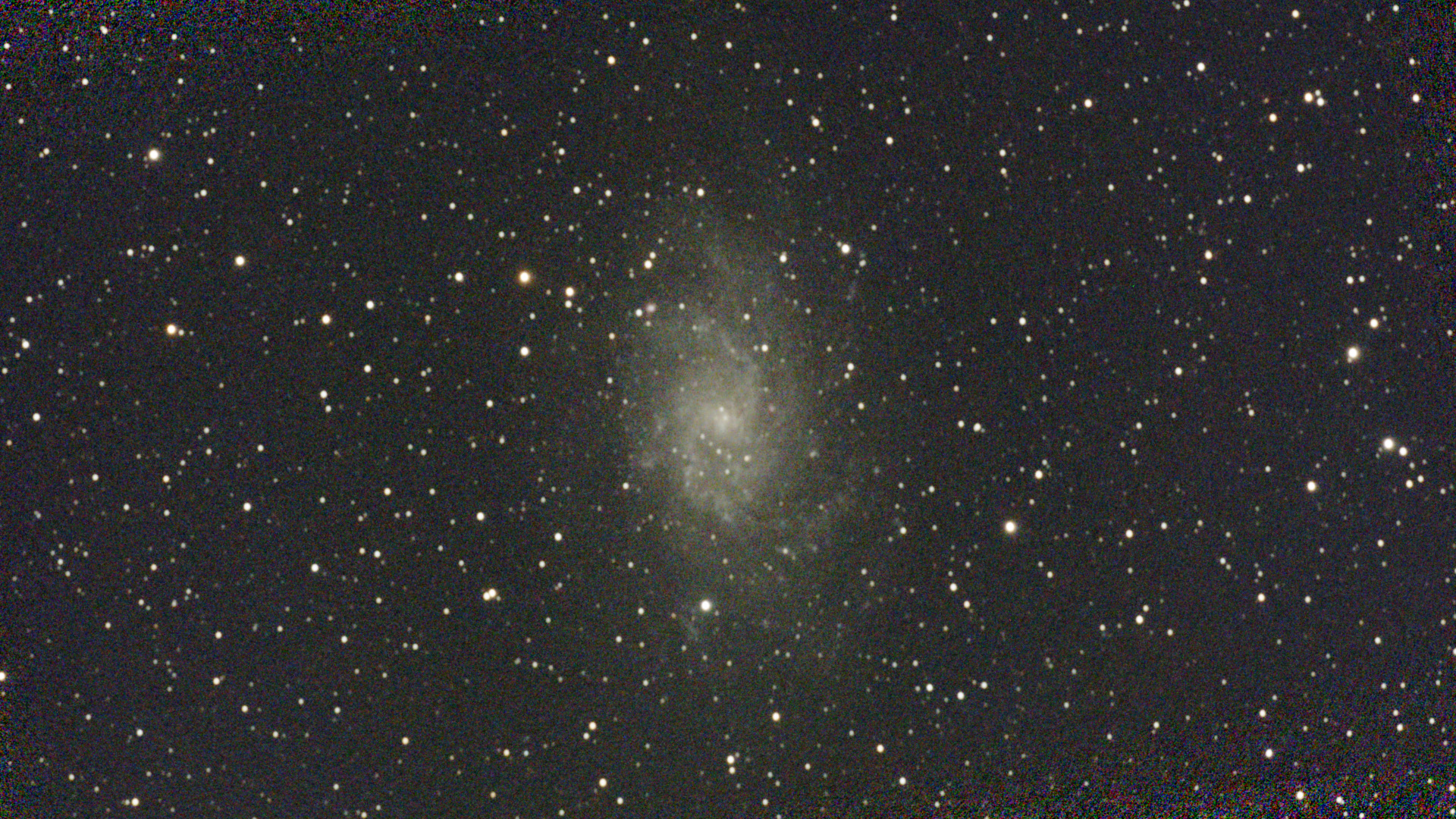
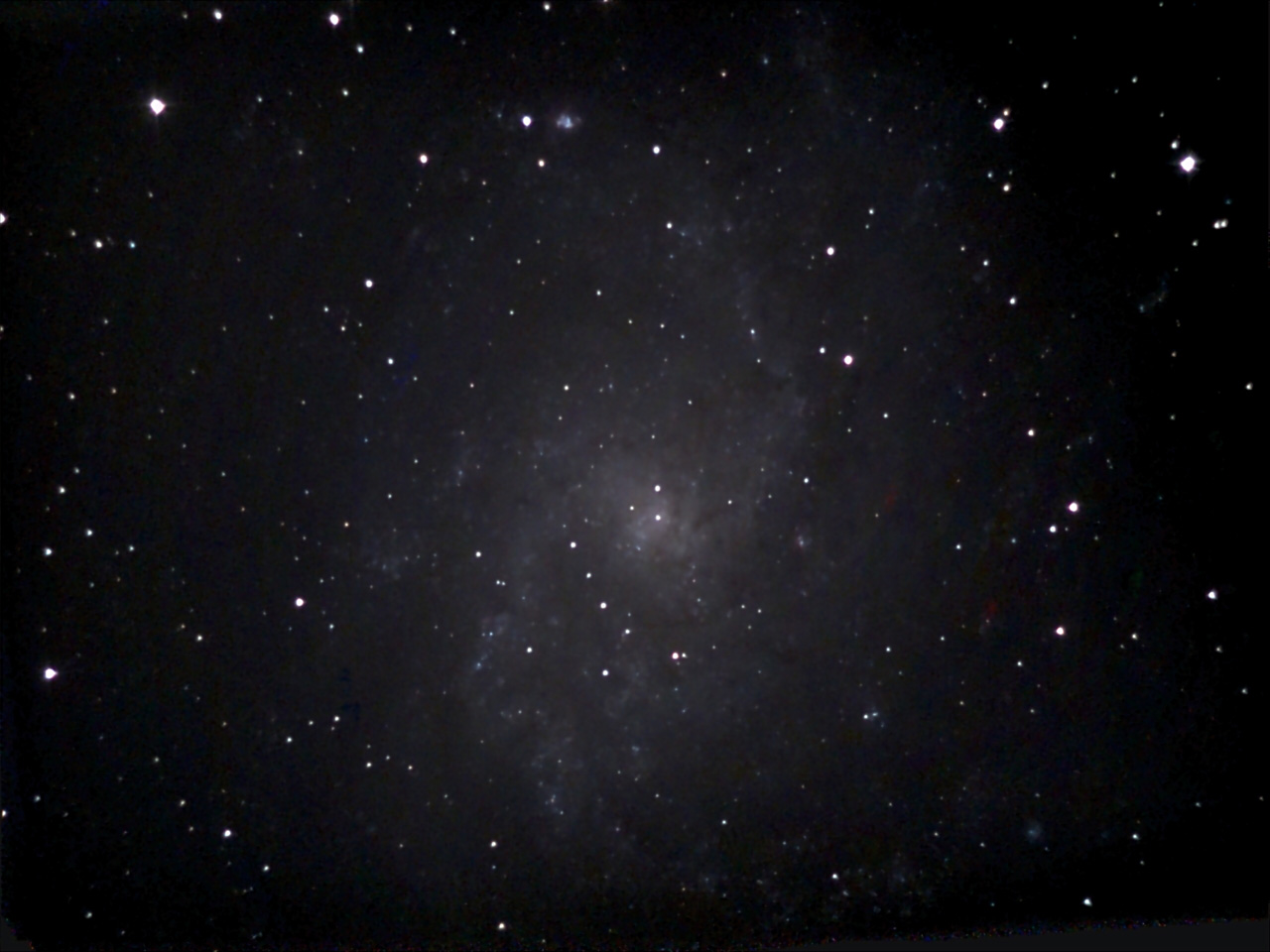
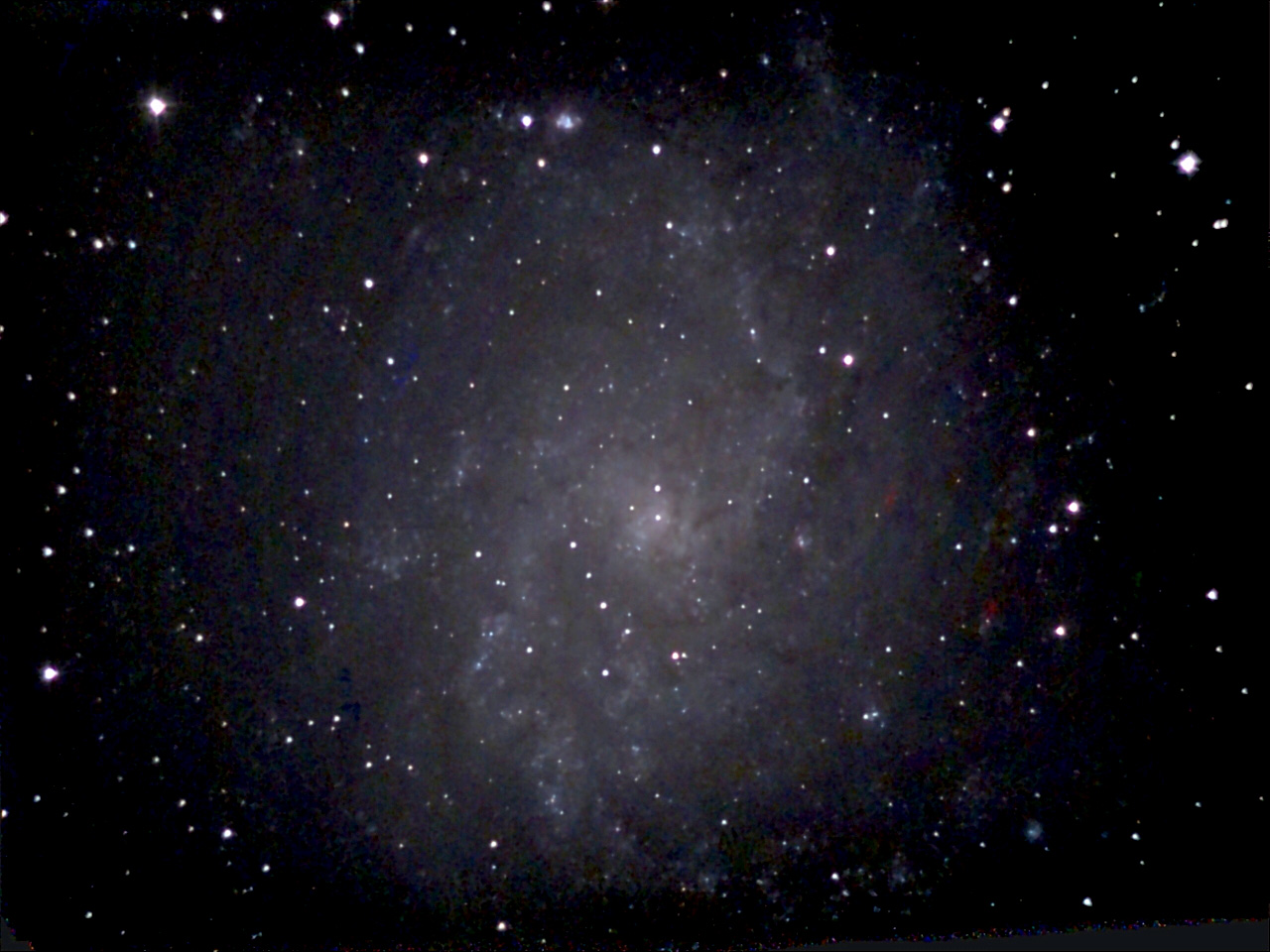
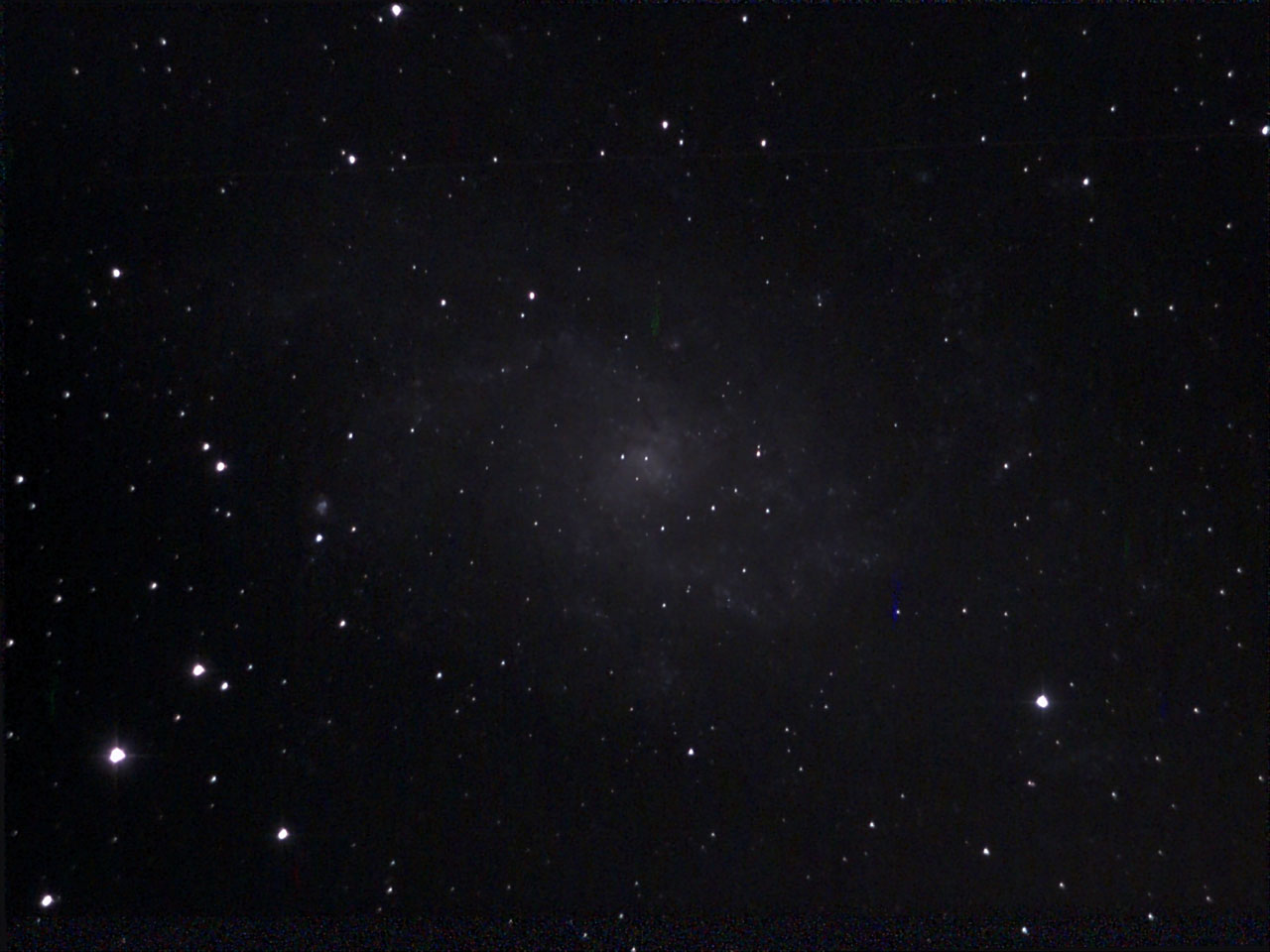
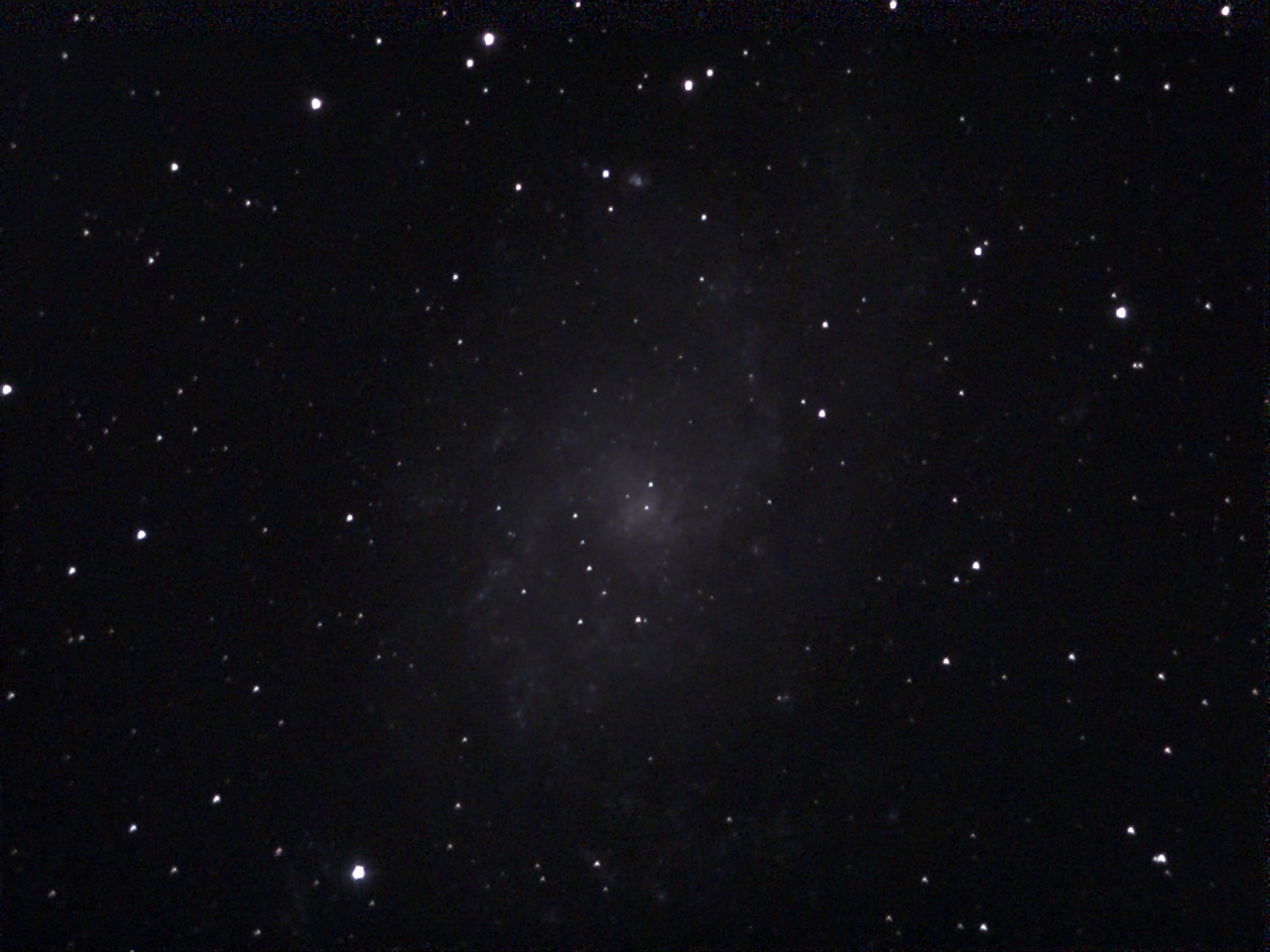
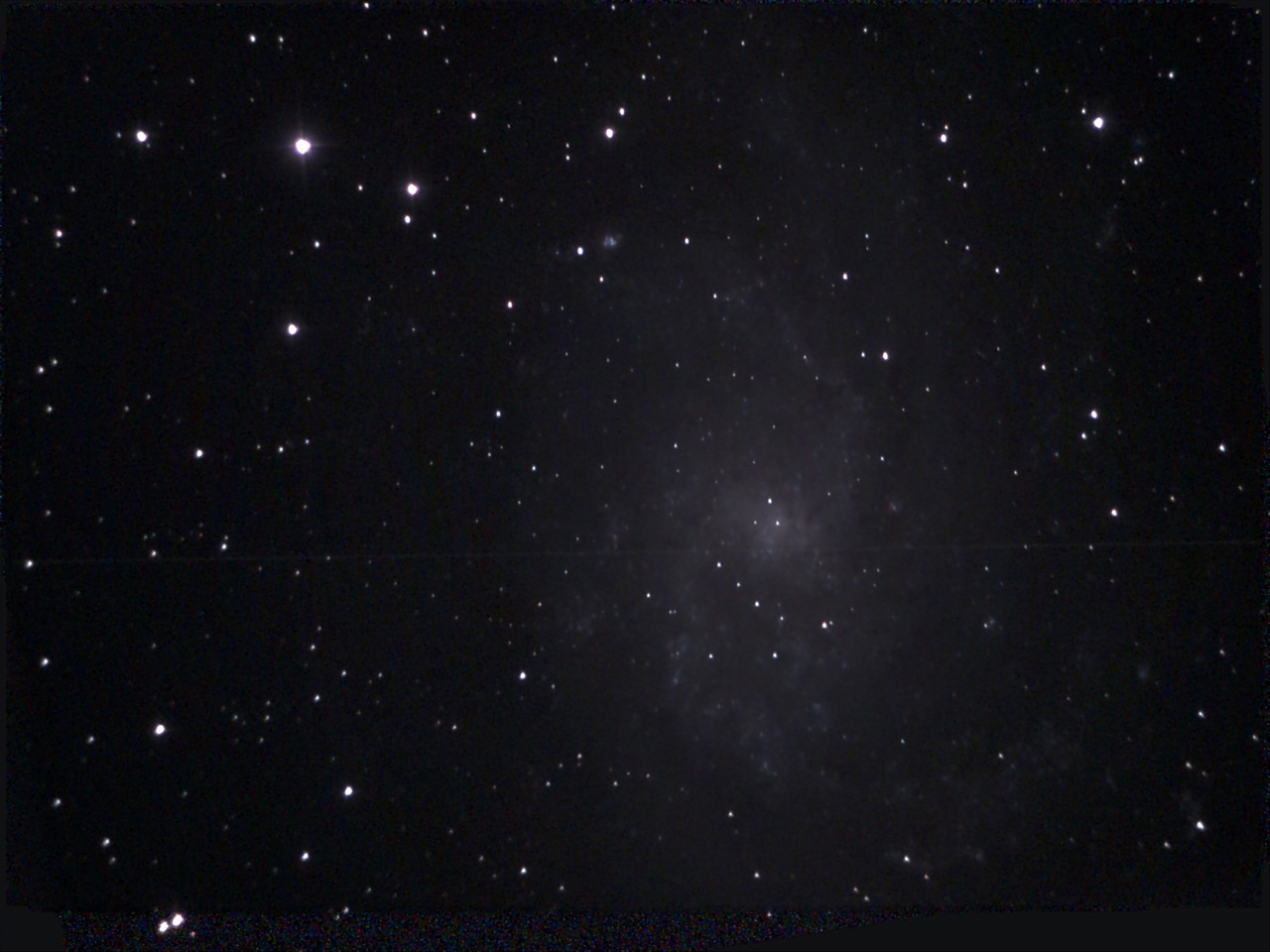
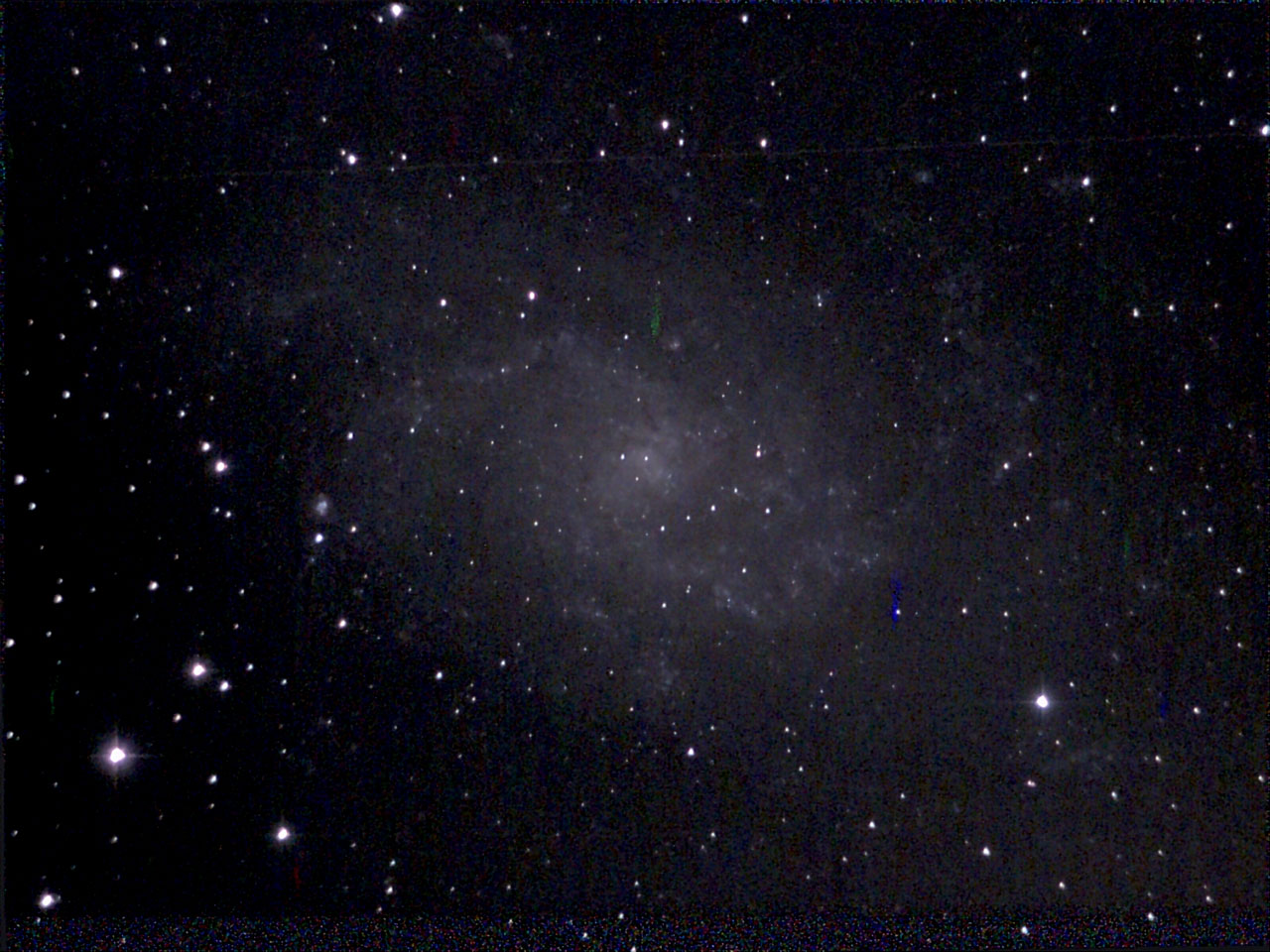
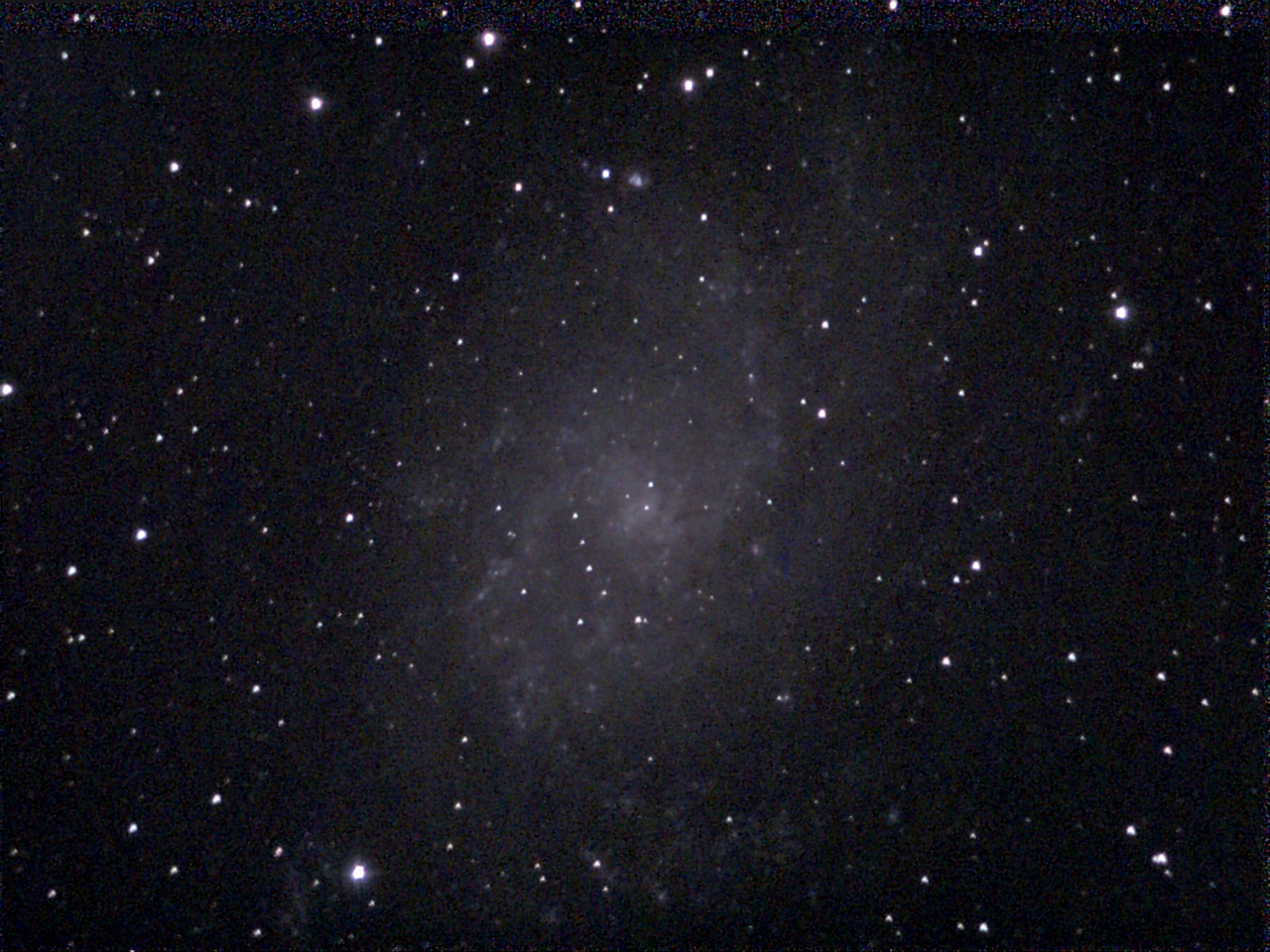
On this page I collect my observations of the Triangulum galaxy M 33 (NGC 598) in the constellation Triangulum, including the enclosed HII region NGC 604.
The Triangulum Galaxy M 33 in constellation Triangulum is the third largest galaxy in the "local group," which also contains our Milky Way and the Andromeda Galaxy M 31. It is considered to be the most distant celestial object visible to the naked eye. I had problems even with my small refractor to catch just a glow at all. According to Stoyan, the problem with this DSO is that the exit pupil is too low. According to this author, the best magnification for a 3" telescope is 12 x. Thus, for my PS 72/432 it would be even less (10 to 11 x...). Such low magnifications also require a very dark sky so that there is enough contrast to the sky background... In France, I was able to catch at least a faint glow in autumn 2018... With "smart telescopes", hoewever, M 33 can be easily observed.
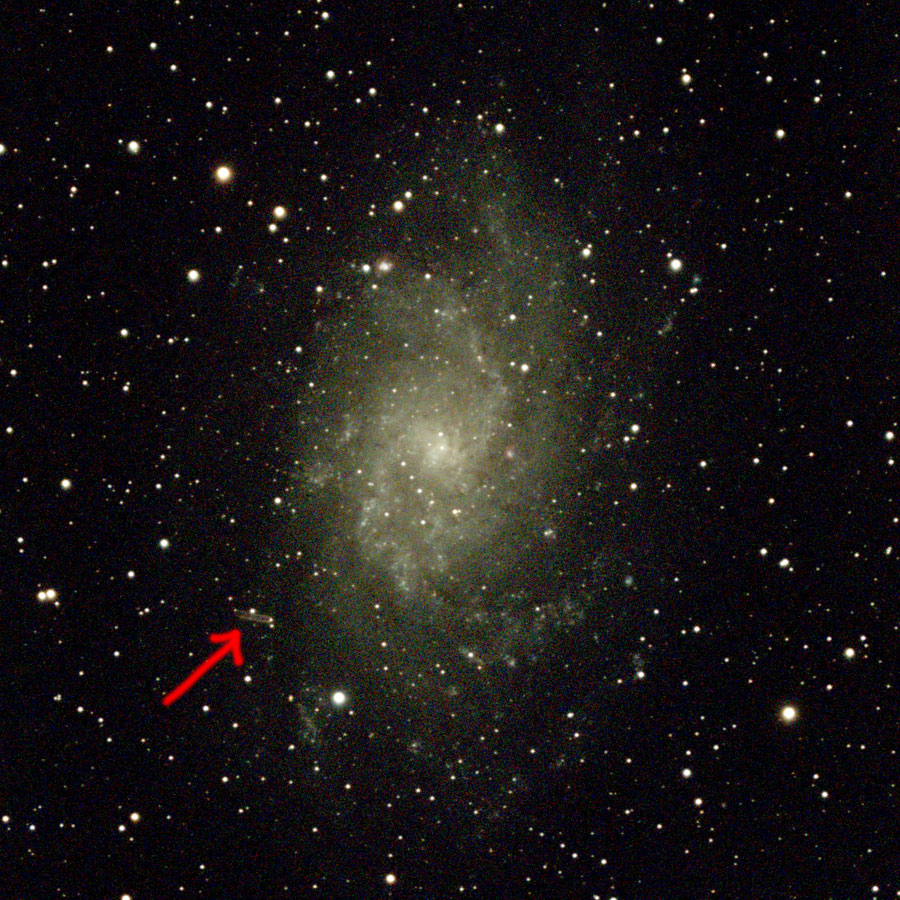
On January 1, 2026 the asteroid Eros passed the galaxyM 33. I photographed this with my Vespera Pro;more on this on page Eros Passes Messier 33 (2026).
| M 33 (NGC 598) | NGC 604 (H II Region) | |
| Size: 30' x 20' / 70.8 x 41.7(Stoyan/Wikipedia) Distance: 2.76 million light years (Wikipedia) Rating: *** (Stoyan) |
Size: 2' (Wikipedia) Distance: 2.76 million light years (Wikipedia) Rating: --- |
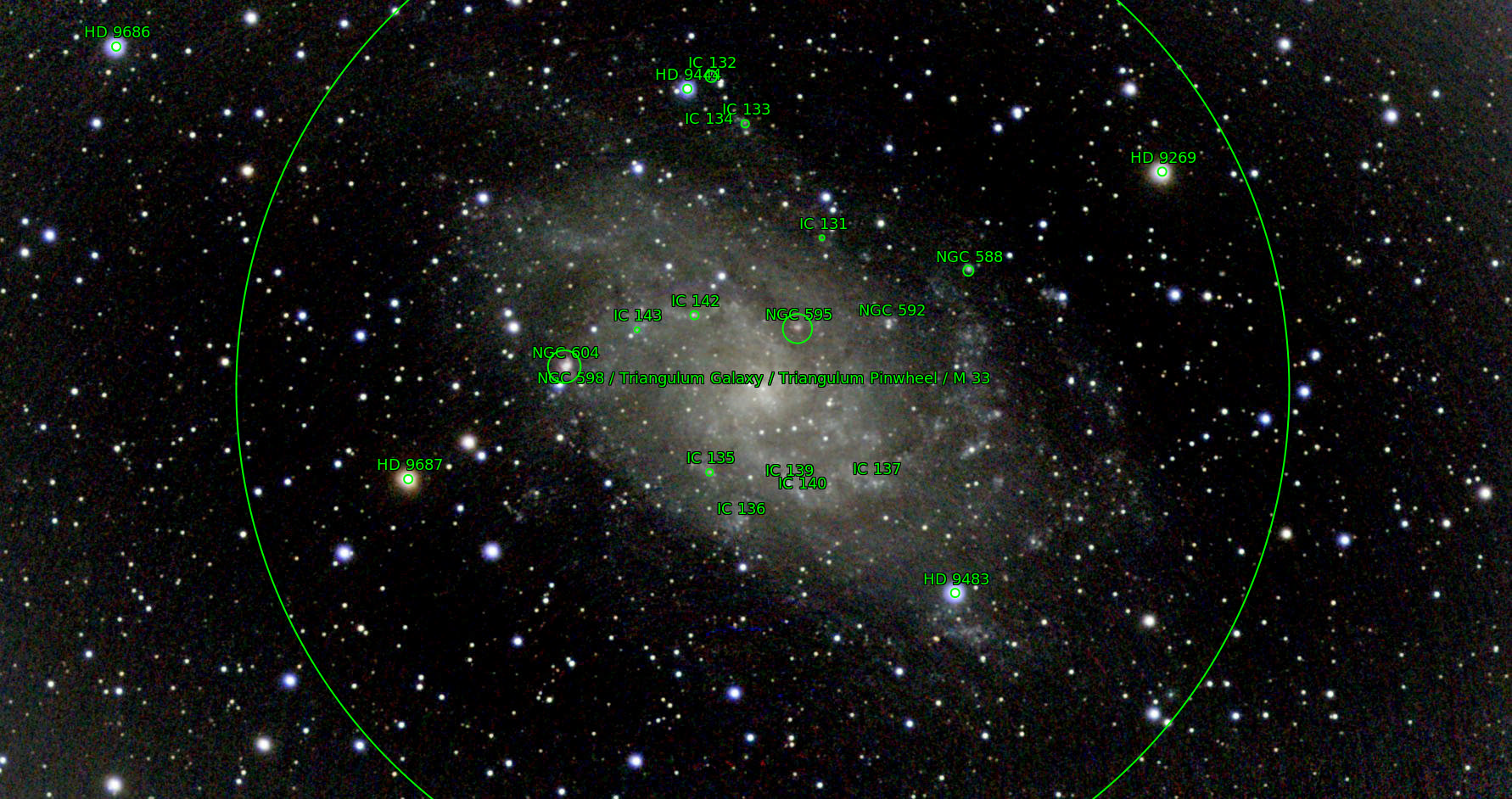
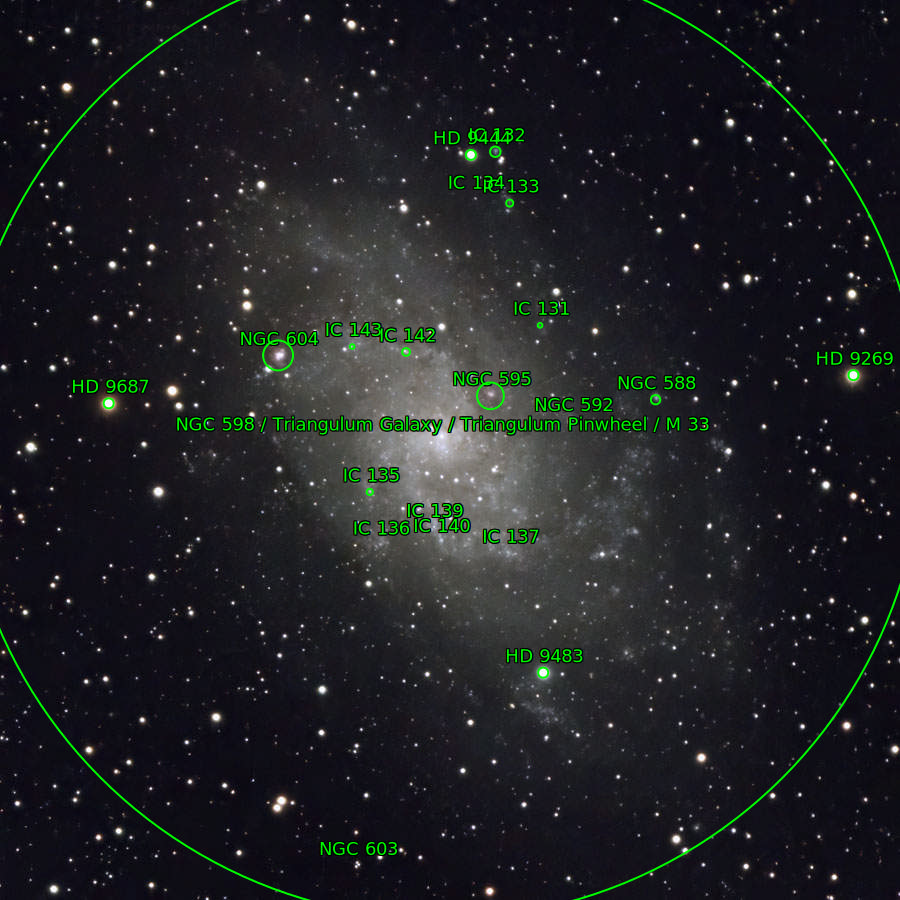
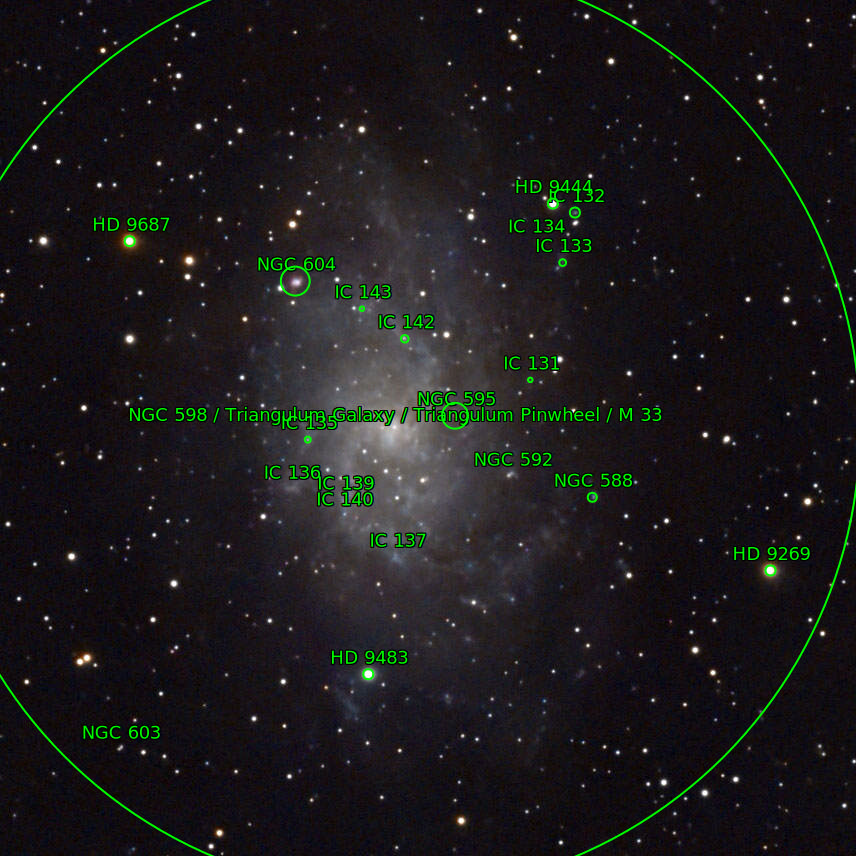
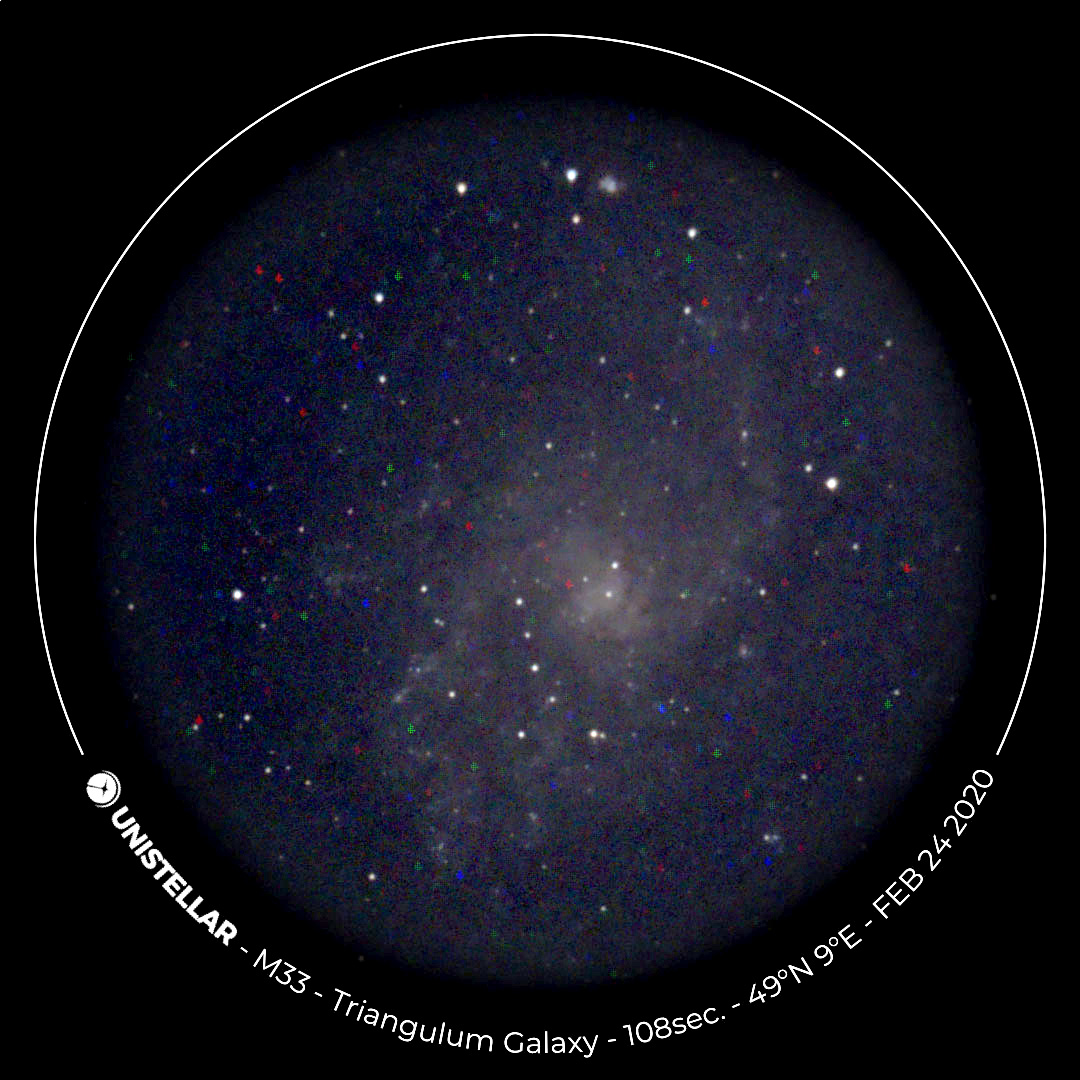
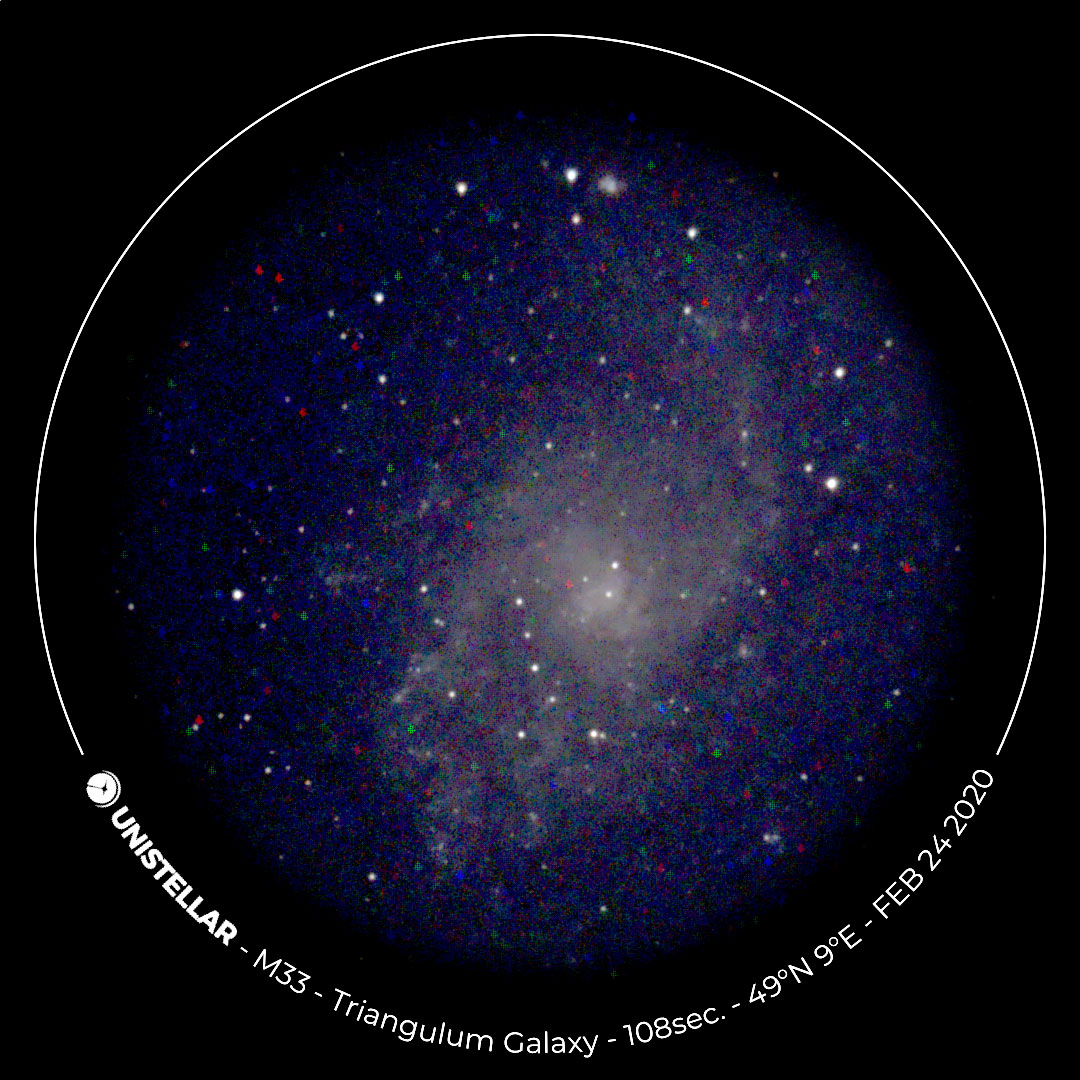
The galaxy M 33 includes a number of H II regions (see below), which correspond to galactic emission nebulae, the brightest of which is NGC 604 that I discovered on an eVscope photo in February 2020 (later, I found all the major H II regions). For more information on H II regions in M 33, see page Vaonis Vespera - H II Regions. Only the evaluation by nova.astrometry.net is shown here (M 33 , Oct 30, 2022):
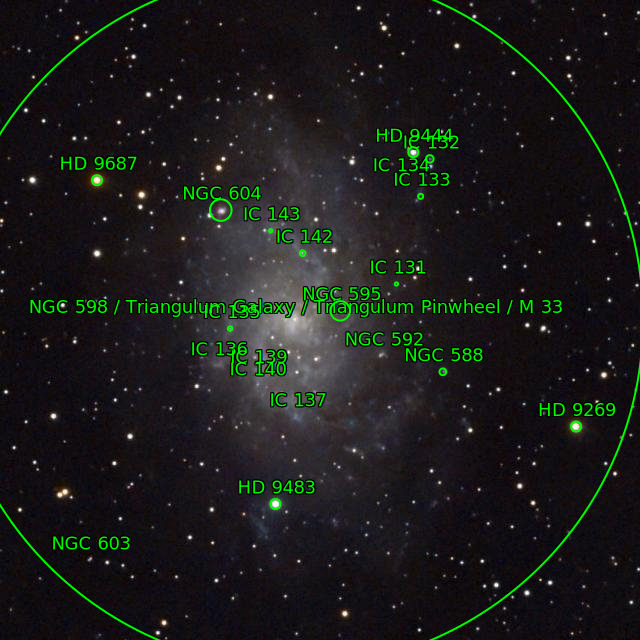
H II regions in M 33: IC 131, IC 132, IC 133, (IC 134*,) IC 135, IC 136, IC 137, IC 139, IC 140, IC 142, IC 143, NGC 588, NGC 592, NGC 595, NGC 604
*) IC 134 is a star
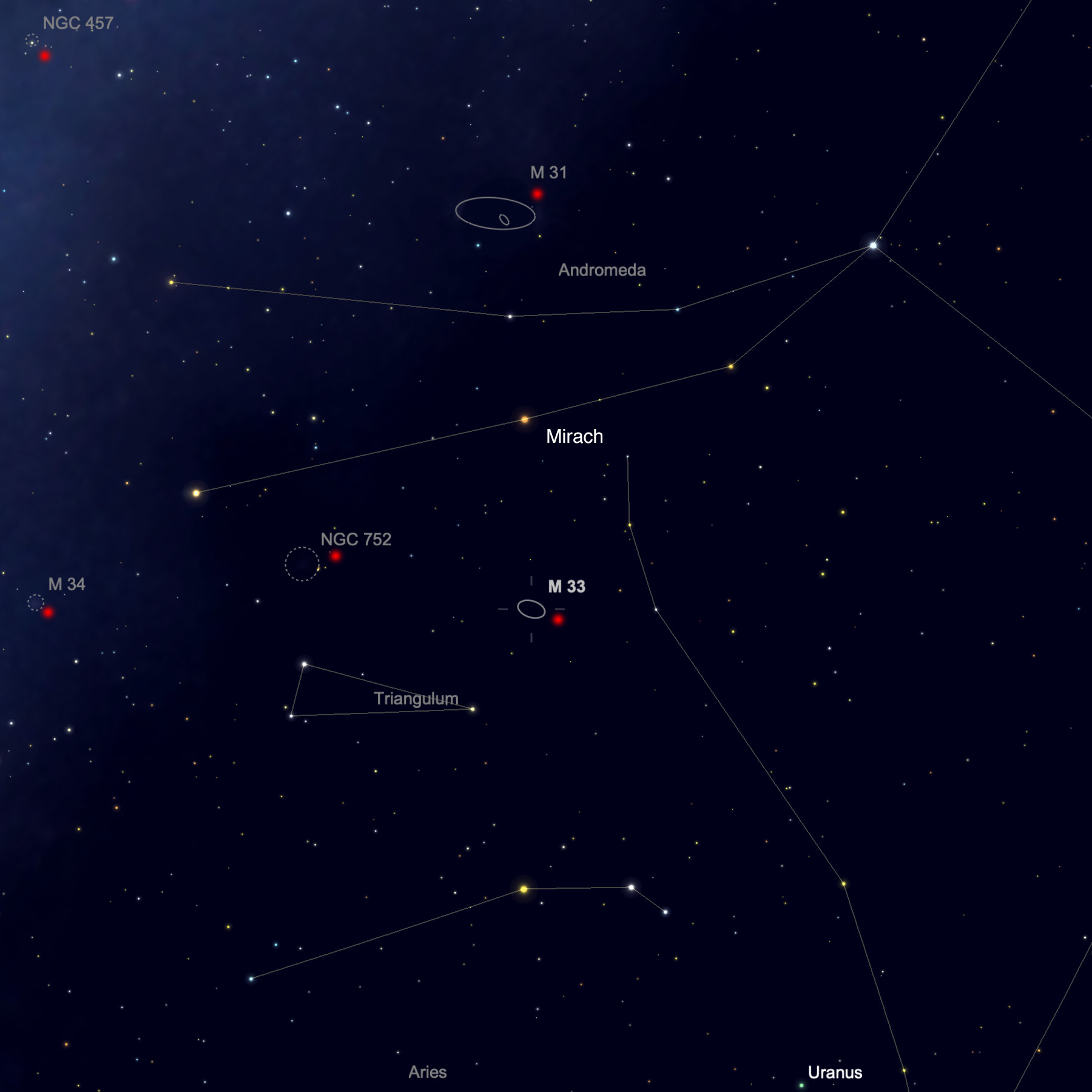
M 33 (Triangulum Galaxy) in the constellation Triangulum; the Andromeda Galaxy M 31 is also marked, as well as several open star clusters (Image Courtesy of SkySafari Astronomy, www.simulationcurriculum.com)
Find: I found the Triangulum Galaxy M 33 by moving down from the Andromeda Galaxy M 31 to the bright star Mirach - and then moved about the same distance down in the same direction. See map below:
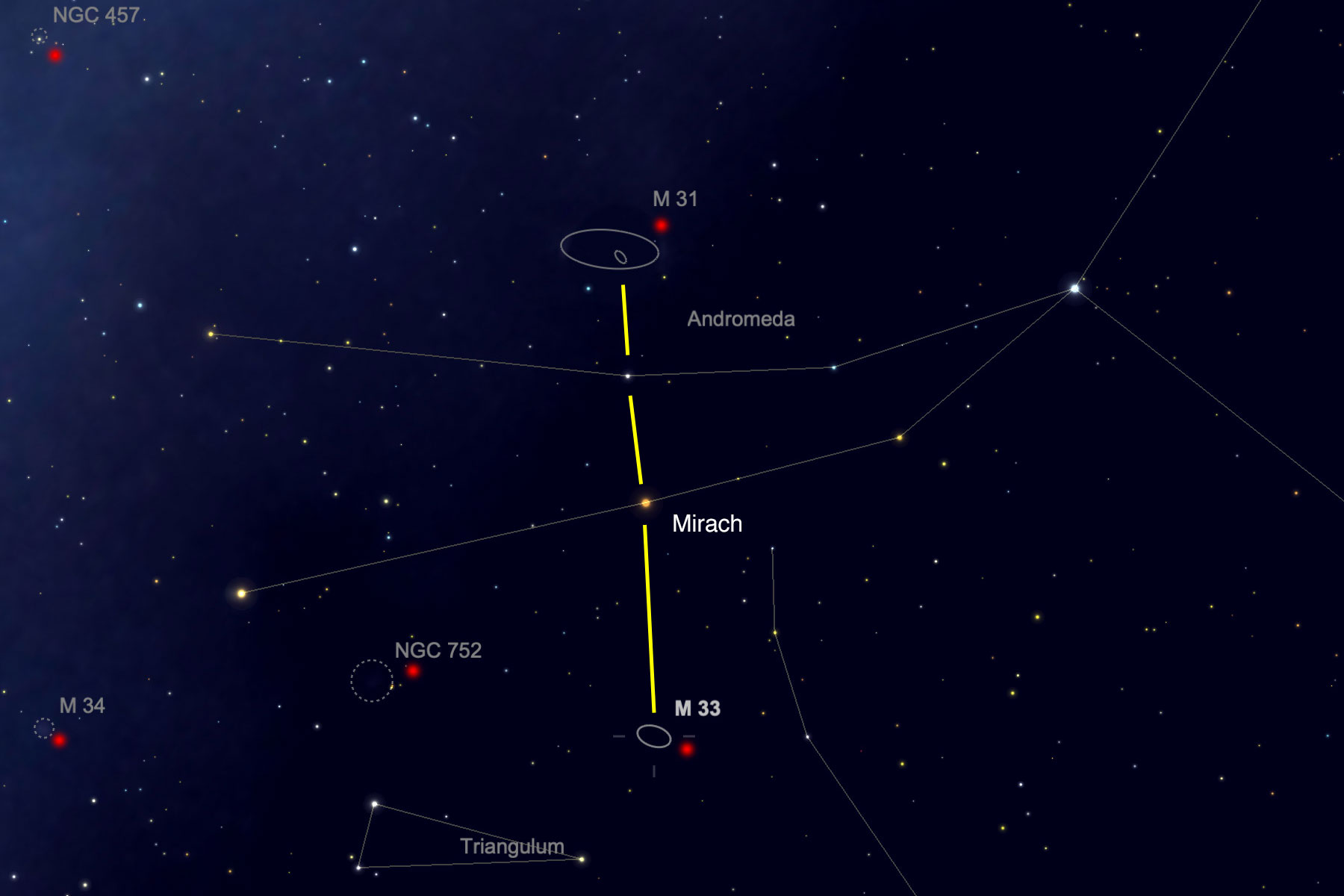
Identify: Once you have found M 33, you can be sure that it is M 33. (Image Courtesy of SkySafari Astronomy, www.simulationcurriculum.com)
The sketch by Michael Vlasov (DeepSkyWatch.com) provides an impression of what I guessed of the Triangulum Galaxy M 33: Sketch of the galaxy M 33 by Michael Vlasov (Copyright © Michael Vlasov 2016)
Note: I only have the author's permission to link to the sketch.
 |
 |
|
||
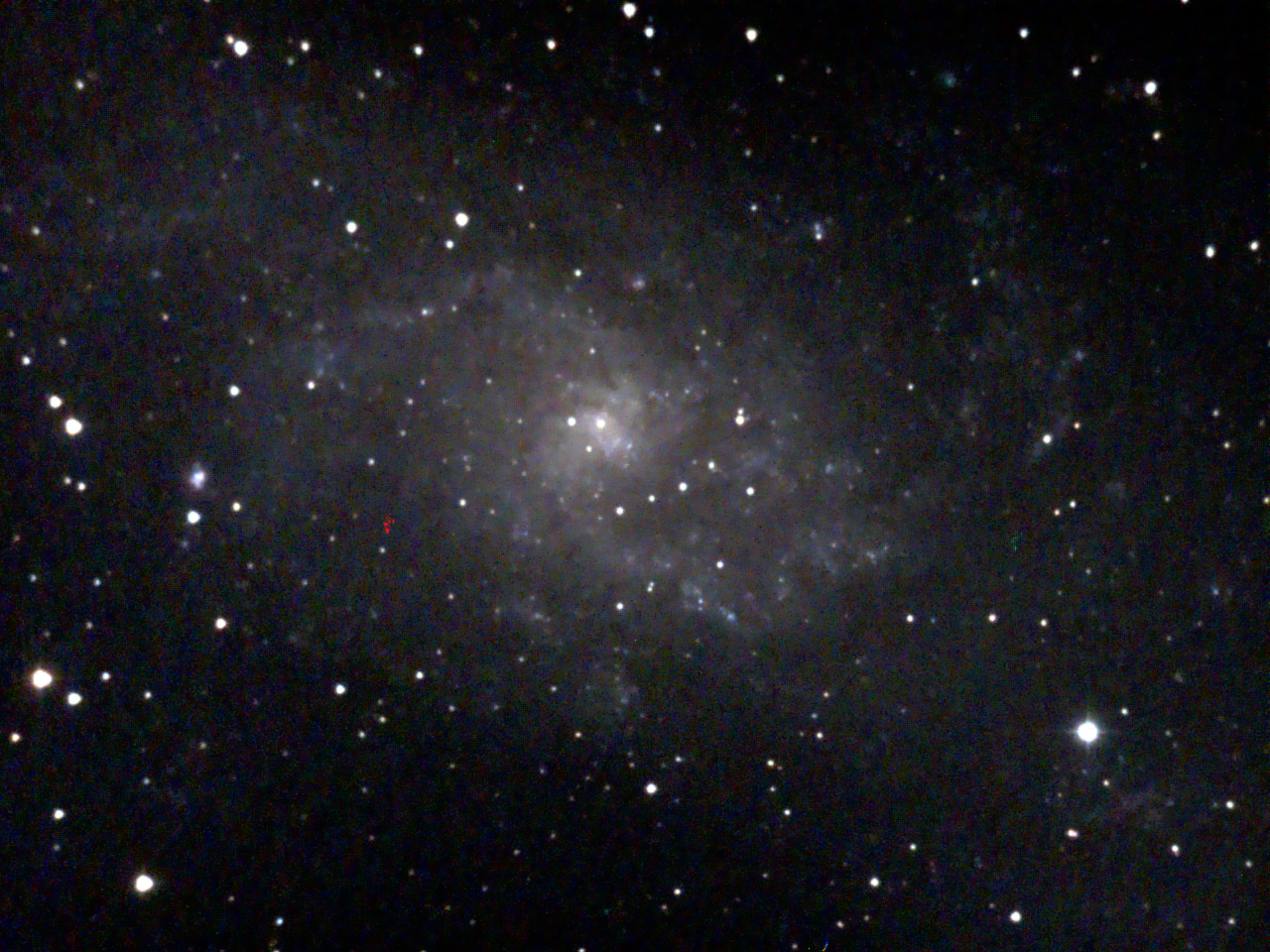
M 33 - Nov 14, 2020 |
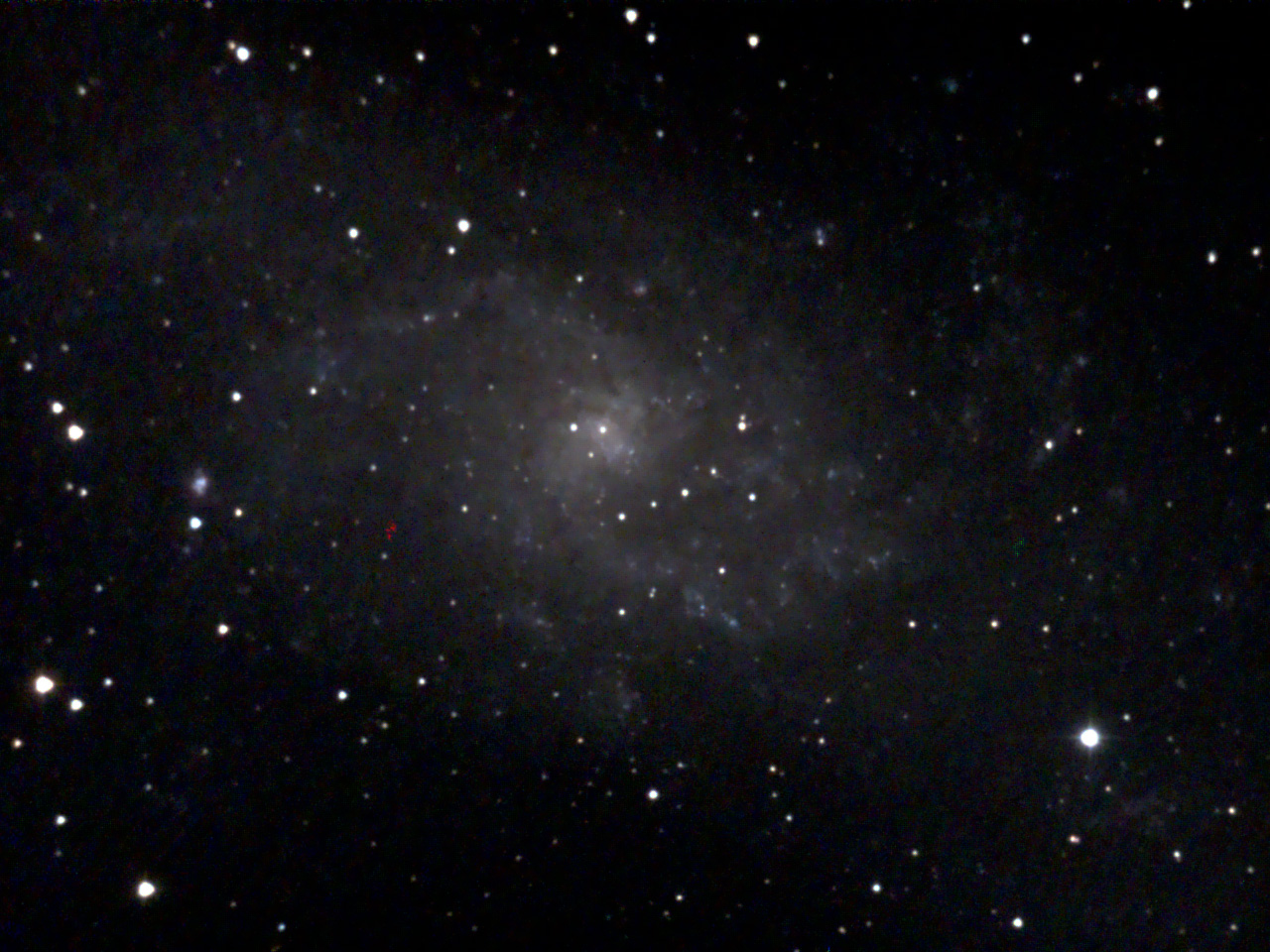
M 33 - Nov 14, 2020 |
M 33 - Nov 14, 2020 |
||
 |
 |
|
||
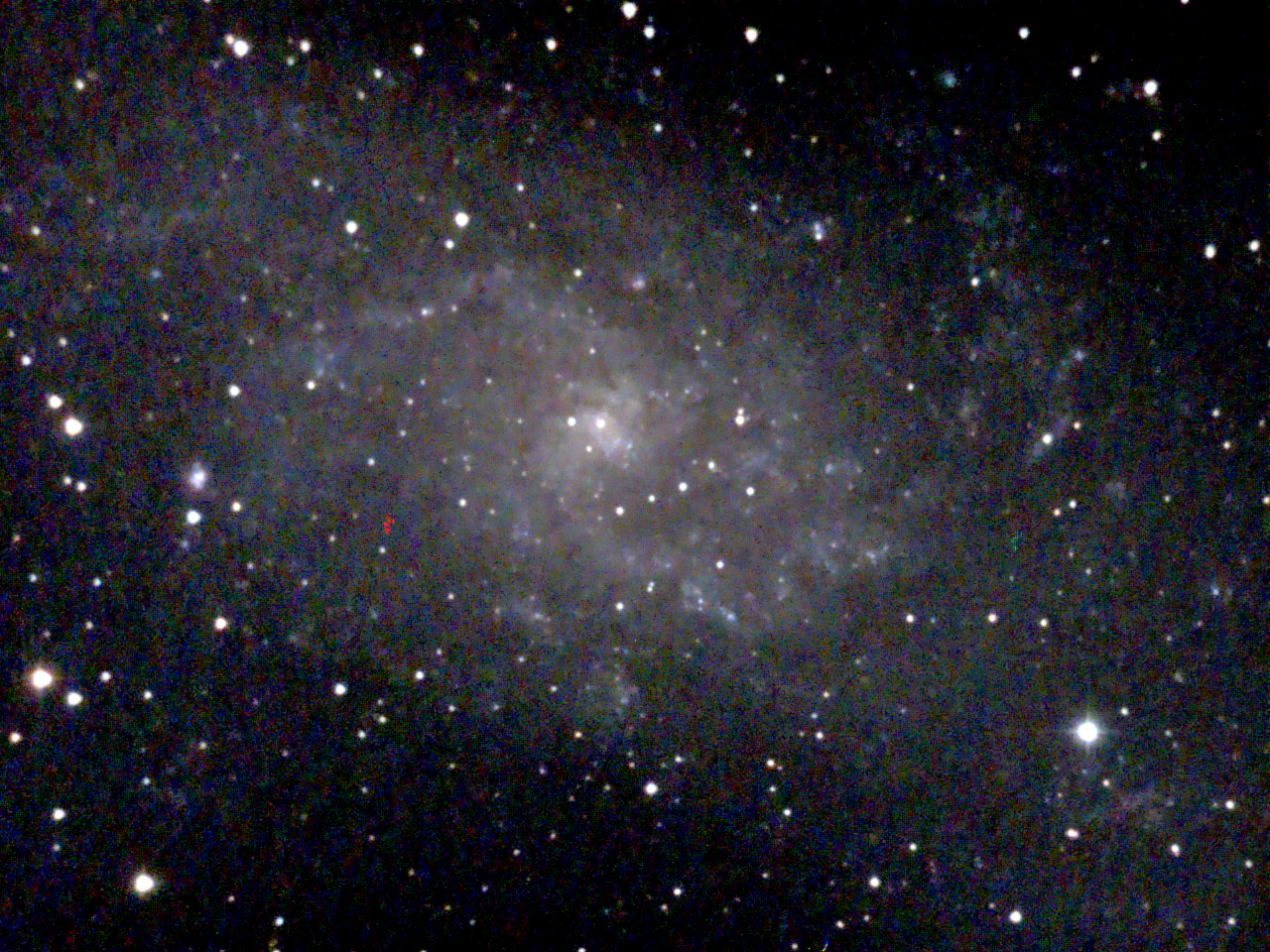
M 33 - Nov 14, 2020, processed |
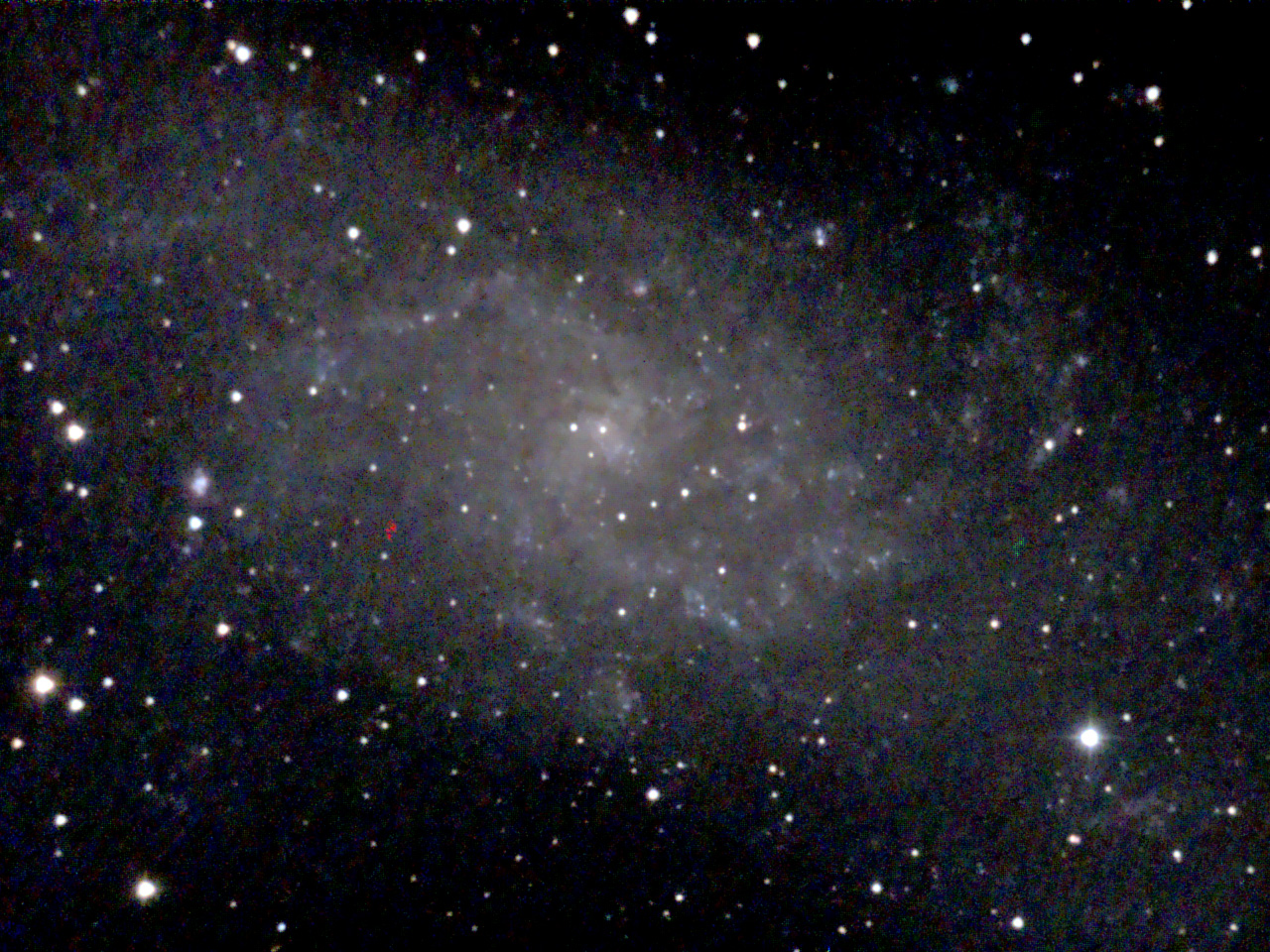
M 33 - Nov 14, 2020, processed |
M 33 - Nov 14, 2020, processed |
||
 |
 |
 |
||
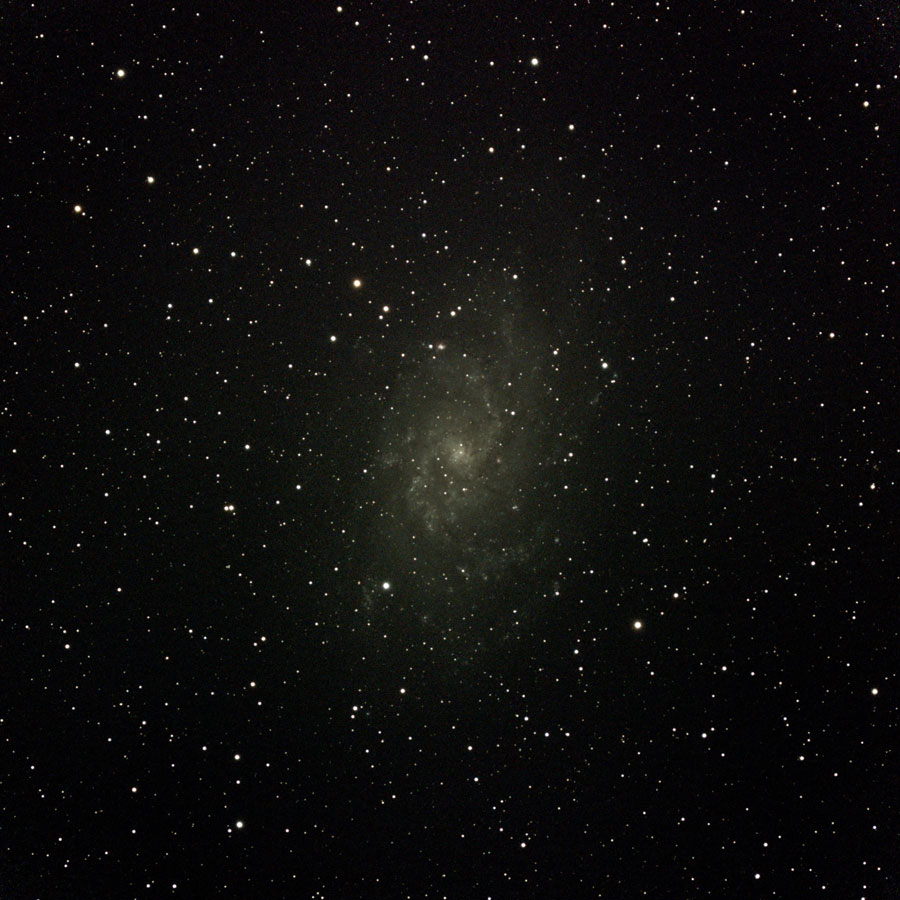
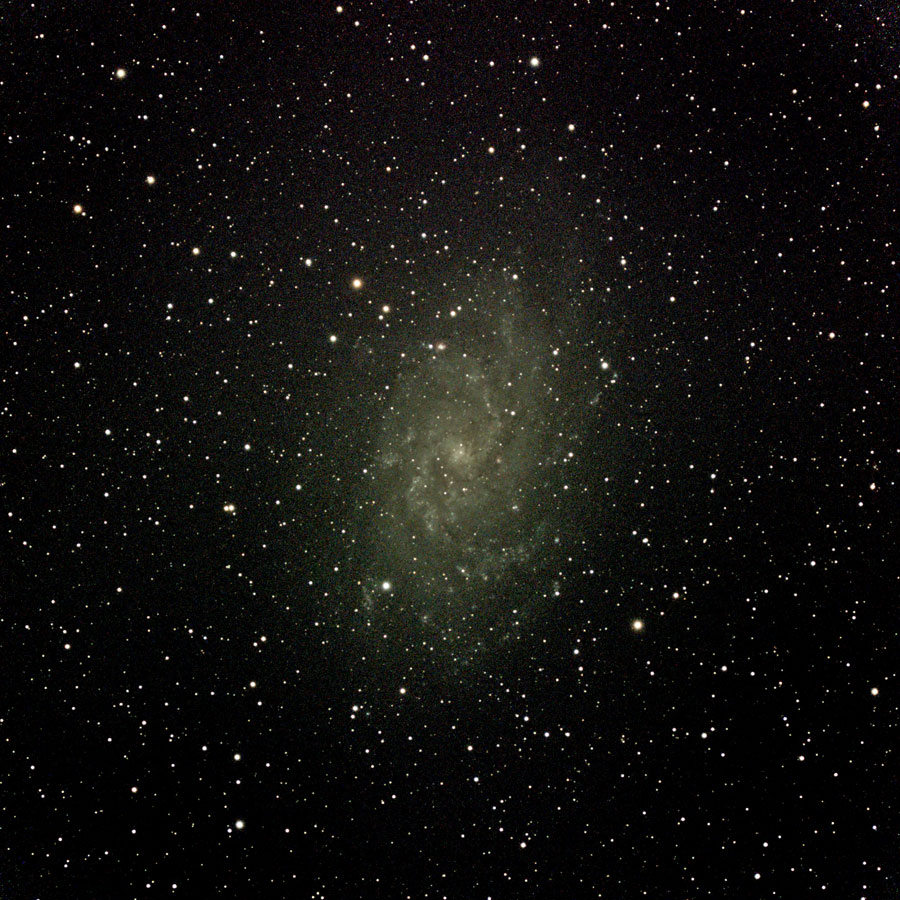
M 33 - Jan 24, 2022 |
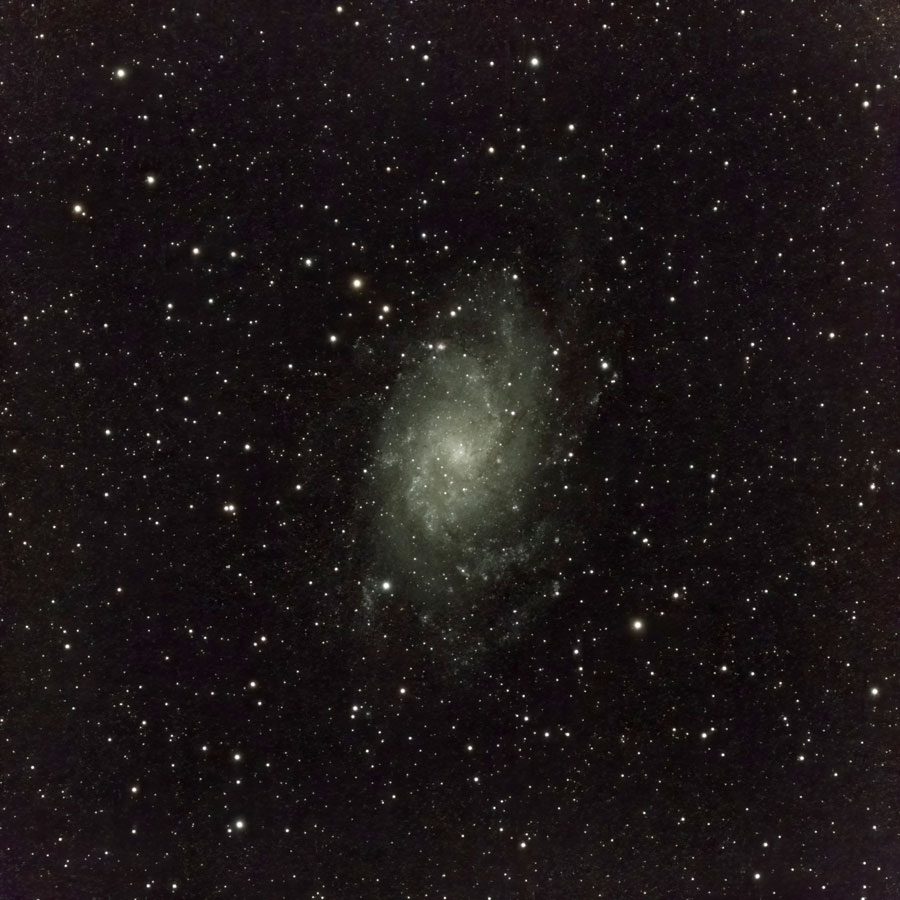
M 33 - Jan 24, 2022, photo left processed |
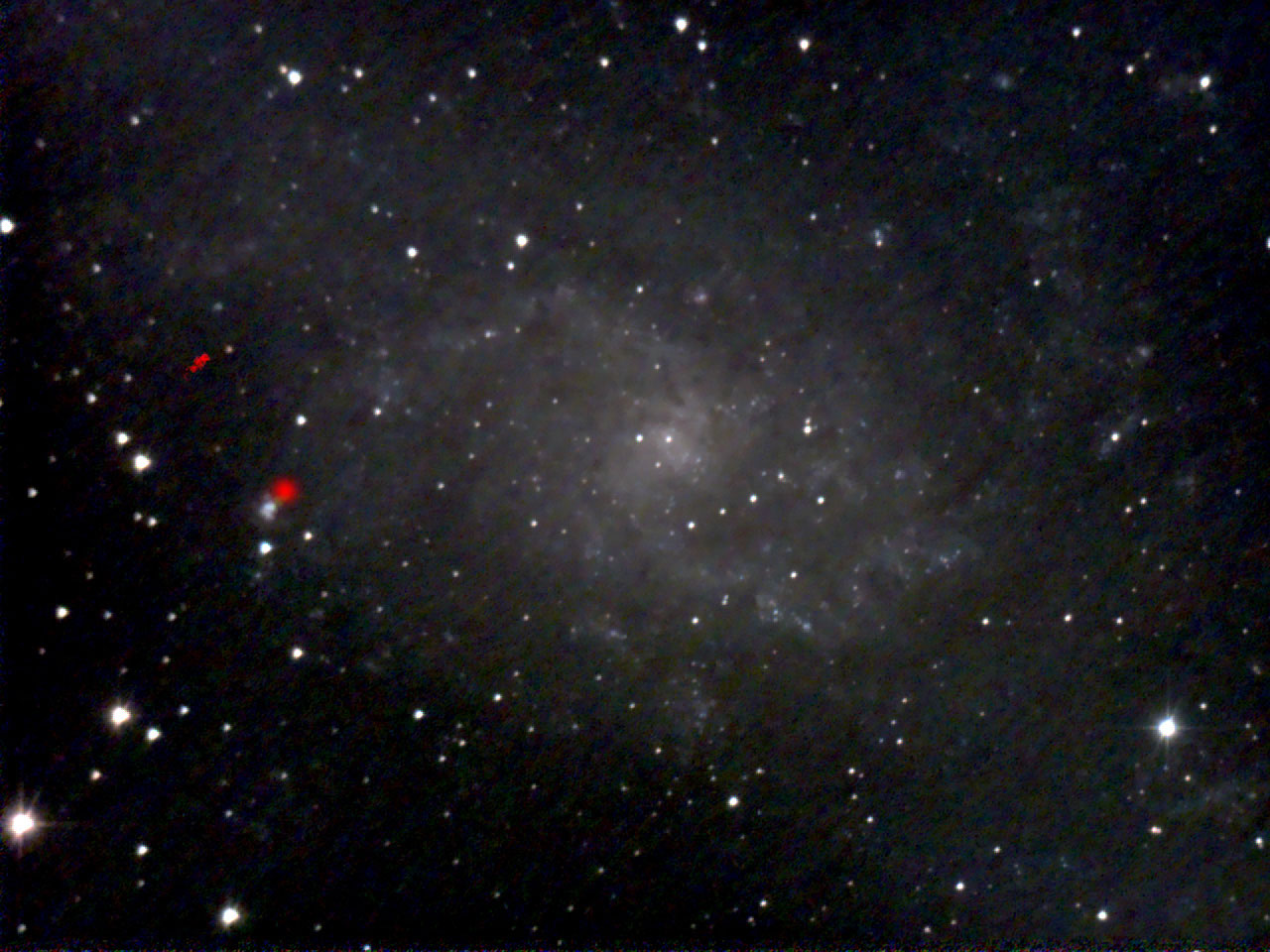
M 33 with NGC 604 - Sep 7, 2020, processed |
 |
 |
 |
||
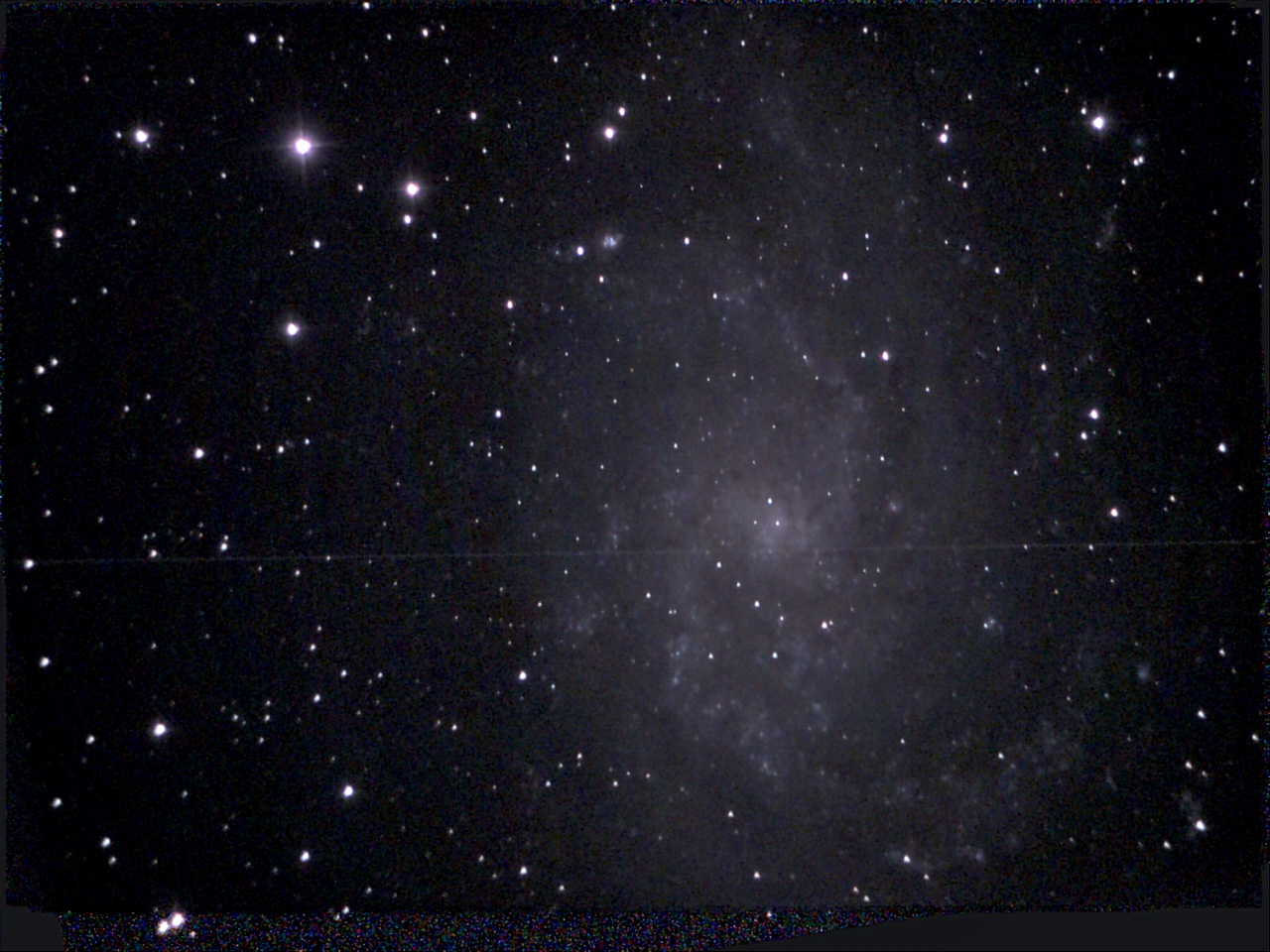
M 33 - Nov 2, 2022 (third sample) |
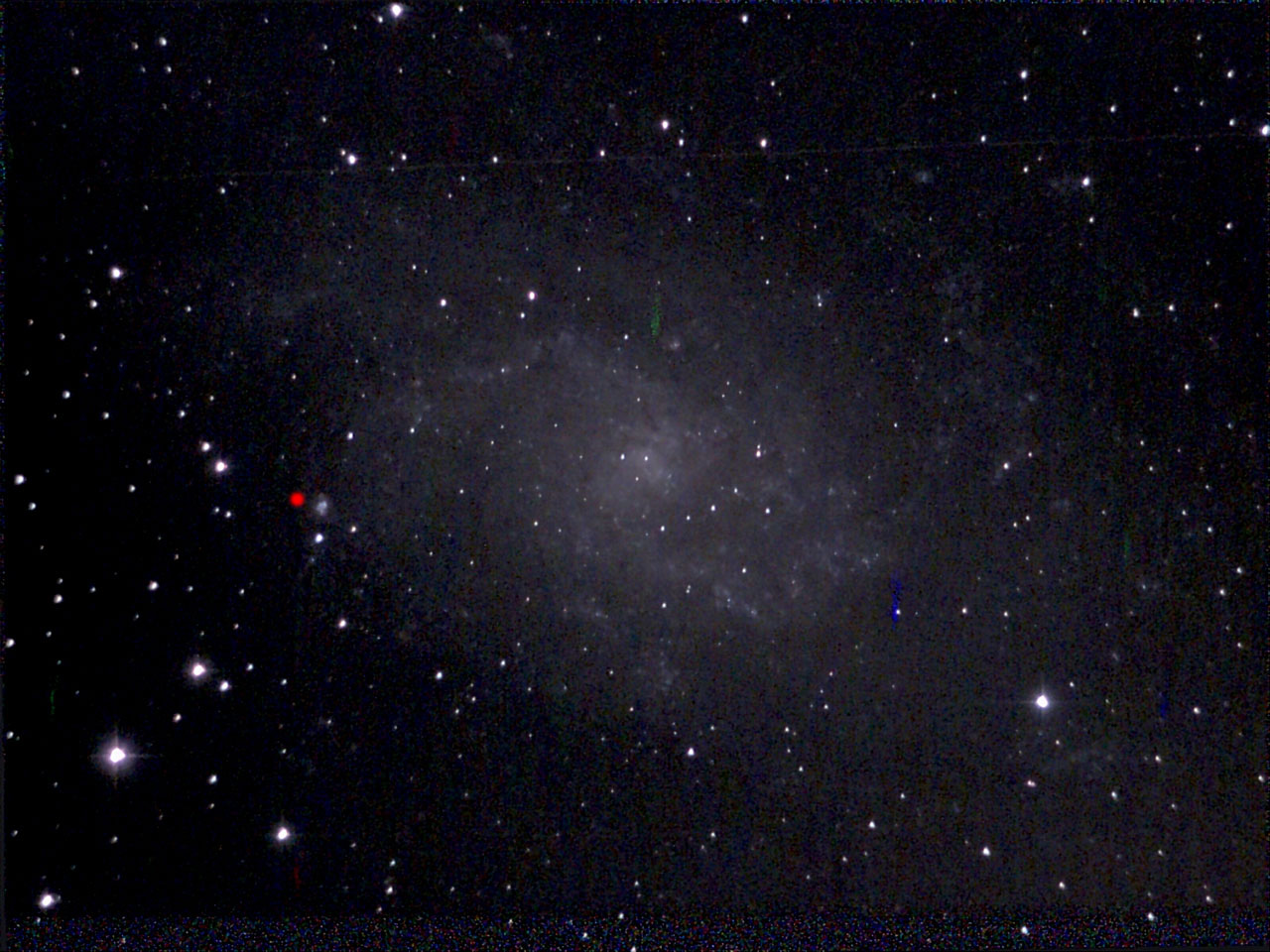
M 33 - Dec 17, 2022 (third sample) |
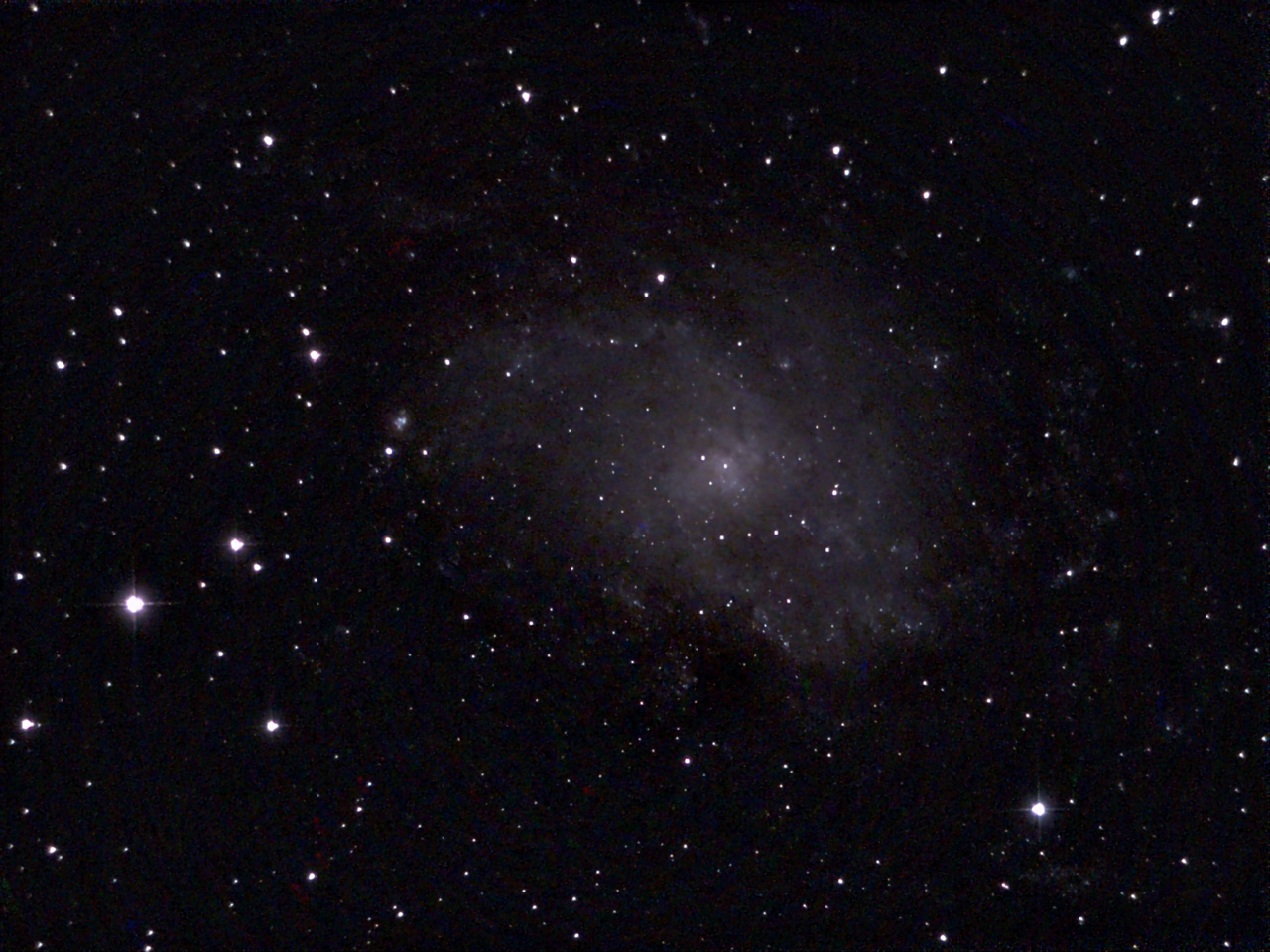
M 33 - Jan 18, 2023 (third sample) |
||
 |
 |
 |
||
M 33 - Nov 2, 2022, photo on top processed |
M 33 - 17.12.2022, photo on top processed |
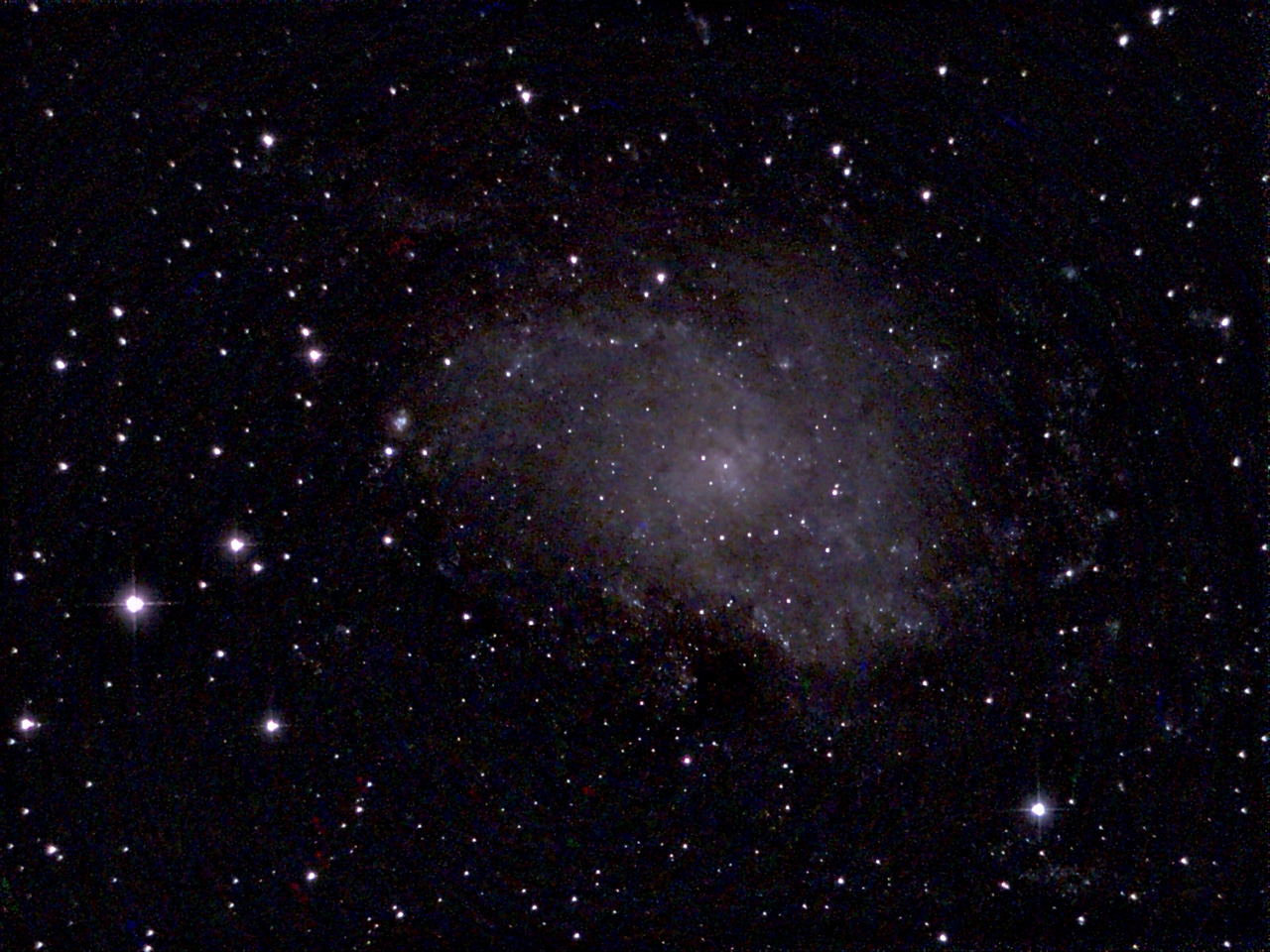
M 33 - Jan 18, 2023, photo on top processed |
||
 |
 |
 |
||
M 33 with NGC 604 - Nov 2, 2022, processed |
M 33 - Dec 18, 2023, 10 min |
M 33 - Dec 18, 2023, photo left processed |
 |
 |
|
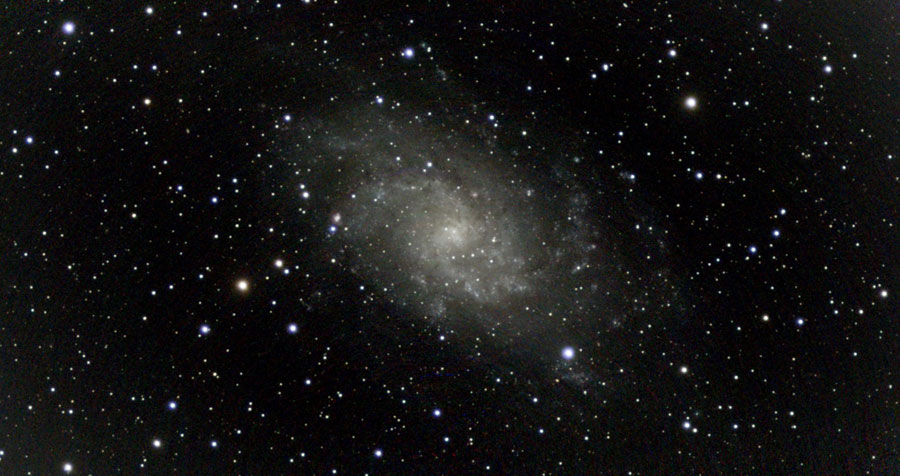
M 33 - Oct 30, 2022, original (270 frames = 2700s) |
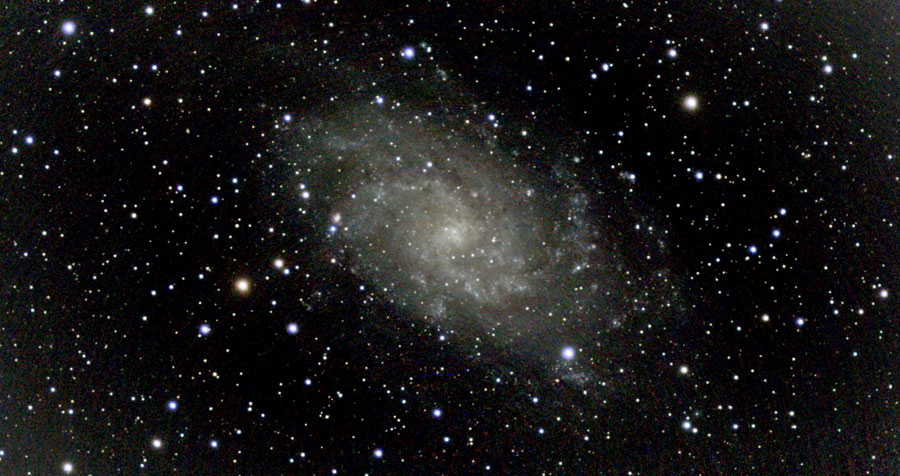
M 33 - Oct 30, 2022, large (270 frames = 2700s) processed |
|
 |
 |
|
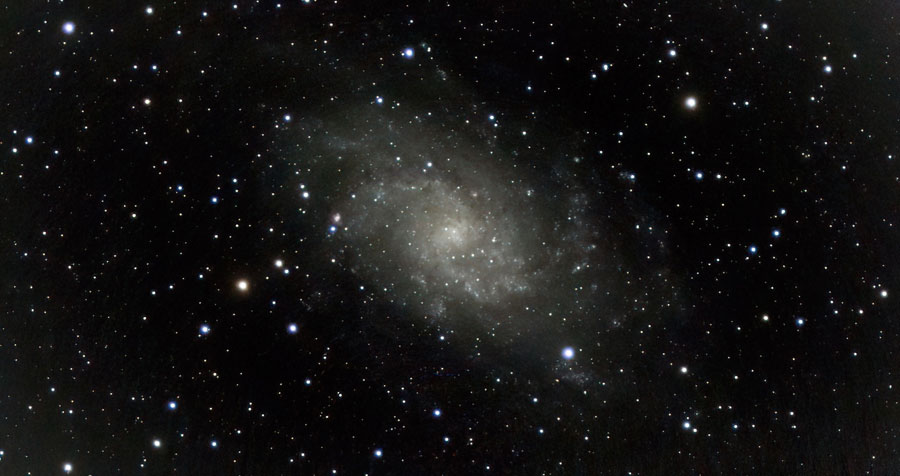
M 33 - Oct 30, 2022, original (270 frames = 2700s), processed and denoised (DN) |
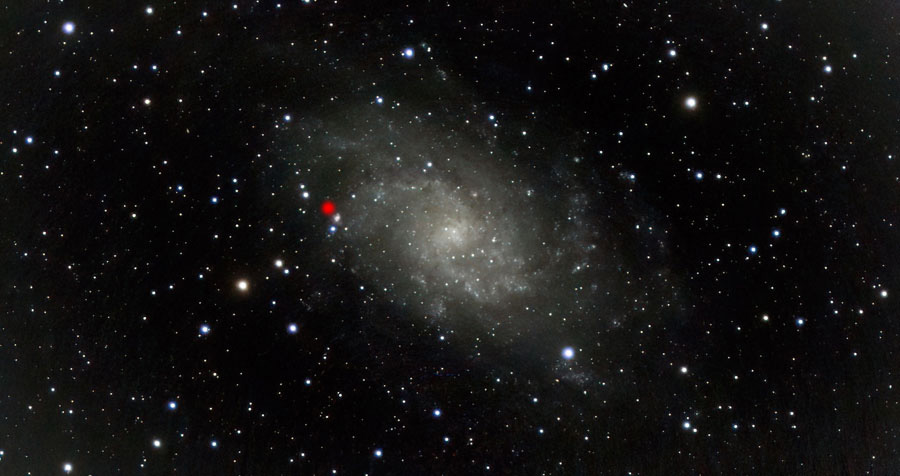
M 33 with NGC 604 - Oct 30, 2022, large (270 frames = 2700s), processed and denoised (DN) |
 |
 |
|
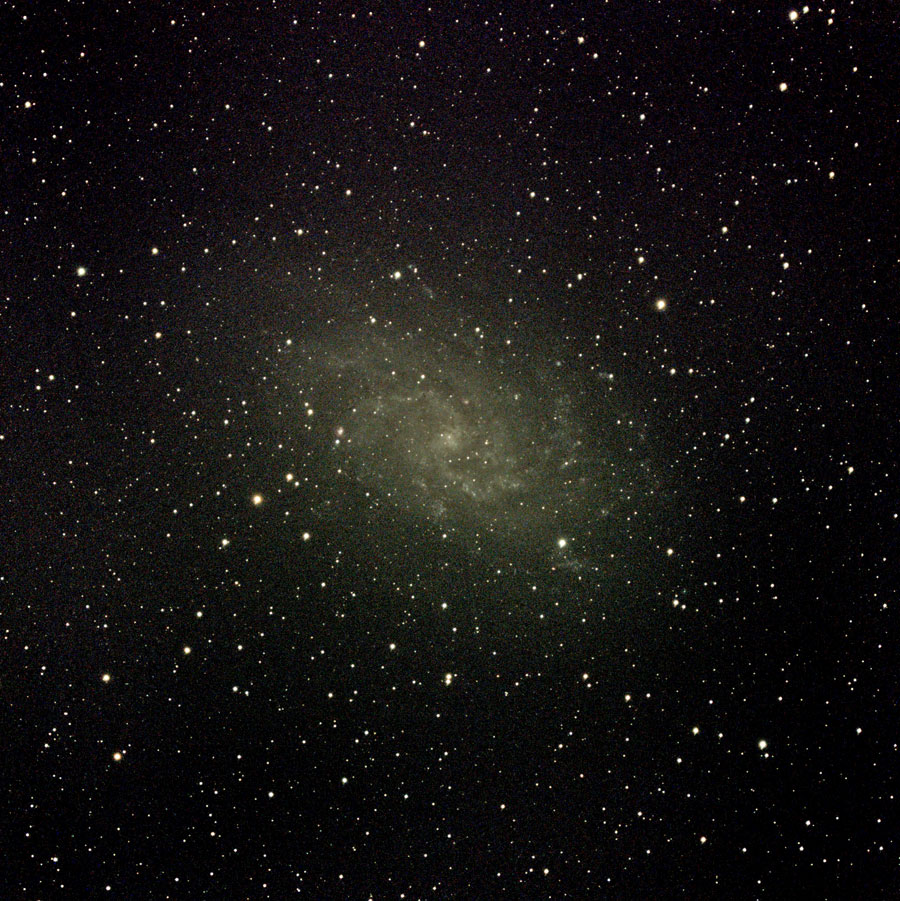
M 33 - Nov 3, 2024, 2000 (361 frames = 1 h) |
M 33 - Nov 3, 2024, 2000 (361 frames = 1 h), processed (PSE) |
|
 |
 |
|
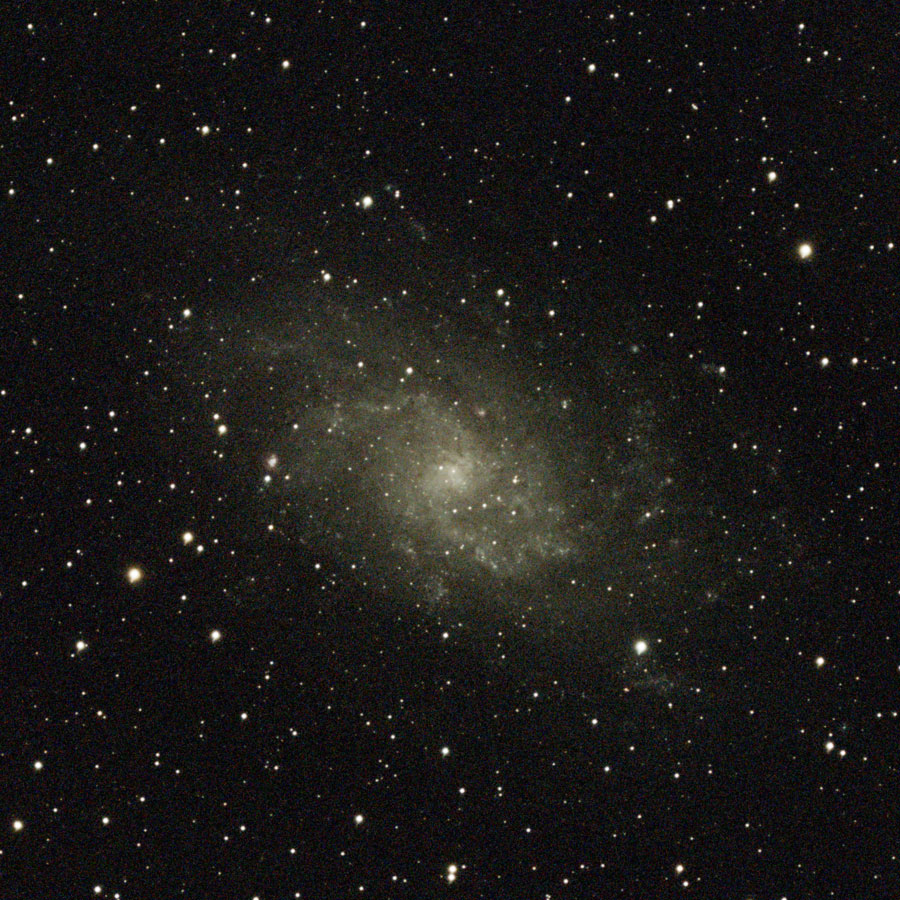
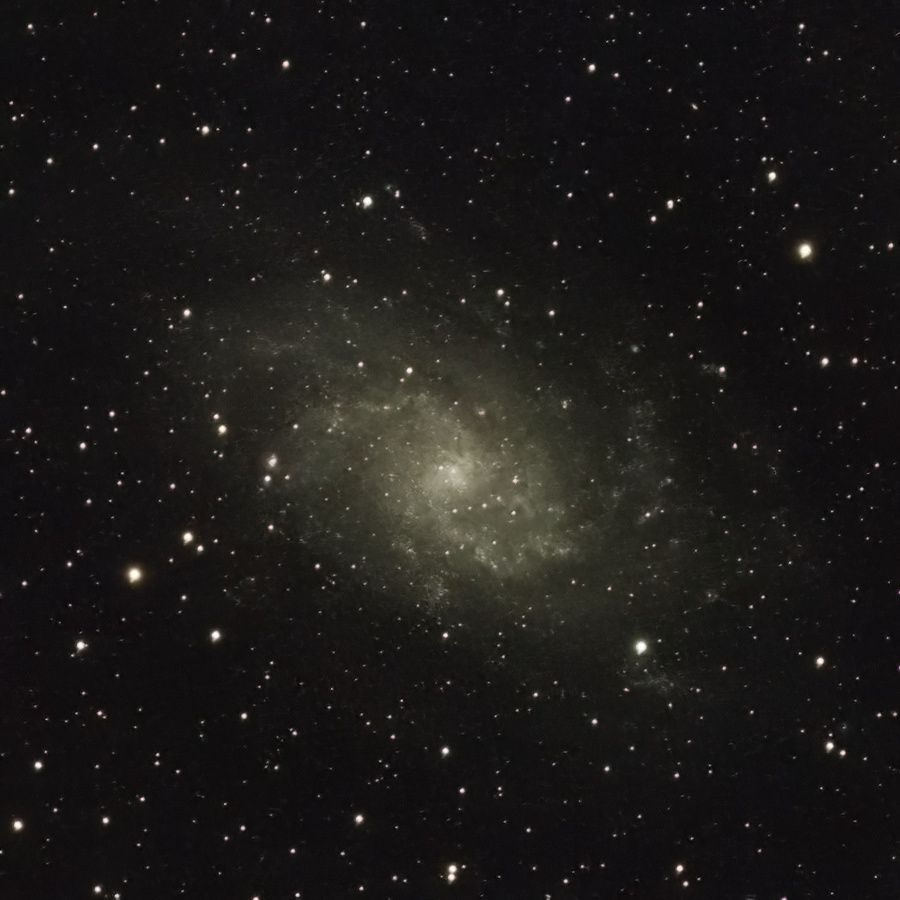
M 33 - Nov 3, 2024, 2100 (361 frames = 1 h), section, processed (TIFF) |
M 33 - Nov 3, 2024, 2100 (361 frames = 1 h), section, processed (TIFF) and denoised |
|
 |
 |
|
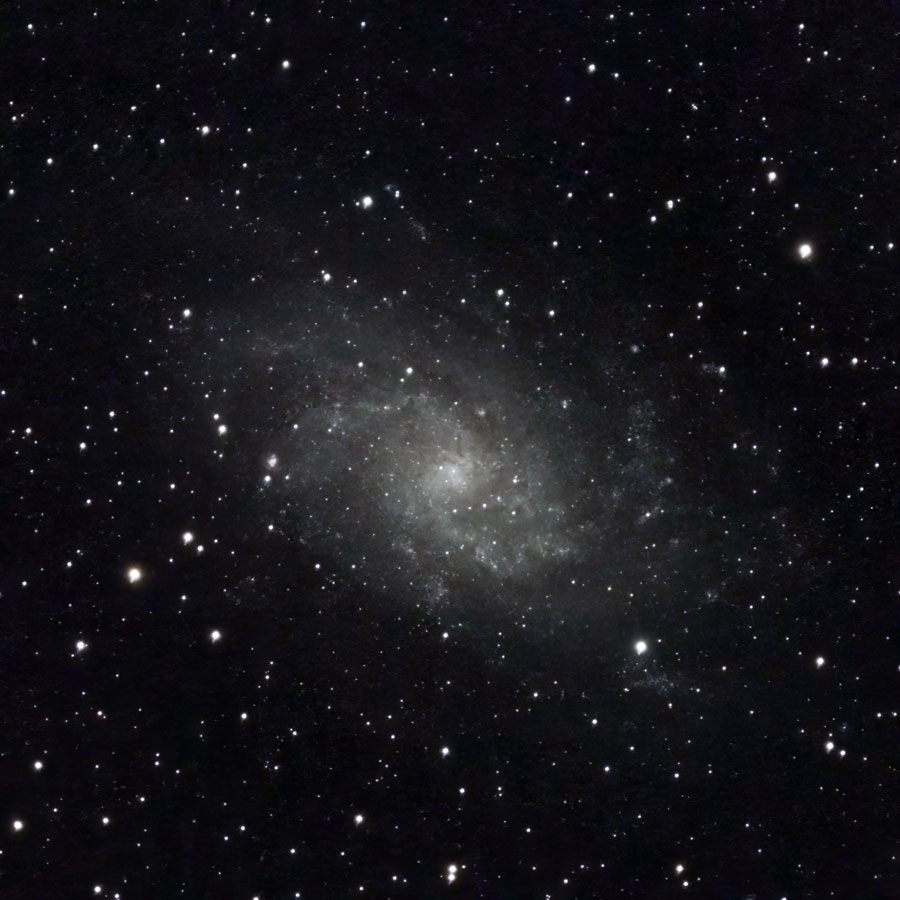
Ditto, with white balance, 2100 |
Ditto, NGC 604 marked, with white balance, 2100 |
|
 |
 |
|
M 33 - Dec 26, 2024, 2000 (241 frames = 40 min) |
M 33 - Dec 26, 2024, 2000 (241 frames = 40 min), processed (PSE) |
|
 |
 |
|
M 33 - Dec 26, 2024, 2000 (241 frames = 40 min), processed (GraXpert) |
M 33 - Dec 26, 2024, 2000 (241 frames = 40 min), processed (GraXpert), made brighter and denoised (DN) |
|
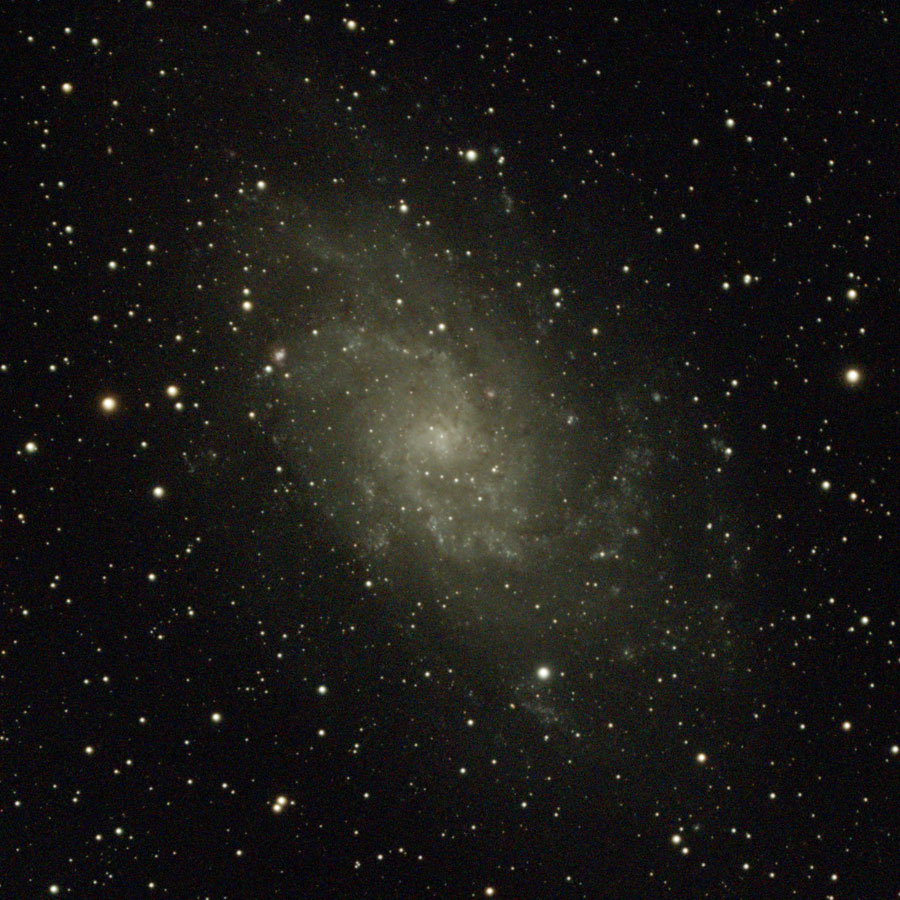 |
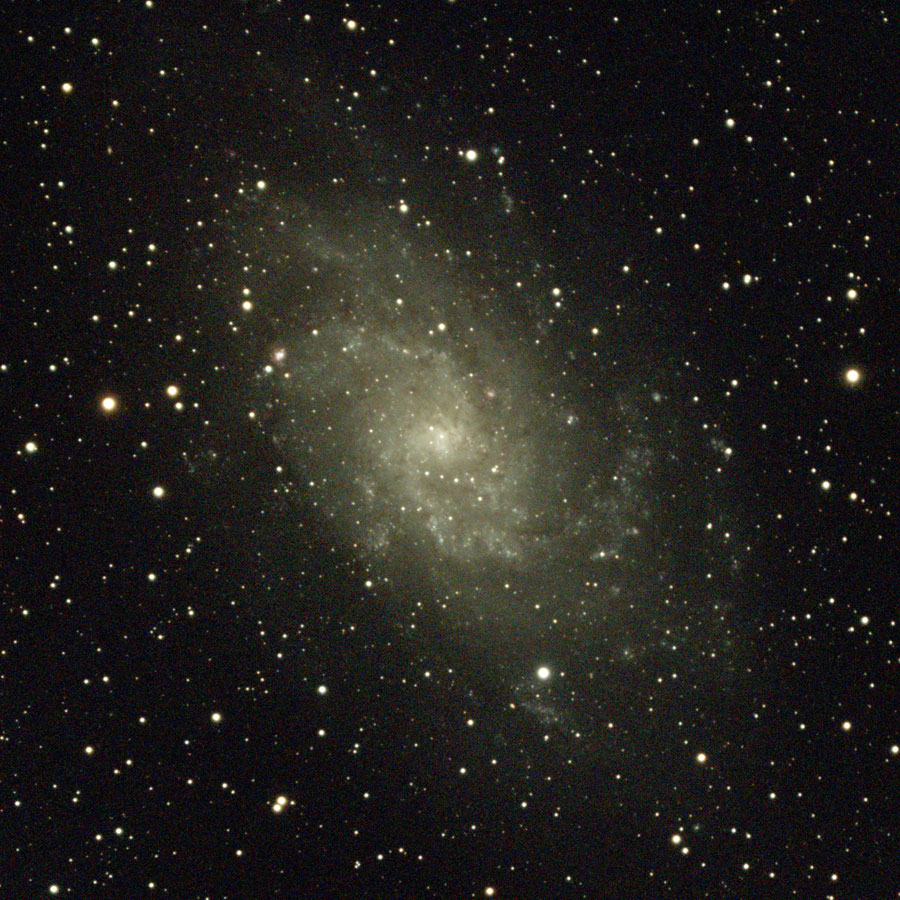 |
|
M 33 - Nov 21, 2025, 2100 (360 frames = 1 h), section |
M 33 - Nov 21, 2025, 2100 (360 frames = 1 h), section, processed |
|
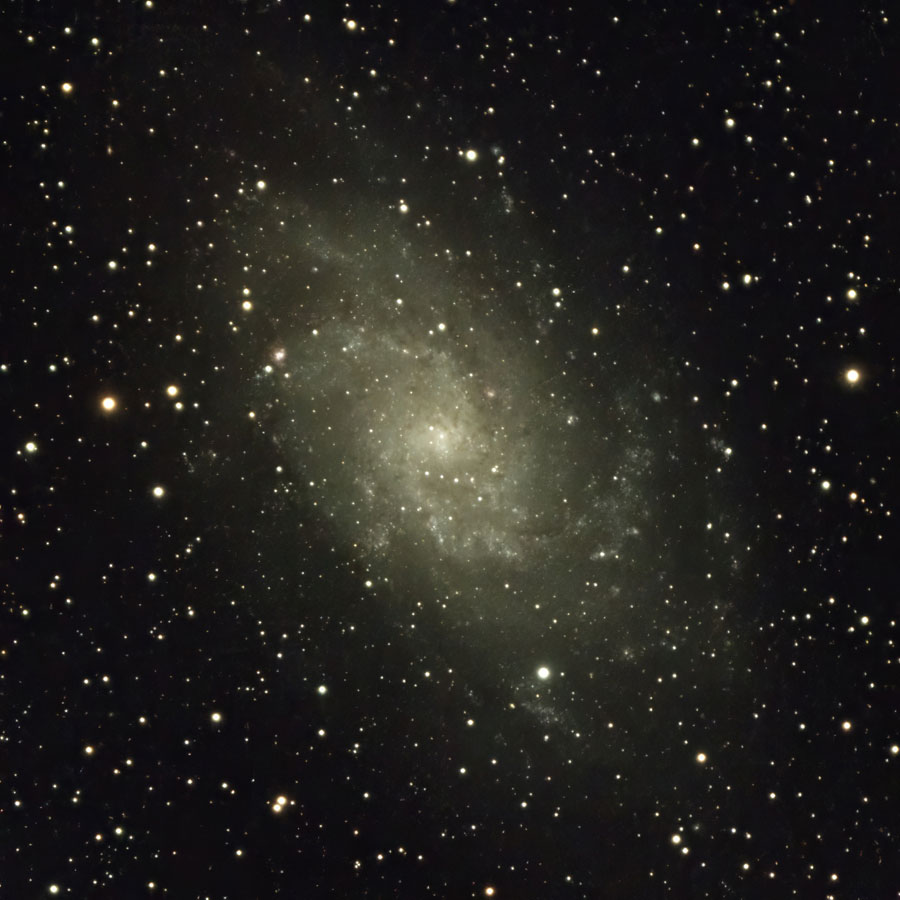 |
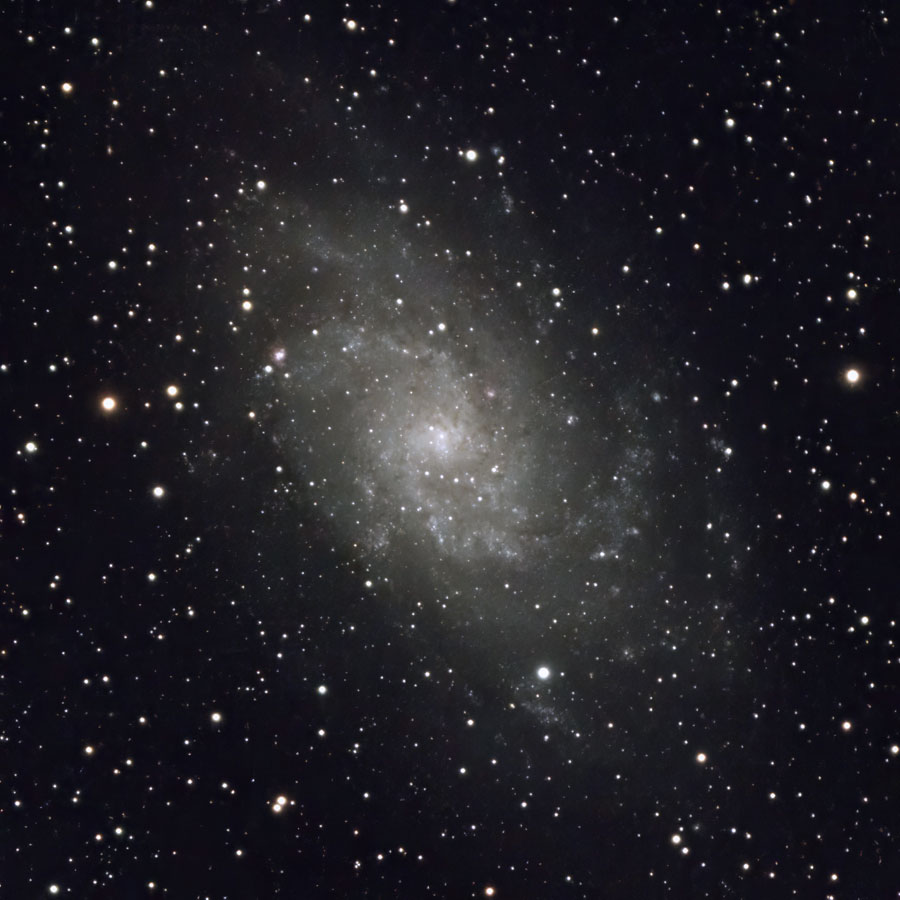 |
|
M 33 - Nov 21, 2025, 2100 (360 frames = 1 h), section, denoised (TP) |
M 33 - Nov 21, 2025, 2100 (360 frames = 1 h), section, denoised (TP), white balance |
|
| H II regions in M 33: IC 131, IC 132, IC 133, (IC 134*,) IC 135, IC 136, IC 137, IC 139, IC 140, IC 142, IC 143, NGC 588, NGC 592, NGC 595, NGC 604 *) IC 134 is a star |
 |
|
Evaluation with nova.astrometry.net |
||
 |
 |
|
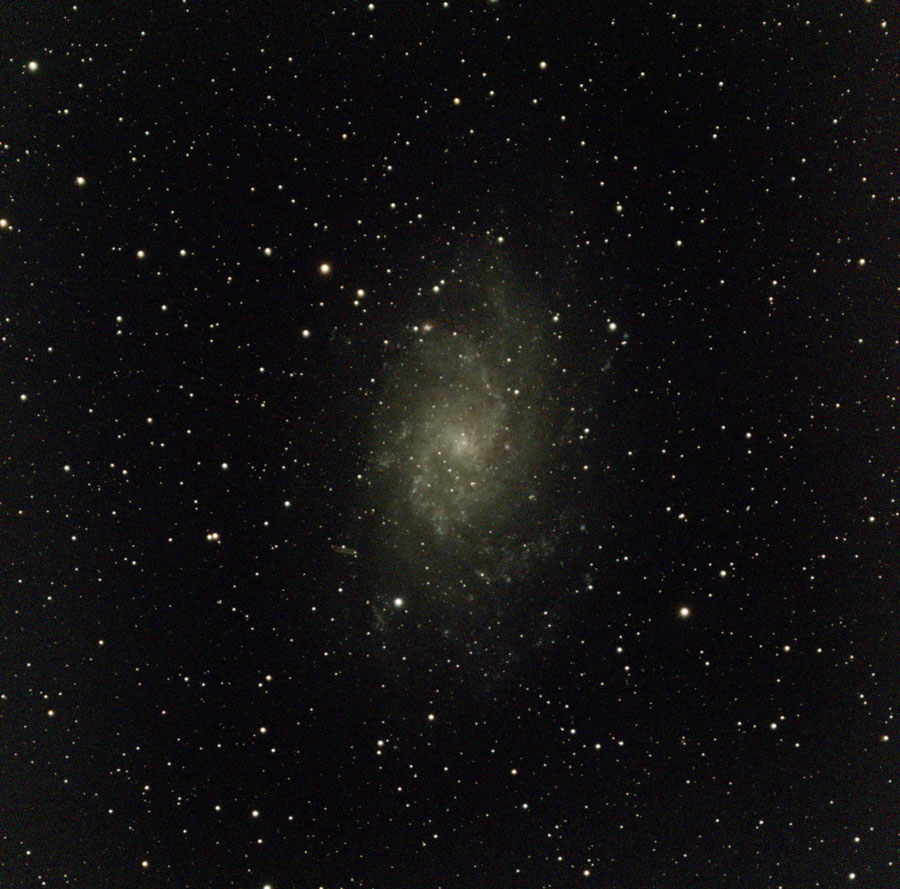
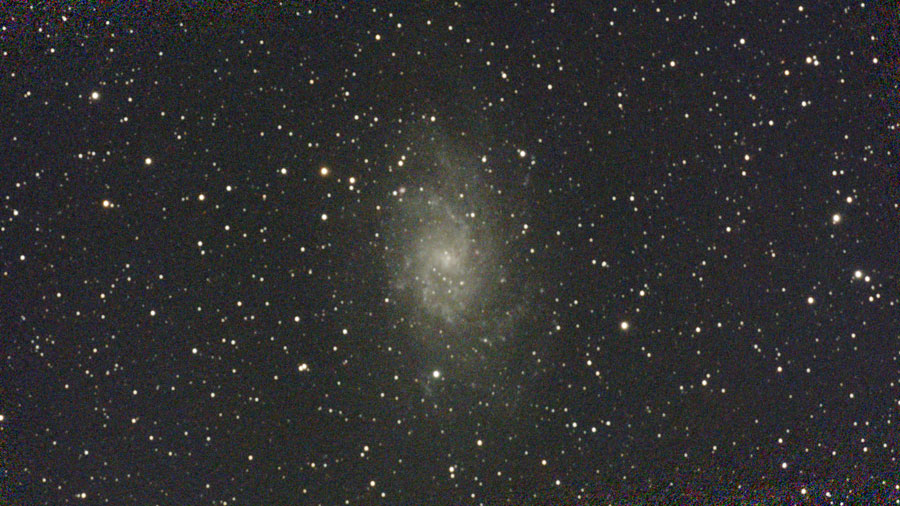
M 33 - Jan 5, 2026, 2000 (360 frames = 1 h) |
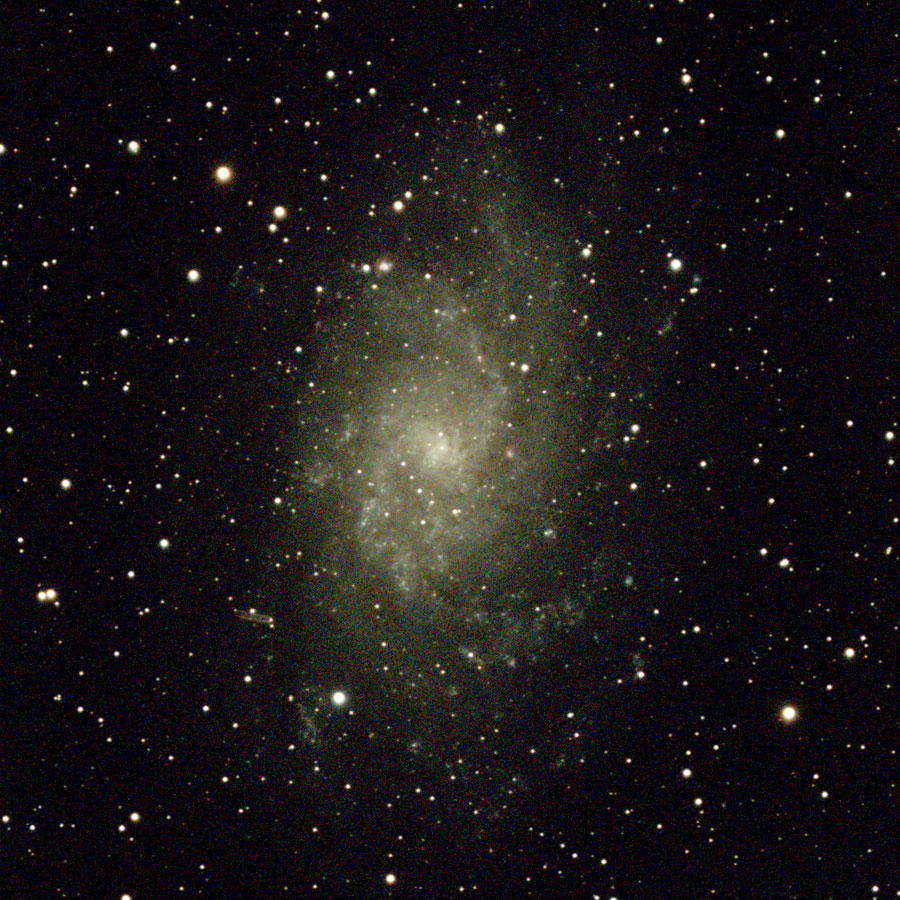
M 33 - Jan 5, 2026, 2000 (360 frames = 1 h), section, processed |
|
 |
 |
|
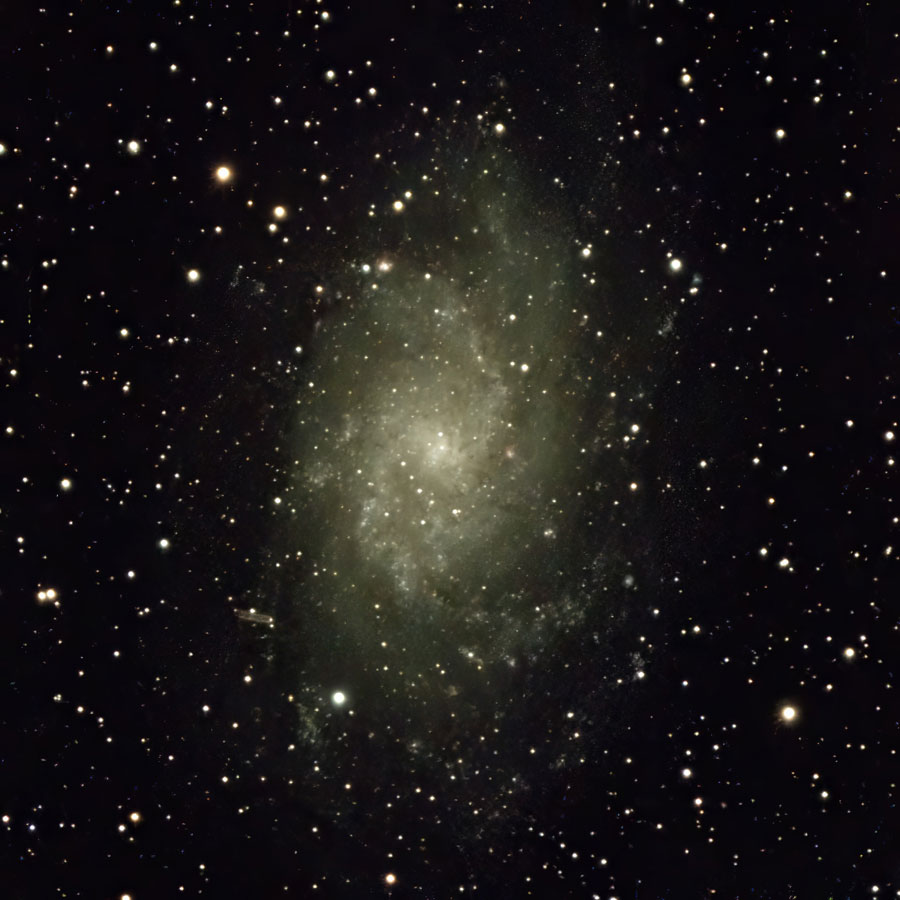
M 33 - Jan 5, 2026, 2000 (360 frames = 1 h), section, processed, denoised (TP) |
M 33 - Jan 5, 2026, (360 frames = 1 h), section, processed, Eros indicated (Trail) |
 |
 |
|
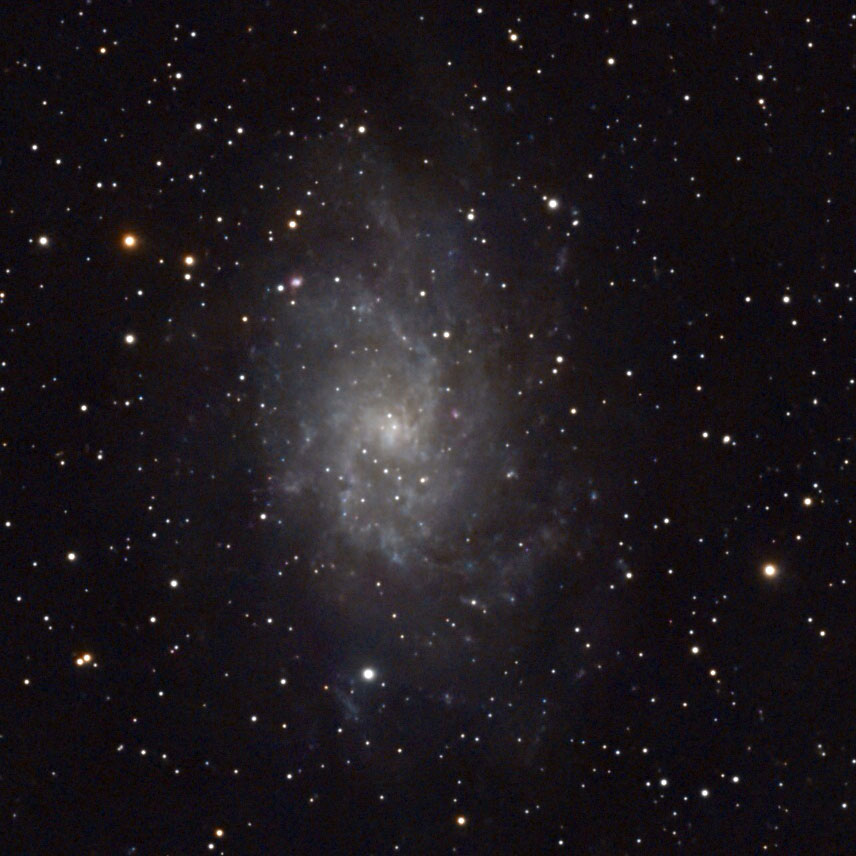
M 33 - Jan 15, 2026, 45 min, unprocessed, original |
M 33 - Jan 15, 2026, 45 min, section, processed with Stellar Studio and further processed | |
 |
 |
|
Evaluation with nova.astrometry.net |
Evaluation with nova.astrometry.net |
H II regions in M 33: IC 131, IC 132, IC 133, (IC 134*,) IC 135, IC 136, IC 137, IC 139, IC 140, IC 142, IC 143, NGC 588, NGC 592, NGC 595, NGC 604
*) IC 134 is a star

 |
 |
 |
||
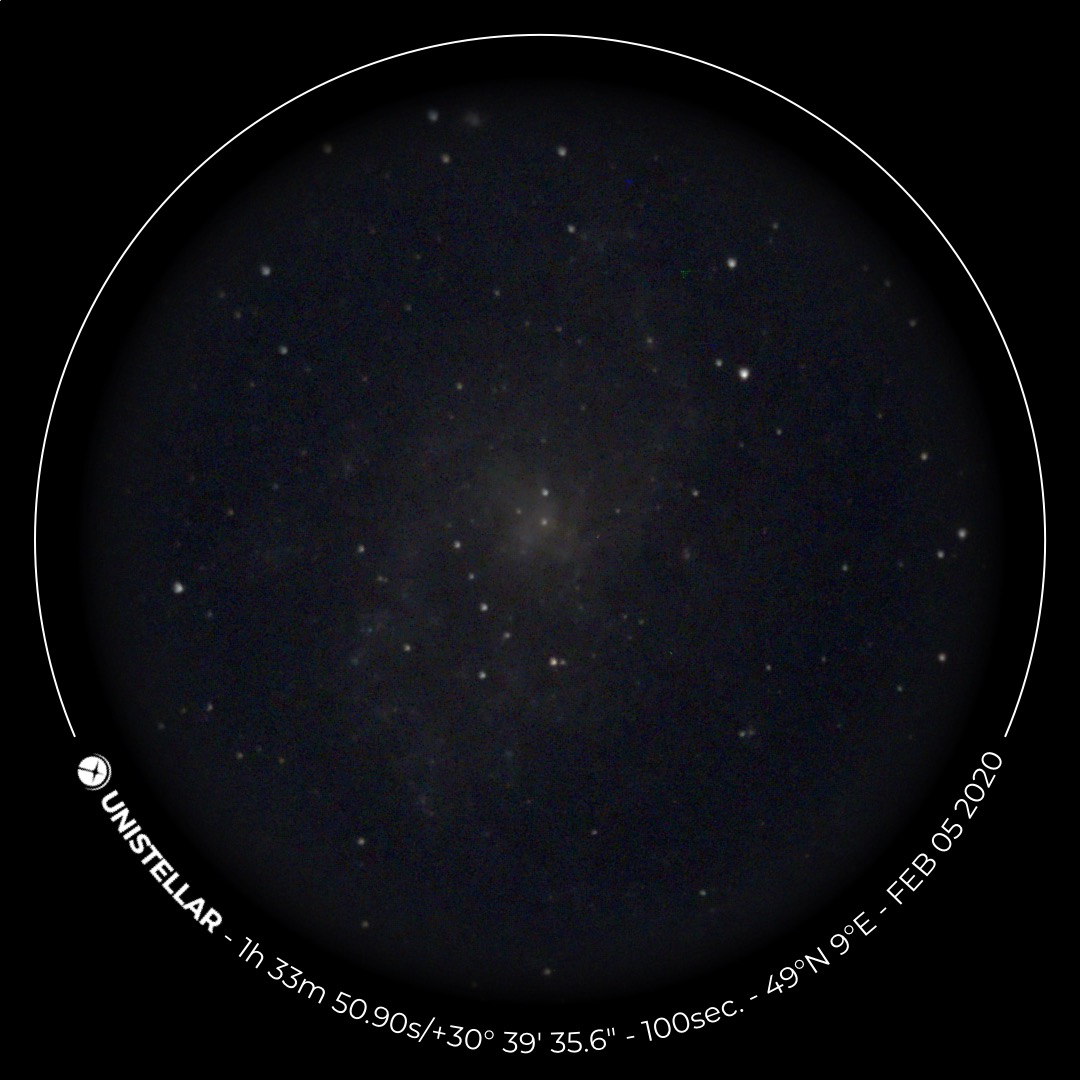
M 33 - Feb 5, 2020 |
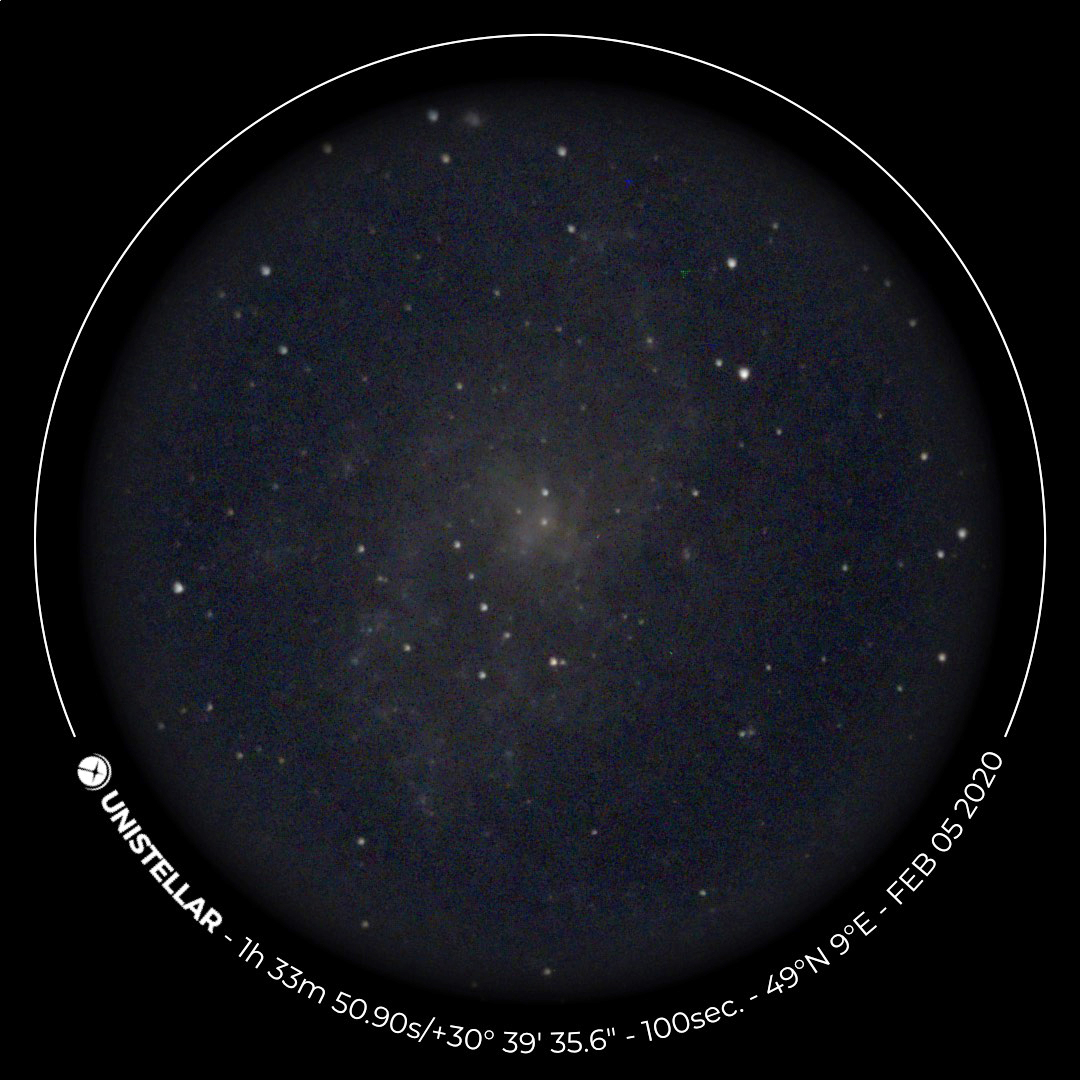
M 33 - Feb 5, 2020, processed |
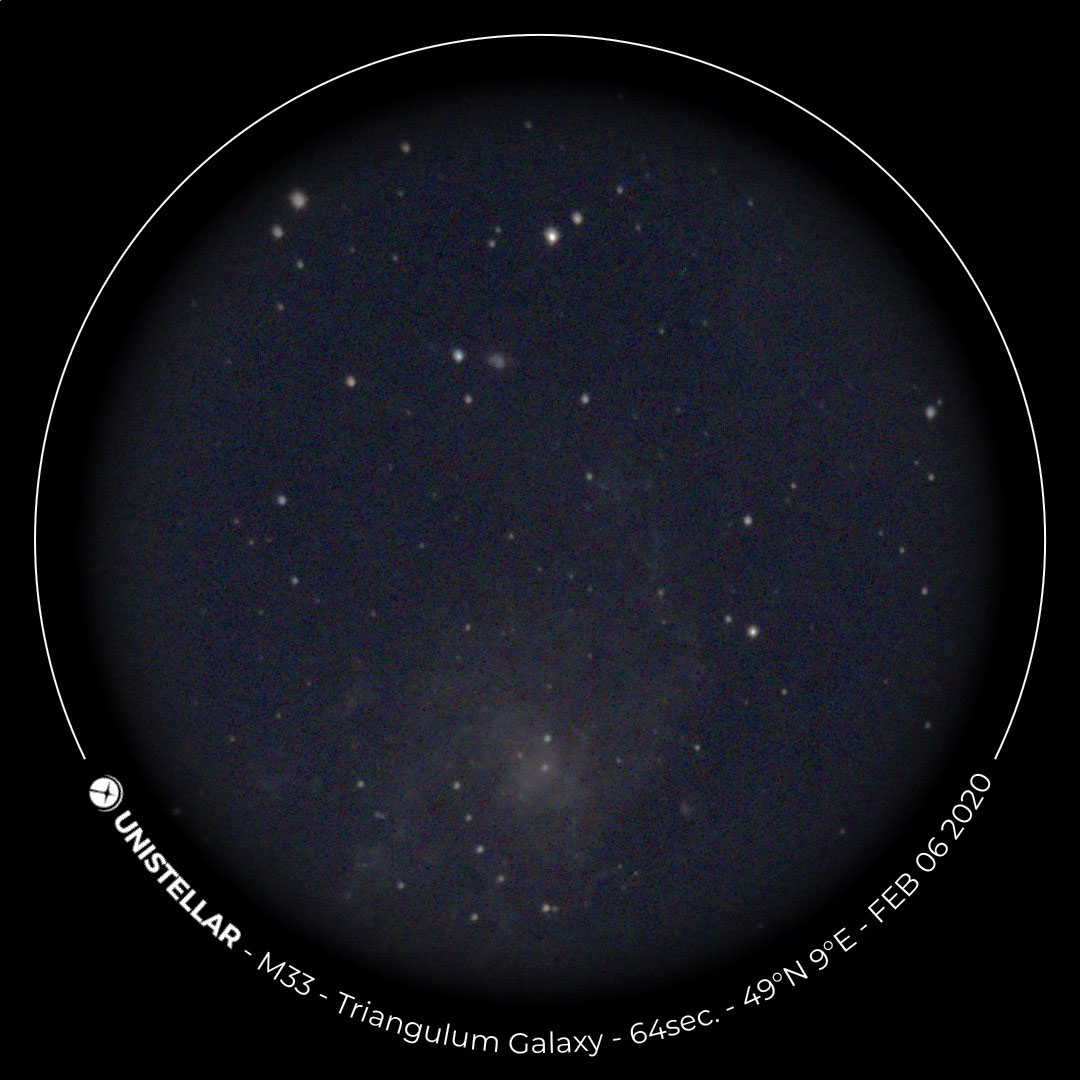
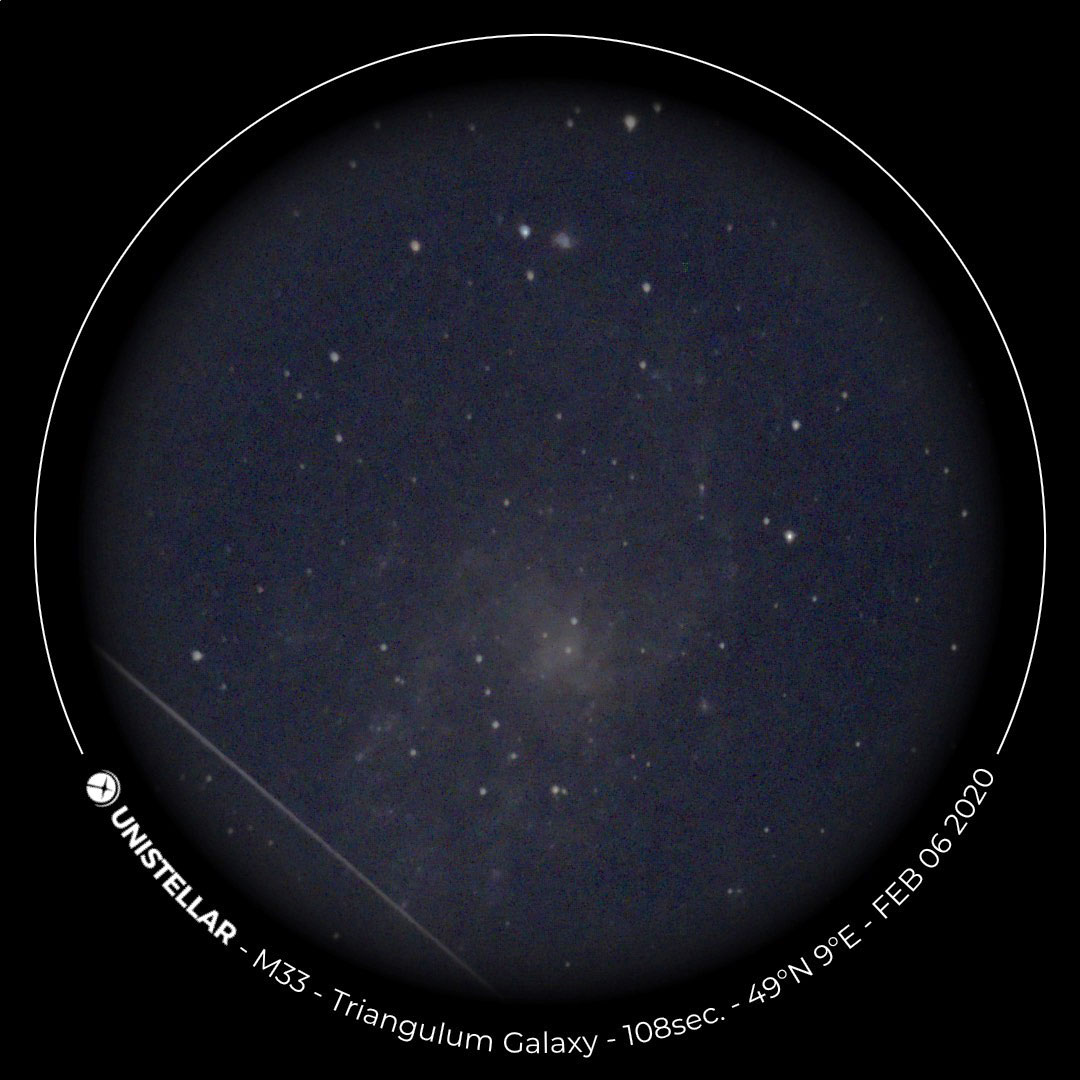
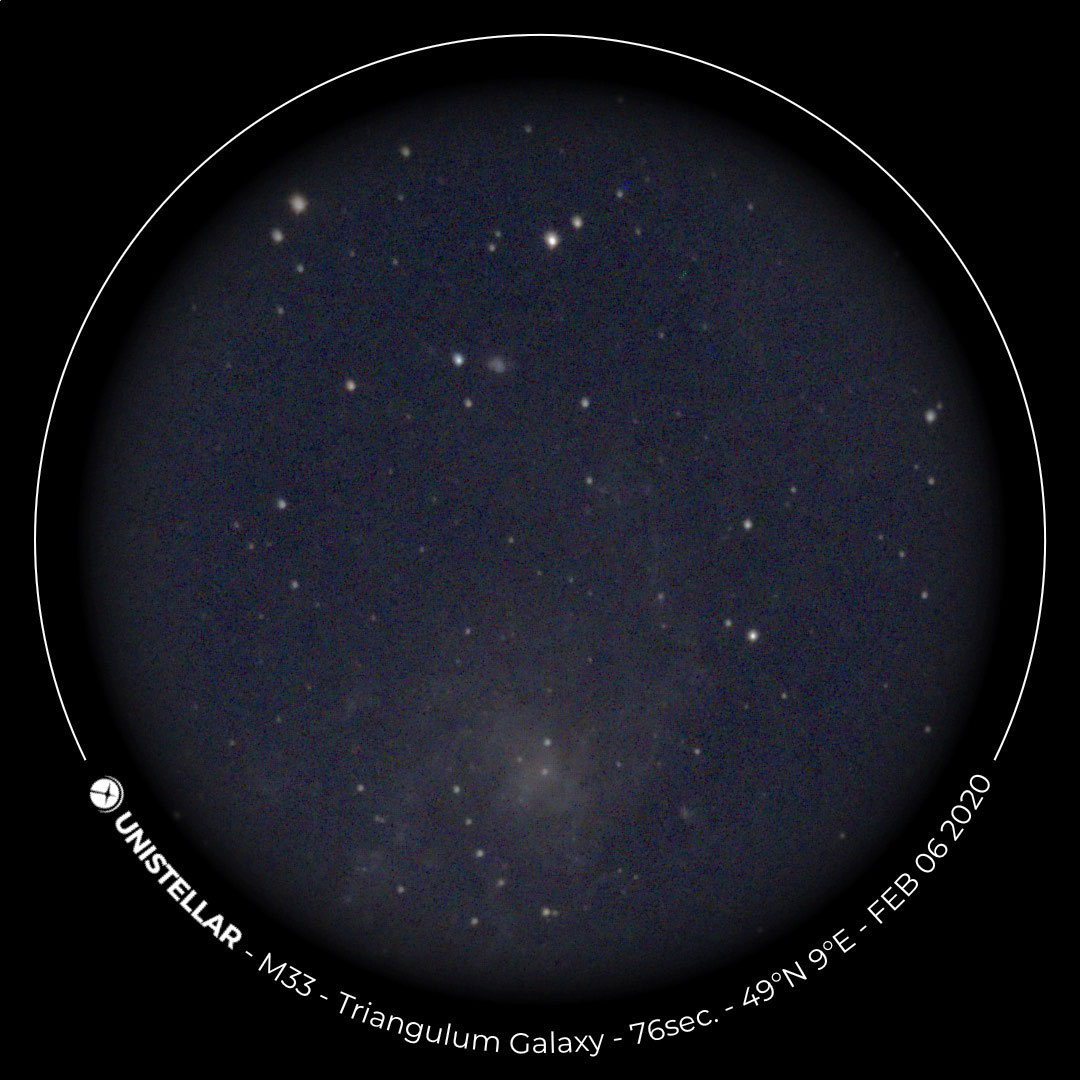
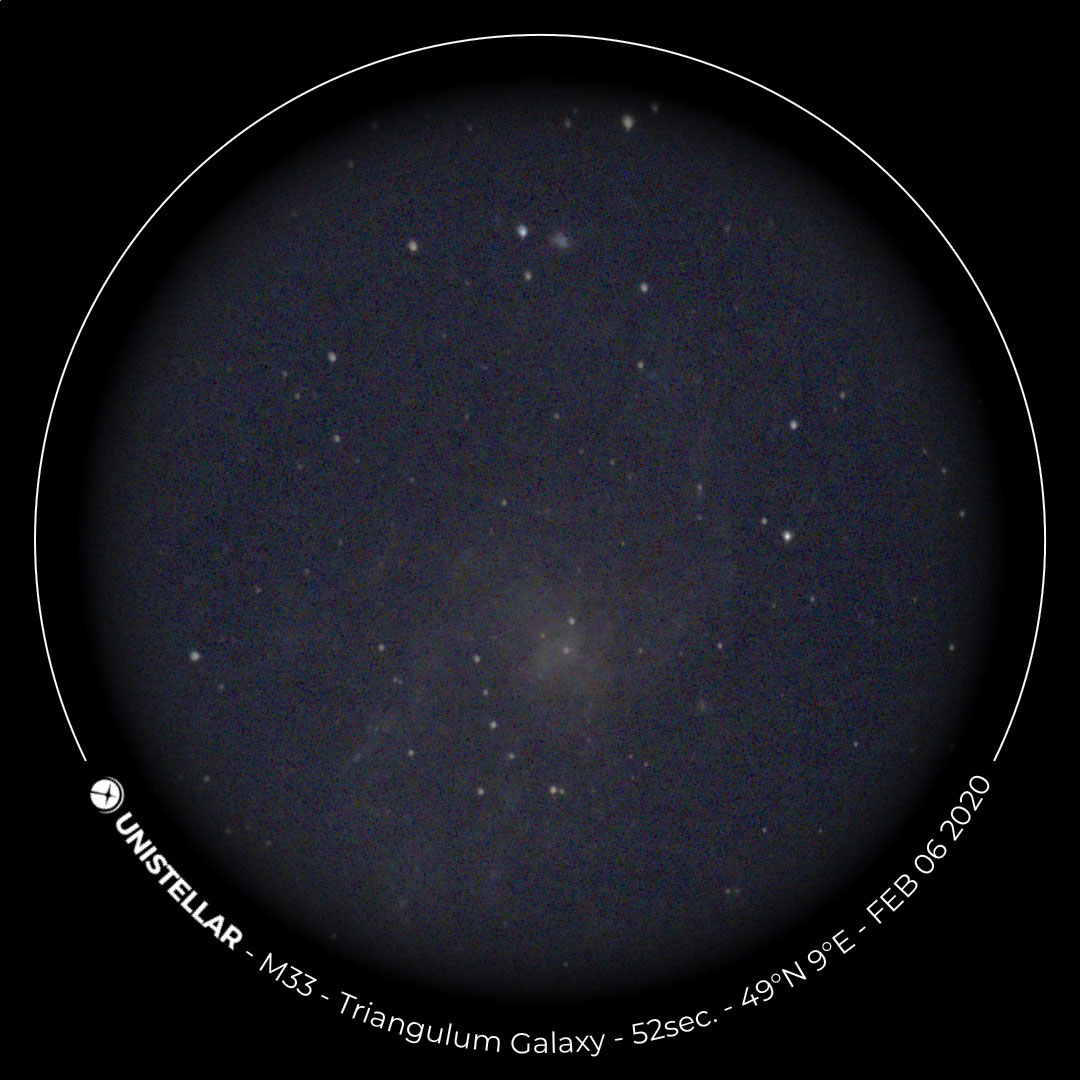
M 33 - Feb 6, 2020, processed |
||
 |
 |
 |
||
M 33 - Feb 6, 2020, processed |
M 33 - Feb 6, 2020, processed |
|
M 33 - Feb 6, 2020, processed |
|
 |
 |
 |
||
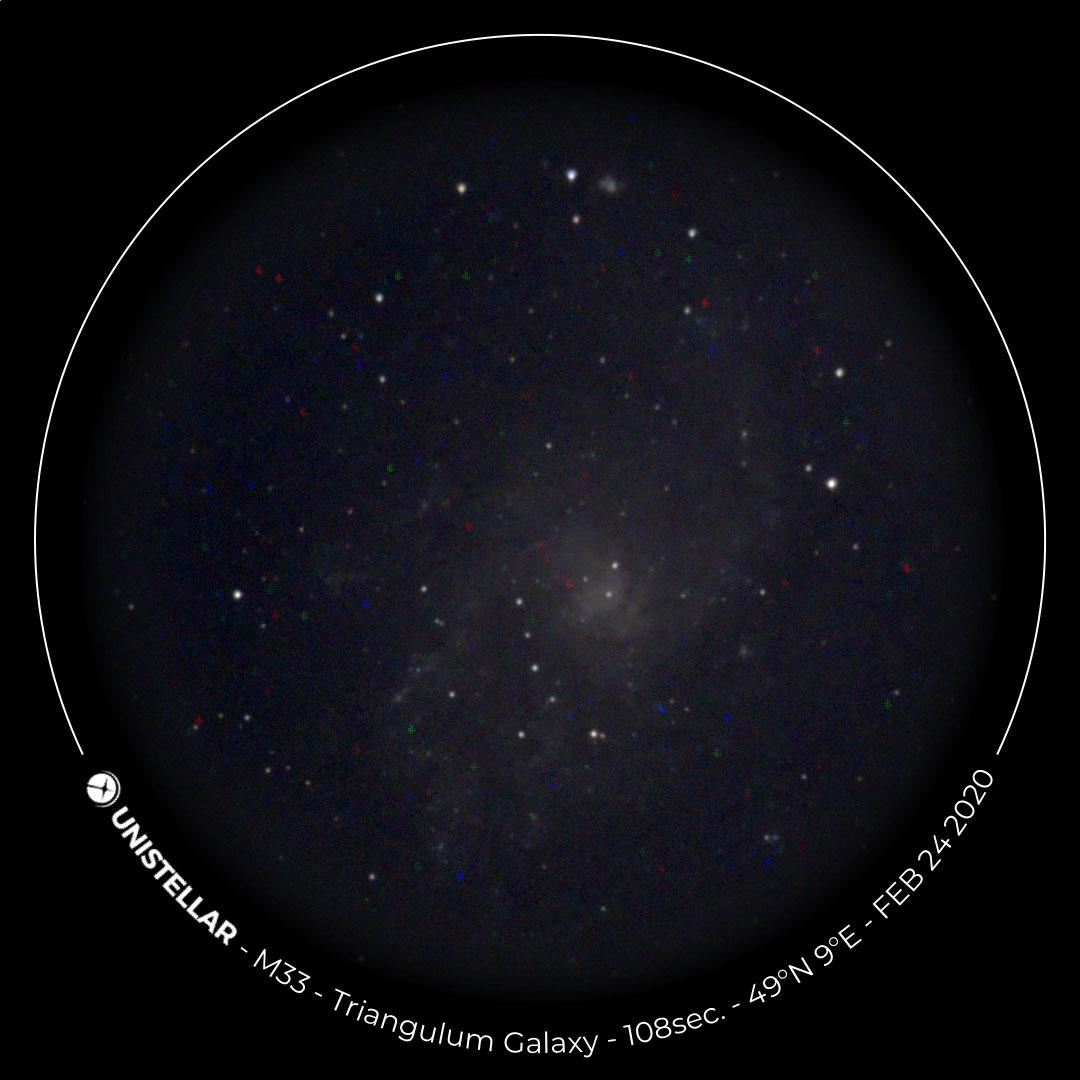
M 33 - Feb 24, 2020 |
M 33 - Feb 24, 2020, processed |
|
M 33 - Feb 24, 2020, heavily processed |
|
 |
 |
|
||
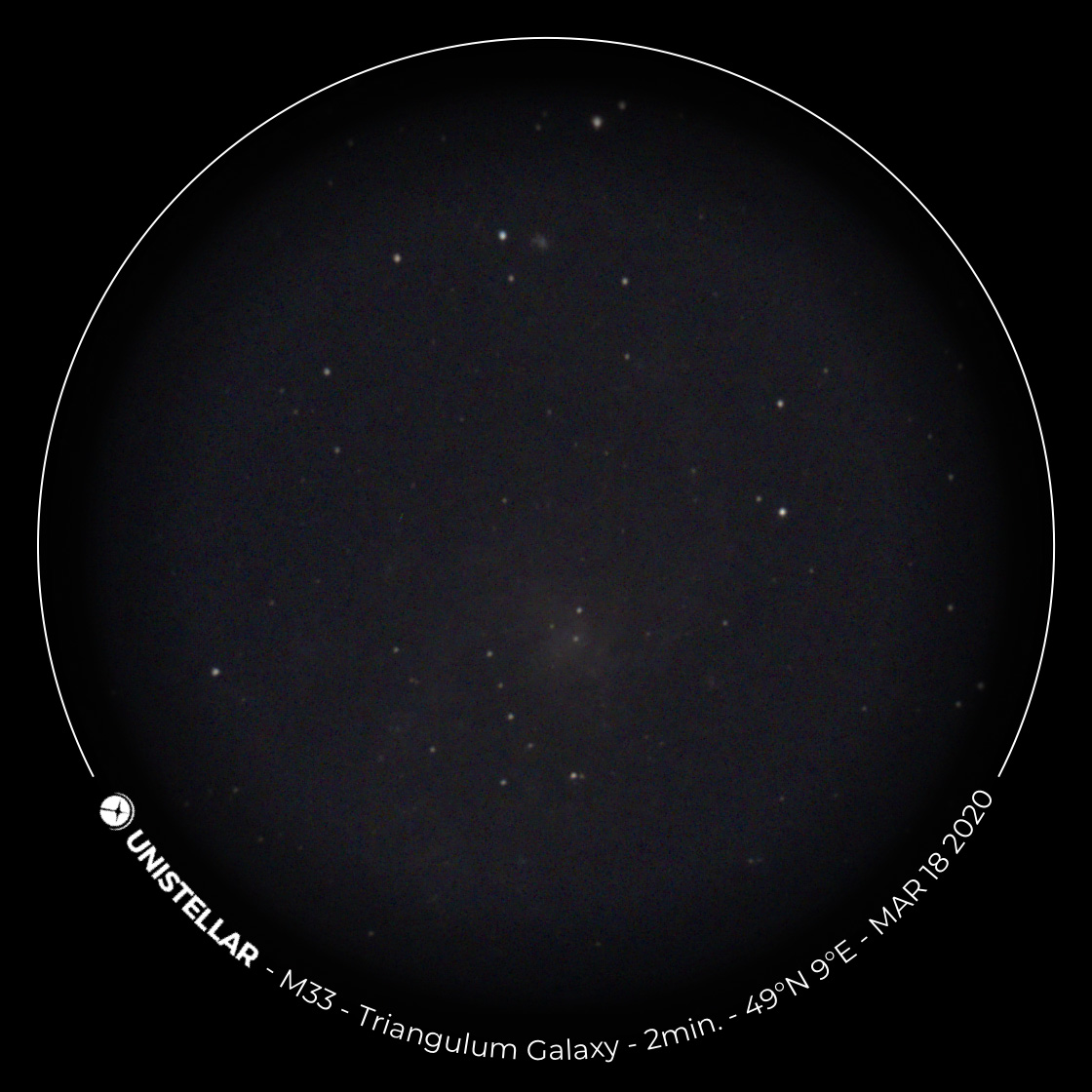
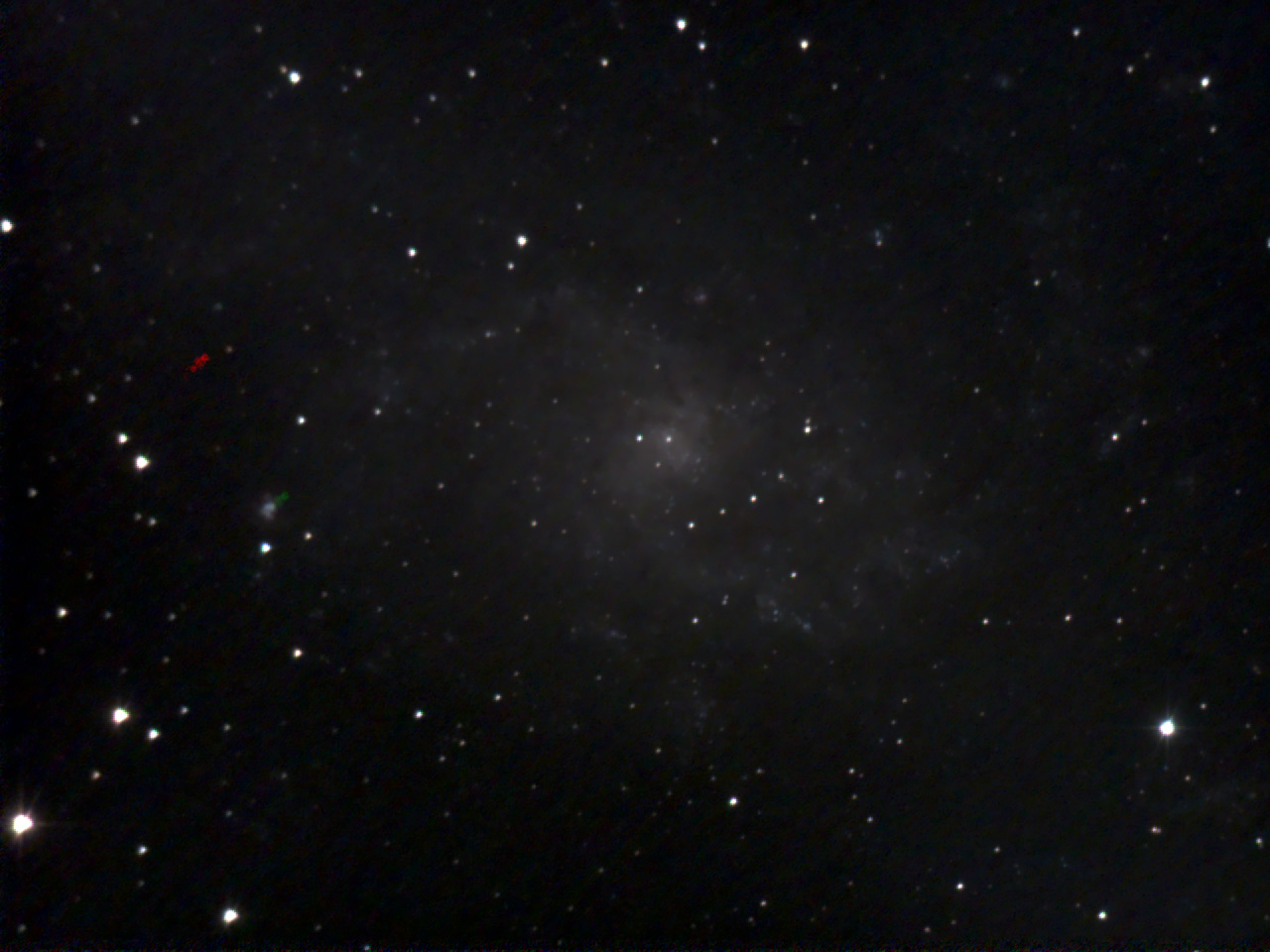
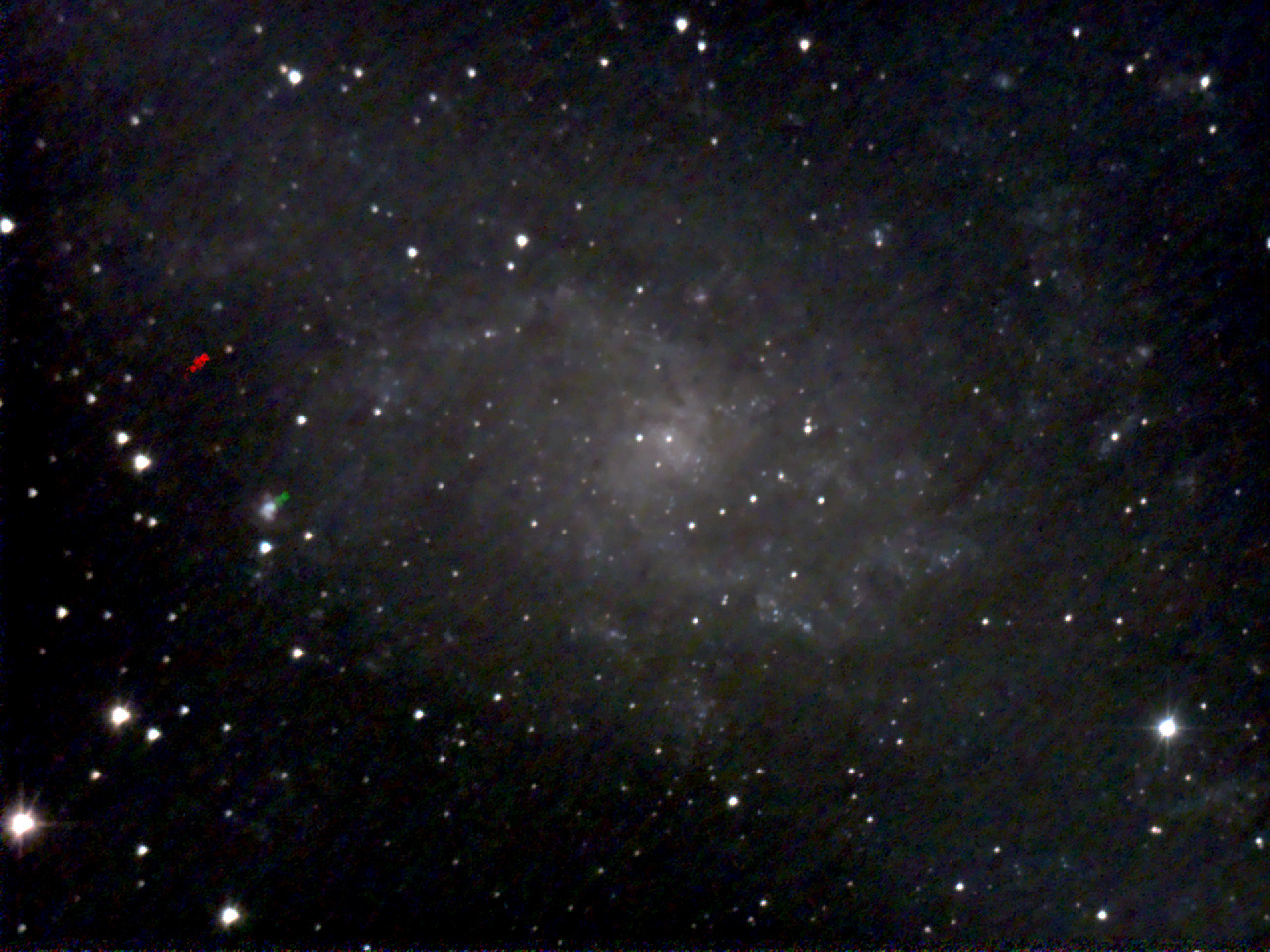
M 33 - Mar 18, 2020 |
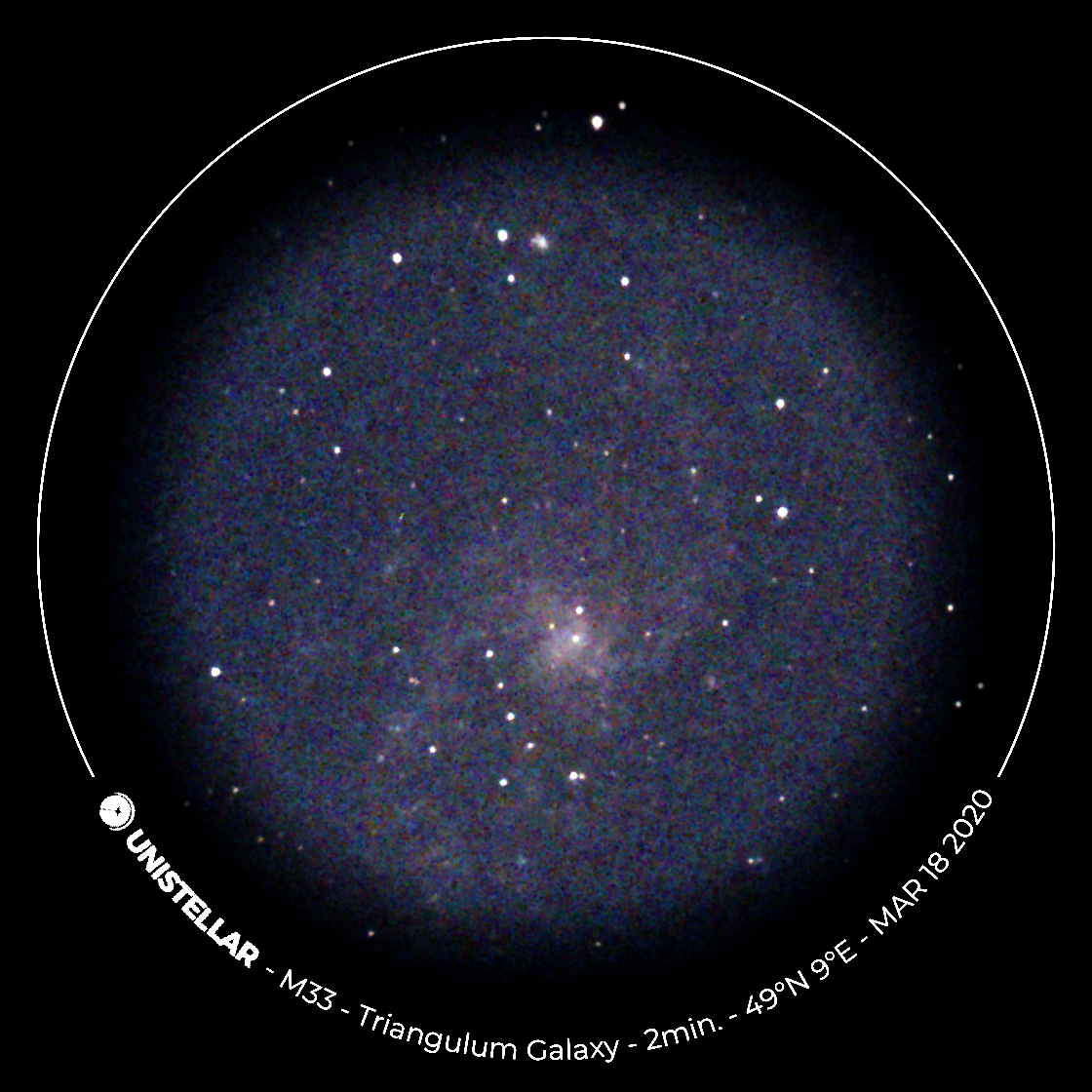
M 33 - Mar 18, 2020, processed |
M 33 - Feb 24, 2020, processed; the arrow points to the brightest HII region in M 33, NGC 604 |
||
 |
 |
|
||
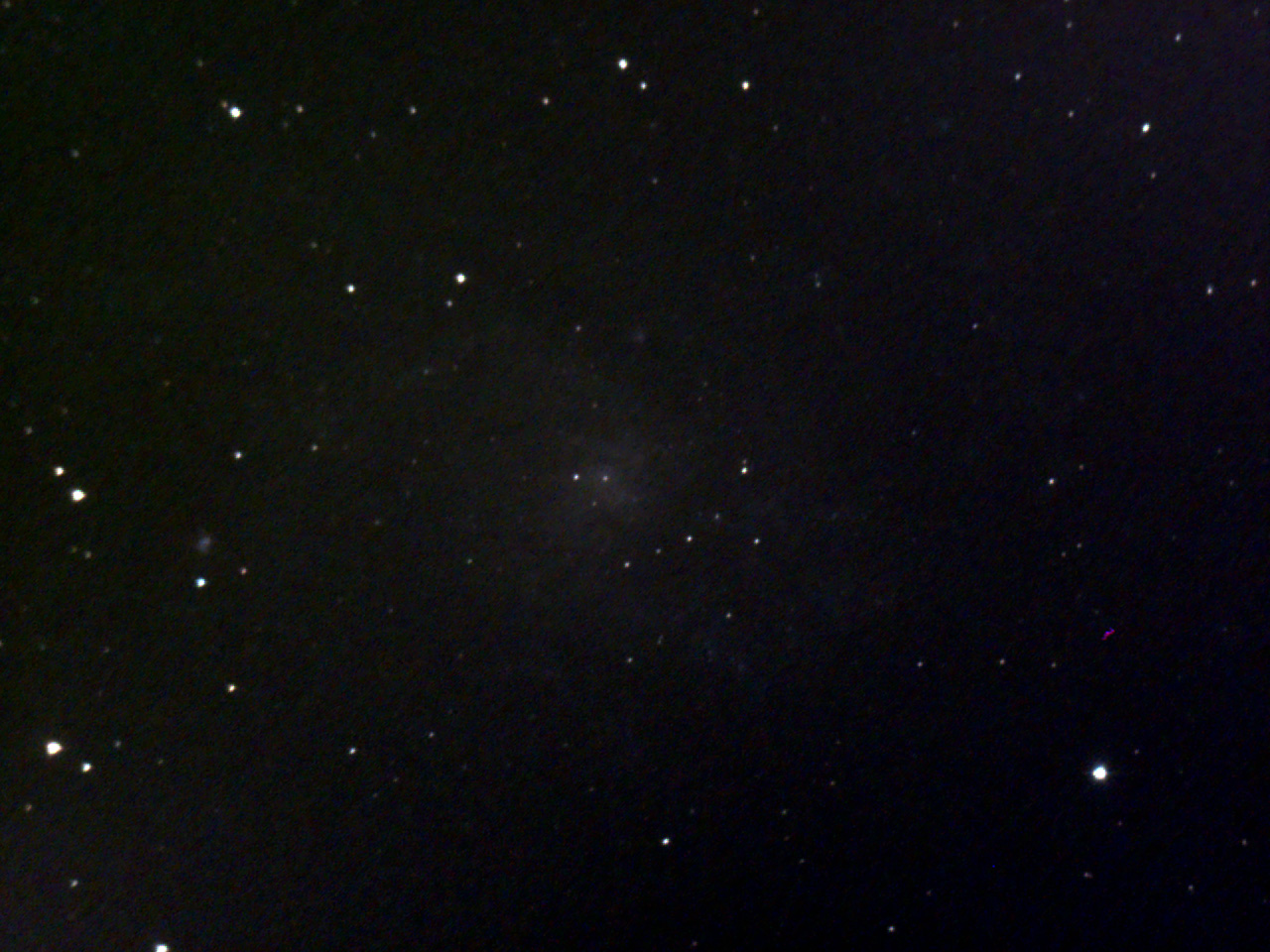
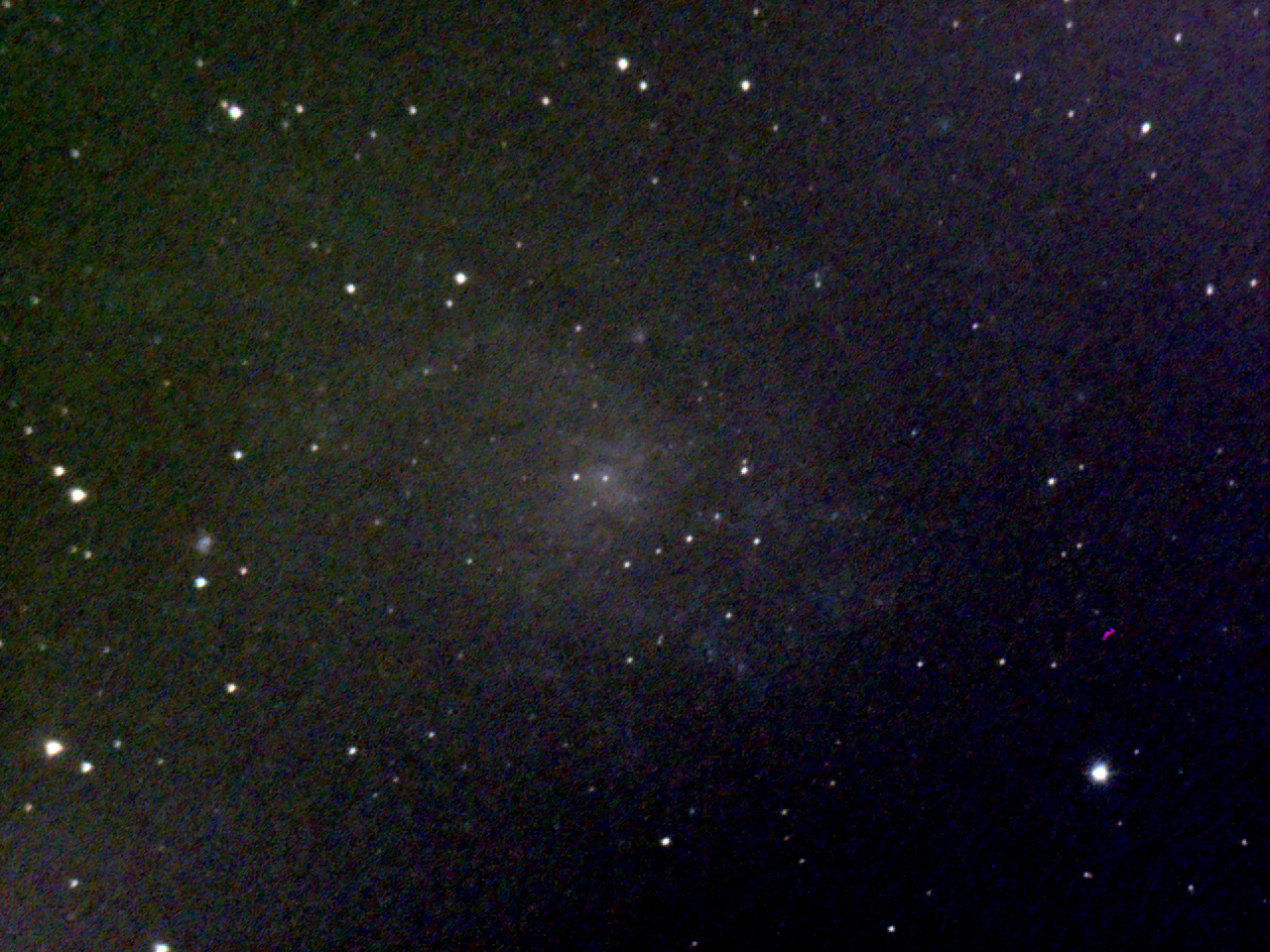
M 33 - Sep 7, 2020 |
M 33 - Sep 7, 2020, processed |
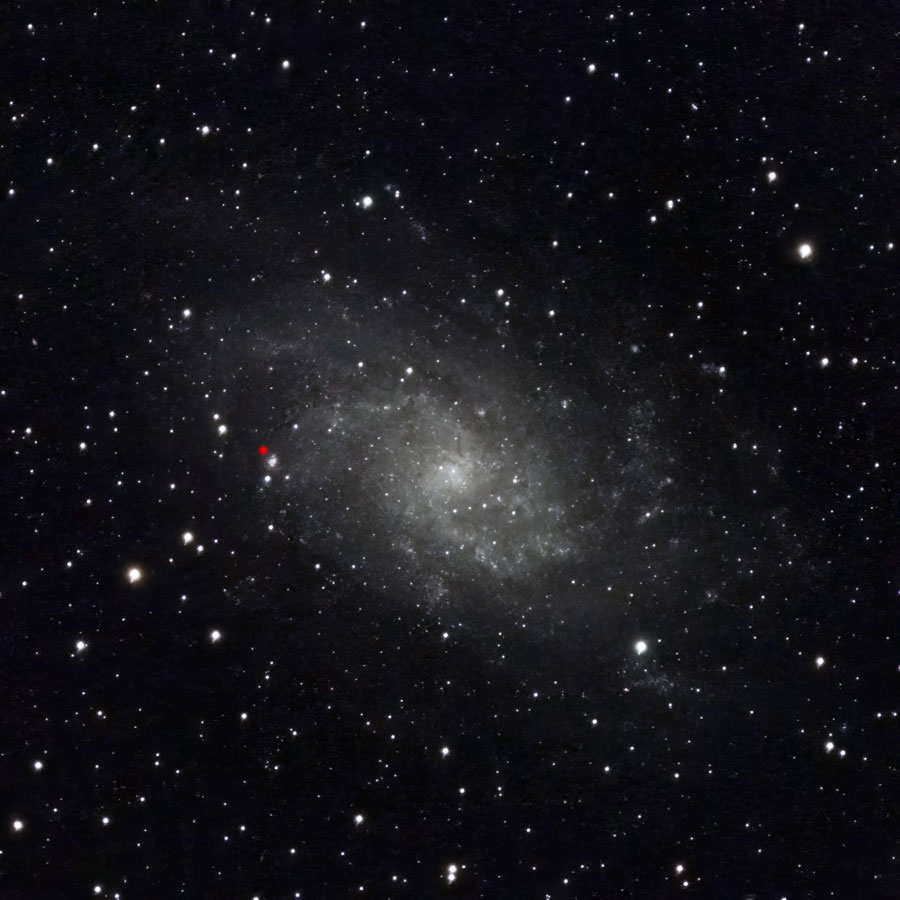
M 33 - Sep 7, 2020, processed; the red dot points to the brightest HII region in M 33, NGC 604 |
||
 |
 |
|||
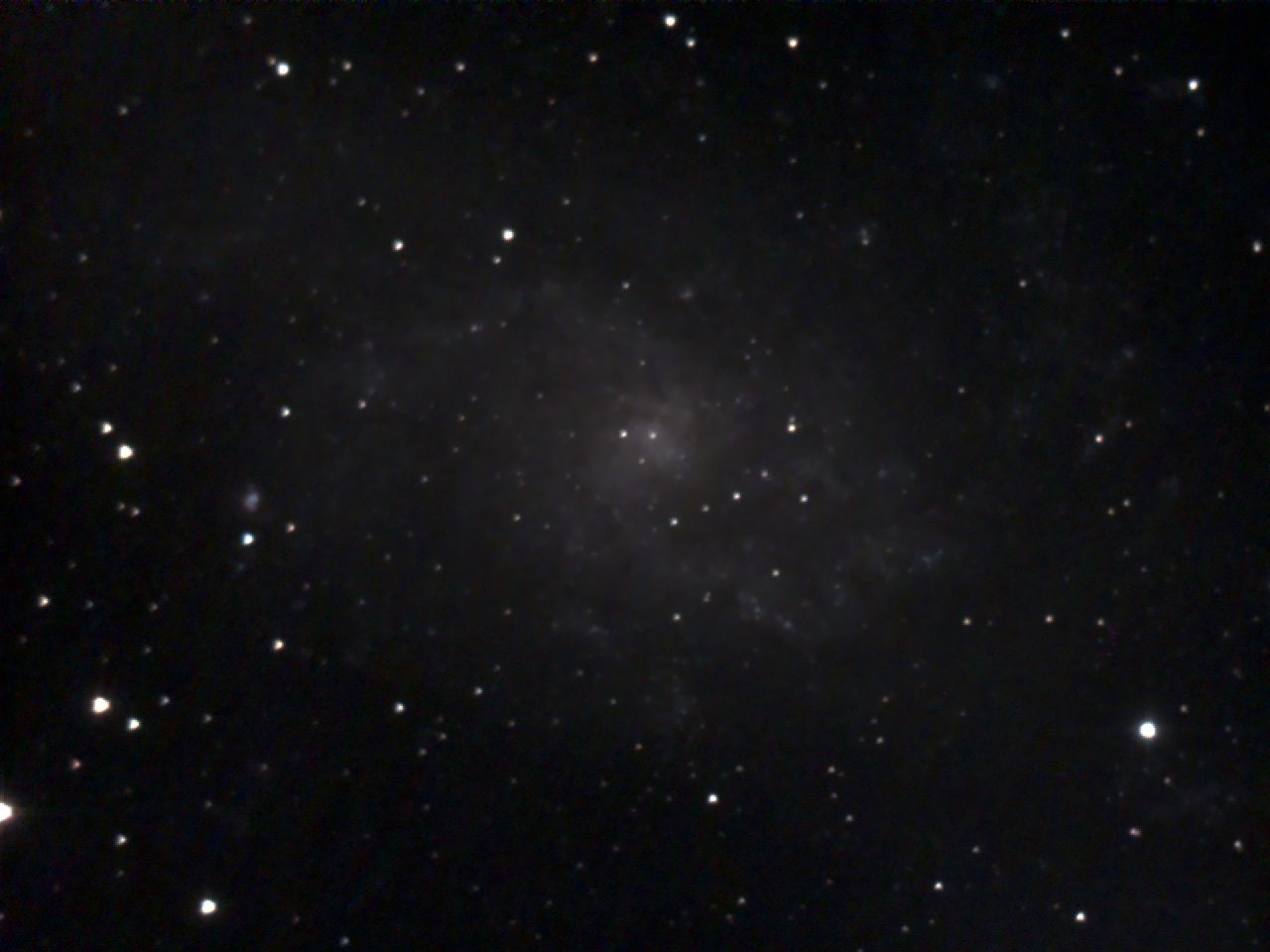
M 33 - Sep 9, 2020, disturbed |
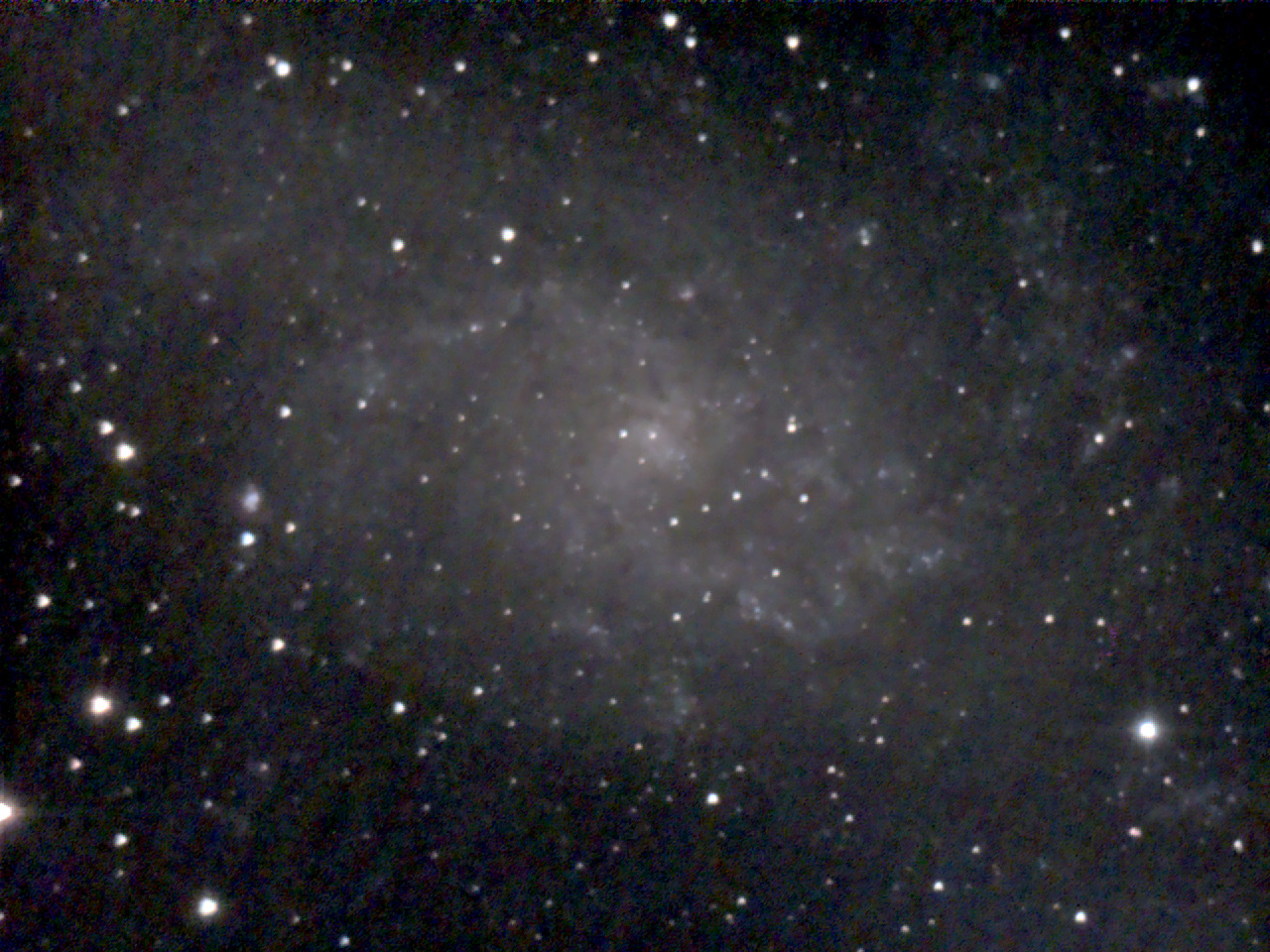
M 33 - Sep 9, 2020, processed |
|||
 |
 |
|||
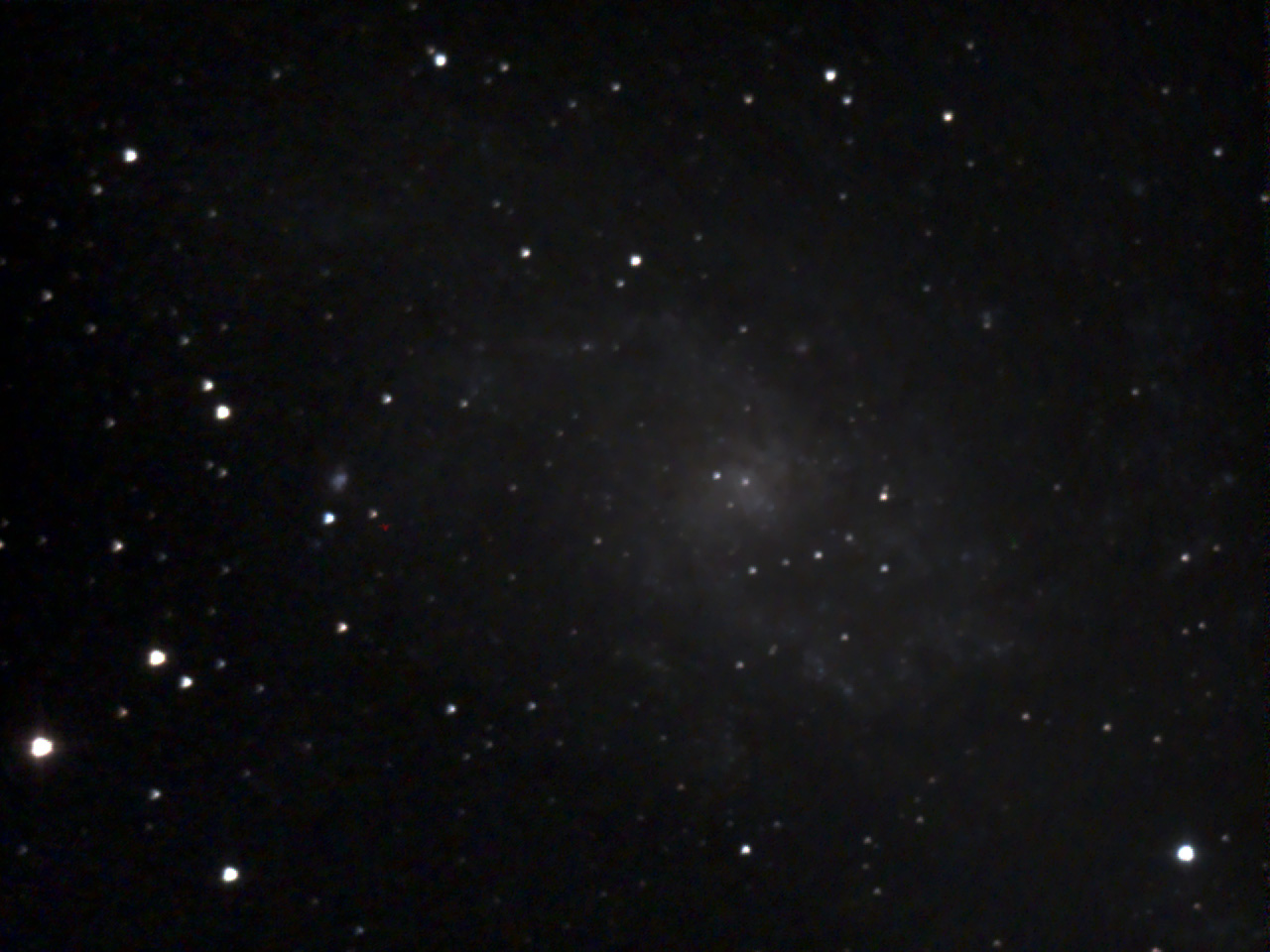
M 33 - Sep 18, 2020 |
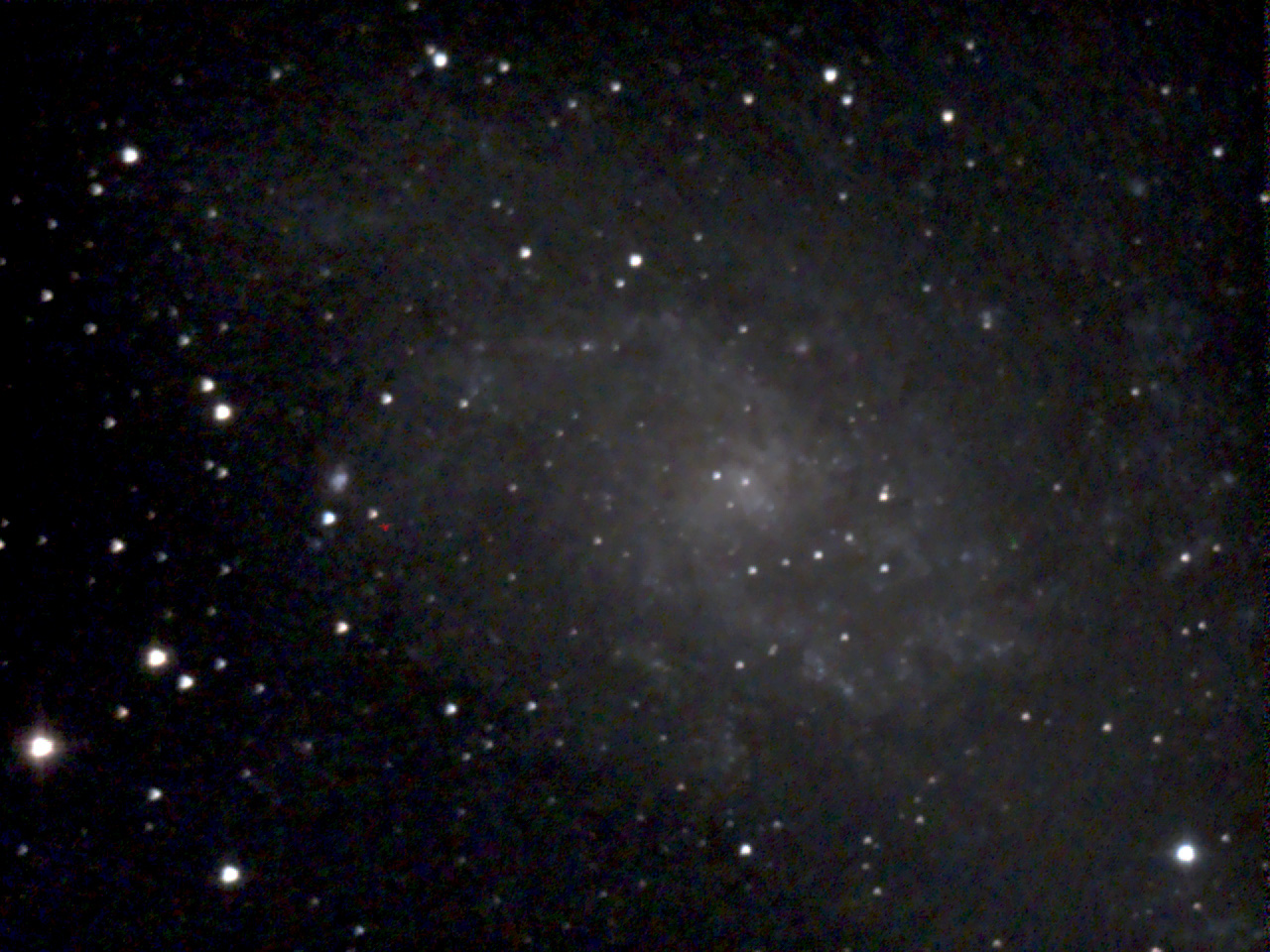
M 33 - Sep 18, 2020, processed |
|||
 |
 |
|||
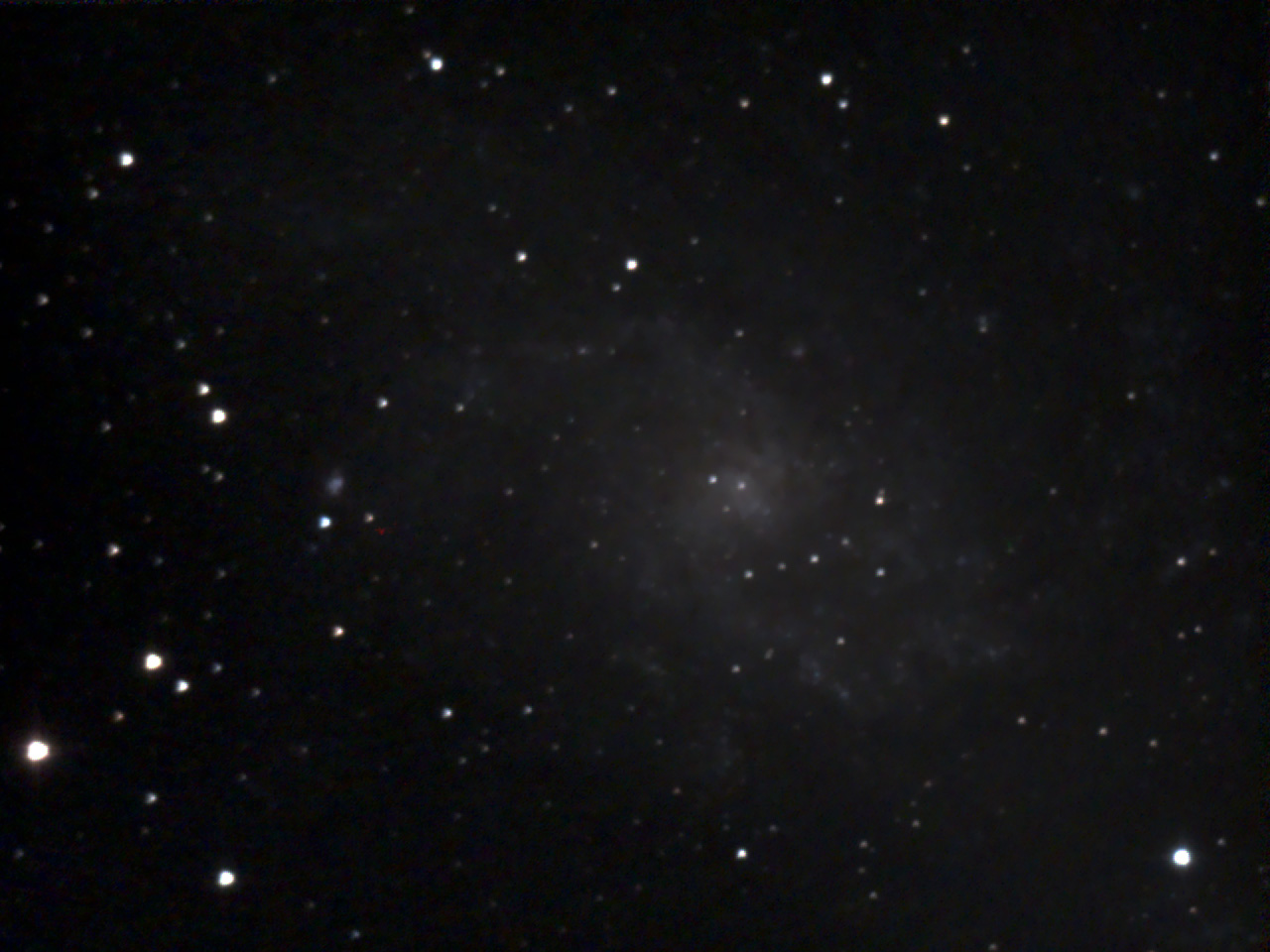
M 33 - Oct 10, 2020 |
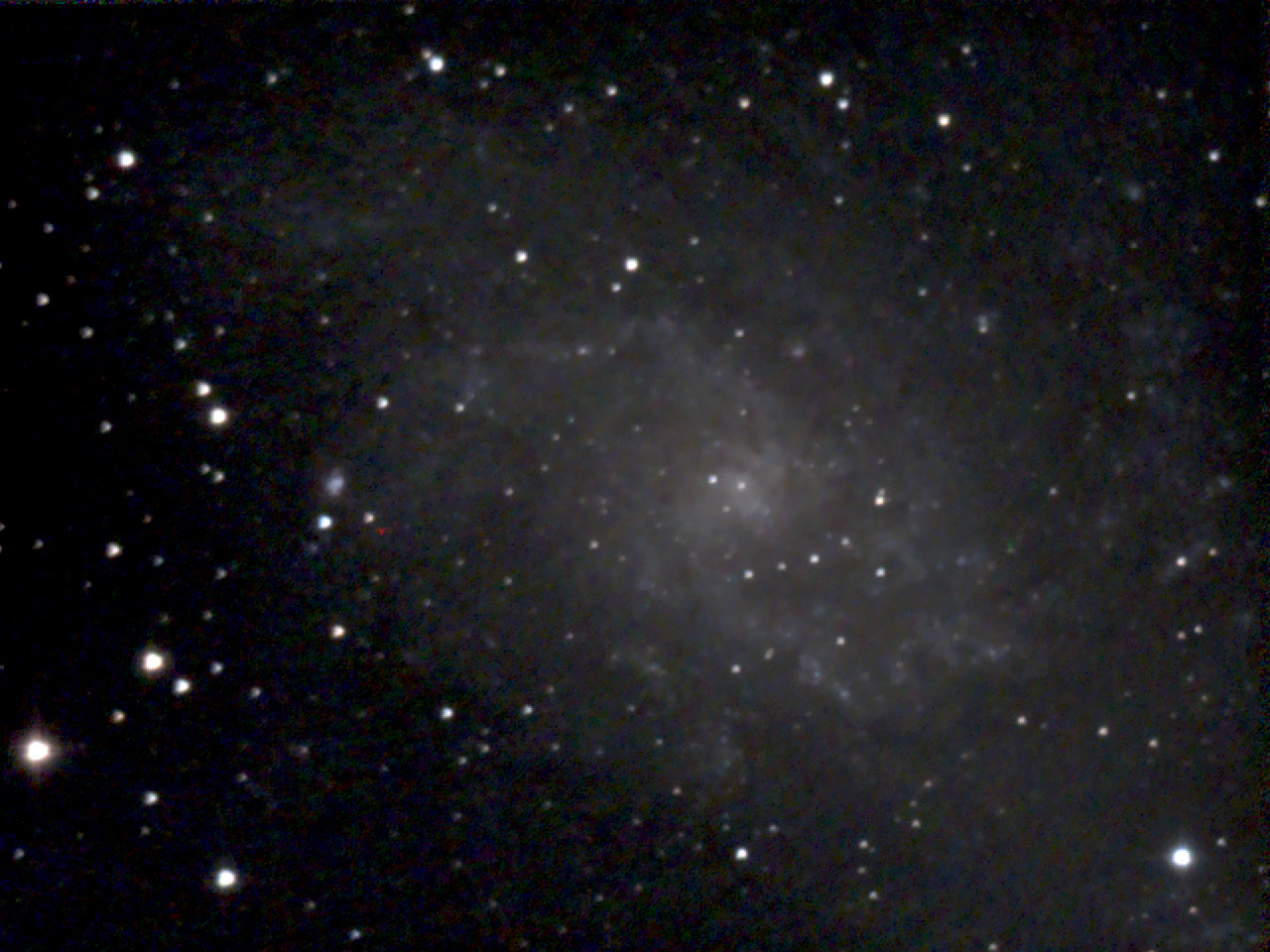
M 33 - Oct 10, 2020, processed |
|||
 |
 |
|||
M 33 - Oct 10, 2020 |
M 33 - Oct 10, 2020, processed |
|||
|
|
|
||
M 33 - Nov 14, 2020 |
M 33 - Nov 14, 2020 |
M 33 - Nov 14, 2020 |
||
|
|
|
||
M 33 - Nov 14, 2020, photo on top processed |
M 33 - Nov 14, 2020, photo on top processed |
M 33 - Nov 14, 2020, photo on top processed |
||
 |
|
|||
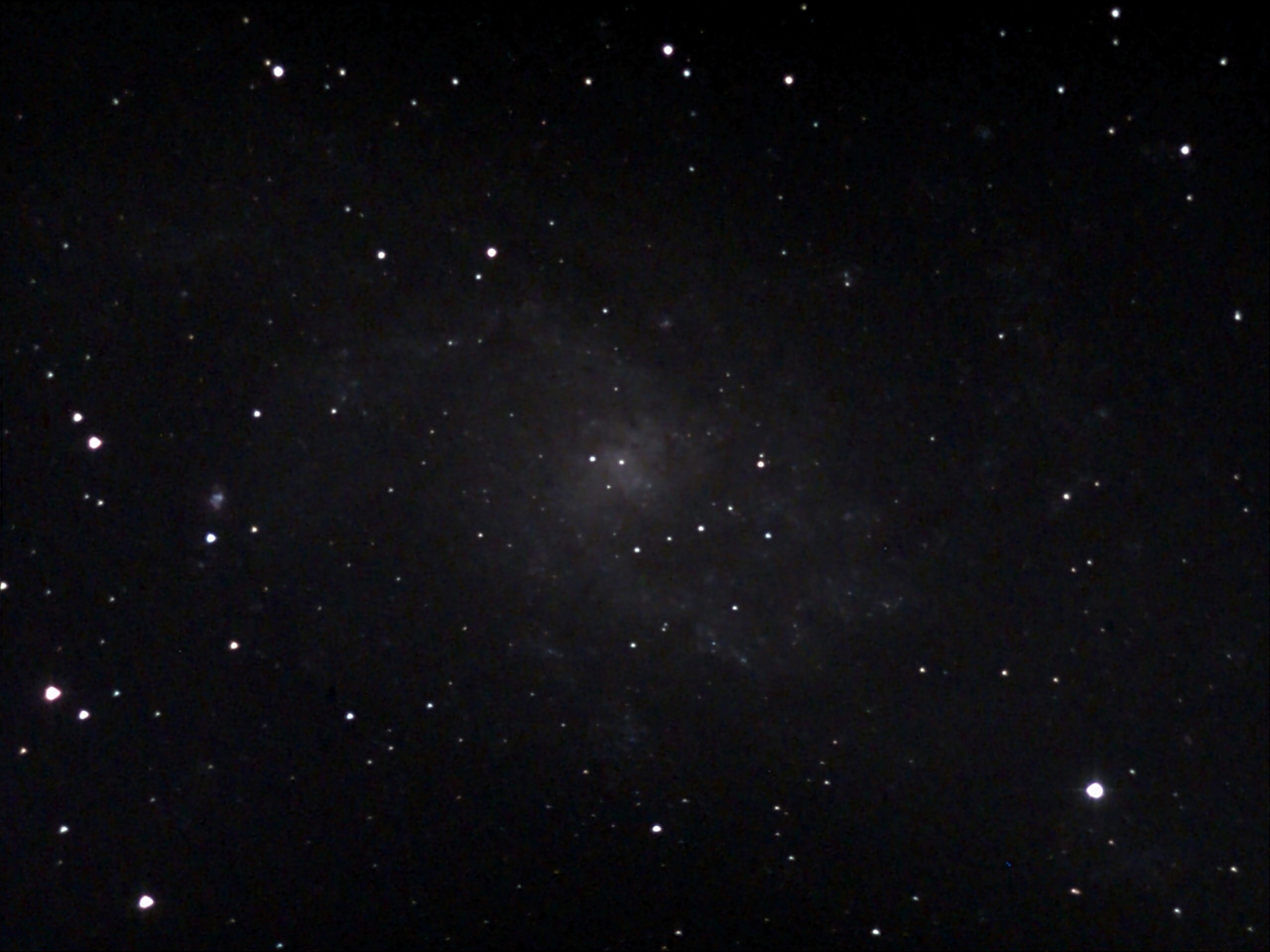
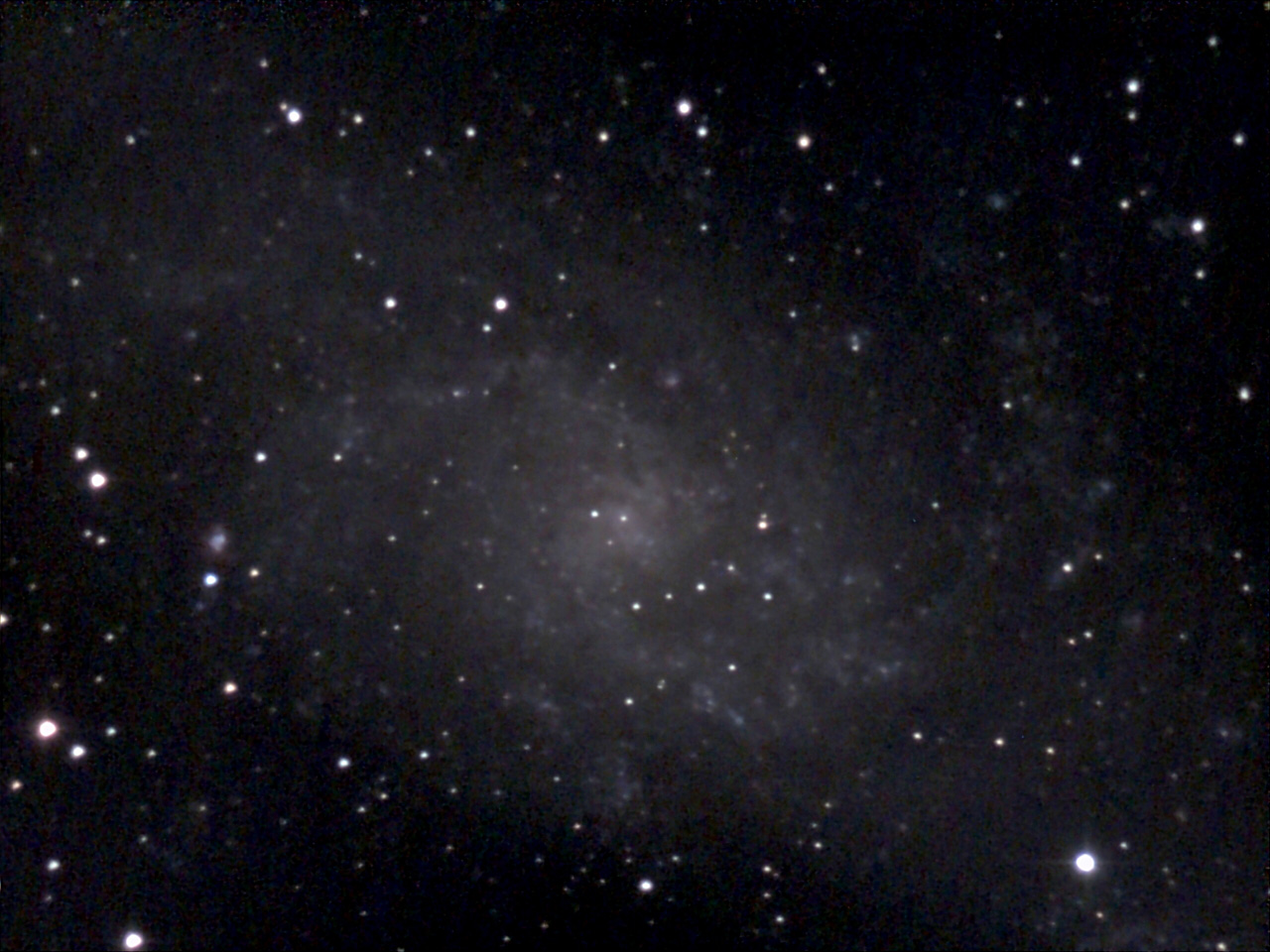
M 33 - Oct 7, 2021 |
M 33 - Oct 7, 2021, somewhat fuzzy |
|||
 |
 |
|||
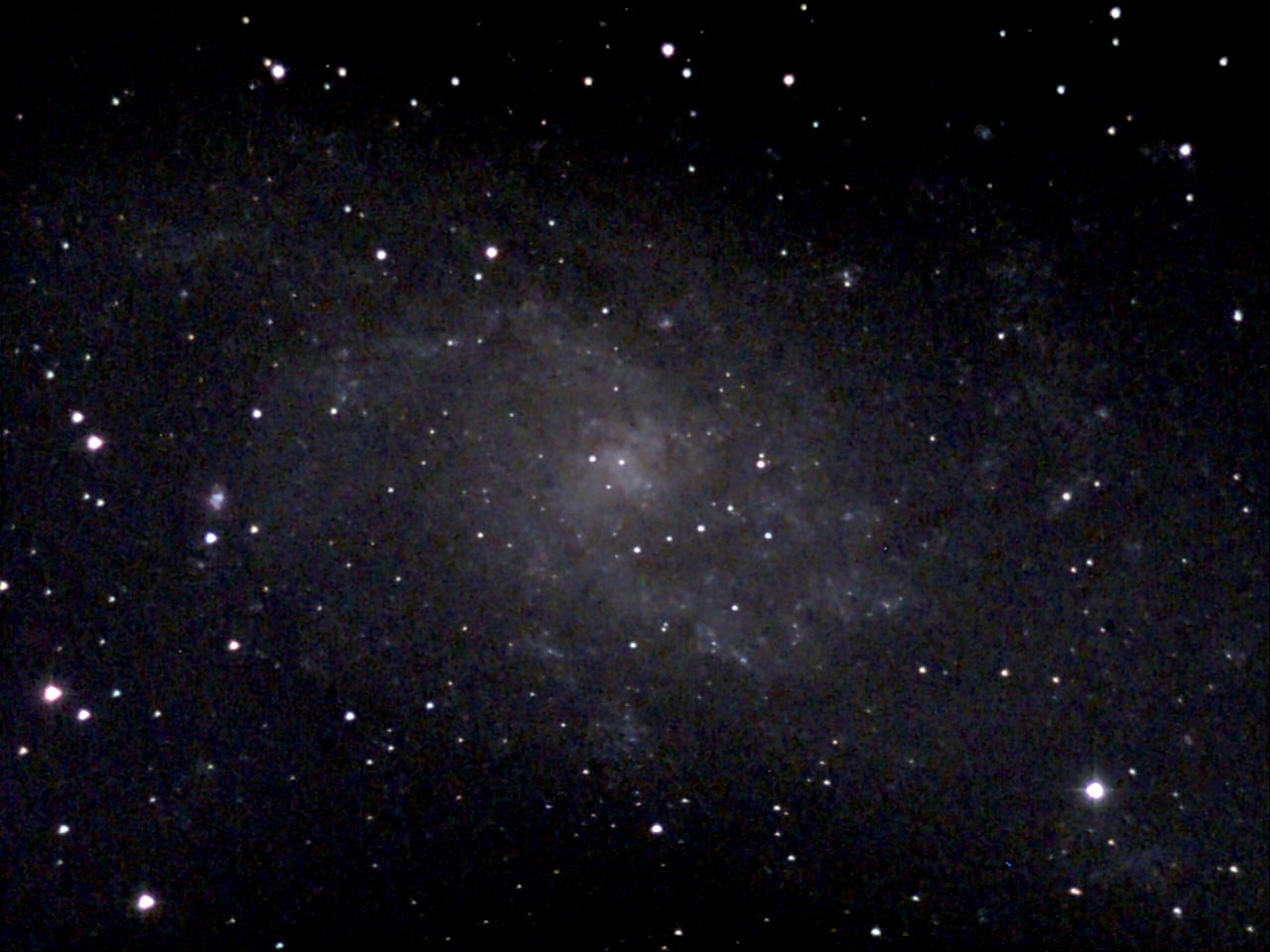
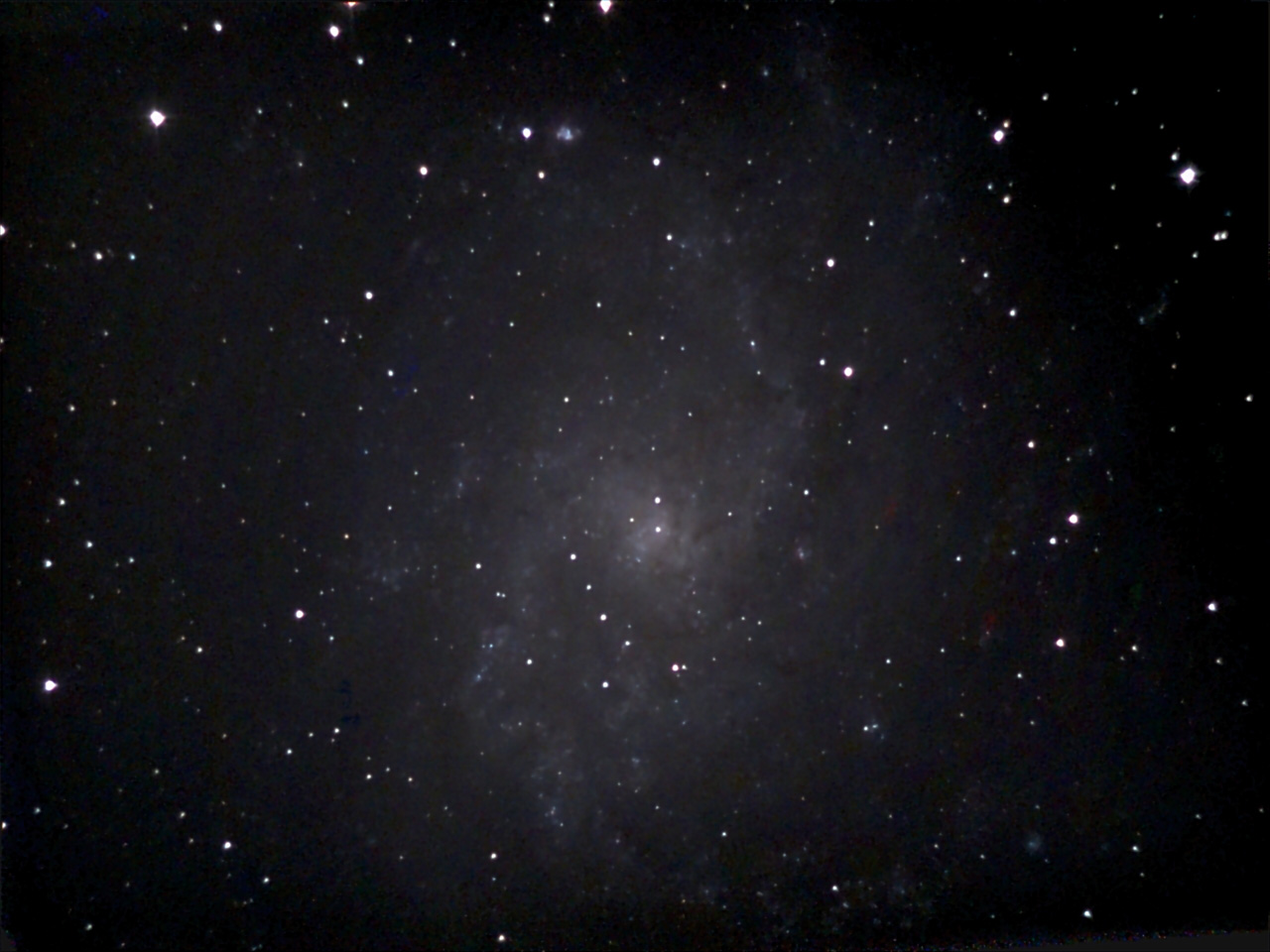
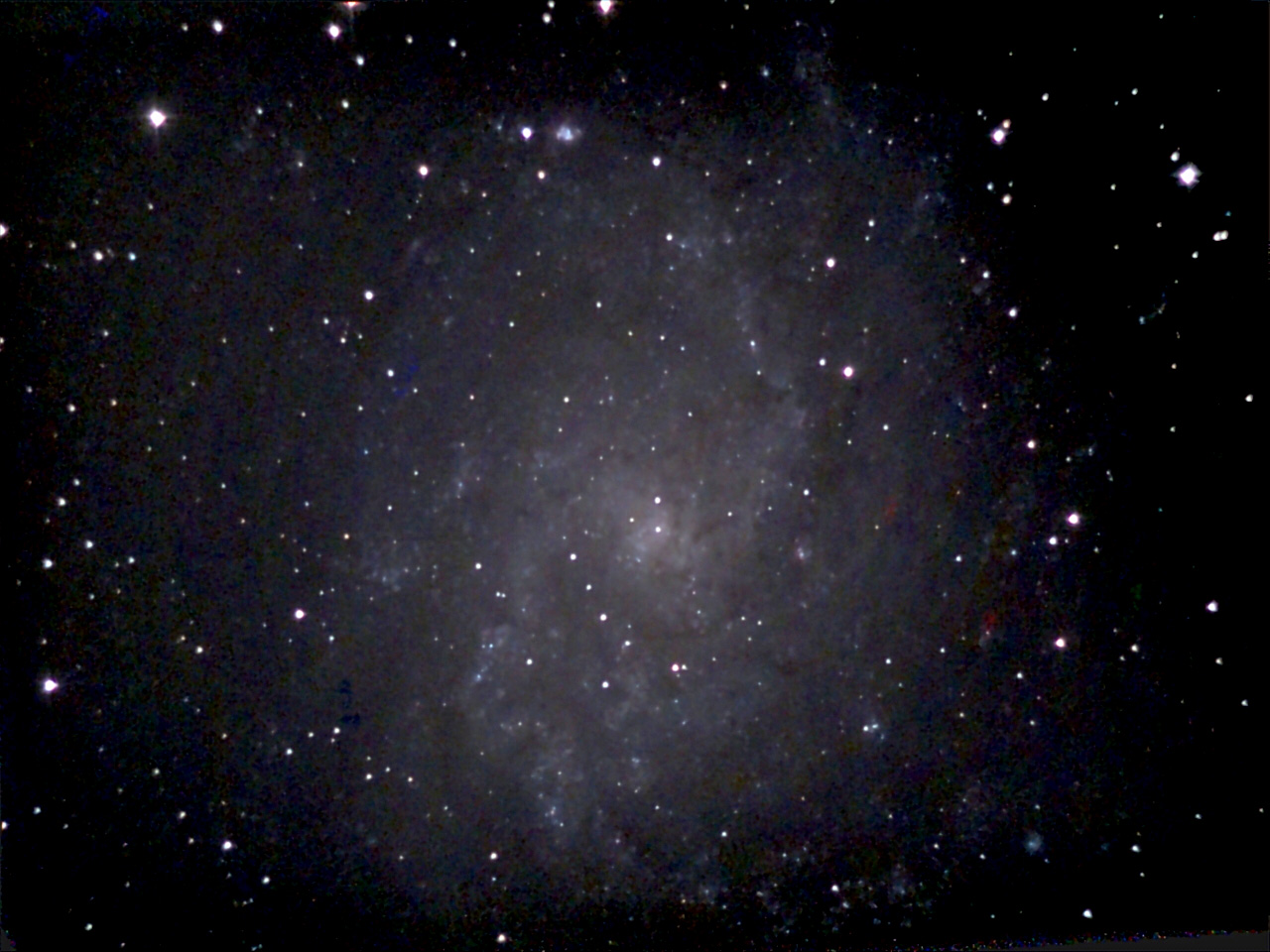
M 33 - Oct 7, 2021, photo on top processed |
M 33 - Oct 7, 2021, photo on top processed |
|||
 |
 |
|||
M 33 - Jan 24, 2022 |
M 33 - Jan 24, 2022, photo left processed |
|||
|
|
|||
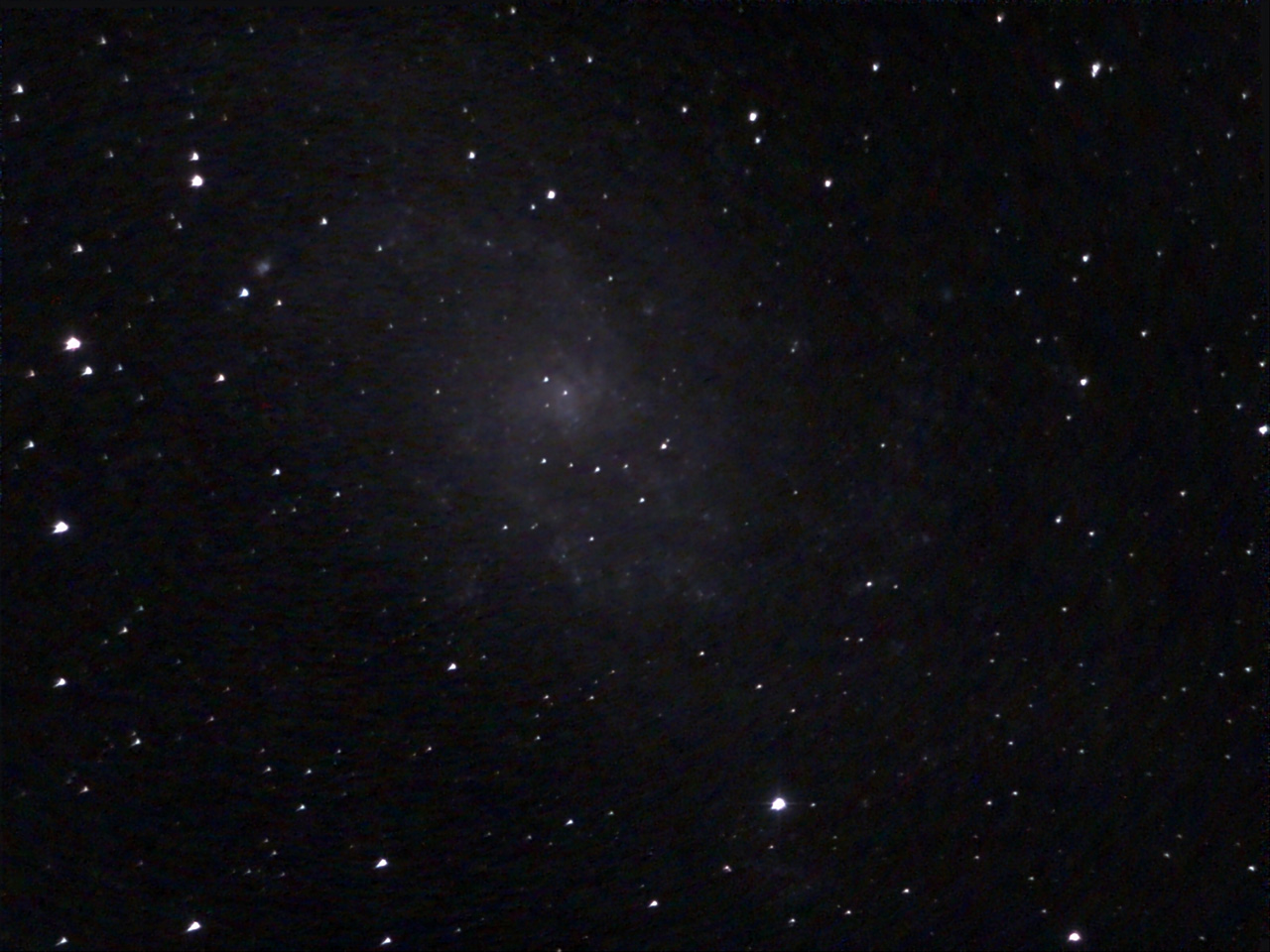
M 33 - Jan 24, 2022 |
M 33 - Jan 24, 2022, photo left processed |
 |
 |
 |
||
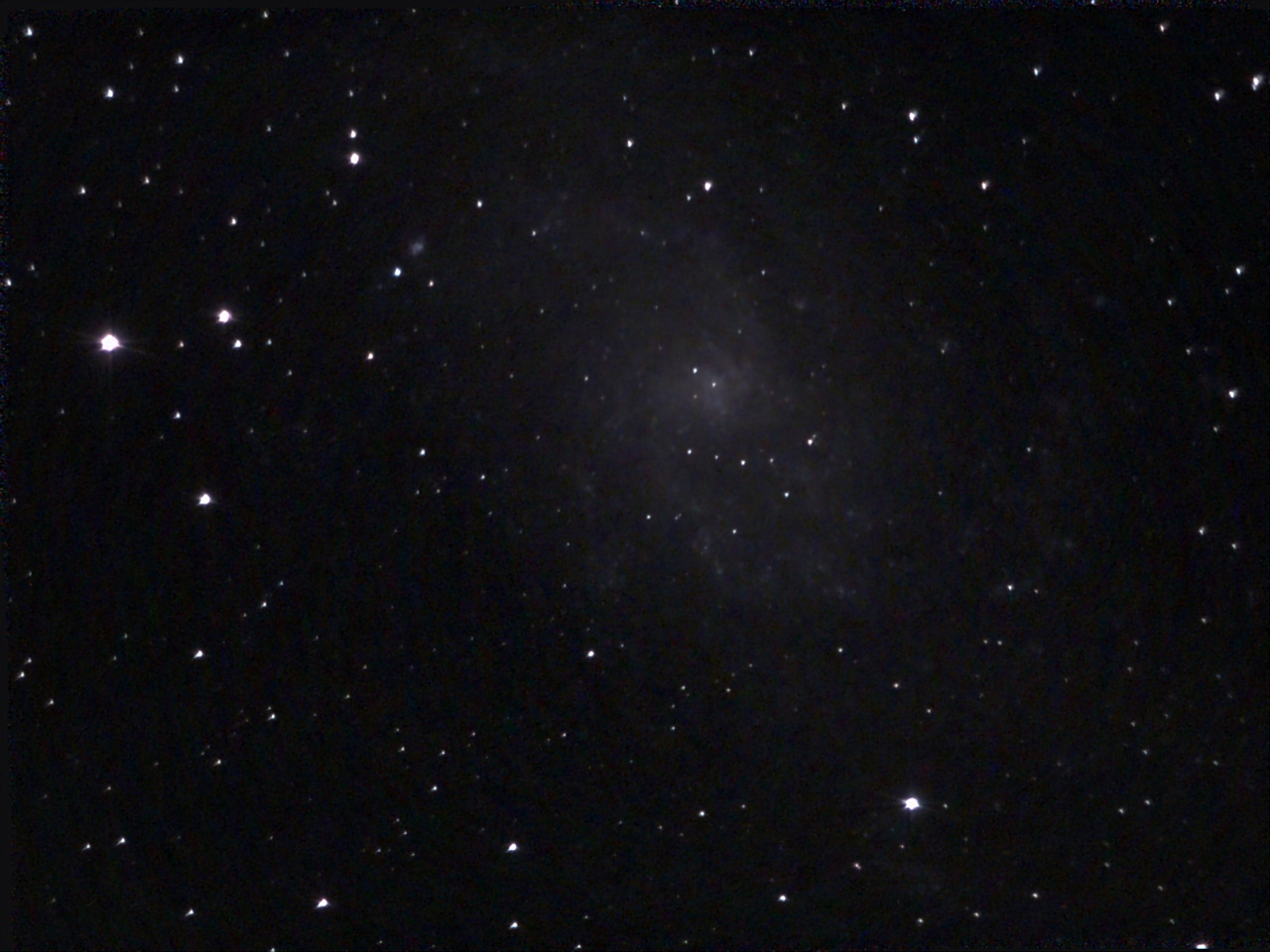
M 33 - Dec 10, 2021 |
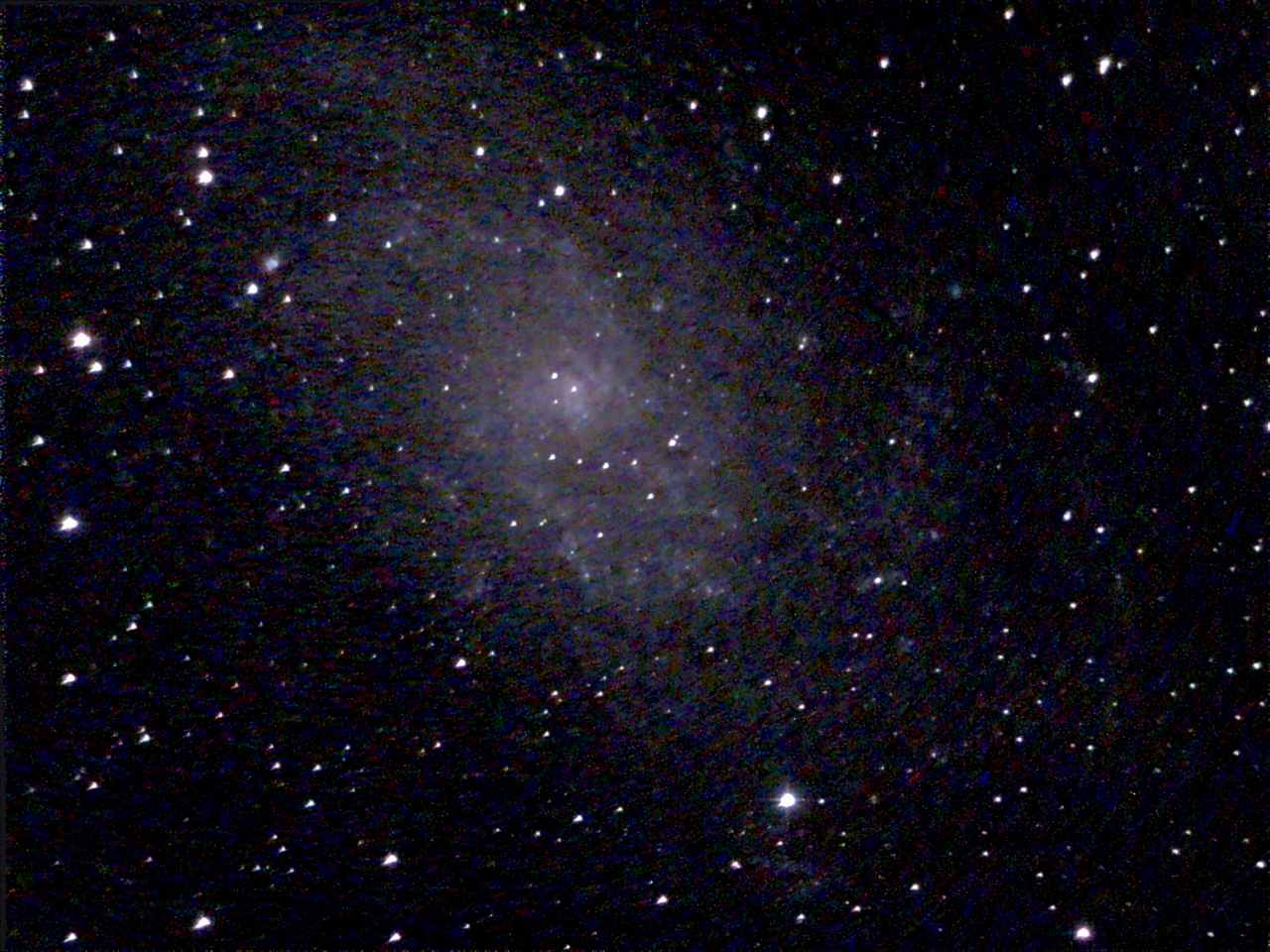
M 33 - Dec 10, 2021 |
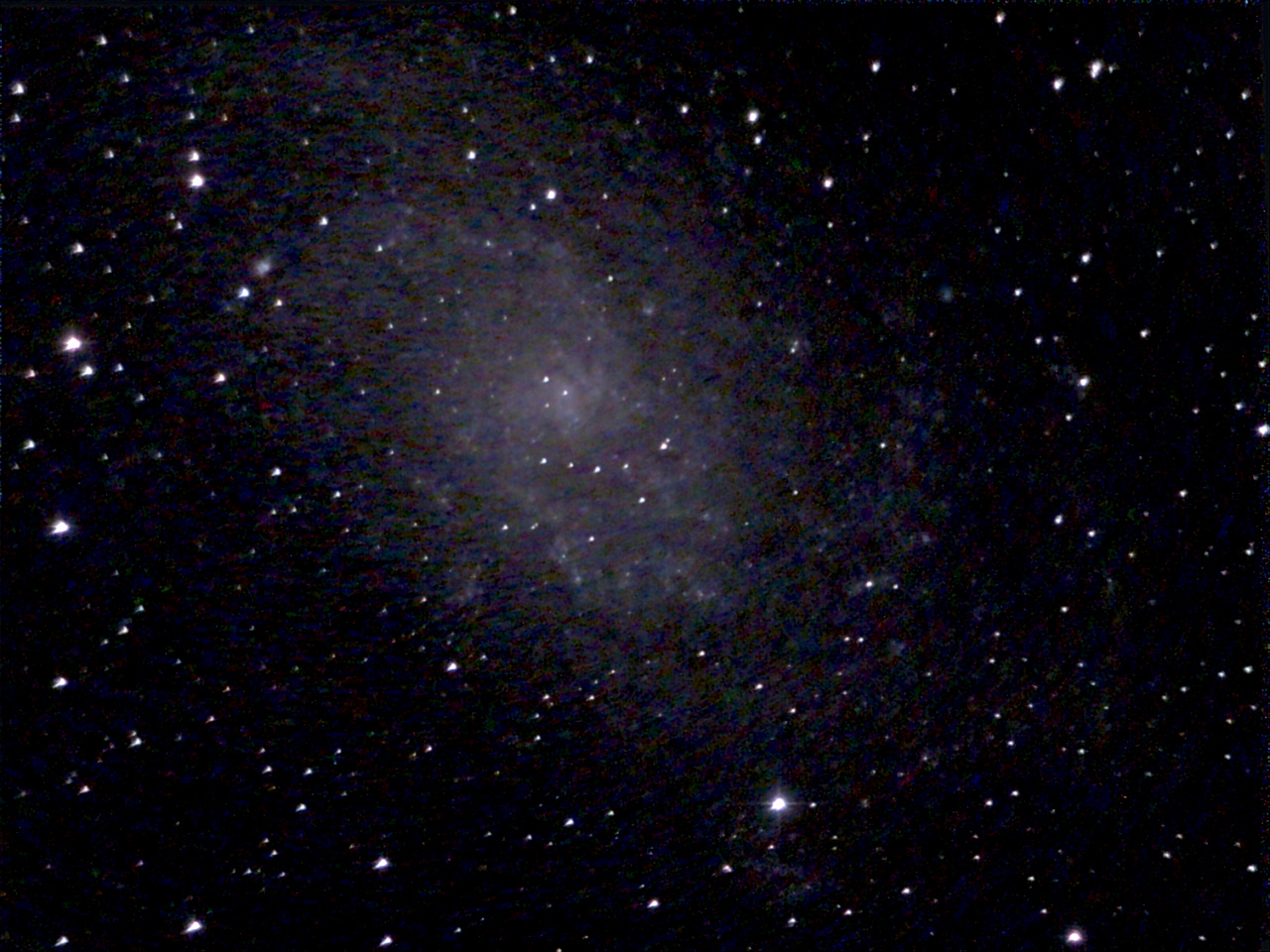
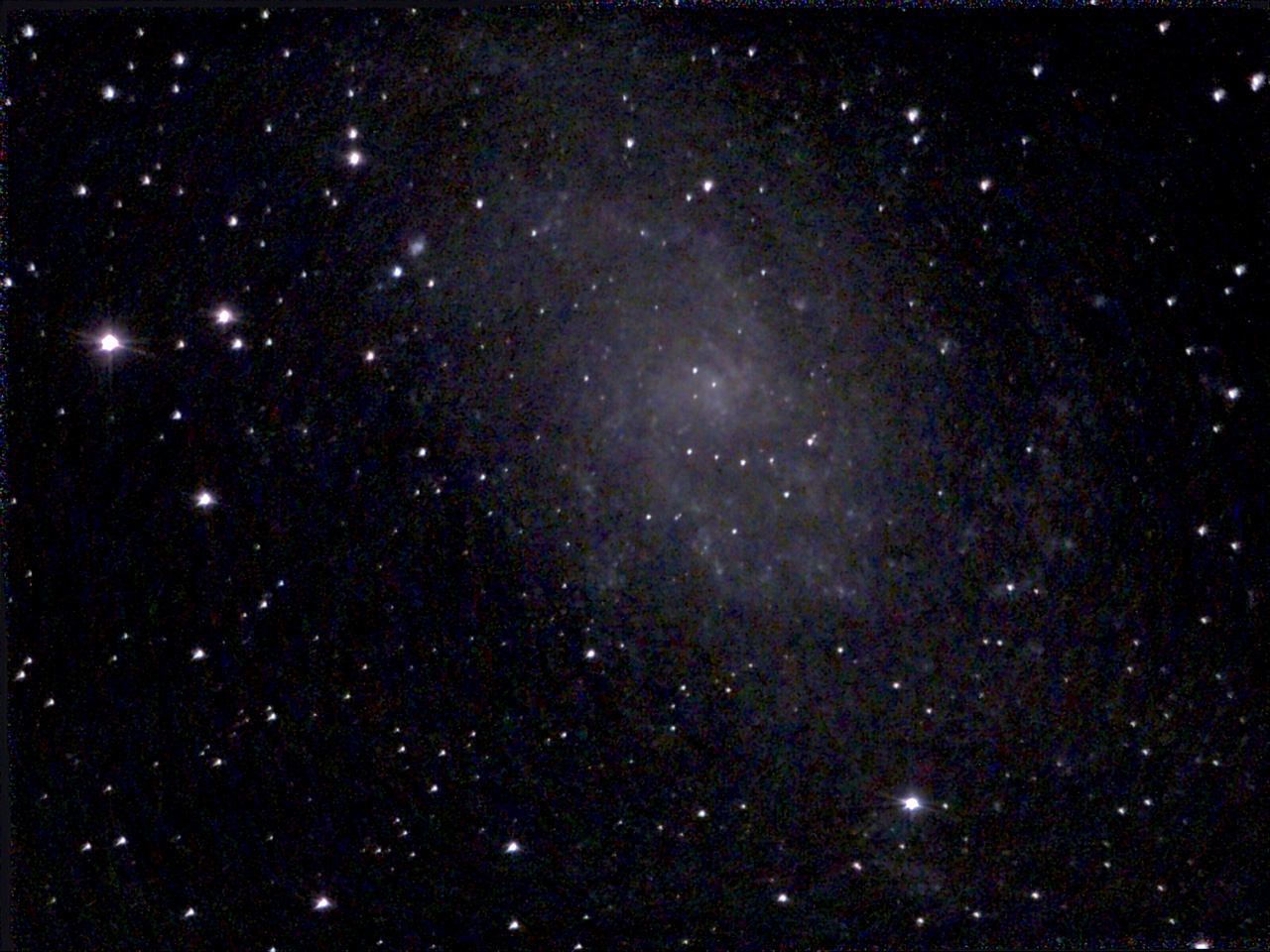
M 33 - Dec 21, 2021 |
||
 |
 |
 |
||
M 33 - Dec 10, 2021, photo on top processed |
M 33 - Dec 10, 2021, photo on top processed |
M 33 - Dec 21, 2021, photo on top processed |
||
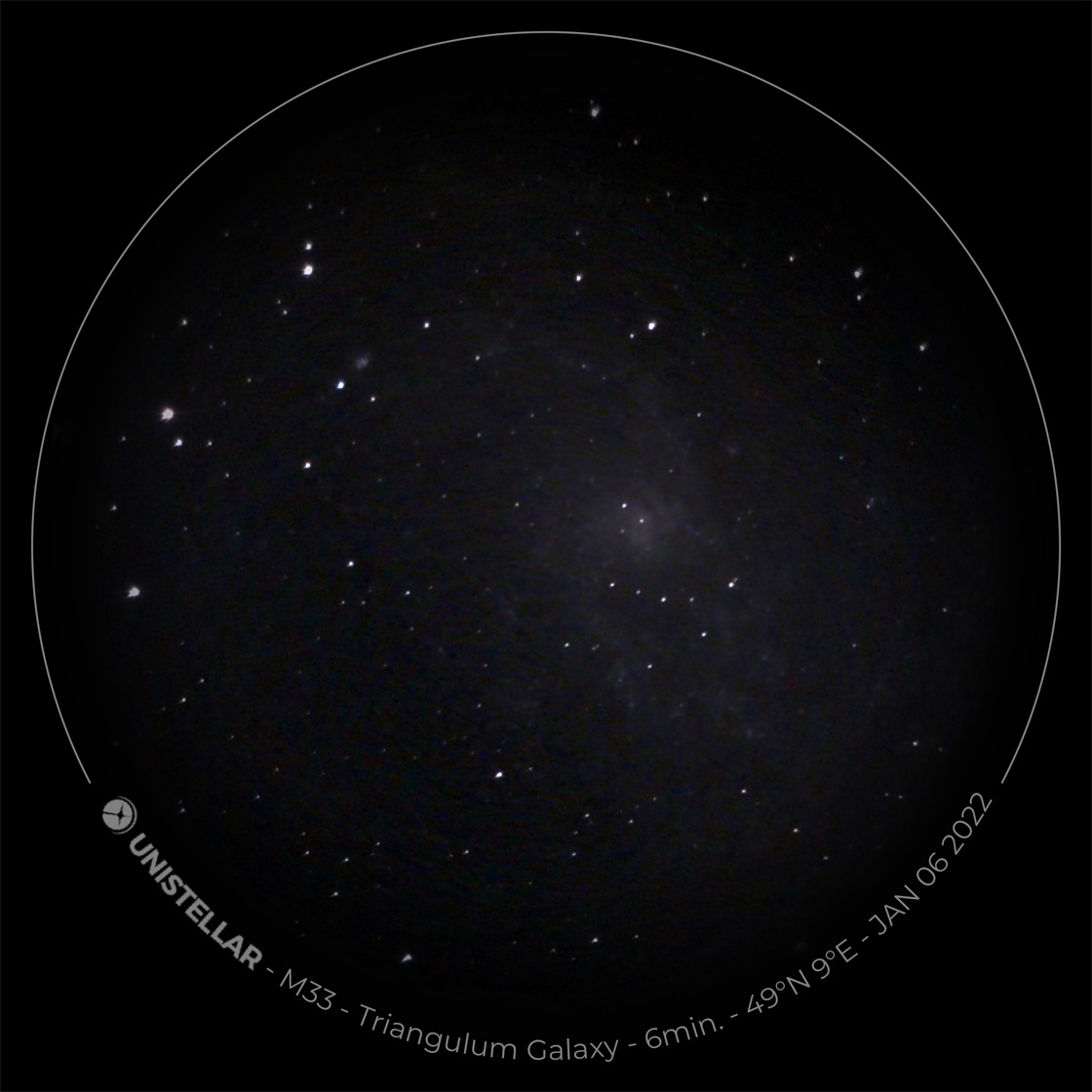 |
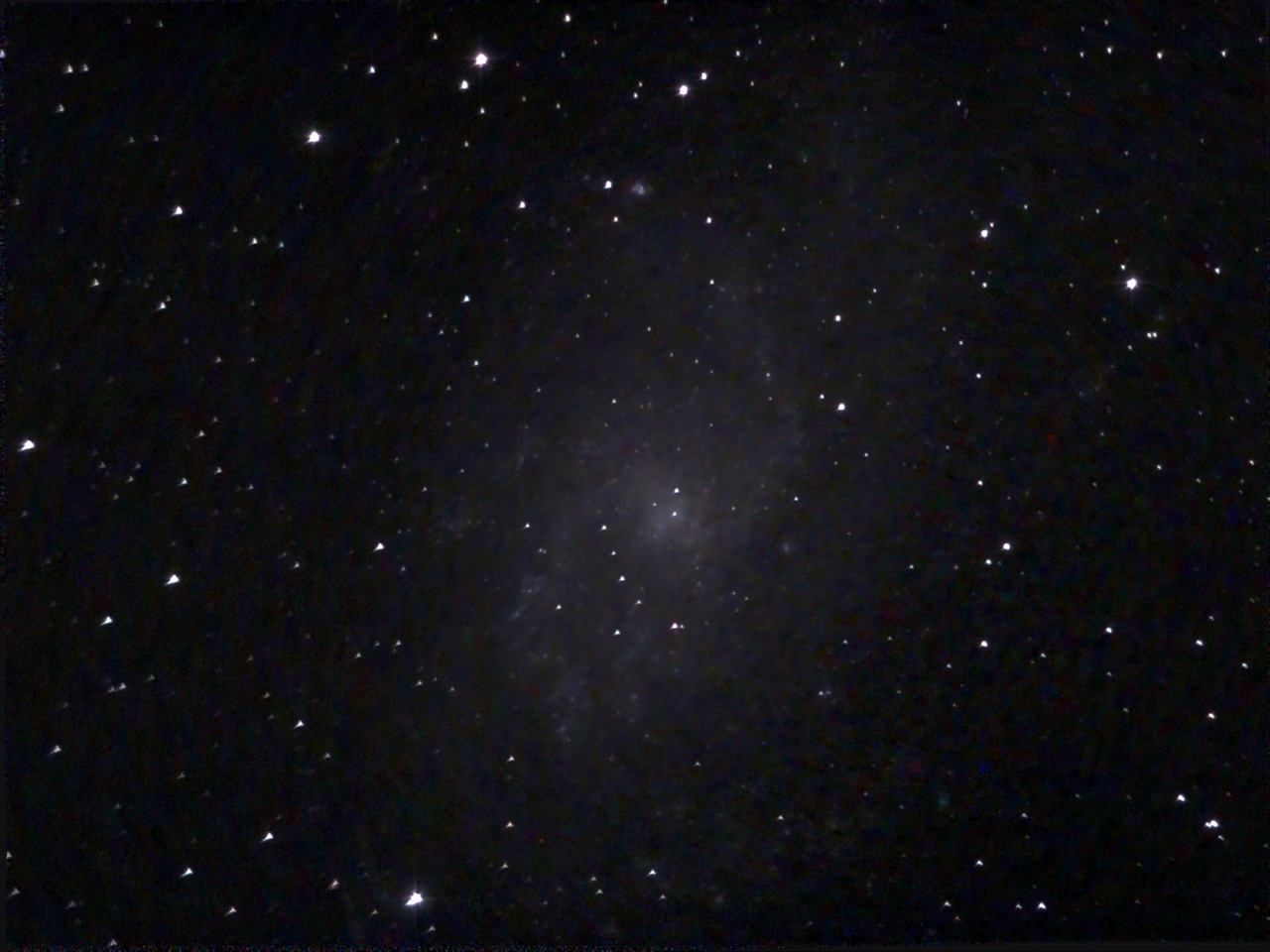 |
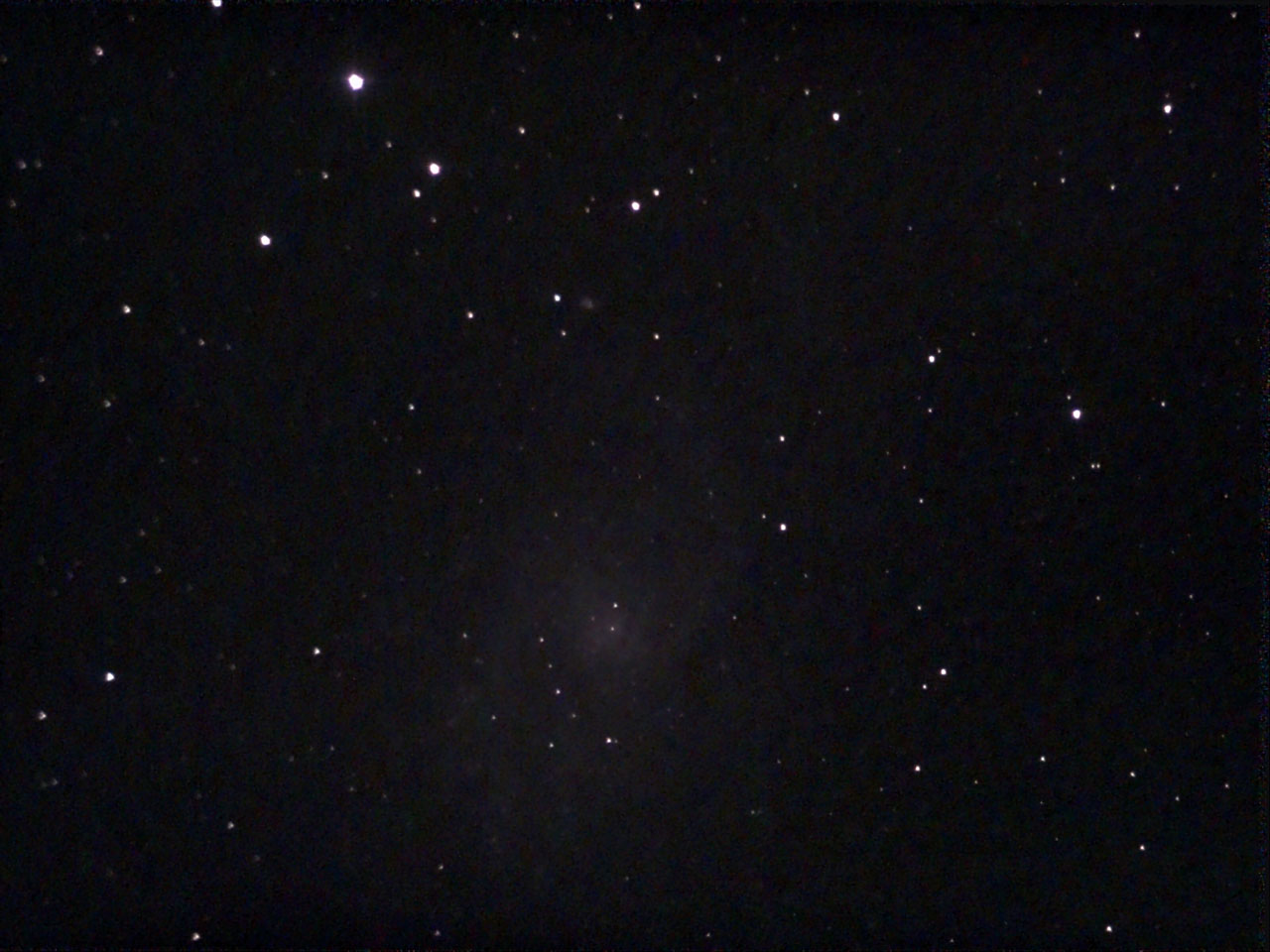 |
||
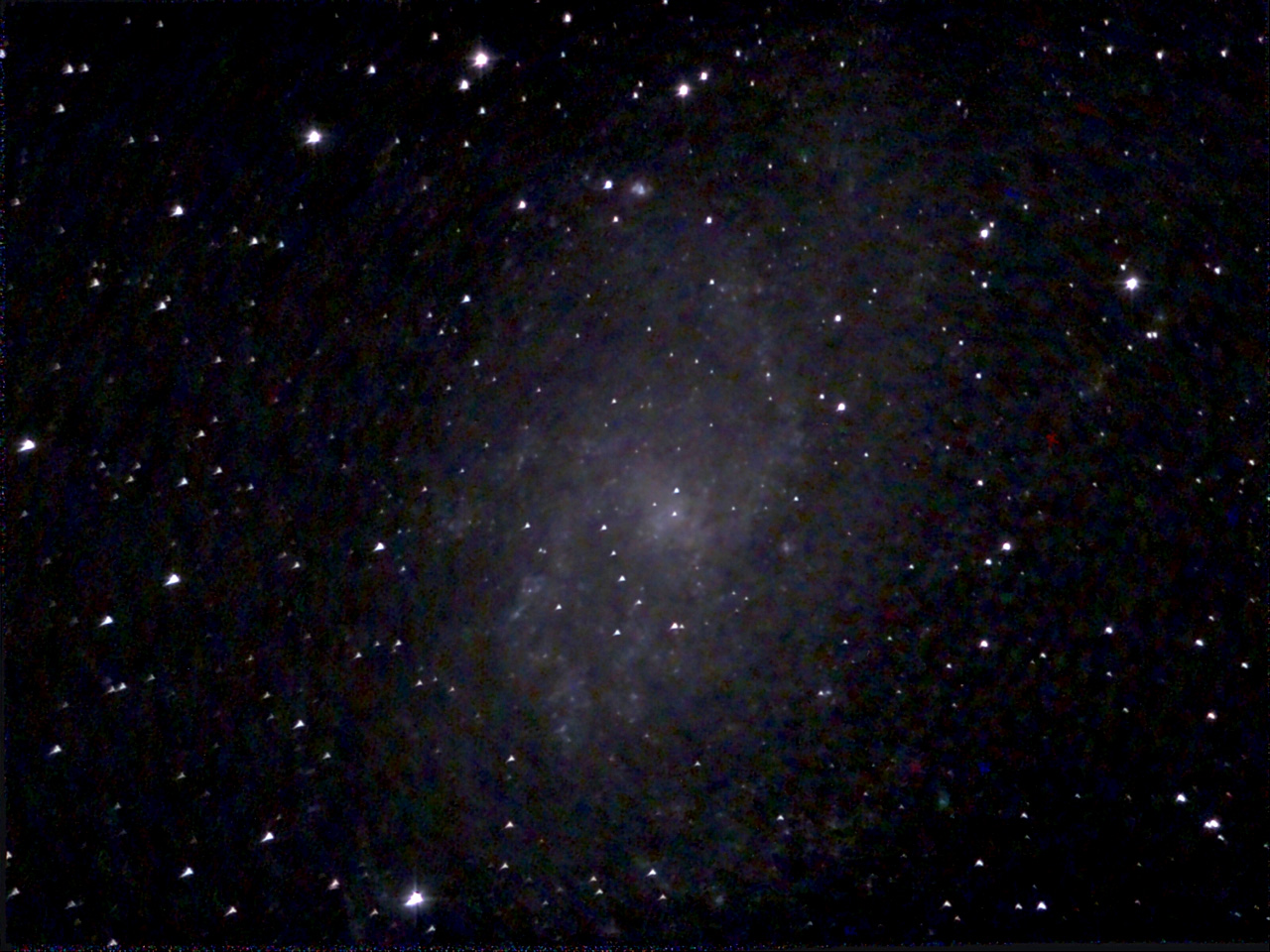
M 33 - Jan 6, 2022 |
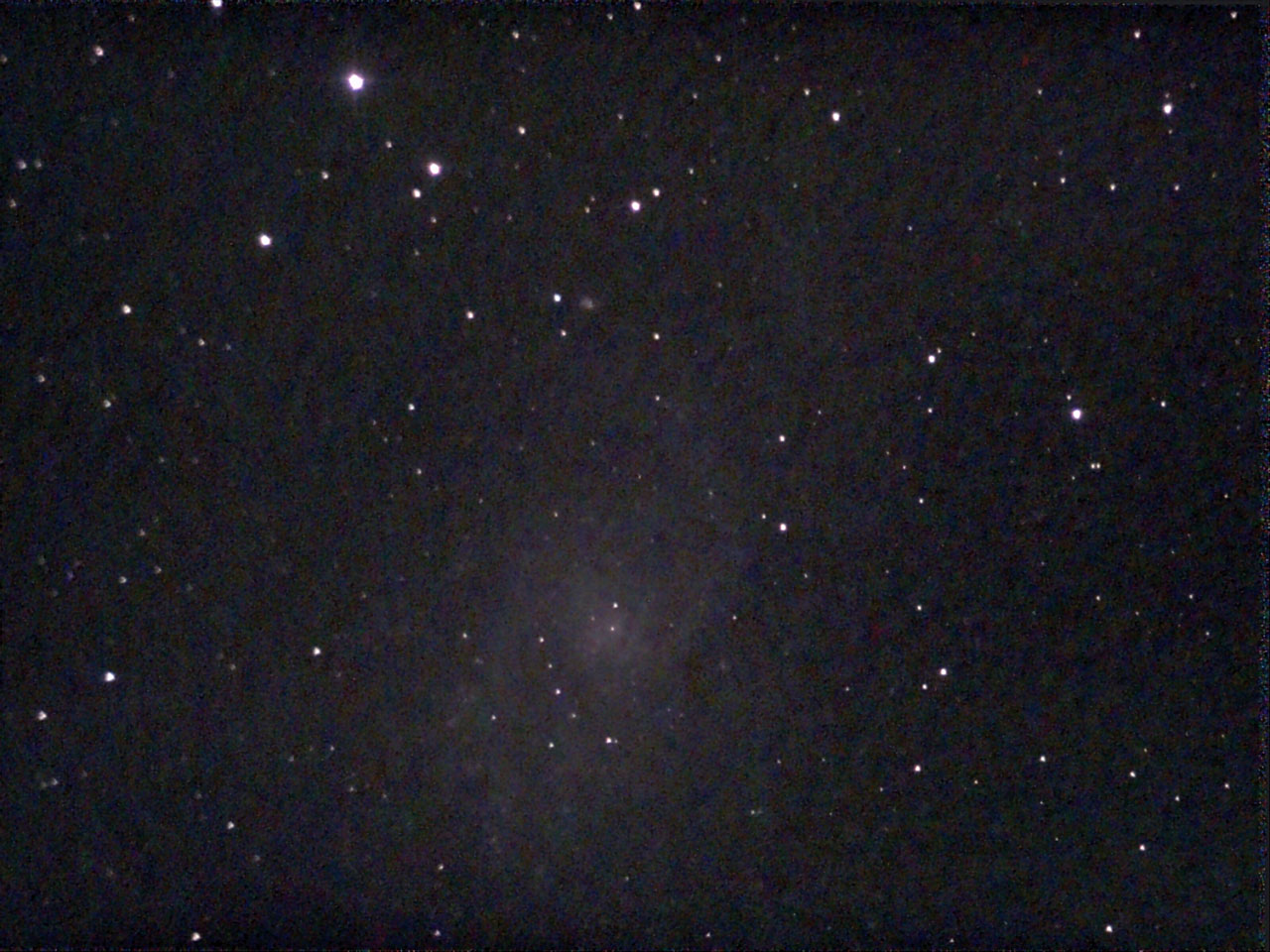
M 33 - Jan 24, 2022 |
M 33 - Mar 19, 2022 |
||
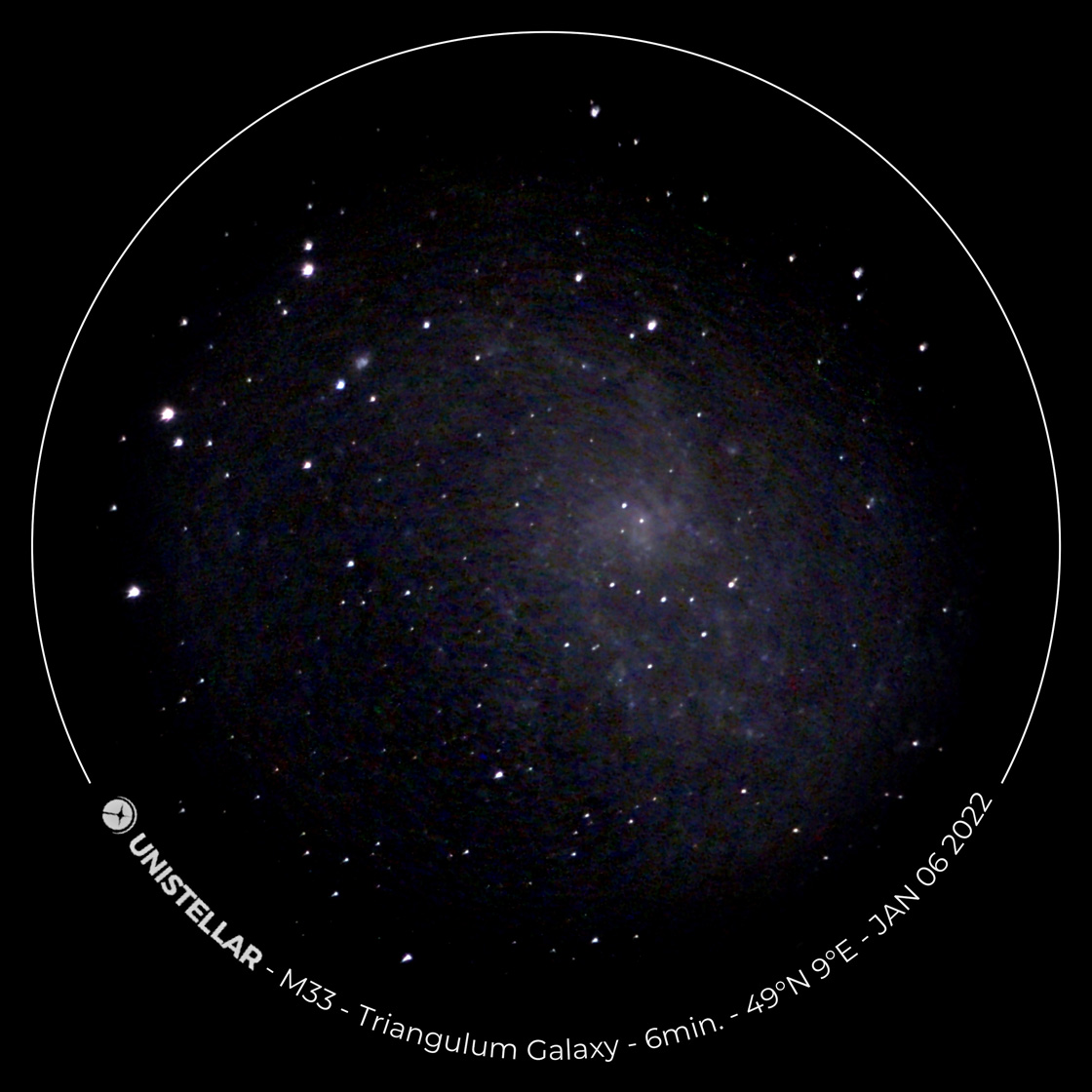 |
 |
 |
||
M 33 - Jan 6, 2022, photo above processed |
M 33 - Jan 24, 2022, photo above processed |
M 33 - Mar 19, 2022, photo above processed |
||
|
|
|
||
M 33 - Nov 2, 2022 (third sample) |
M 33 - Dec 17, 2022 (third sample) |
M 33 - Jan 18, 2023 (third sample) |
||
|
|
|
||
M 33 - Nov 2, 2022, photo on top processed |
M 33 - 17.12.2022, photo on top processed |
M 33 - Jan 18, 2023, photo on top processed |
||
|
|
|
||
M 33 with NGC 604 - Nov 2, 2022, processed |
M 33 - Dec 18, 2023, 10 min |
M 33 - Dec 18, 2023, photo left processed |
|
|
|
M 33 - Oct 30, 2022, original (270 frames = 2700s) |
M 33 - Oct 30, 2022, large (270 frames = 2700s) processed |
|
|
|
|
M 33 - Oct 30, 2022, original (270 frames = 2700s), processed and denoised (DN) |
M 33 with NGC 604 - Oct 30, 2022, large (270 frames = 2700s) processed and denoised (DN) |
|
 |
 |
|
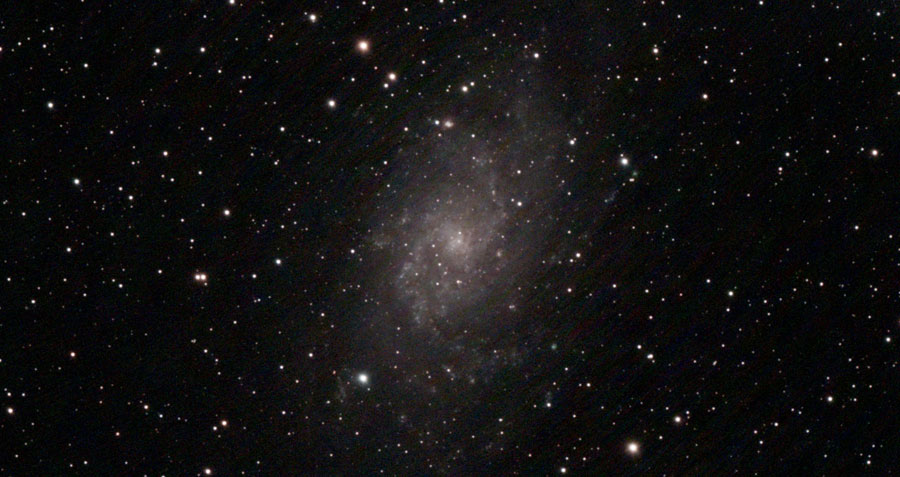
M 33 - Jan 28, 2024, original (250 frames = 2500s), CLS Filter |
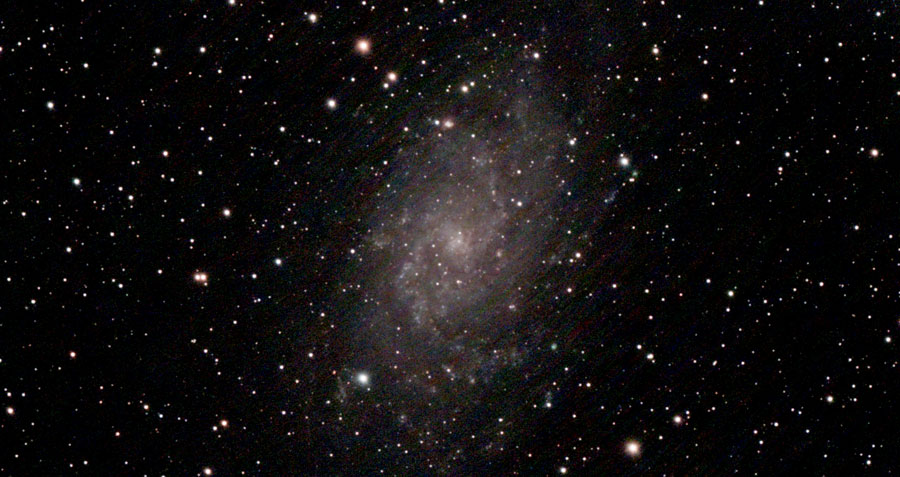
M 33 - Jan 29, 2024, large (250 frames = 2500s) CLS Filter, processed |
|
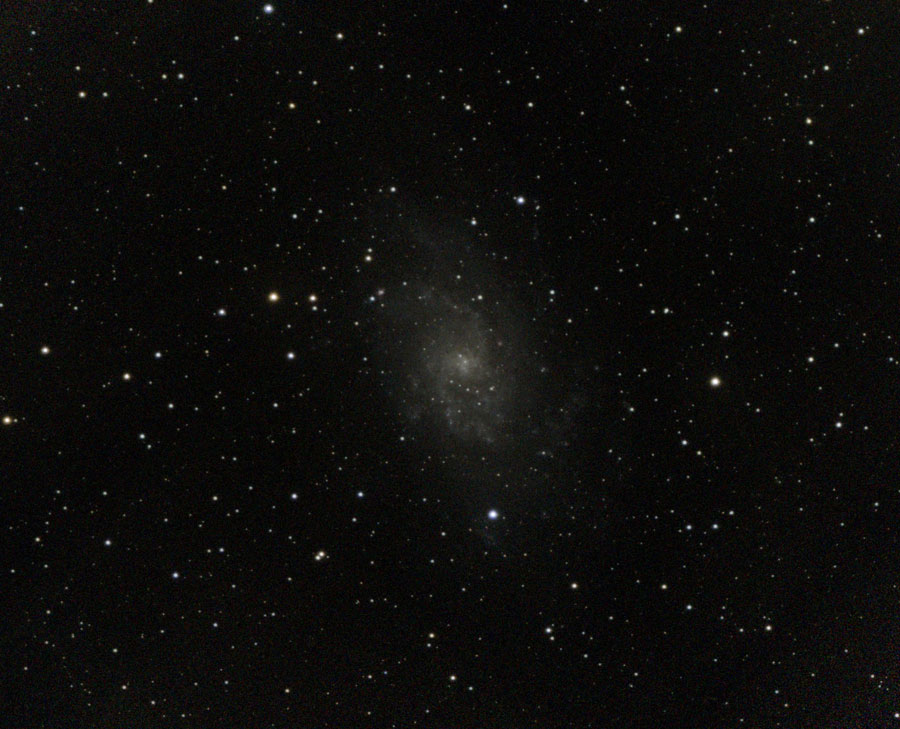 |
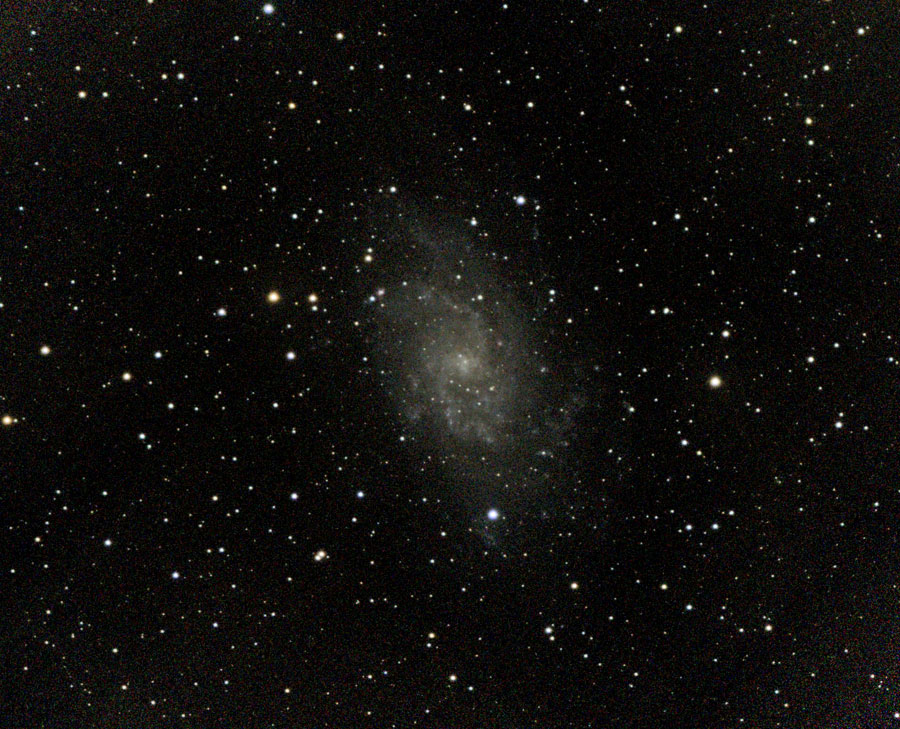 |
|
M 33 - Jan 29, 2024, original (253 frames = 2530s), small mosaic |
M 33 - Jan 29, 2024, large (253 frames = 2530s) processed |
|
|
|
M 33 - Nov 3, 2024, 2000 (361 frames = 1 h) |
M 33 - Nov 3, 2024, 2000 (361 frames = 1 h), processed (PSE) |
|
|
|
|
M 33 - Nov 3, 2024, 2100 (361 frames = 1 h), section, processed (TIFF) |
M 33 - Nov 3, 2024, 2100 (361 frames = 1 h), section, processed (TIFF) and denoised |
|
|
|
|
Ditto, with white balance, 2100 |
Ditto, NGC 604 marked, with white balance, 2100 |
|
|
|
|
M 33 - Dec 26, 2024, 2000 (241 frames = 40 min) |
M 33 - Dec 26, 2024, 2000 (241 frames = 40 min), processed (PSE) |
|
|
|
|
M 33 - Dec 26, 2024, 2000 (241 frames = 40 min), processed (GraXpert) |
M 33 - Dec 26, 2024, 2000 (241 frames = 40 min), processed (GraXpert), made brighter and denoised (DN) |
|
|
|
|
M 33 - Nov 21, 2025, 2100 (360 frames = 1 h) |
M 33 - Nov 21, 2025, 2100 (360 frames = 1 h), processed |
|
|
|
|
M 33 - Nov 21, 2025, 2100 (360 frames = 1 h) |
M 33 - Nov 21, 2025, 2100 (360 frames = 1 h) |
|
| H II regions in M 33: IC 131, IC 132, IC 133, (IC 134*,) IC 135, IC 136, IC 137, IC 139, IC 140, IC 142, IC 143, NGC 588, NGC 592, NGC 595, NGC 604 *) IC 134 is a star |
|
|
Evaluation with nova.astrometry.net |
||
|
|
|
M 33 - Jan 5, 2026, 2000 (360 frames = 1 h) |
M 33 - Jan 5, 2026, 2000 (360 frames = 1 h), section, processed |
|
|
|
|
M 33 - Jan 5, 2026, 2000 (360 frames = 1 h), section, processed, denoised (TP) |
M 33 - Jan 5, 2026, (360 frames = 1 h), section, processed, Eros indicated (Trail) |
|
|
|
M 33 - Jan 15, 2026, 45 min, unprocessed, original |
M 33 - Jan 15, 2026, 45 min, section, processed with Stellar Studio and further processed | |
|
|
|
Evaluation with nova.astrometry.net |
Evaluation with nova.astrometry.net |
H II regions in M 33: IC 131, IC 132, IC 133, (IC 134*,) IC 135, IC 136, IC 137, IC 139, IC 140, IC 142, IC 143, NGC 588, NGC 592, NGC 595, NGC 604
*) IC 134 is a star