

H2 II Regions
What Are H II Regions? | H II Regions in M 33 (Triangulum Galaxy) | H II Regions in M 101 (Pinwheel Galaxy) | Final Words | Links | Appendix 1: M 33 | Appendix 2: M 101
On this page, I describe my experiences with photographing H II regions in external galaxies using my electronic telescopes Unistellar eVscope (2), Vaonis Vespera (Pro), and DwarfLab Dwarf mini. I will start by showing only photos of one telescope, and include the rest in the appendices.
What Are H II Regions?
I do not want to give detailed explanations of H regions here, but only quote the introduction to H II regions on Wikipedia:
An H II region or HII region is a region of interstellar atomic hydrogen that is ionized. It is typically in a molecular cloud of partially ionized gas in which star formation has recently taken place, with a size ranging from one to hundreds of light years, and density from a few to about a million particles per cubic centimetre. The Orion Nebula, now known to be an H II region, was observed in 1610 by Nicolas-Claude Fabri de Peiresc by telescope, the first such object discovered.
The regions may be of any shape because the distribution of the stars and gas inside them is irregular. The short-lived blue stars created in these regions emit copious amounts of ultraviolet light that ionize the surrounding gas. H II regions - sometimes several hundred light-years across - are often associated with giant molecular clouds. They often appear clumpy and filamentary, sometimes showing intricate shapes such as the Horsehead Nebula. H II regions may give birth to thousands of stars over a period of several million years. In the end, supernova explosions and strong stellar winds from the most massive stars in the resulting star cluster disperse the gases of the H II region, leaving a cluster of stars which have formed (such as the Pleiades).
H II regions can be observed at considerable distances in the universe, and the study of extragalactic H II regions is important in determining the distances and chemical composition of galaxies. Spiral and irregular galaxies contain many H II regions, while elliptical galaxies are almost devoid of them. In spiral galaxies, including our Milky Way, H II regions are concentrated in the spiral arms, while in irregular galaxies they are distributed chaotically. Some galaxies contain huge H II regions, which may contain tens of thousands of stars. Examples include the 30 Doradus region in the Large Magellanic Cloud and NGC 604 in the Triangulum Galaxy.
More on this on Wikipedia!
H II Regions in M 33 (Triangulum Galaxy)
SkySafari Overview
SkySafari map showing M 33 and its H II regions:
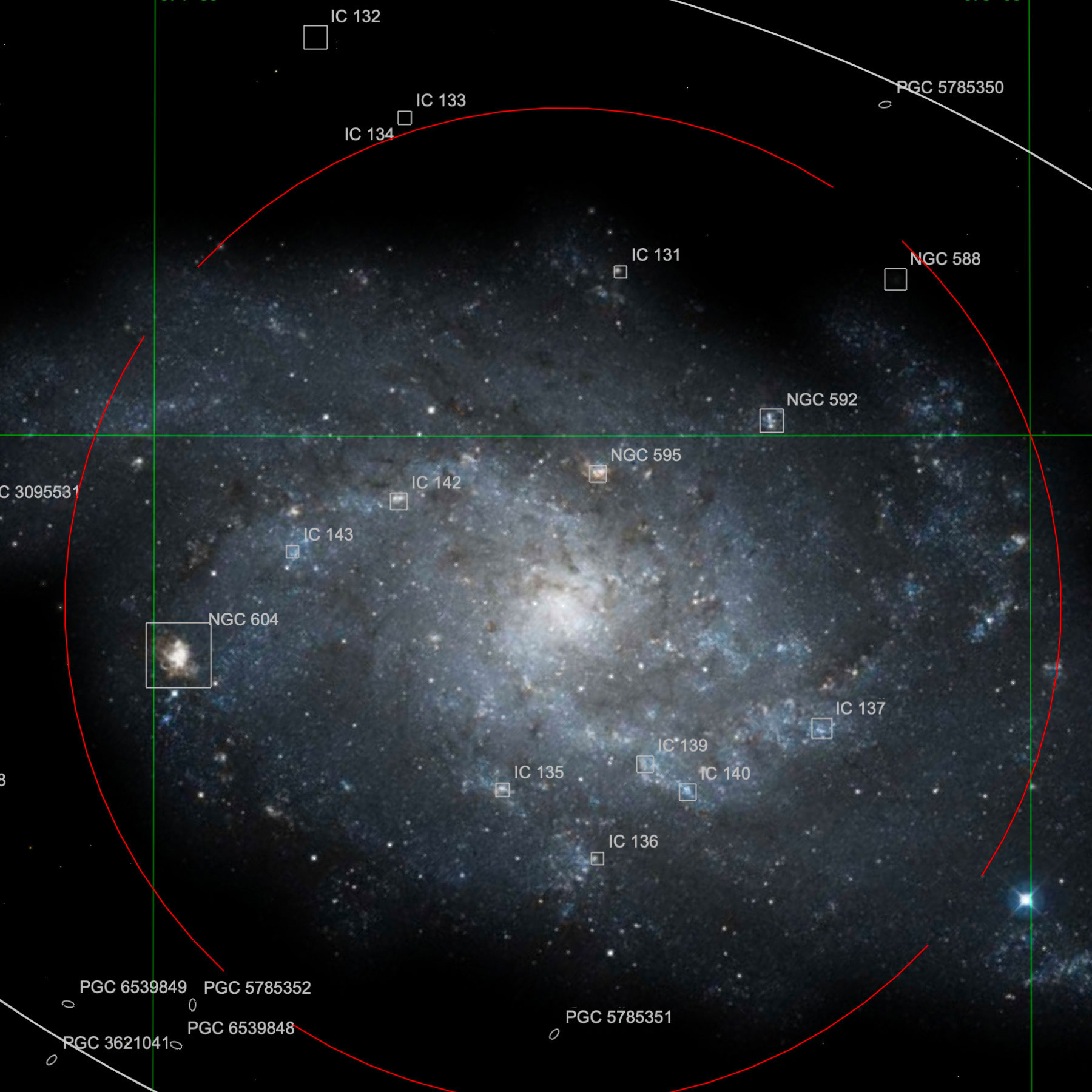
Indicated H II regions: IC 131, IC 132, IC 133, (IC 134*,) IC 135, IC 136, IC 137, IC 139, IC 140, IC 142, IC 143, NGC 588, NGC 592, NGC 595, NGC 604
*) IC 134 is a star
Wikipedia-Informationen
Wikipedia list of H II regions in M 33: IC 131, IC 132, IC 133, (IC 134*,) IC 135, IC 136, IC 137, IC 139, IC 140, IC 142, IC 143, NGC 588, NGC 592, NGC 595, NGC 604
*) IC 134 is a star
- IC 131: IC 131 is an H-II region and a large stellar association in the Messier 33 galaxy in the constellation Triangle (discovered by French astronomer Guillaume Bigourdan). (Wikipedia, translated)
- IC 132: IC 132 is an H-II region and a large stellar association in the Messier 33 galaxy in the constellation Triangle (discovered by French astronomer Guillaume Bigourdan). (Wikipedia, translated)
- IC 133: IC 133 is an H-II region and a large stellar association in the Messier 33 galaxy in the constellation Triangle (discovered by French astronomer Guillaume Bigourdan). (Wikipedia, translated)
- IC 134: IC 134 is a star in the constellation Triangulum. The star was discovered by French astronomer Guillaume Bigourdan on October 28, 1889, and was probably mistaken for a galaxy. (Wikipedia, translated)
- IC 135: IC 135 is an H-II region and a large stellar association in the Messier 33 galaxy in the constellation Triangle (discovered by French astronomer Guillaume Bigourdan). (Wikipedia, translated)
- IC 136: IC 136 is an H-II region and a large stellar association in the Messier 33 galaxy in the constellation Triangle (discovered by French astronomer Guillaume Bigourdan). (Wikipedia, translated)
- IC 137: IC 137 is an H-II region and a large stellar association in the Messier 33 galaxy in the constellation Triangle (discovered by French astronomer Guillaume Bigourdan). (Wikipedia, translated)
- IC 139: IC 139 is an H-II region and a large stellar association in the Messier 33 galaxy in the constellation Triangle (discovered by French astronomer Guillaume Bigourdan). (Wikipedia, translated)
- IC 140: IC 140 is an H-II region and a large stellar association in the Messier 33 galaxy in the constellation Triangle (discovered by French astronomer Guillaume Bigourdan). (Wikipedia, translated)
- IC 142: IC 142 is an H-II region and a large stellar association in the Messier 33 galaxy in the constellation Triangle (discovered by French astronomer Guillaume Bigourdan). (Wikipedia, translated)
- IC 143: IC 143 is an H-II region and a large stellar association in the Messier 33 galaxy in the constellation Triangle (discovered by French astronomer Guillaume Bigourdan). (Wikipedia, translated)
- NGC 588: NGC 588 is an H-II region and a large stellar association in the Messier 33 galaxy in the constellation Triangle (discovered on October 2, 1861 by the German-Danish astronomer Heinrich Louis d'Arrest). (Wikipedia, translated)
- NGC 592: NGC 592 is an H-II region and a large stellar association in the Messier 33 galaxy in the constellation Triangle. The H-II region consists of two bright nuclei about 25" apart surrounded by faint, extended filamentary structures (discovered by the German-Danish astronomer Heinrich Louis d'Arrest). (Wikipedia, translated)
- NGC 595: NGC 595 is an H-II region in the Messier 33 galaxy in the constellation Triangle. After NGC 604 it is the second brightest H-II region in M33 (discovered by the German-Danish astronomer Heinrich Louis d'Arrest). (Wikipedia, translated)
- NGC 604: NGC 604 is an H-II region in the Messier 33 galaxy in the constellation Triangle in the northern fixed star sky (discovered by the German-British astronomer Wilhelm Herschel). NGC 604 is one of the largest known H-II regions. (Wikipedia, translated)
Example Photo: Vaonis Vespera
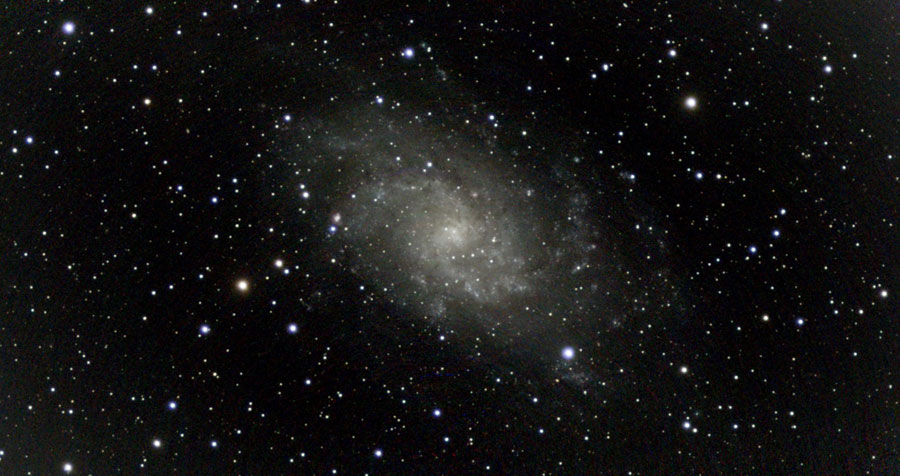
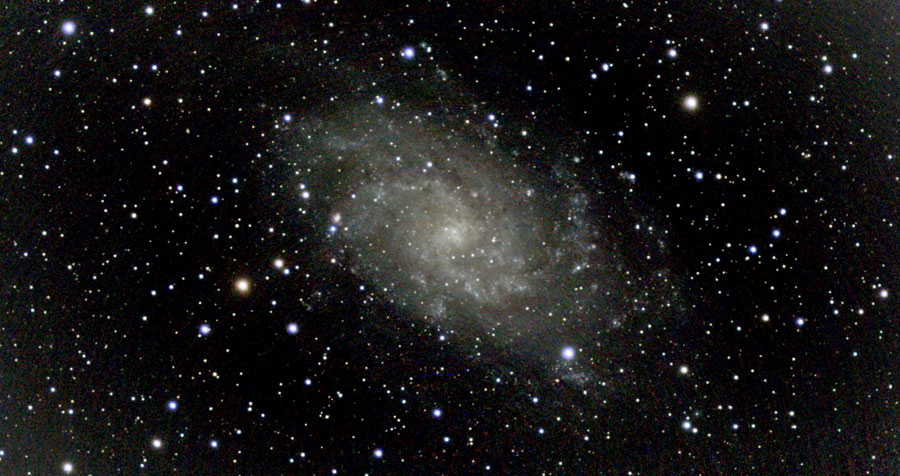
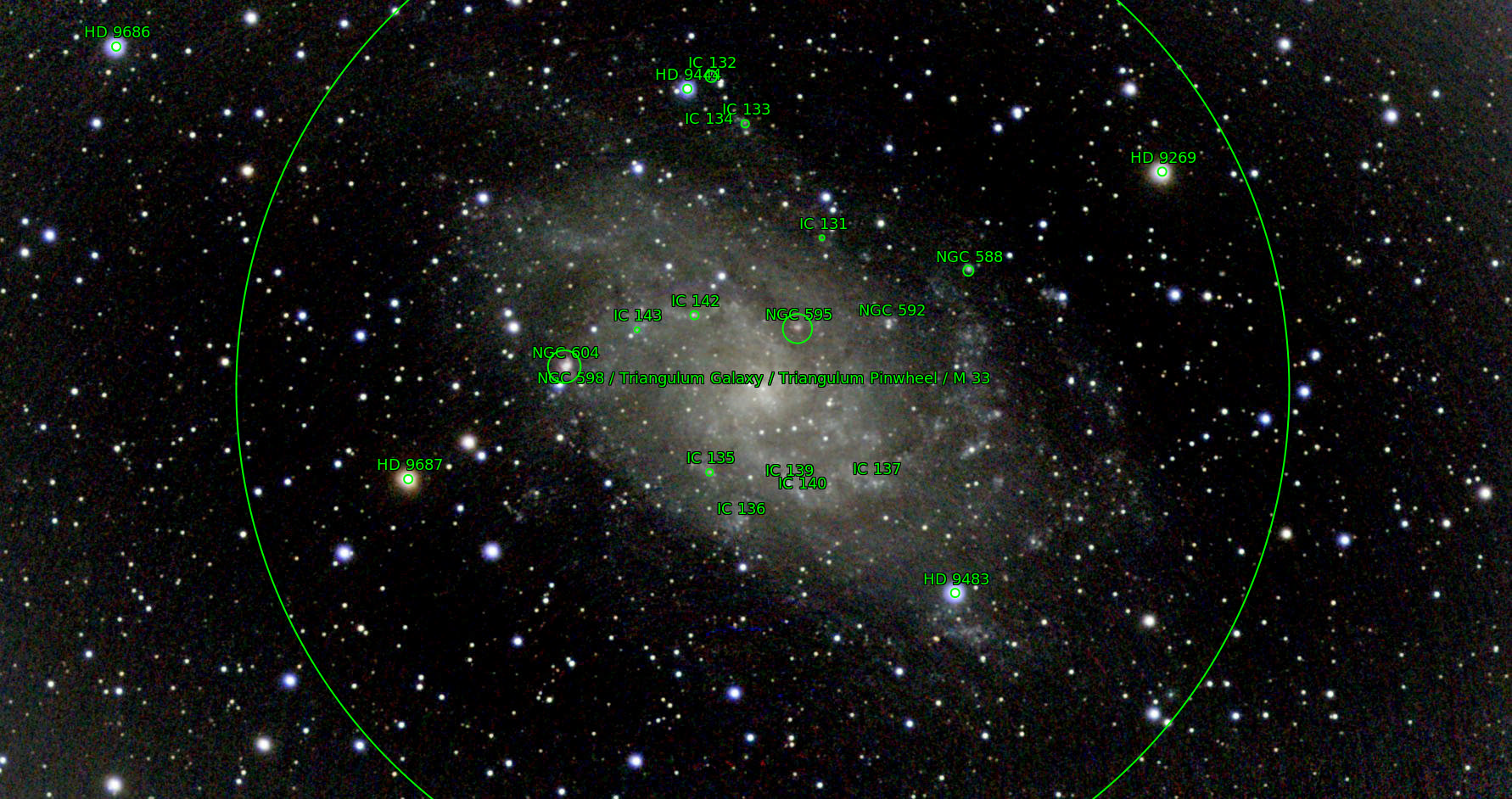
To find H II areas on my M 33 photo, I used the Website nova.astrometry.net. First, I present the photo (unprocessed, processed) and then the evaluation by nova.astrometry.net:
 |
 |
|
M 33 - Oct 30, 2022, original (269 frames = 2690 seconds) |
M 33 - Oct 30, 2022, large (269 frames = 2690 seconds) processed | |
 |
||
M 33 - evaluation by nova.astrometry.net |
||
Conclusion: On my Vaonis Vespera photo, all H II areas of M 33 were recognized.
H II Regions in M 101 (Pinwheel Galaxy)
SkySafari Overview
SkySafari map showing M 101 and its H II regions:
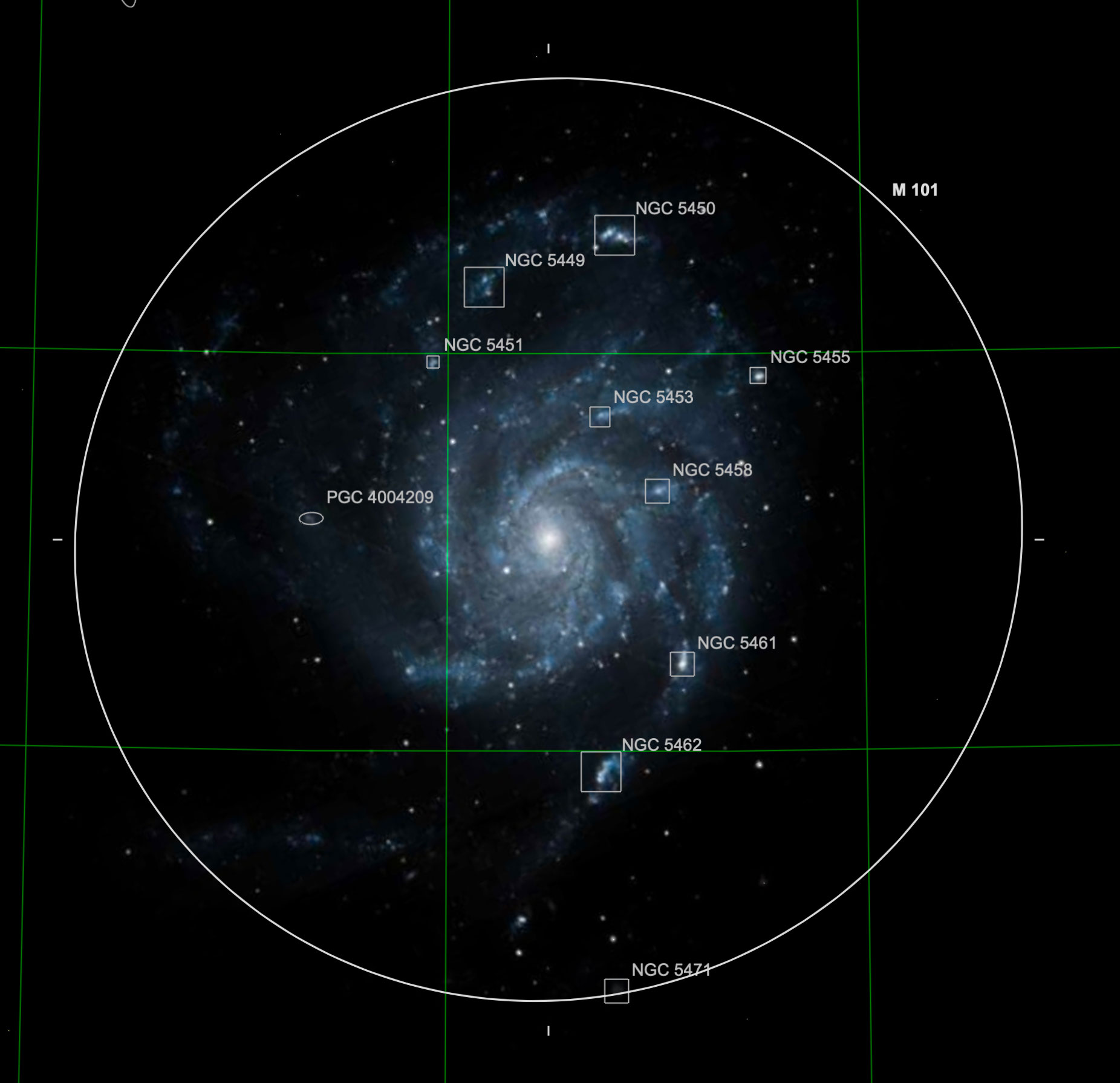
Indicated H II regions: NGC 5449, NGC 5450, NGC 5451, NGC 5453, NGC 5455, NGC 5458, NGC 5461, NGC 5462, NGC 5471
Wikipedia Information
Wikipedia list (only NGC objects): NGC 5449, NGC 5450 (NGC 5447), NGC 5451, NGC 5453, NGC 5455, NGC 5458, NGC 5461, NGC 5462, NGC 5471
Example Photo: Vaonis Vespera
To find the H II regions in M 101, I used nova.astrometry.net and SkySafari, as well as a Wikipedia list of H II regions.
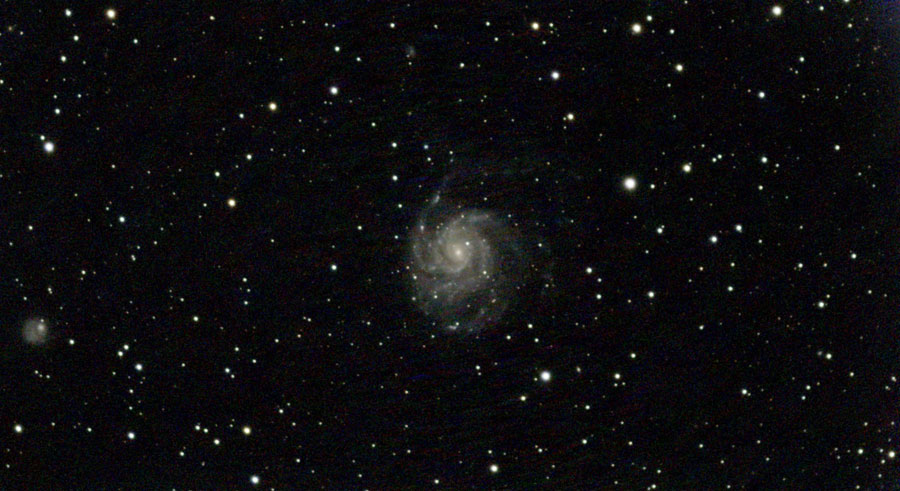
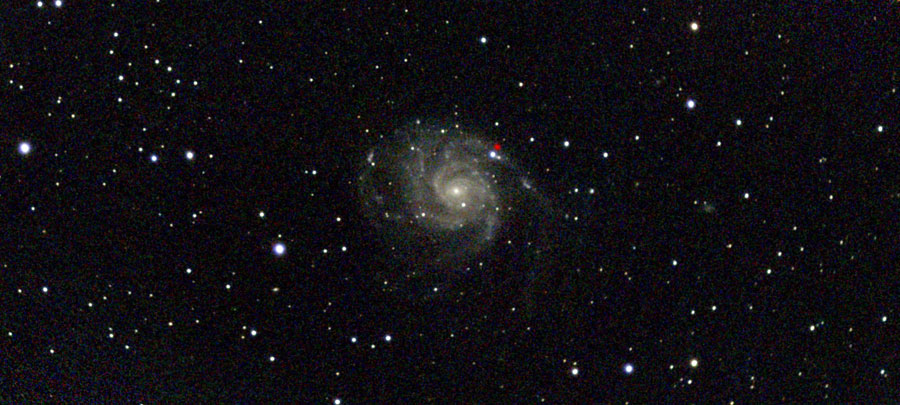
First, I present two different photos of M 101 (processed):
 |
 |
|
M 101, Aug 7, 2022 - original (191 frames = 1910 seconds); spiral galaxy NGC 5474 to the left |
M 101, Jun 2, 2023 - original (186 frames = 1860 seconds); supernova SN 2023ixf marked (red dot) |
Then, the evaluations using nova.astrometry.net are shown. Evaluation of the first photo:
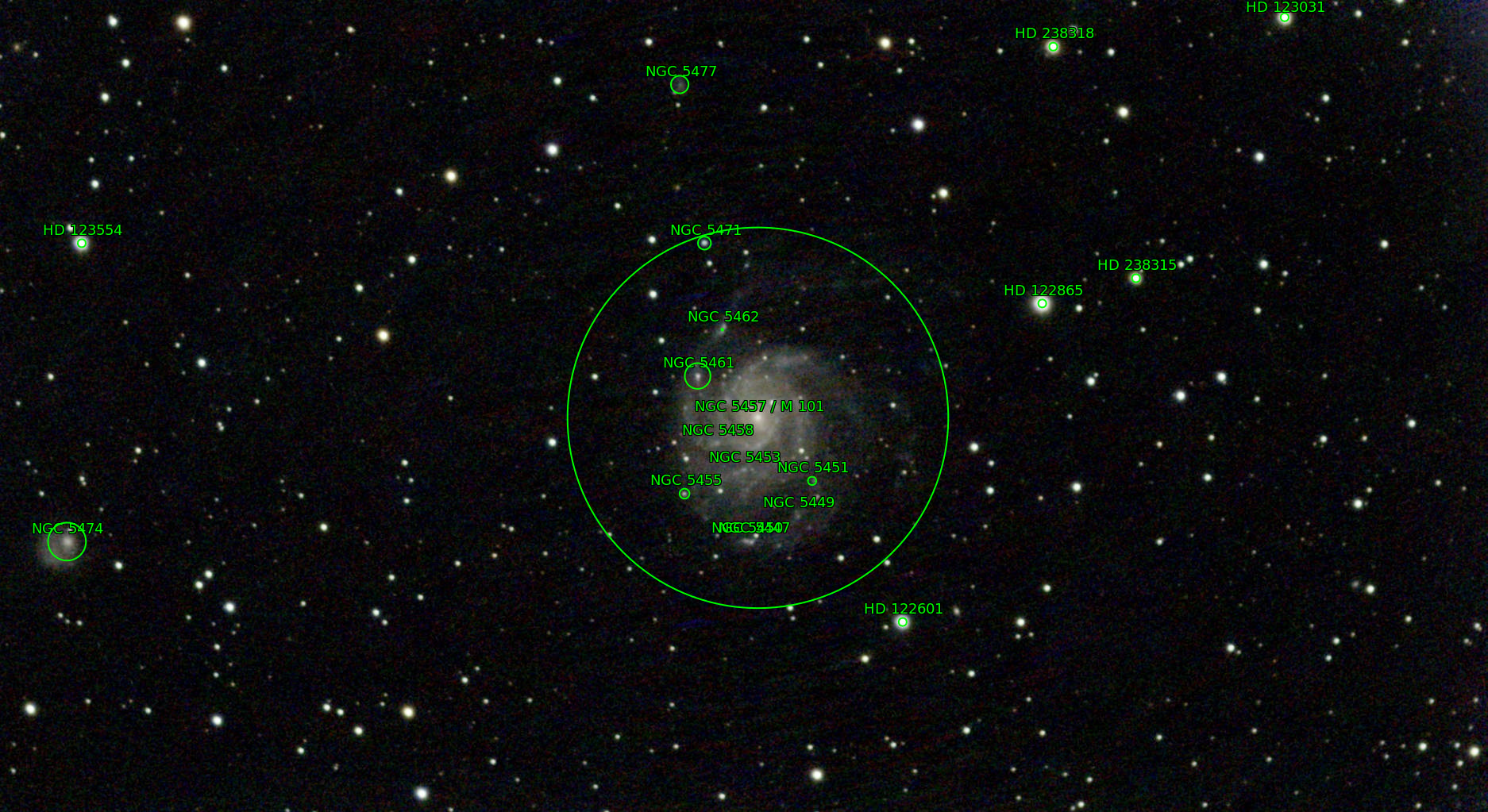
H II regions: NGC 5447/50 (deciphered with the help of the second photo), NGC 5449, NGC 5451, NGC 5453, NGC 5455, NGC 5458, NGC 5461, NGC 5462, NGC 5471 (dwarf galaxy NGC 5474 to the left)
Evaluation by nova.astrometry.net of the second photo:
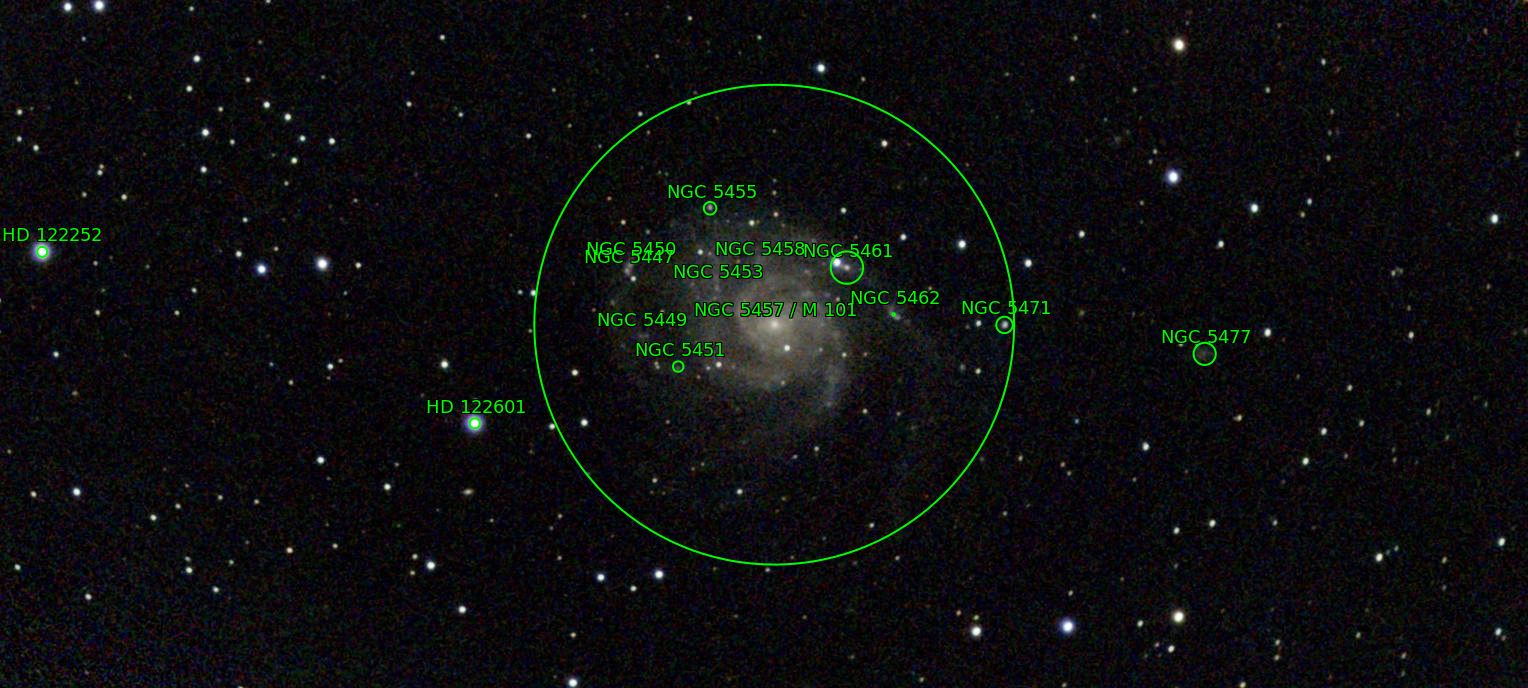
H II regions: NGC 5447/50, NGC 5449, NGC 5451, NGC 5453, NGC 5455, NGC 5458, NGC 5461, NGC 5462, NGC 5471 (dwarf galaxy NGC 5477 to the right)
Final Words
My "entry" into H II regions was with the region NGC 604 within M 33, which I discovered on an eVscope photo of M 33. Using all of my electronic telescopes, I was able to detect all major H-II regions by analyzing images of M 33 and M 101 via nova.astrometry.net.
See also the evaluations for my eVscope (2) photos on a separate page.
Links
- Unistellar eVscope Information
- Unistellar eVscope 2 Information
- Vaonis Vespera - Information
- Vaonis Vespera Pro - Information
- DwarfLab Dwarf mini - Information
- H II Region (Wikipedia): en.wikipedia.org/wiki/H_II_region
- Nova Astrometry: nova.astrometry.net
- See also my page offering Astronomy Links.
Appendix 1: M 33
eVscope
 |
 |
|
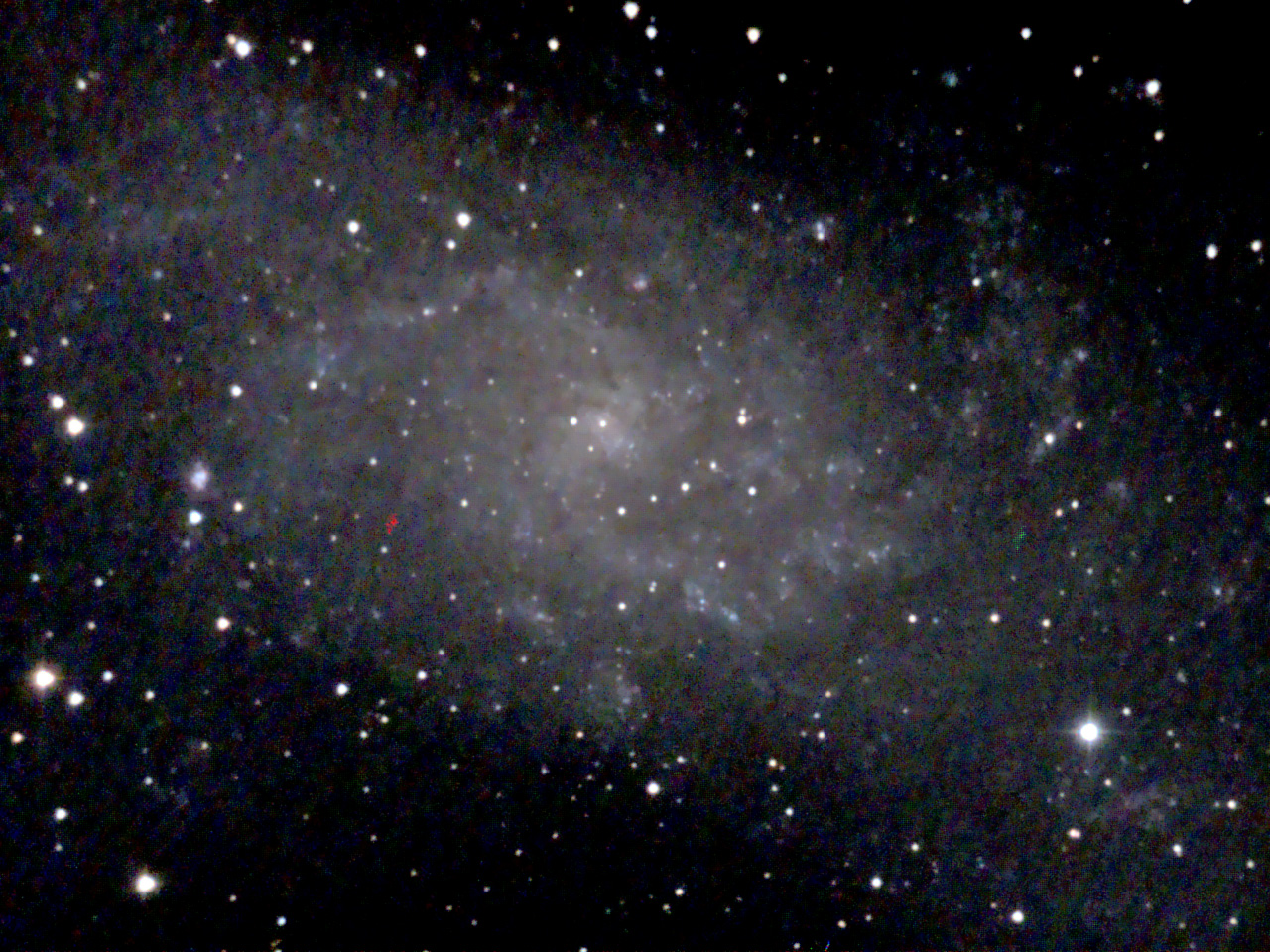
M 33 - Nov 14, 2020, processed |
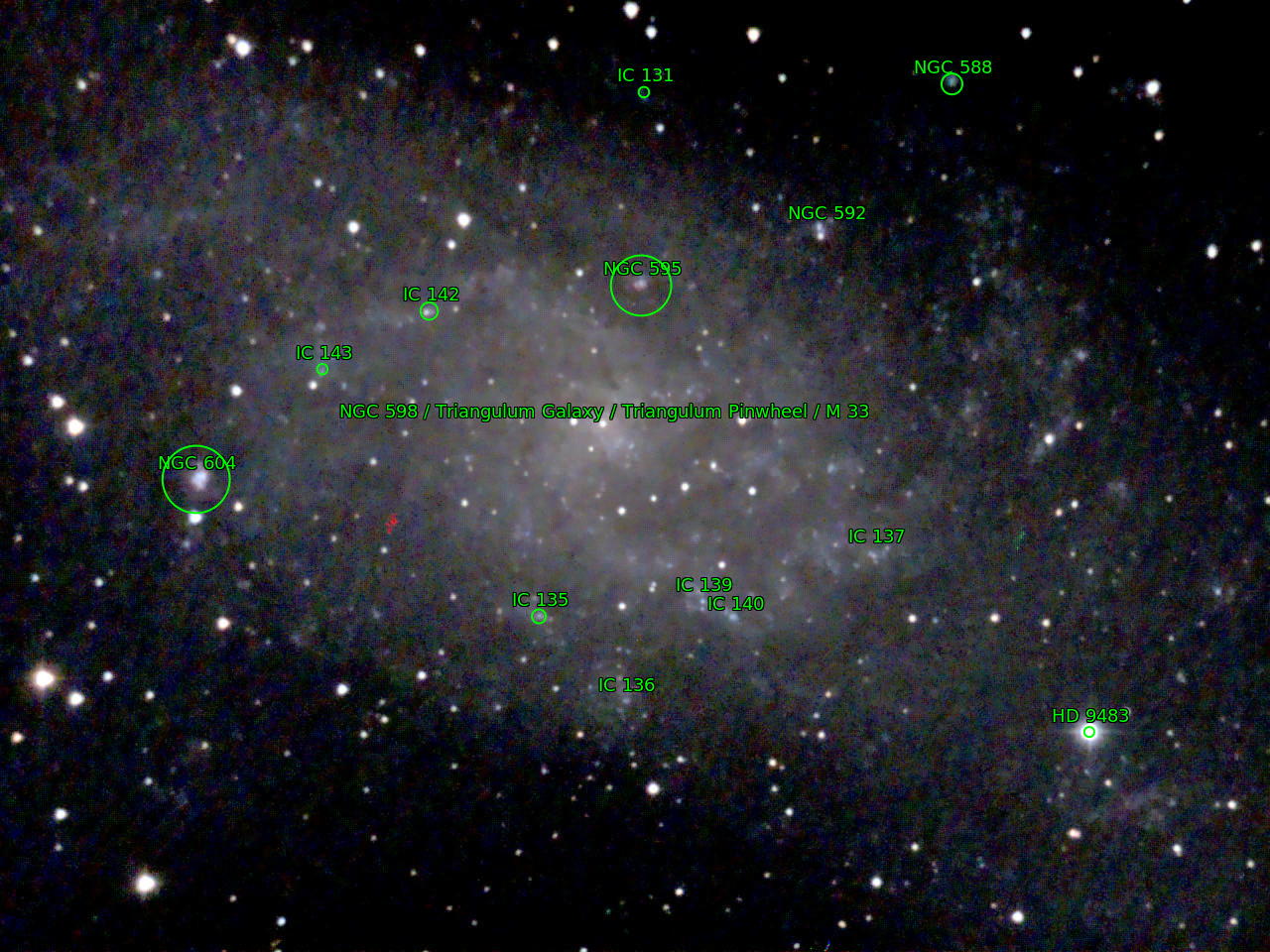
Evaluation by astrometry.net |
H II regions found: IC 131, IC 135, IC 136, IC 137, IC 139, IC 140, IC 142, IC 143, NGC 588, NGC 592, NGC 595, NGC 604
Thus, some H II regions are missing...
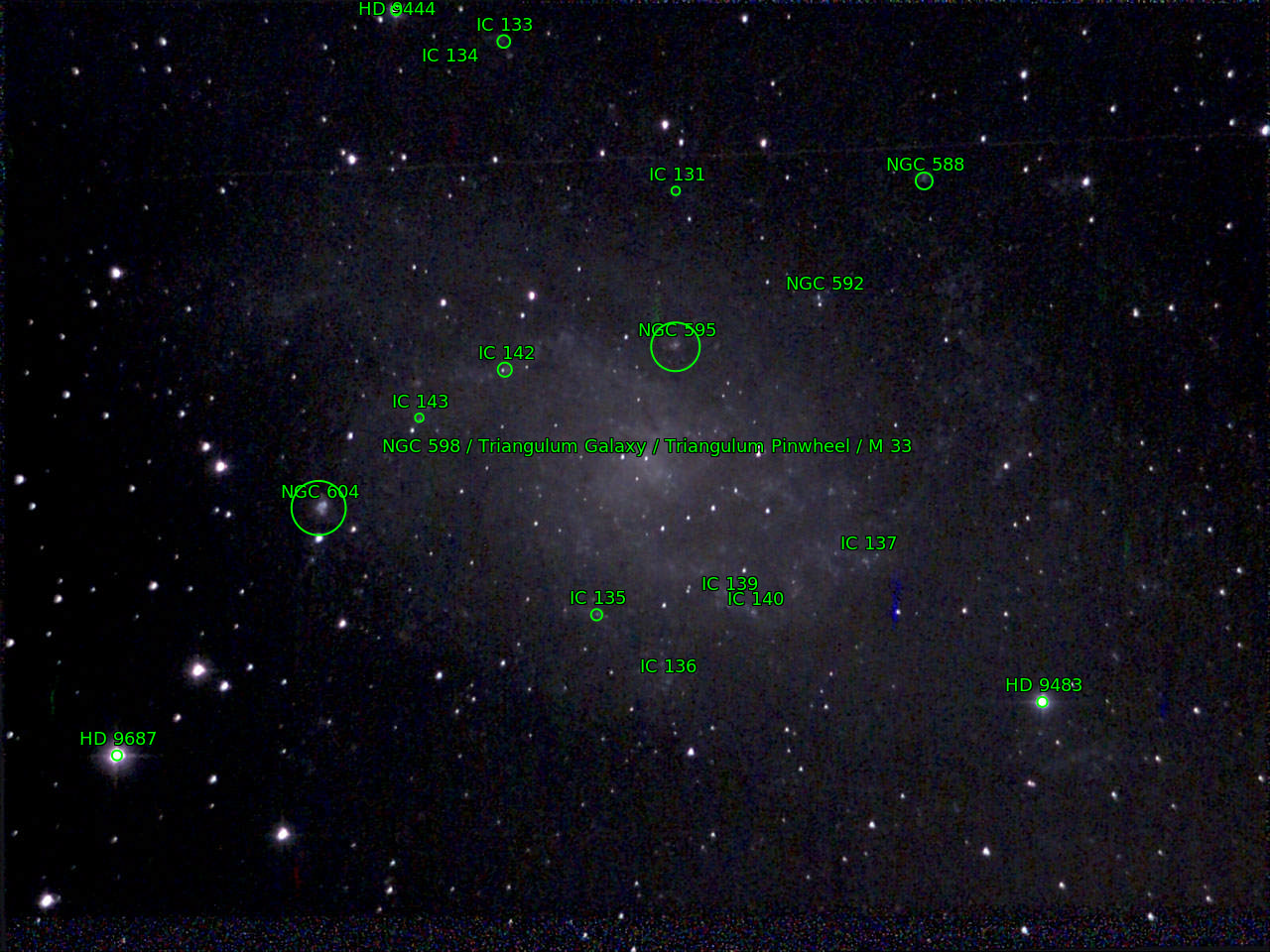
eVscope 2
 |
 |
|
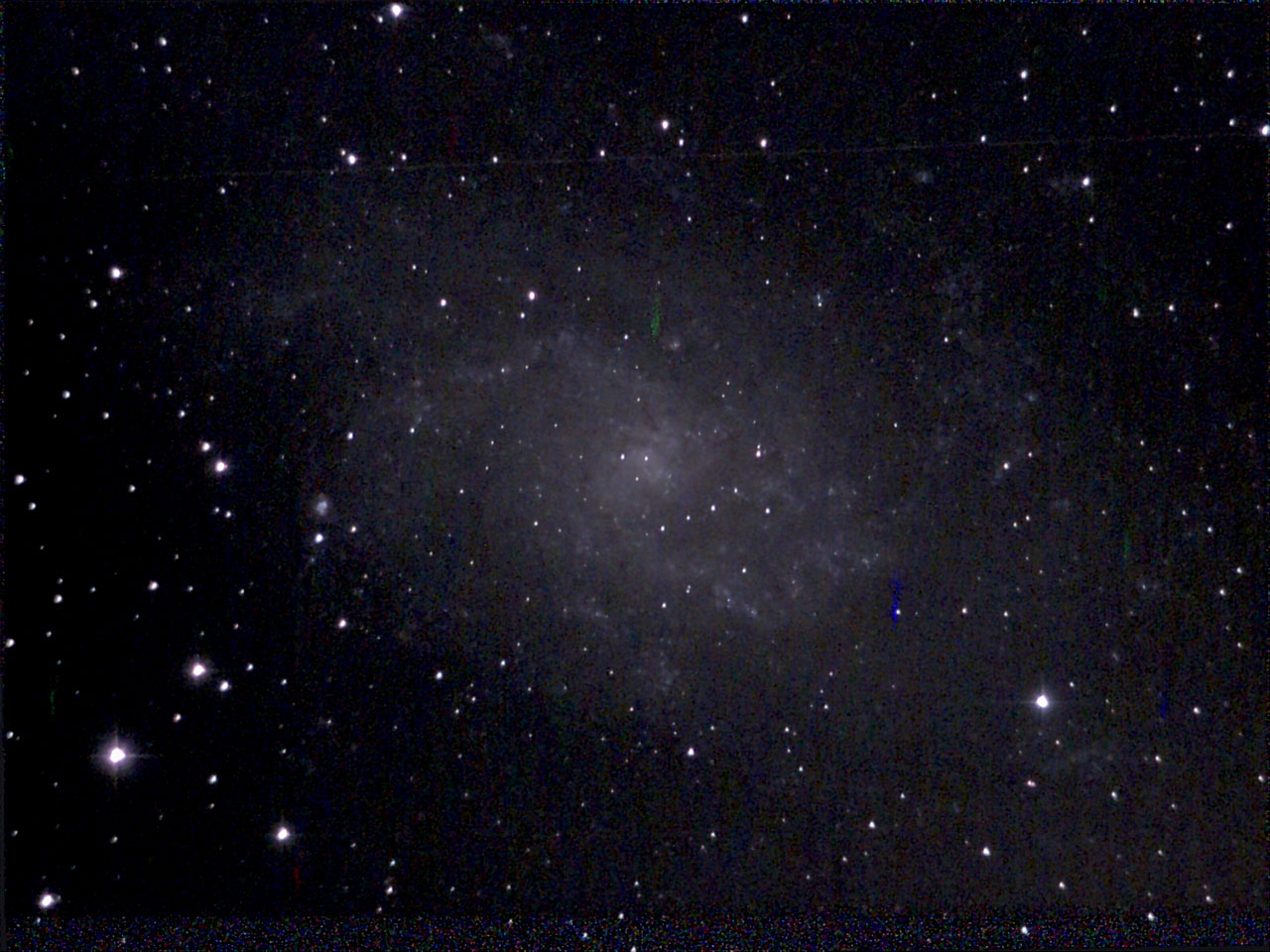
M 33 - Nov 2, 2022, processed |
Evaluation by astrometry.net |
H II regions found: : IC 131, IC 132*, IC 133, (IC 134,) IC 135, IC 136, IC 137, IC 139, IC 140, IC 142, IC 143, NGC 588, NGC 592, NGC 595, NGC 604
*) at the very top, only the ring is visible (identified with the help of the Vespera photo)
Thus, all H II regions were found.
Vespera Pro
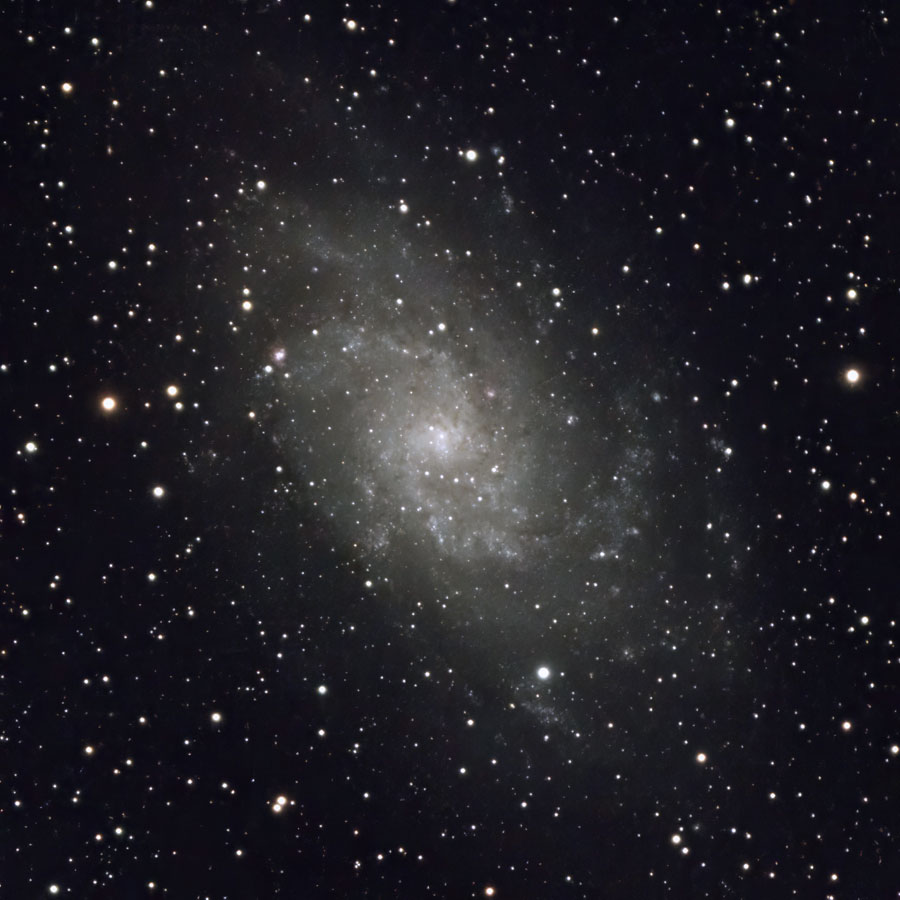
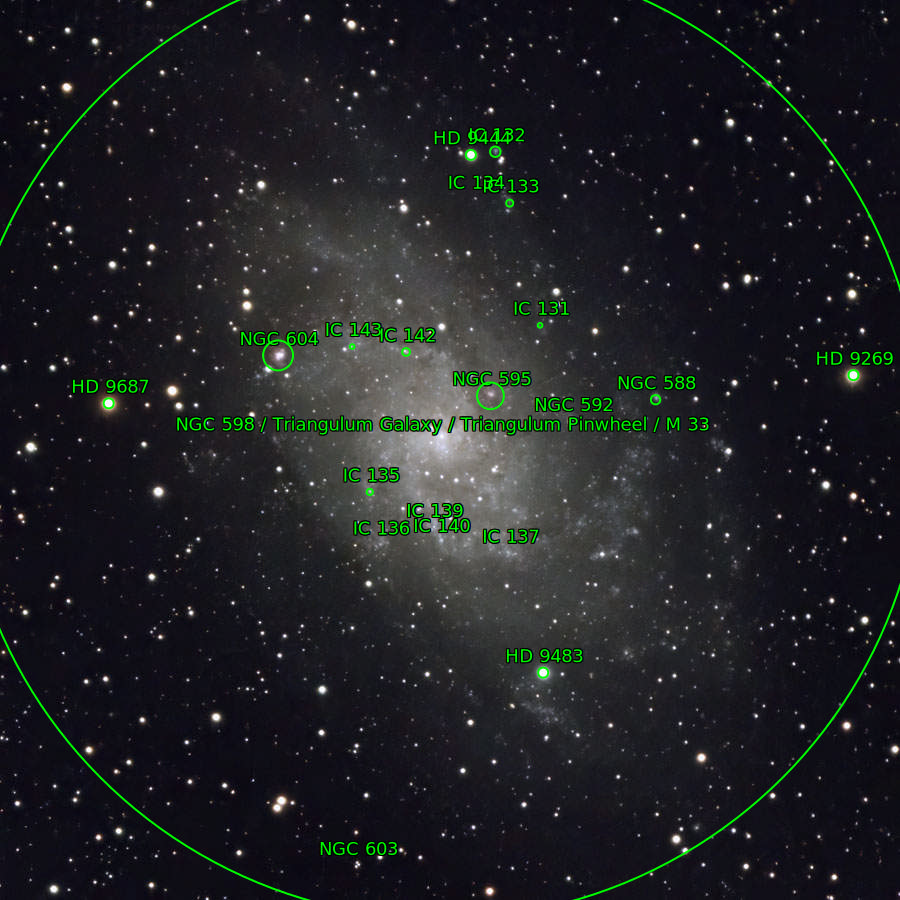
To find H II areas on my M 33 photo, I used the Website nova.astrometry.net. First, I present the photo (processed) and then the evaluation by nova.astrometry.net:
 |
 |
|
M 33 - Nov 21, 2025, 2100 (360 frames = 1 h), section, denoised (TP), white balance |
Evaluation with nova.astrometry.net |
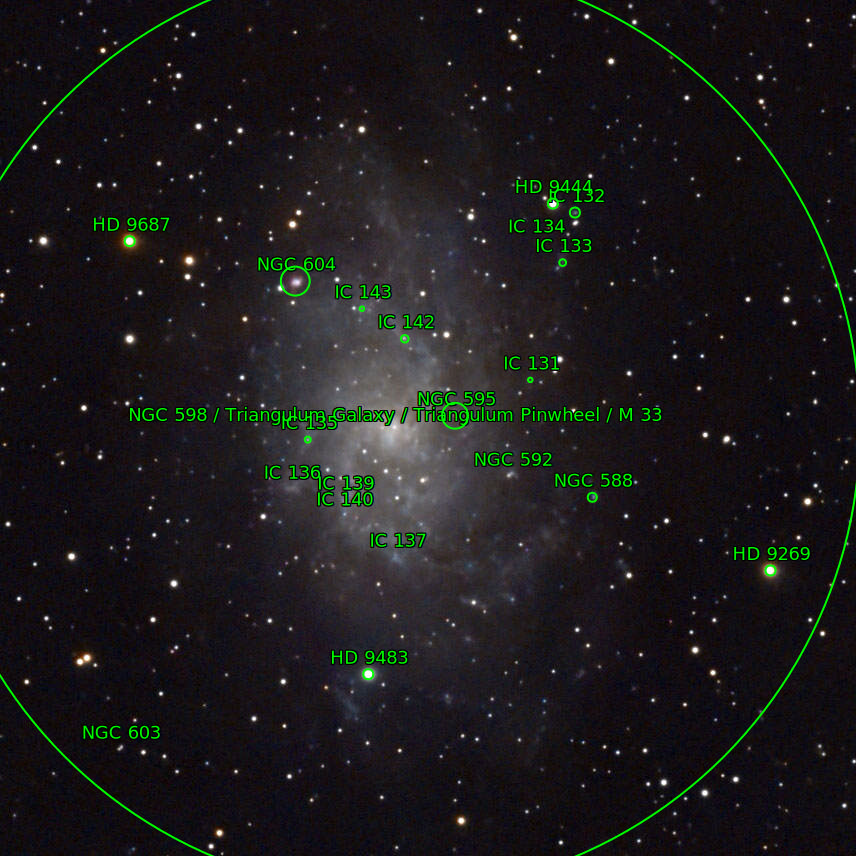
H II regions in M 33: IC 131, IC 132, IC 133, (IC 134*,) IC 135, IC 136, IC 137, IC 139, IC 140, IC 142, IC 143, NGC 588, NGC 592, NGC 595, NGC 604
*) IC 134 is a star
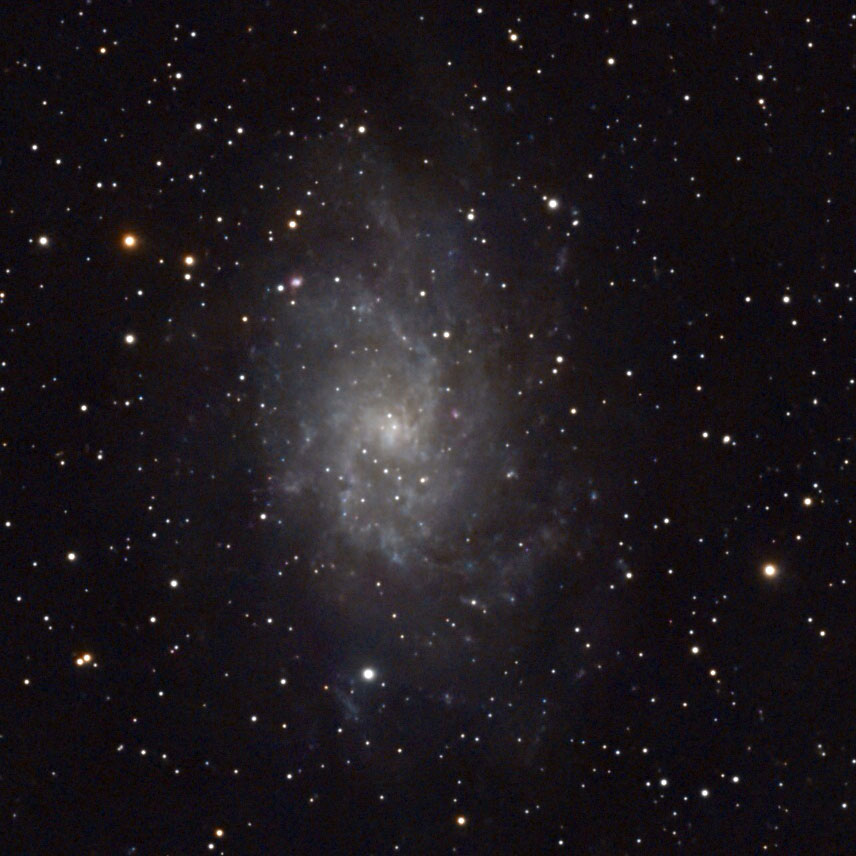
Dwarf mini
 |
 |
|
| M 33 - Jan 15, 2026, 45 min, section, processed with Stellar Studio and further processed | Evaluation with nova.astrometry.net |
Appendix 2: M 101
eVscope
|
 |
|
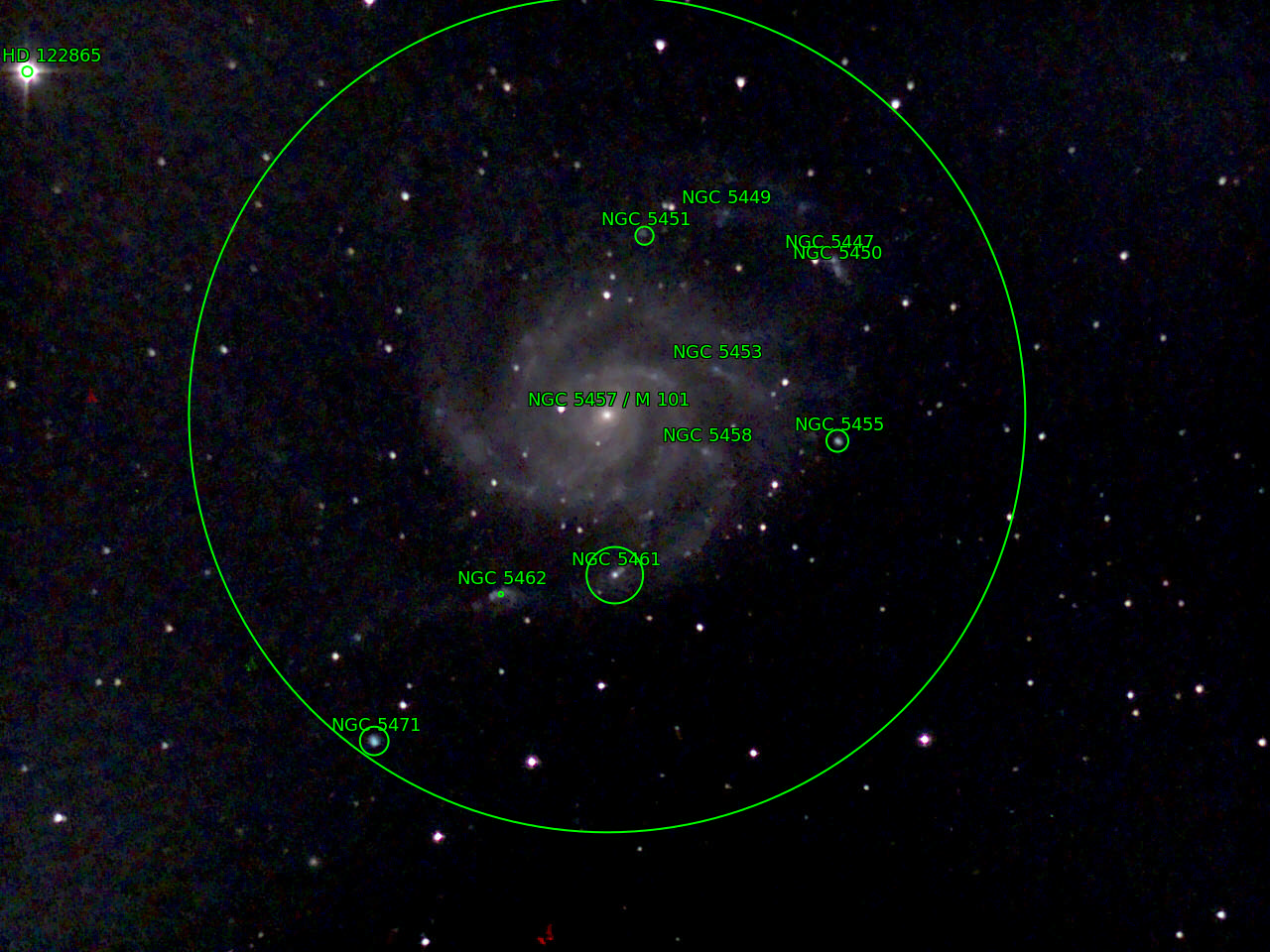
M 101 - Mar 6, 2021, processed |
Evaluation by astrometry.net |
H II regions found: NGC 5447/50, NGC 5449, NGC 5451, NGC 5453, NGC 5455, NGC 5458, NGC 5461, NGC 5462, NGC 5471
Thus, all H II regions were found.
eVscope 2
 |
 |
|
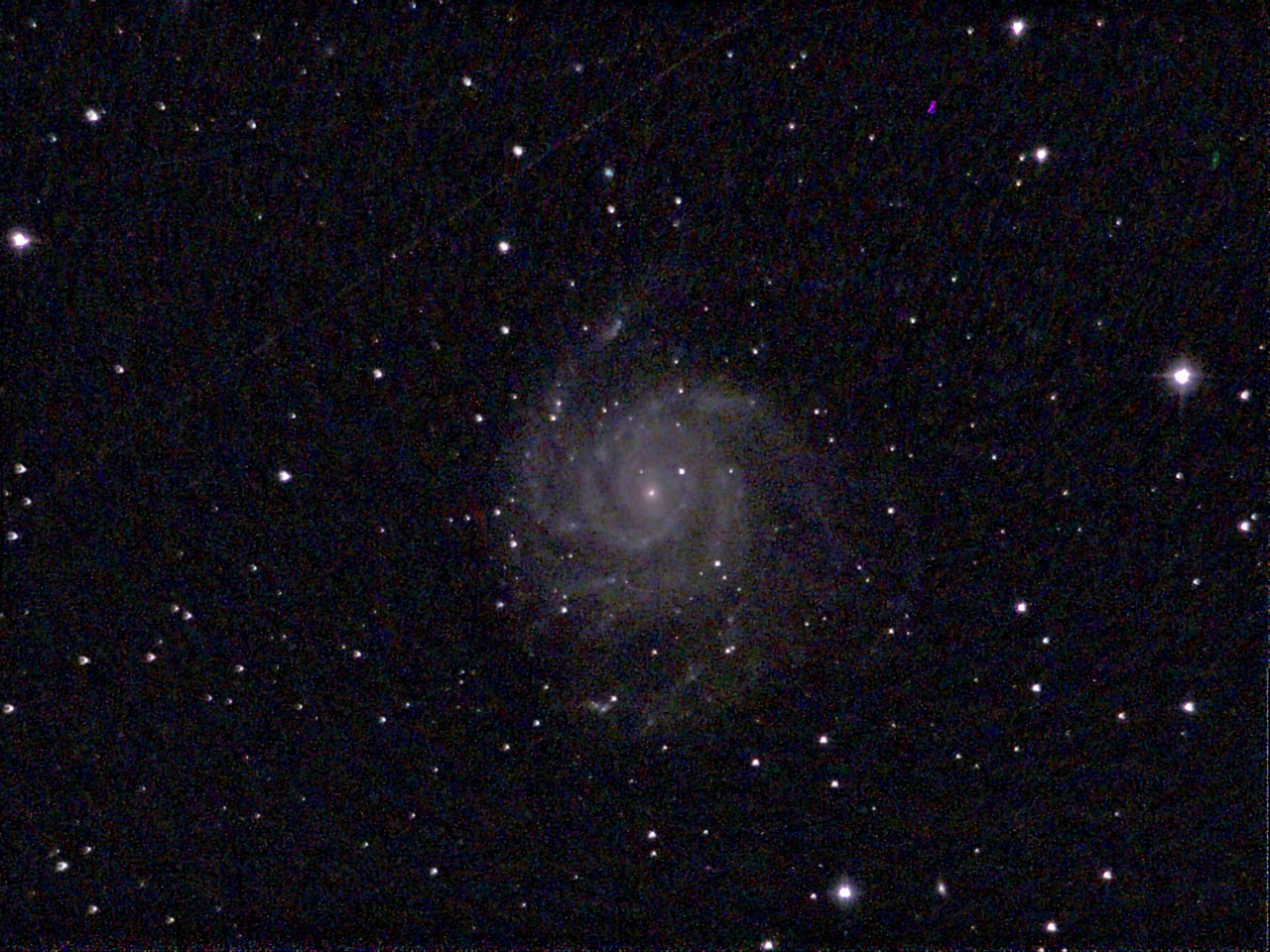
M 101 - Aug 21, 2023, processed |
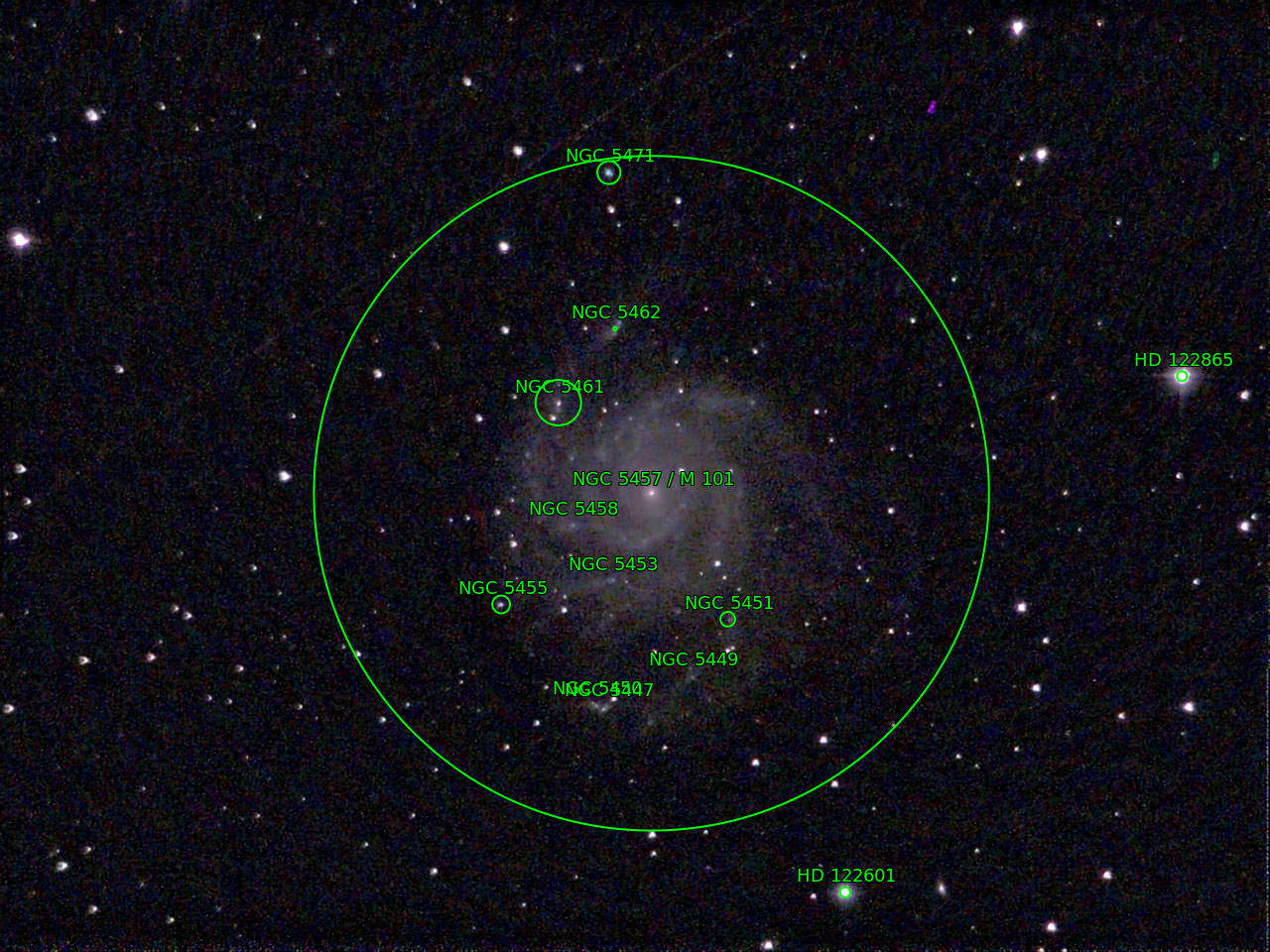
Evaluation by astrometry.net |
H II regions found: NGC 5447/50, NGC 5449, NGC 5451, NGC 5453, NGC 5455, NGC 5458, NGC 5461, NGC 5462, NGC 5471
Thus, all H II regions were found.
Vespera Pro
 |
 |
|
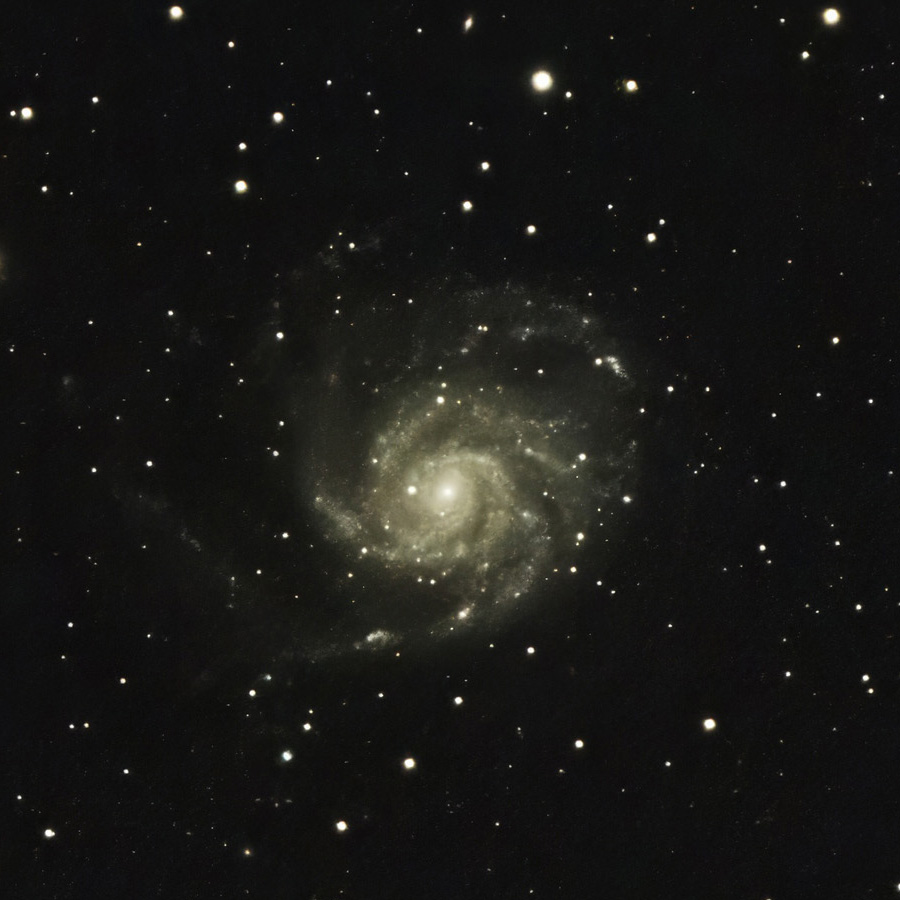
M 101, 27.3.2025 - (540 frames = 90 min), tight section, processed from TIFF and denoised (PAI) |
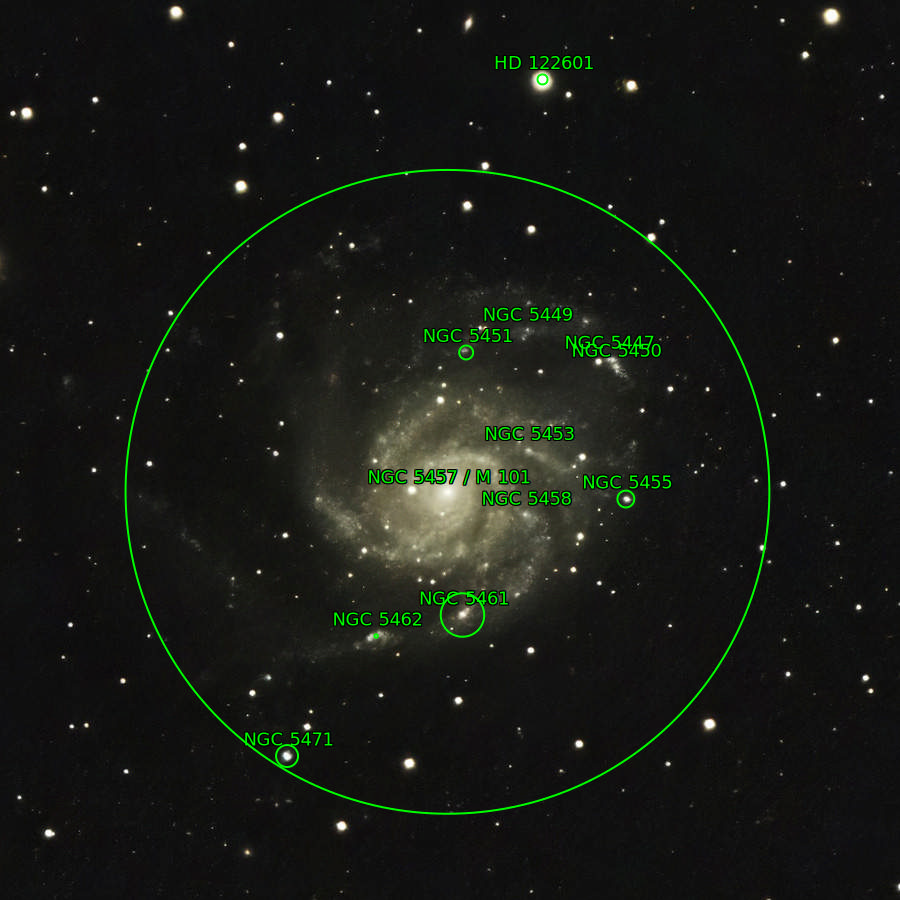
Evaluation by astrometry.net |
H II regions in M 101: NGC 5447/50, NGC 5449, NGC 5451, NGC 5453, NGC 5455, NGC 5458, NGC 5461, NGC 5462, NGC 5471
Thus, all H II regions were found.
Dwarf mini
 |
 |
|
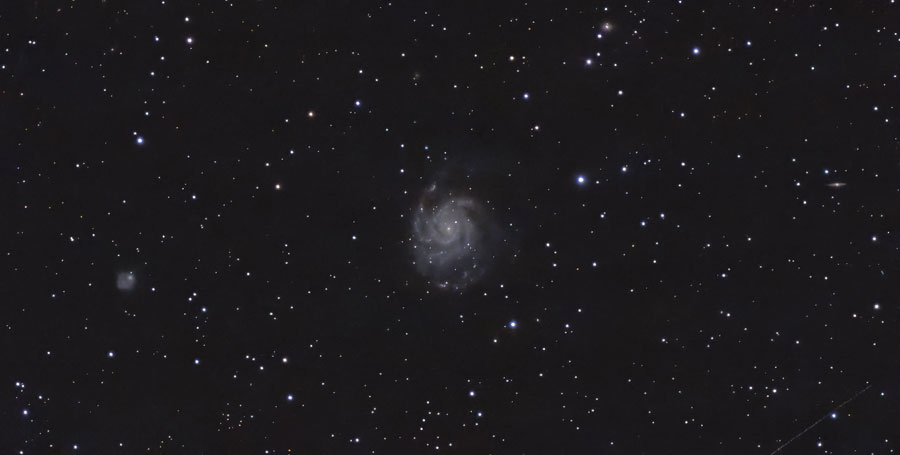
M 101 - Aug 12, 2026 - Original (301 frames = 75 min), processed with Stellar Studio, PSE and TP |
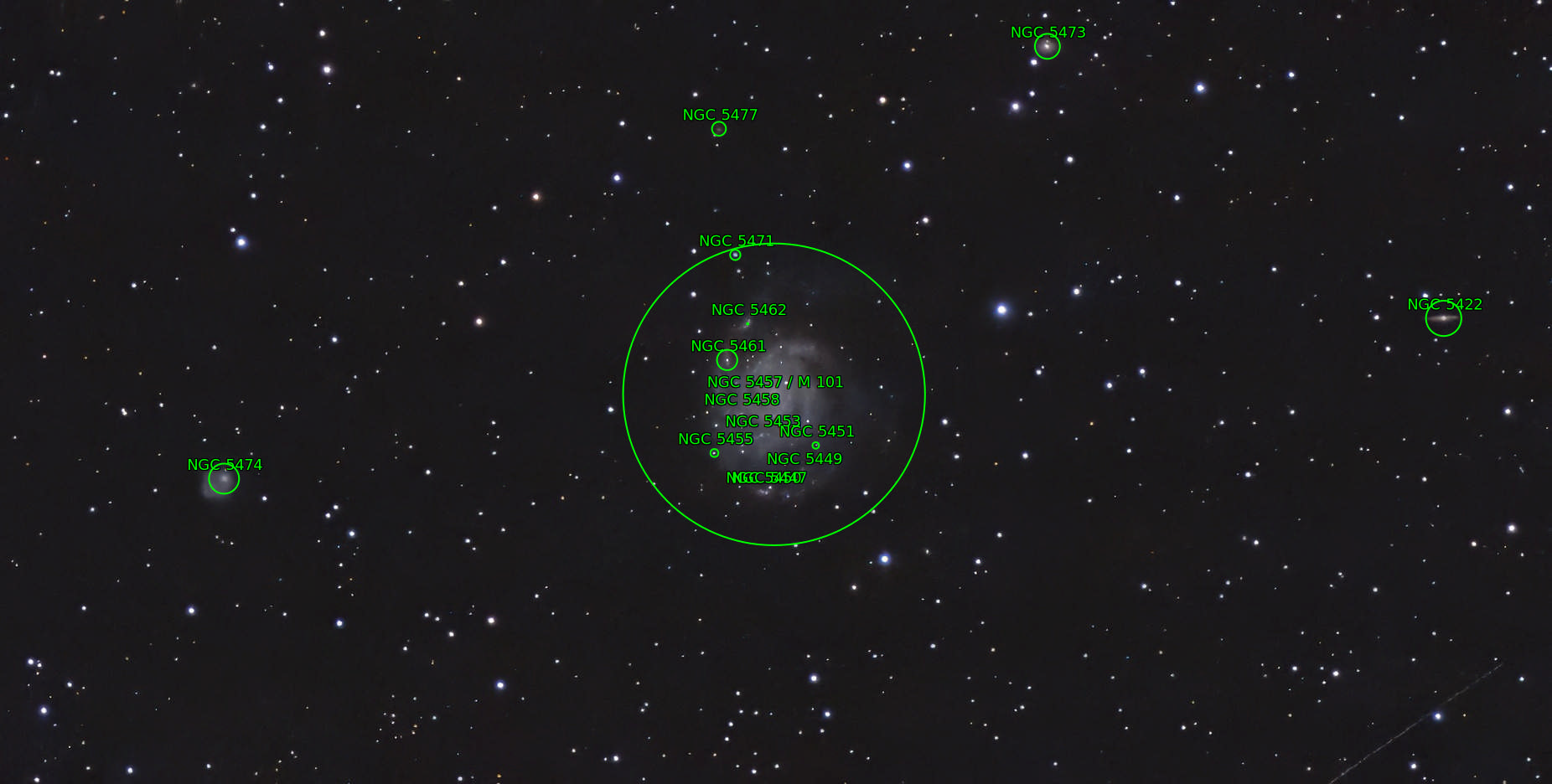
Evaluation with nova.astronometry.net |
H II regions in M 101: NGC 5447/50, NGC 5449, NGC 5451, NGC 5453, NGC 5455, NGC 5458, NGC 5461, NGC 5462, NGC 5471 (and further galaxies)
Thus, all H II regions were found.
|
made by  on a mac! on a mac! |


| 29.09.2026 |  |