Distances of Deep Sky Objects on My Own Photos
Introduction | Types of Deep-Sky Objects | Distances of some of the Better-Known Deep-Sky Objects that I Have Photographed | Conclusions | Links
On this page, I explore the question of how far away the various types of deep-sky objects (DSOs) are that I can observe with my electronic telescopes.
Note:
- See also page Farthest Distances of Deep Sky Objects on My Own Photos
There, I describe my search for the most distant objects that I have photographed with my electronic telescopes.
Introduction
First, I would like to list the types of deep-sky objects that I observe (or am able to observe) with my electronic telescopes:
- Stars (incl. double and multiple stars)
- Star Clusters: Open star clusters, globular star clusters, star patterns (asterismns)
- Galaktic Nebulae: Emission nebulae (incl. H II regions), reflection nebulae, dark nebulae/dark clouds
- Planetary nebulae
- Galaxies
- Supernovae
- Supernova remnants
In addition, there are plenty of other sky objects, such as planets, comets, moons, asteroids, novas, and even quasars, but I will not go into further detail about them here. H II regions are briefly explained below.
Apart from galaxies and supernovae in other galaxies, all of these objects are located within our Milky Way and are therefore no farther away than the diameter of the Milky Way (about 100,000 light-years). However, that i’s not entirely accurate, because the Milky Way’s halo extends much farther, and globular clusters are found within it. Galaxies, including H II regions and supernovae in other galaxies, on the other hand, are at least several million light-years away from us. I am not aware of any supernovae within our Milky Way, nor have I photographed any. The supernova remnants that I have been able to photograph so far - for example, the Crab Nebula M 1 in Taurus and the Veil Nebula NGC 69960/6992/5 in Cygnus - are located within our galaxy.
With sufficiently powerful telescopes, it is possible to observe stars, star clusters, and nebulae even in distant galaxies (Ernest Hubble was the first to photograph stars in a distant galaxy). Accordingly, they are roughly as far away as the galaxy in question. With my telescopes, however, I can only photograph a few so-called H II regions (for example, in the galaxies M 33 and M 101), which correspond to emission nebulae.
I will not discuss stars in the following. Ultimately, the same principles apply to them as to star clusters, although the nearest stars are "only" a good 4 light-years away...
- Up to 1,000 light-years
- 1,000 to 10,000 light-years
- 10,000 to 100,000 light-years
- 100,000 to 1 million light-years
- 1 million to 5 million light-years
- 5 million to 25 million light-years
- 25 million to 100 million light-years
- 100 million to 600 million light-years
- 600 to more than a billion light-years
Diese Aufteilung mag etwas merkwürdig aussehen, aber macht meiner Meinung nach Sinn. Bei Bedarf werde ich diese Grenzen jedoch "anpassen" ;)
Die Entfernungen der DSO habe ich unterschiedlichen Quellen entnommen, wobei sich die Quellen oft nicht genau übereinstimmen und sich manchmal sogar richtiggehend widersprechen. Außerdem wurden die Entfernungsangaben im Laufe der Zeit verbessert und aktualisiert. Ich bitte deshalb, meine Entfernungsangaben nicht zu genau zu nehmen ;)
This classification might seem a little strange, but I think it makes sense. If necessary, though, I will "adjust" these boundaries ;)
I obtained the distances for the DSOs from various sources, though the sources often do not match exactly and sometimes even contradict each other outright. Furthermore, the distance figures have been refined and updated over time. So please do not take my distance figures too literally ;)
Types of Deep-Sky Objects
Star Clusters: Open Star Clusters, Globular Star Clusters, Star Patterns (Asterismns)
Kugelsternhaufen sind Sternhaufen aus einer großen Zahl gravitativ aneinander gebundener Sterne, deren Dichte eine kugelsymmetrische Verteilung zeigt, indem sie vom Zentrum, wo die Sterne sehr dicht zusammenstehen, zum Rand in alle Richtungen gleichermaßen abnimmt. Typische Kugelsternhaufen enthalten mehrere hunderttausend Sterne. Kugelsternhaufen sind typischerweise sehr alt (viele Milliarden Jahre).
Open star clusters are typically relatively nearby DSO. There is a connection between the stars, reflected in their proximity to one another and their possible shared motion. Star patterns (asterisms), on the other hand, are characterized solely by the fact that the stars appear to be close together from our perspective. In reality, there is no connection between them, and they can be located at very different distances.
Open star clusters, likely in their early stages, are often found near galactic nebulae (which are star-forming regions) and, accordingly, are at the same distances as these nebulae. Older star clusters (e.g., the Pleiades) have lost their nebulae and are also typically in the process of dispersing.
Globular star clusters are clusters of a large number of stars bound together by gravity, whose density exhibits a spherically symmetric distribution, decreasing uniformly in all directions from the center - where the stars are very densely packed - toward the outer edges. Typical globular star clusters contain several hundred thousand stars. Globular star clusters are typically very old (many billions of years).
(Galaktic) Nebulae, H II Regions
A (galactic) nebula is an interstellar cloud of gas and dust located within a single galaxy (such as our Milky Way). Composition: They consist of more than 90 percent hydrogen and helium. Types: A distinction is made between emission nebulae (which glow on their own), reflection nebulae (which reflect starlight), and dark nebulae/dark clouds (which absorb light and do not glow).
An H-II region is a luminous emission nebula composed of ionized hydrogen gas in which active star formation is taking place. It can be found in our galaxy, but also in other galaxies. H II regions are the only nebulae I can photograph with my telescopes in distant galaxies (e.g., in the Triangulum Galaxy M 33 and the Pinwheel Galaxy M 101).
Planetary Nebulae
Planetary nebulae are the result of the death of smaller stars, triggered by a nova - that is, a stellar explosion. During this process, the star collapses into a neutron star, known as the central star, and is subsequently surrounded by a nebular envelope. Planetary nebulae are usually only a few thousand years old.
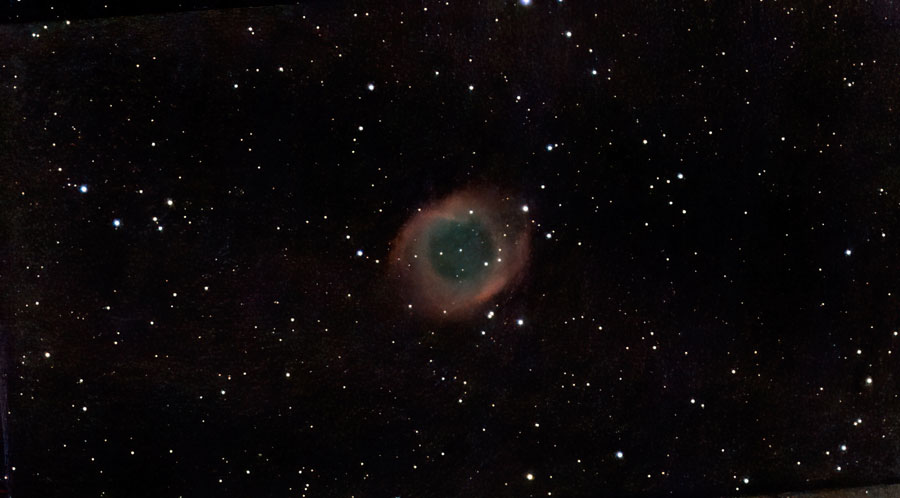
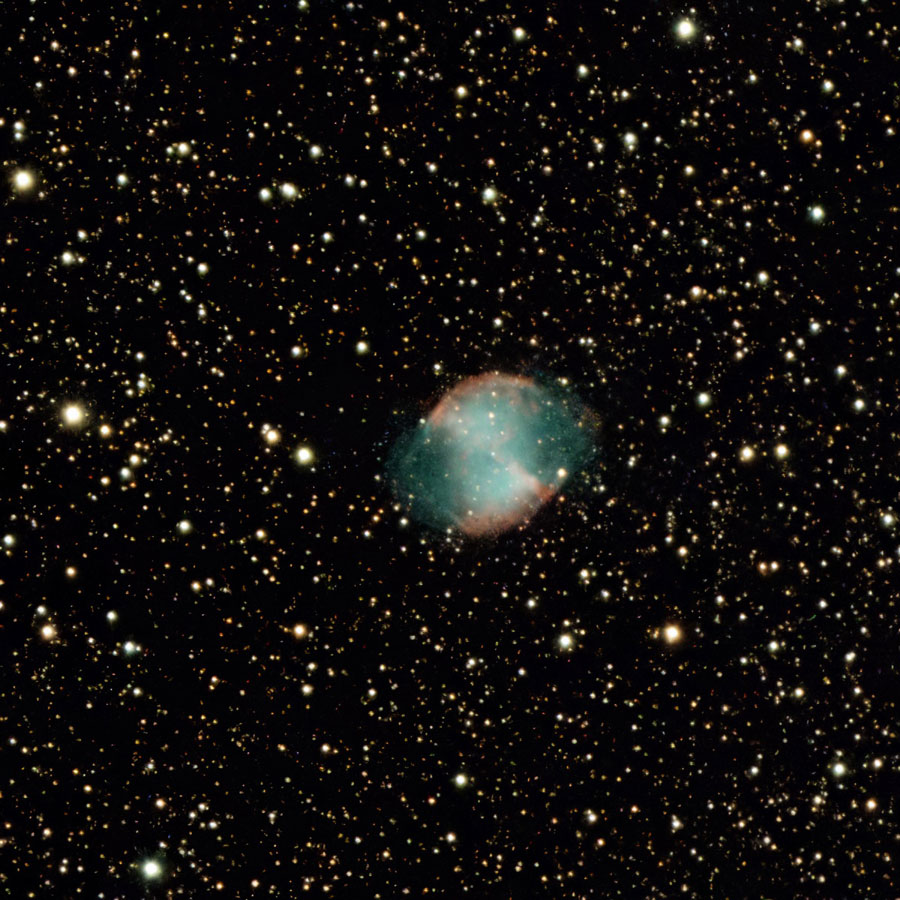
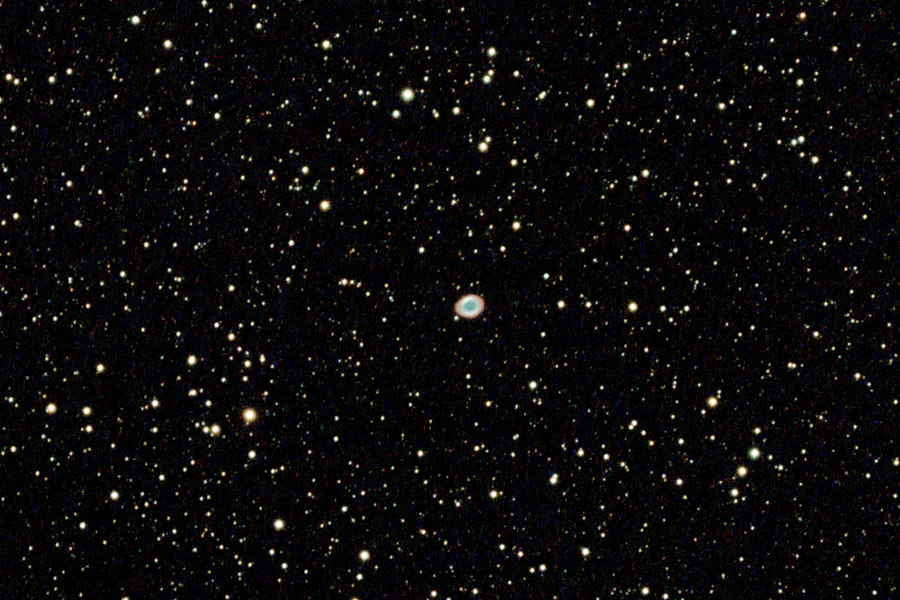
Most planetary nebulae are very small when viewed with the naked eye (1' and smaller...), but there are also some that appear larger (the Helix Nebula NGC 7293, the Dumbbell Nebula M 27). The Helix Nebula NGC 7293, at a distance of about 650 light-years, is one of the closest planetary nebulae and thus one of those with the largest apparent diameter (16' x 28'). The Dumbbell Nebula M 27 measures 8' x 6' and is a good 1,200 light-years away.
Galaxien
Galaxien sind riesige Sternansamlungen wie unsere Milchstraße und die am weitesten entfernten Objekte, die ich mit meinen elektronischen Teleskopen beobachten kann. Die nächste Galaxie, die Andromeda-Galaxie M 31 ist 2,5 Millionen Lichtjahre entfernt, die weisteste, die ich fotografieren konnte, mit gutem Willen gut eine Milliarde Lichtjahre.
Supernovae, Supernova Remnants
Supernovae are the result of the death of massive stars. For a short time, the star reaches extreme brightness, allowing supernovae in distant galaxies to be photographed with telescopes during this period. I am not aware of any supernovae in our galaxy.
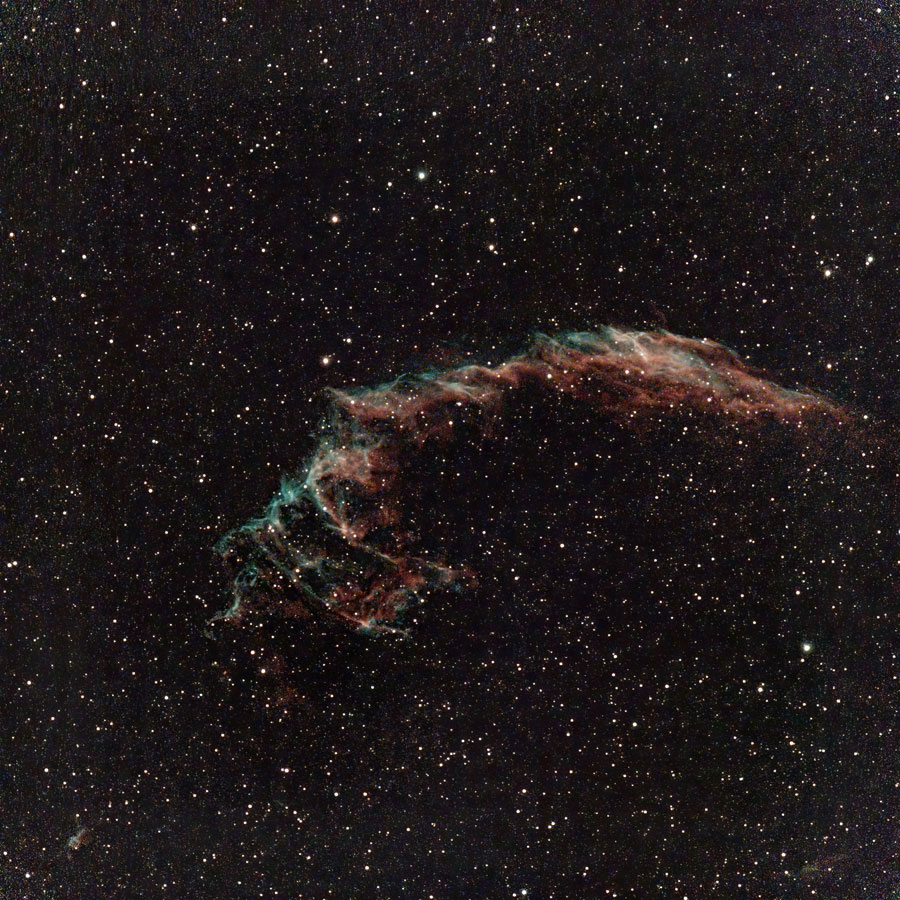
After a supernova, remnants resembling nebulae may remain. There are presumably many supernova remnants, but the ones I have photographed are located within our Milky Way (e.g., the Crab Nebula M 1, the Veil Nebula NGC 6960/6992/5).
Distances of some of the Better-Known Deep-Sky Objects that I Have Photographed
Below, I list the distances for a number of well-known deep-sky objects that I have photographed. I arranged the objects according to the distance scale given above.
Up to 1,000 Light-Years
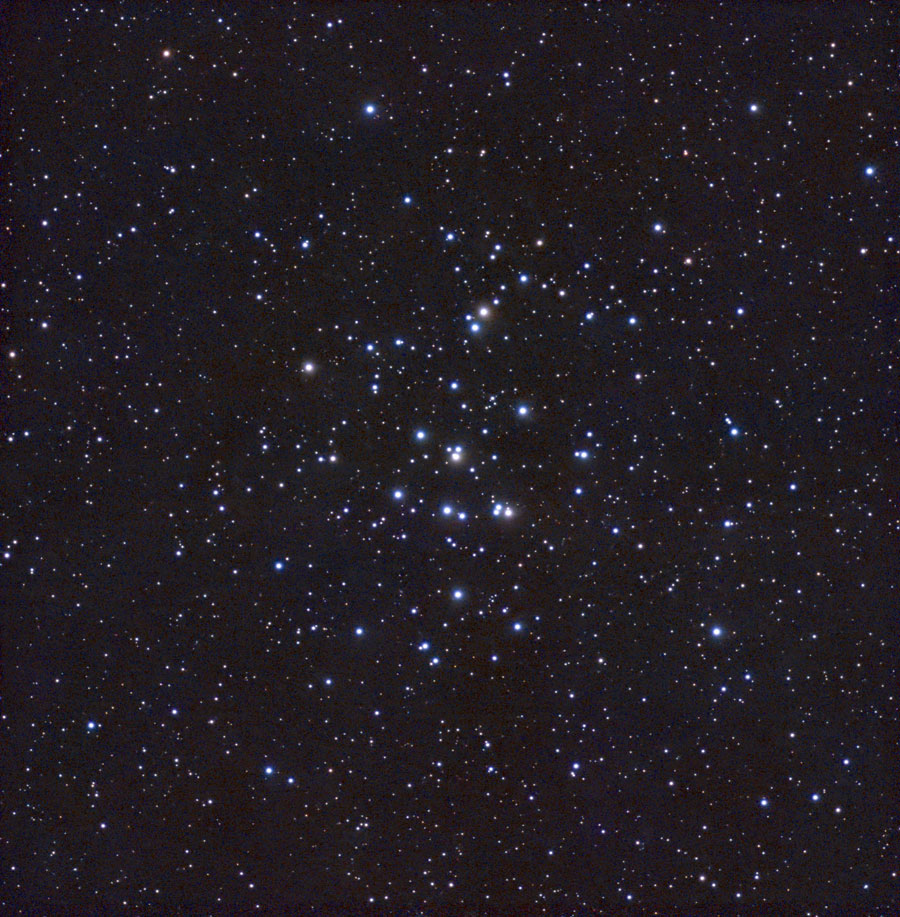
In this distance range, you will mainly find visually large open clusters (OC) and visually large planetary nebulae (PN). Let us see if I can add any more objects...
 |
 |
 |
||
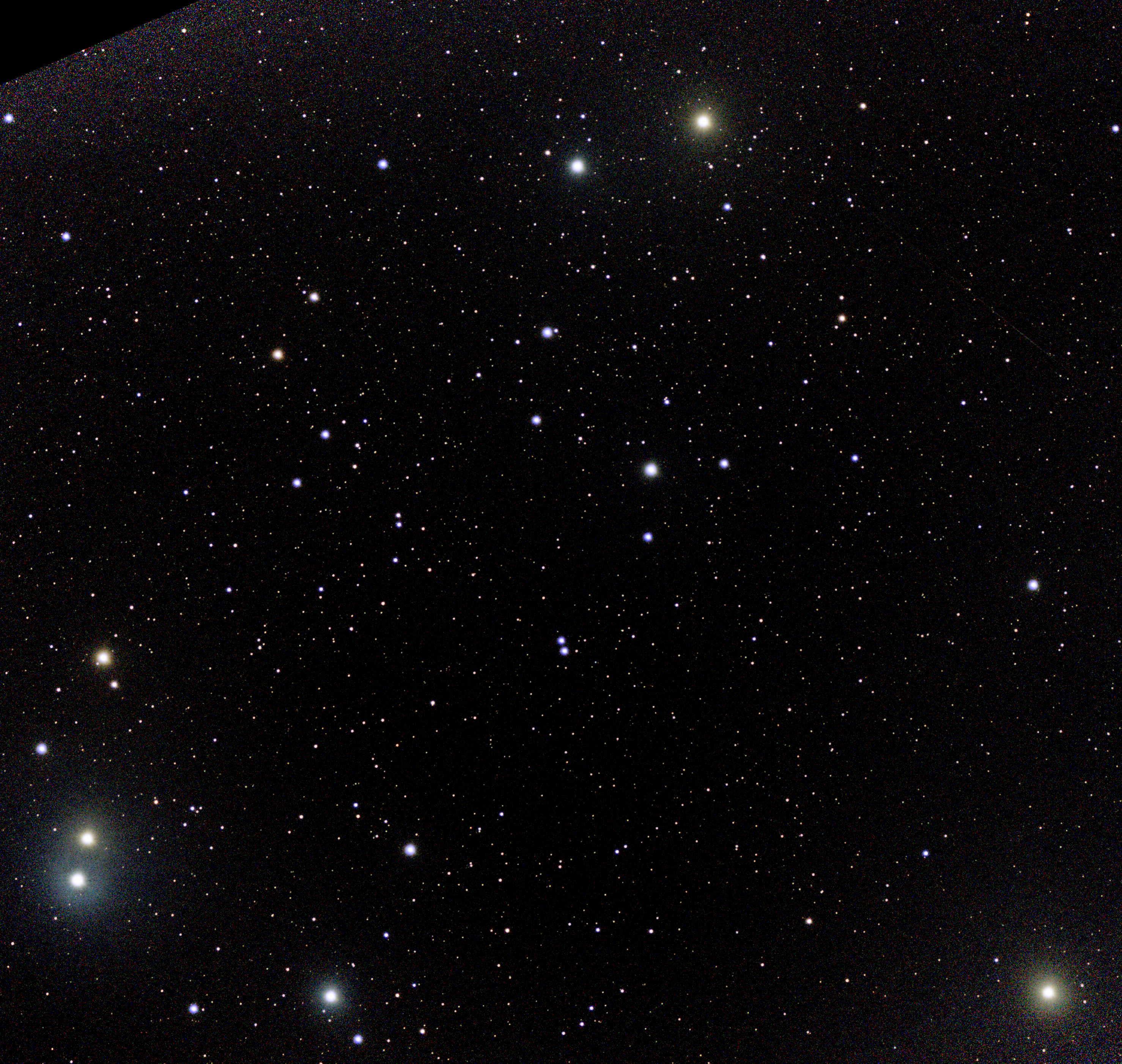
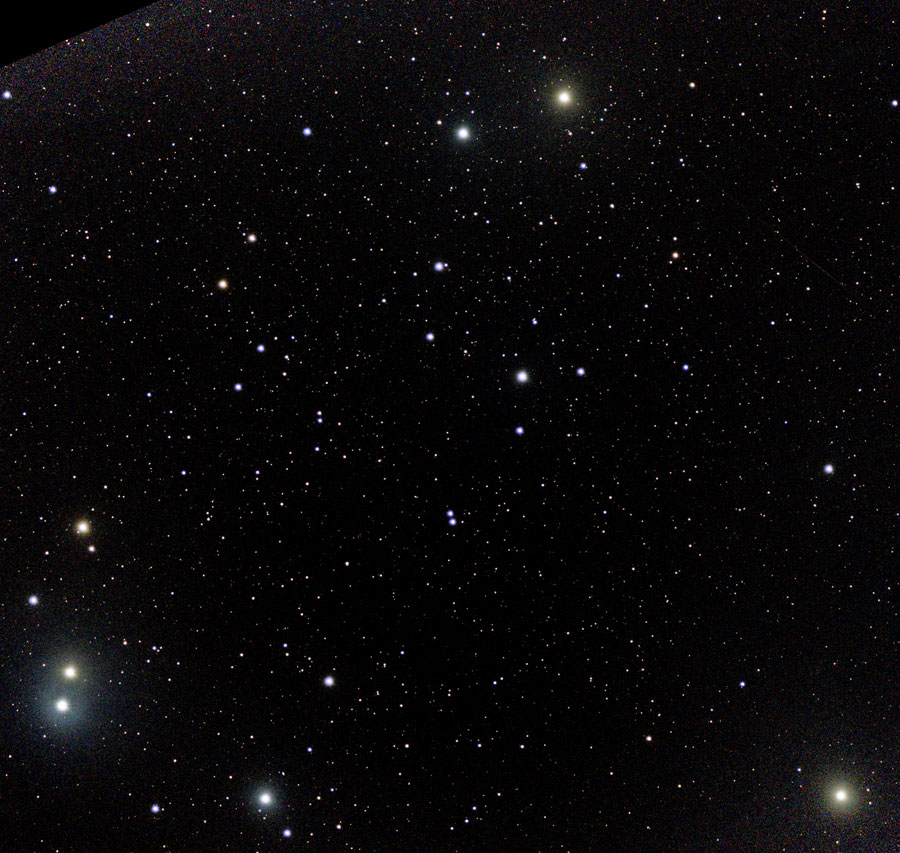
OC: Mel 25 (Hyades), Jan 29, 2024 - large (150 LY) |
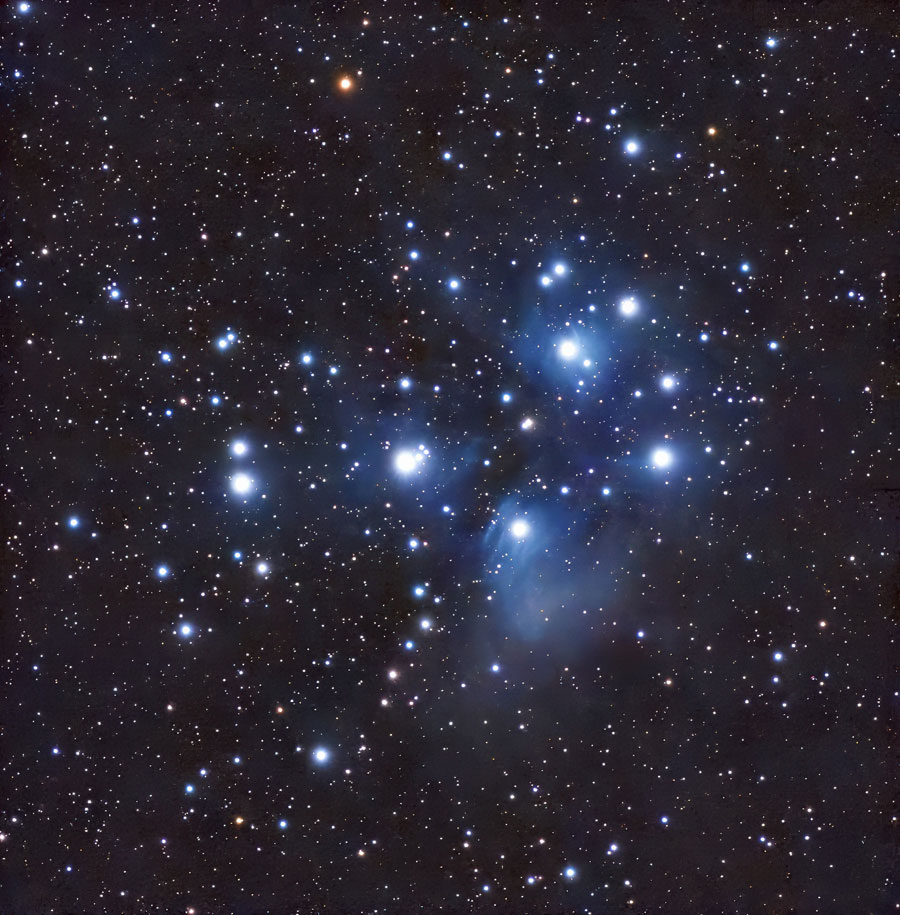
OC: M 45, 50 min, Feb 5, 2026 - original (440 LY) |
OC: M 44, Mar 19, 2026 - original (610 LY) |
||
 |
||||
| PN: NGC 7243, Nov 1, 2022 - large (650 LY) |
Other nearby and visually impressive open clusters, best observed with binoculars, include: Melotte 111 (Coma Cluster; 290 light-years), Melotte 20 (Mirfak Cluster, Perseus Moving Cluster; 550 light-years)
1,000 to 10,000 Light-Years
In this distance range, one can find open star clusters, galactic and planetary nebulae, and supernova remnants (SR), as well as M 4, the globular cluster closest to Earth. Essentially, this is the most interesting distance range because almost all types of deep-sky objects (DSOs) are found here.
 |
 |
 |
||
PN: M 27, Aug 25, 2025 - 1200 (1,200 LY) |
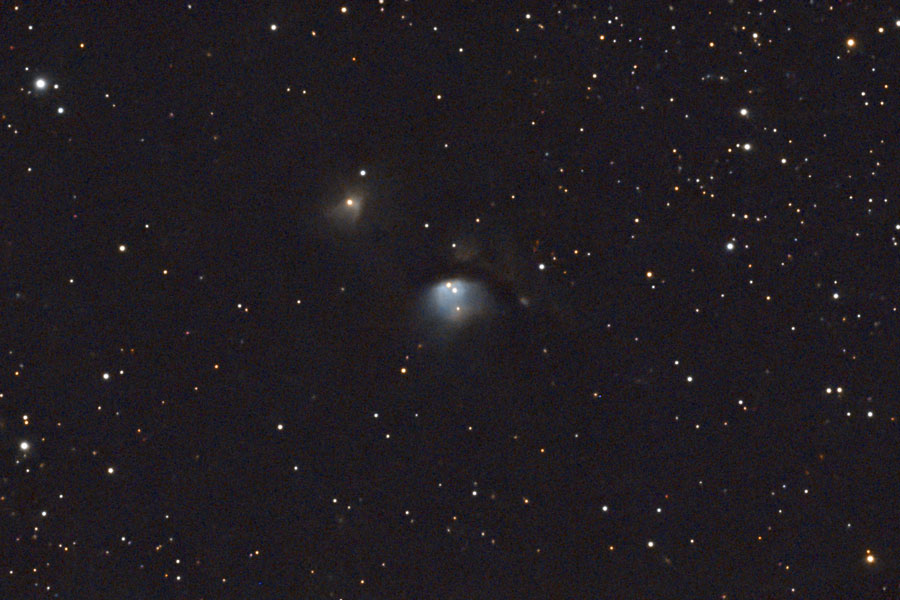
GN: M 78 with NGC 2071, Jan 19, 2026 - original (1,200 LY) |
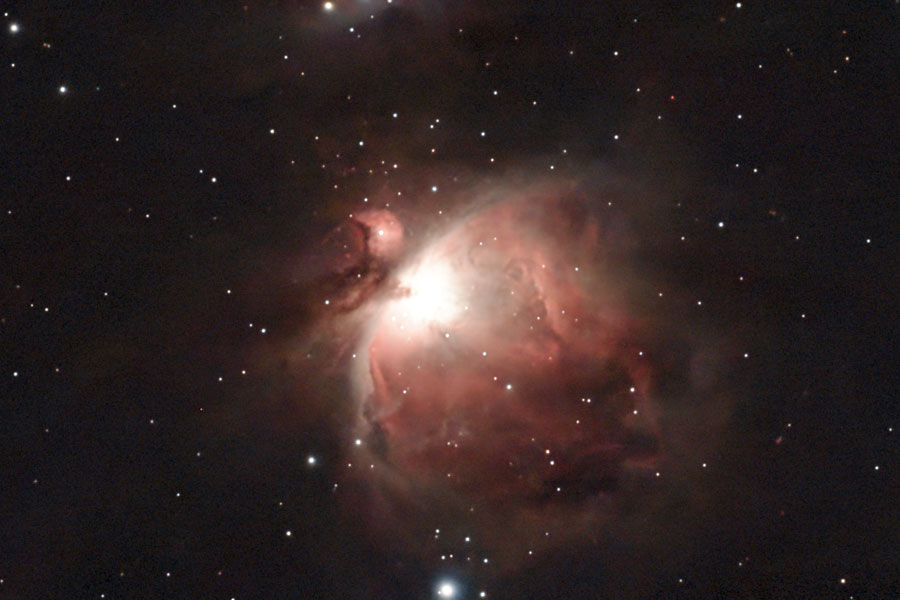
GN: M 42/43, Jan 19, 2026 - large (1,350 LY) |
||
 |
 |
 |
||
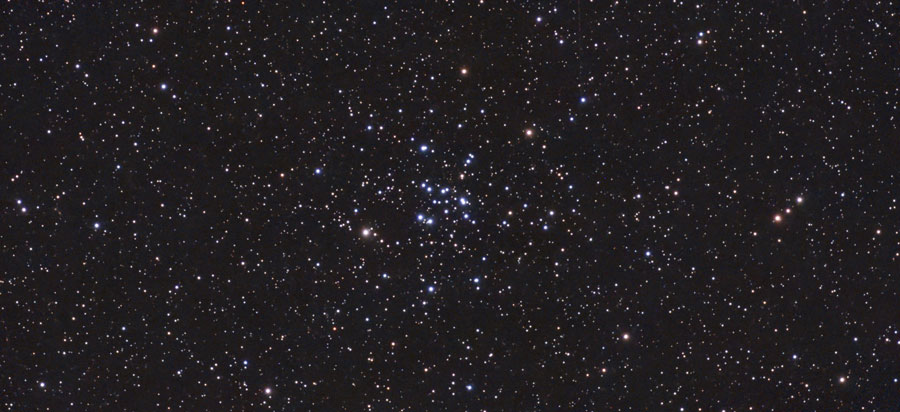
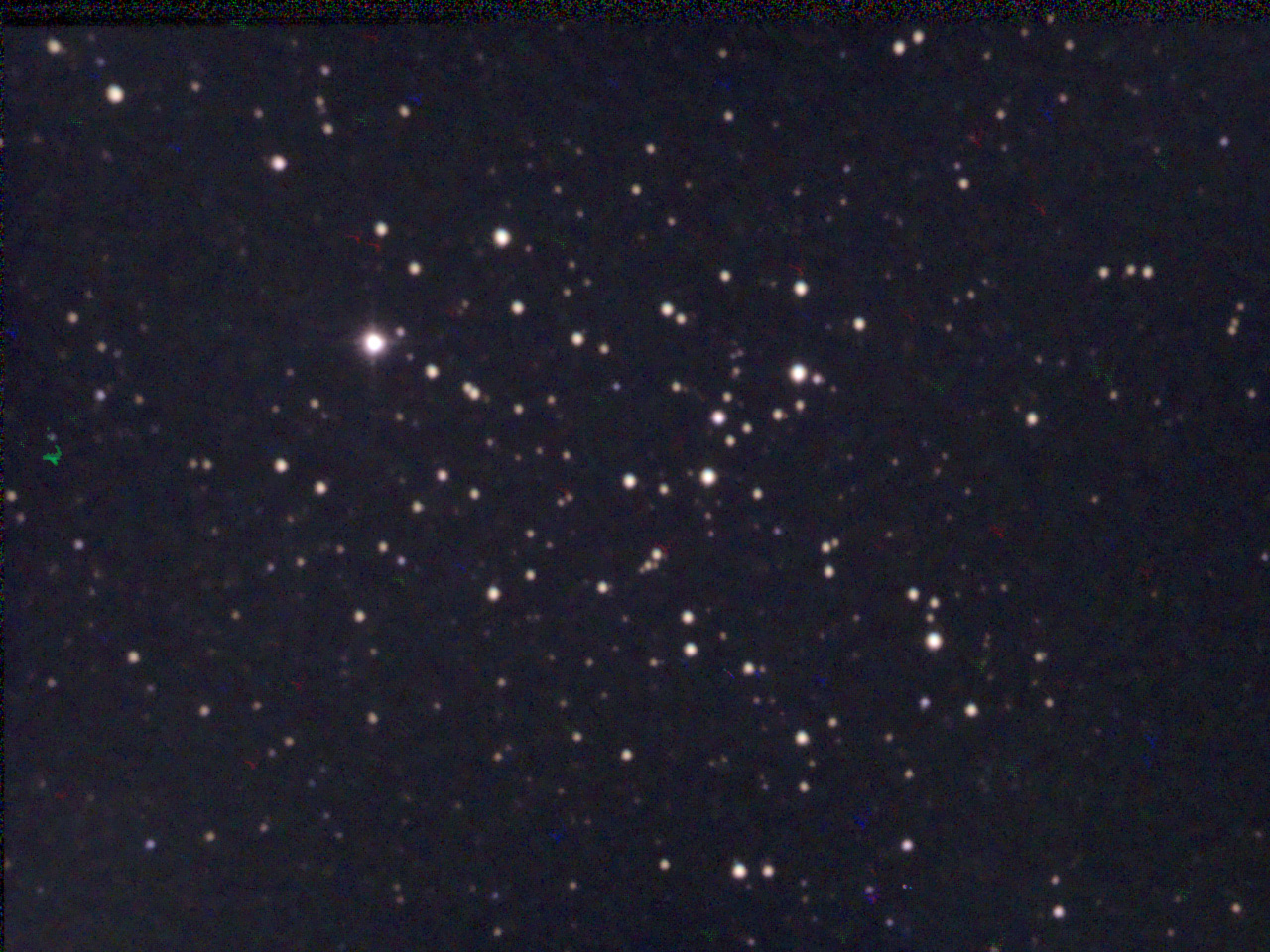
OC: NGC 752 (C 28), Jan 24, 2024 - original (1.500 LY) |
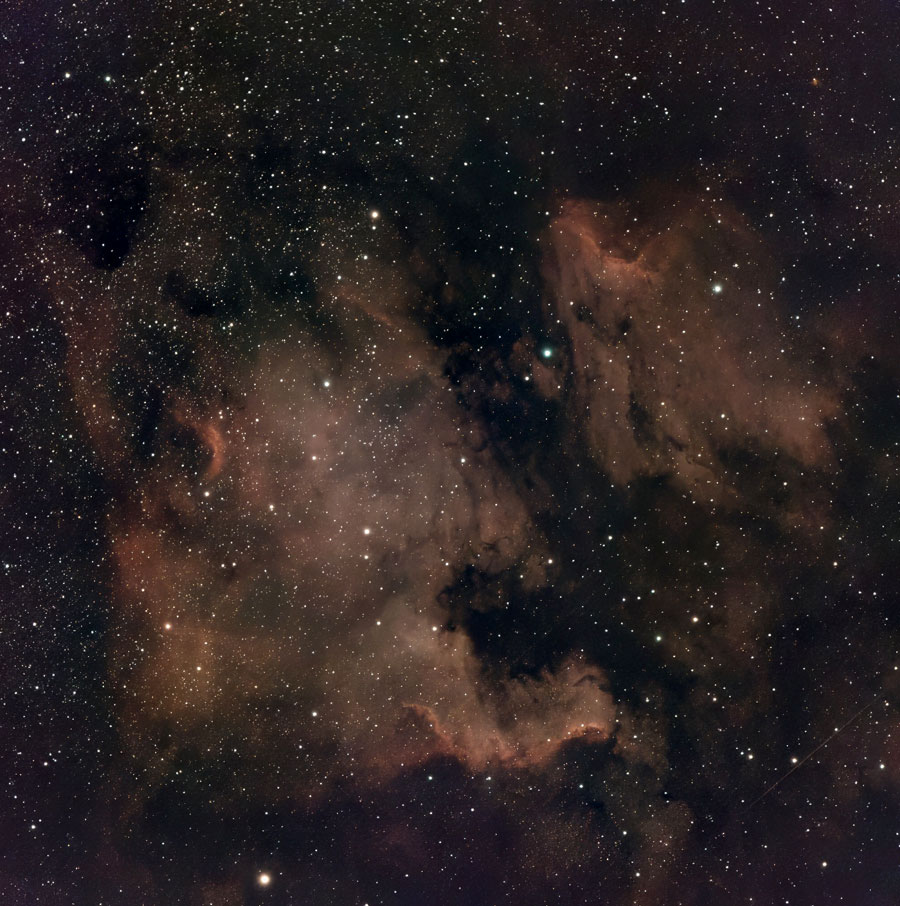
GN: NGC 7000 & IC 5070, Sep 18, 2025 - 2000 (2,000 LY) |
|||
 |
 |
 |
||
SR: NGC 6992/5, Dec 26, 2024 - 2000 (2,000 LY) |
PN: M 57 - Jul 8, 2024, 1800p (2,570 LY) |
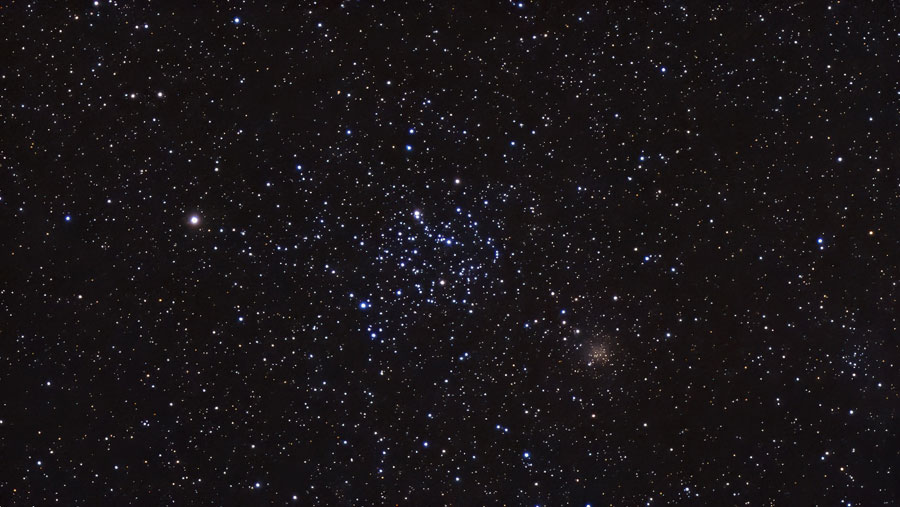
OC: M 35 with NGC 2158, Apr 26, 2026 - original (2,600 LY) |
||
 |
 |
 |
||
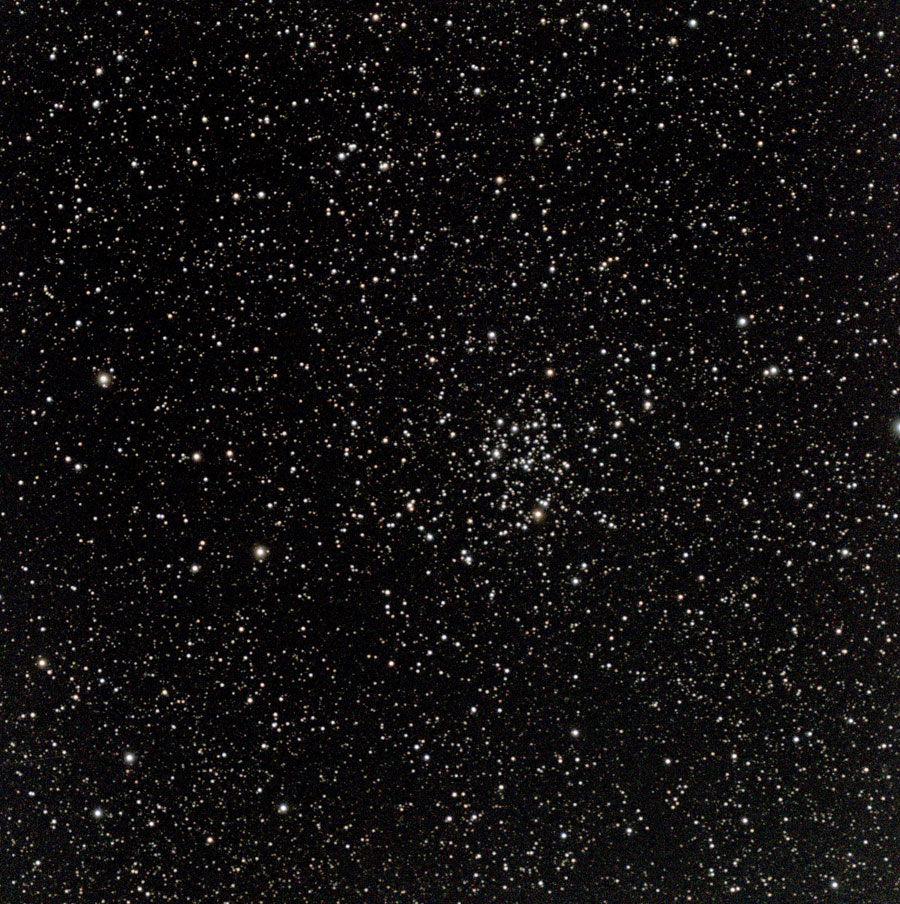
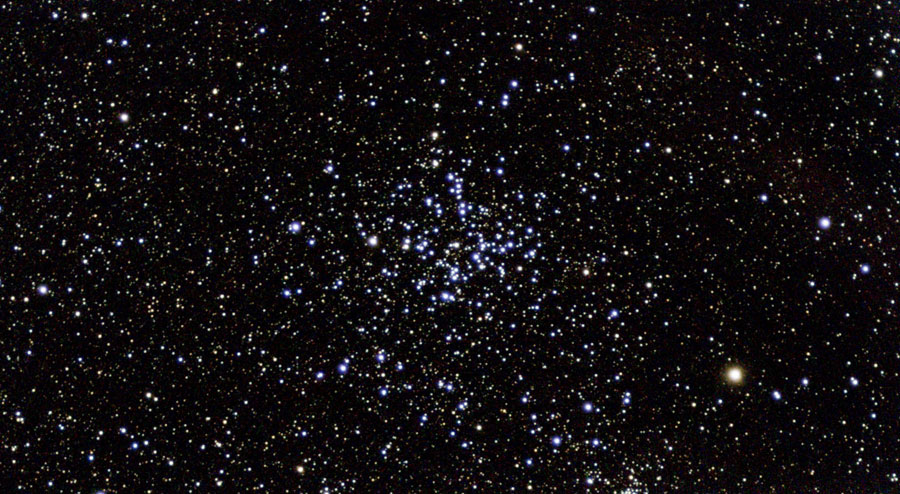
OC: M 50 Mar 5, 2025 - 2000 (3,000 LY) |
OC: M 38, Feb 13, 2023 - original (3,500 LY) |
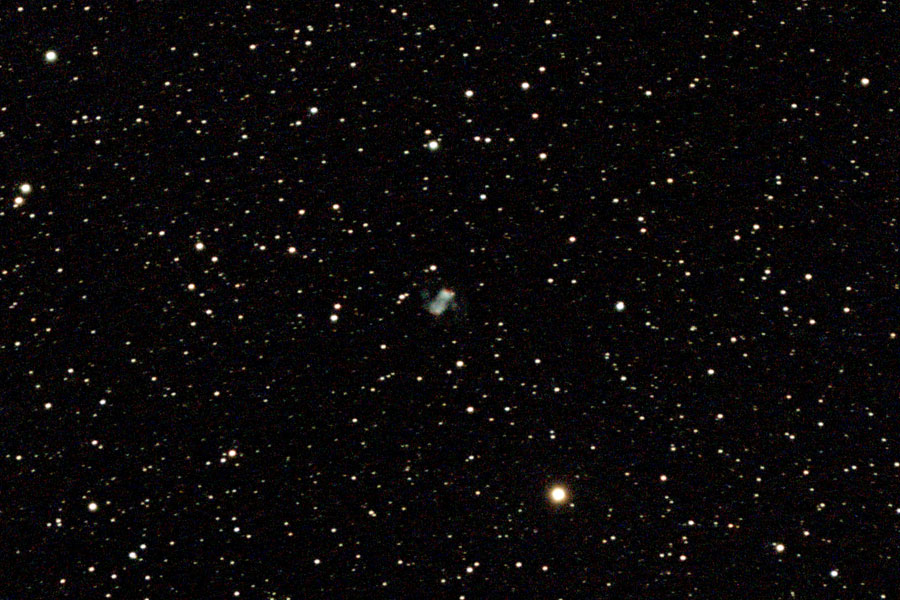
PN: M 76 - Nov 5, 2024, 2000 (4,000 LY) |
||
 |
 |
 |
||
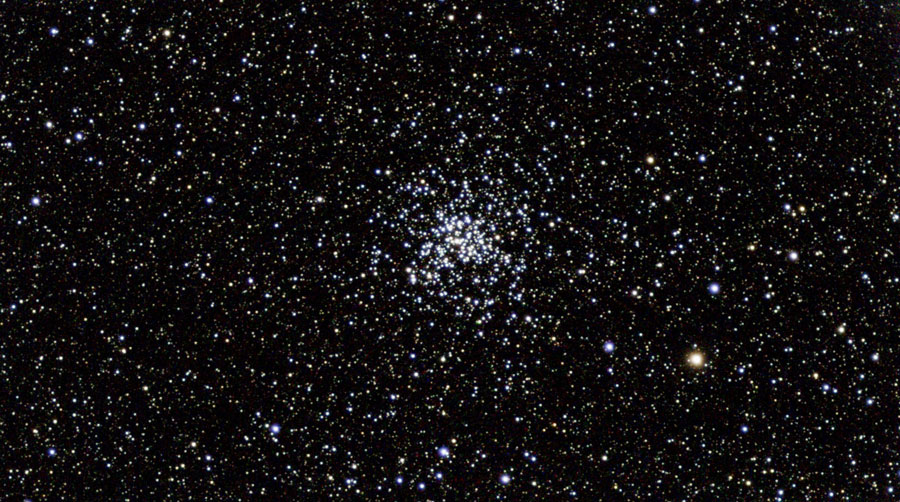
OC: M 37, Feb 13, 2023 - original (4,500 LY) |
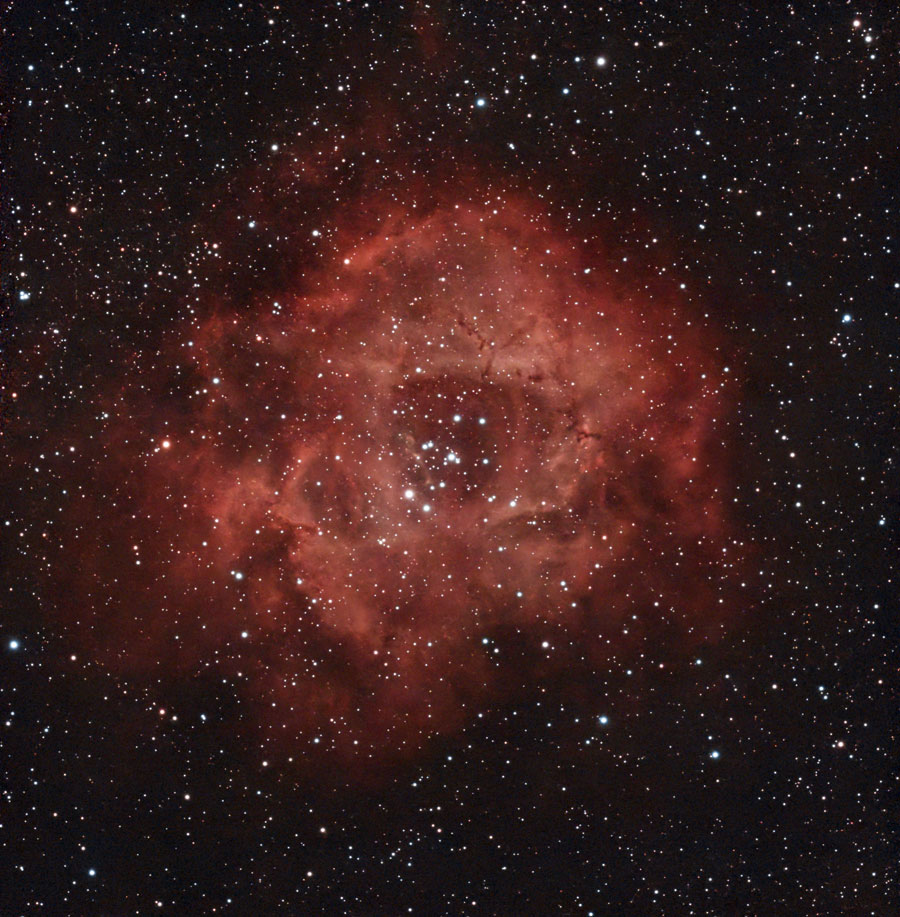
GN: NGC 2237/2244, Feb 9, 2026, original (4,700 LY) |
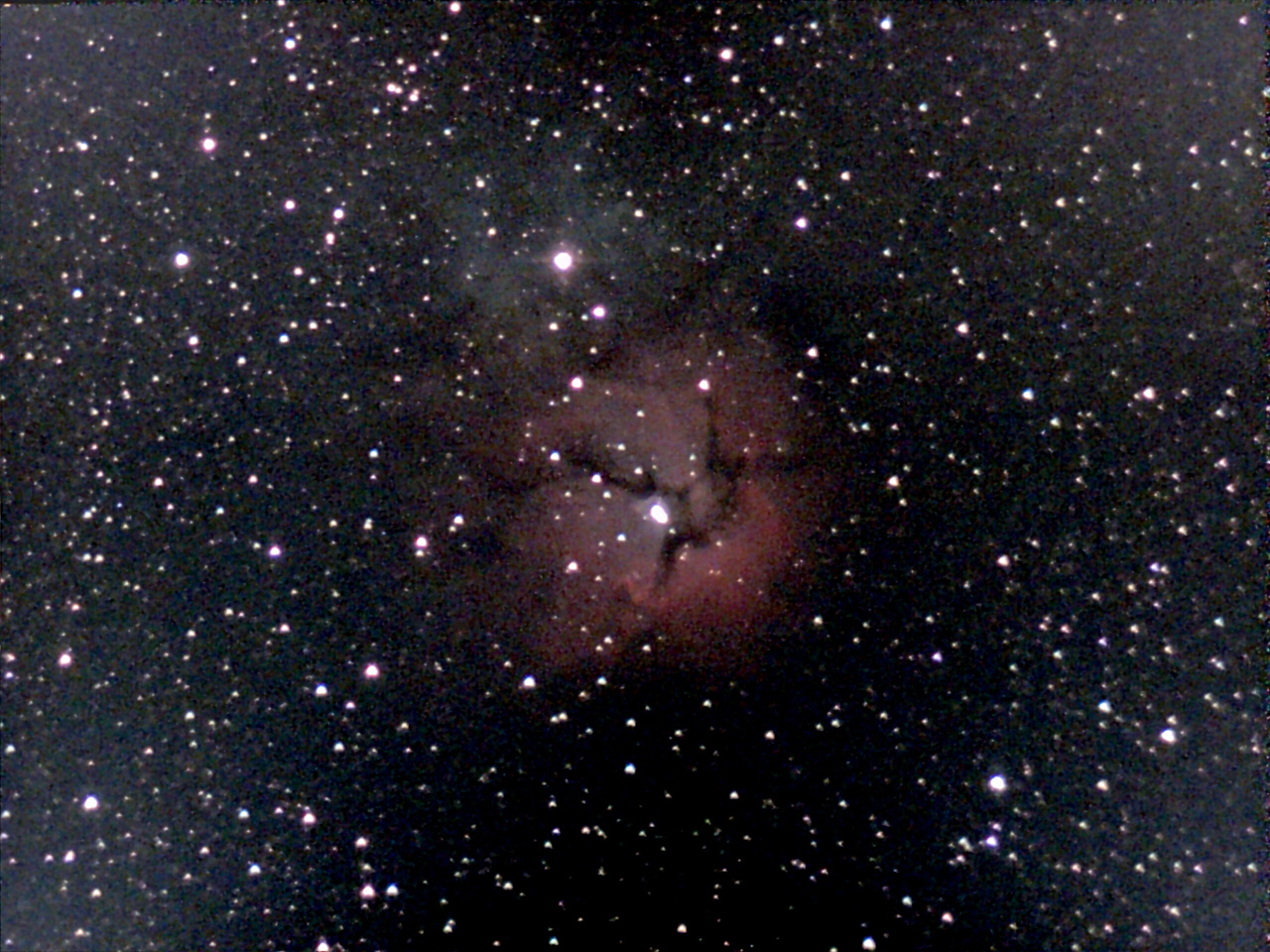
GN: M 20 - Jul 18, 2021 (5,000 LY) |
||
 |
 |
 |
||
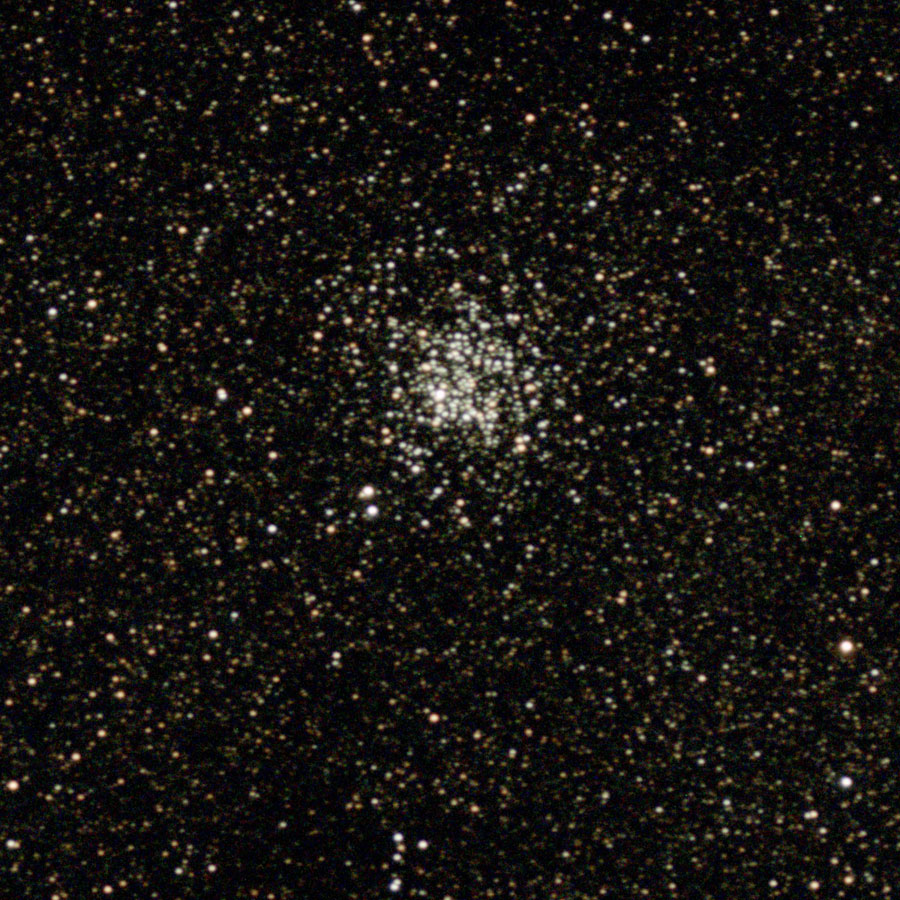
GN: M 8 - Aug 6, 2024, 2100p (5,200 LY) |
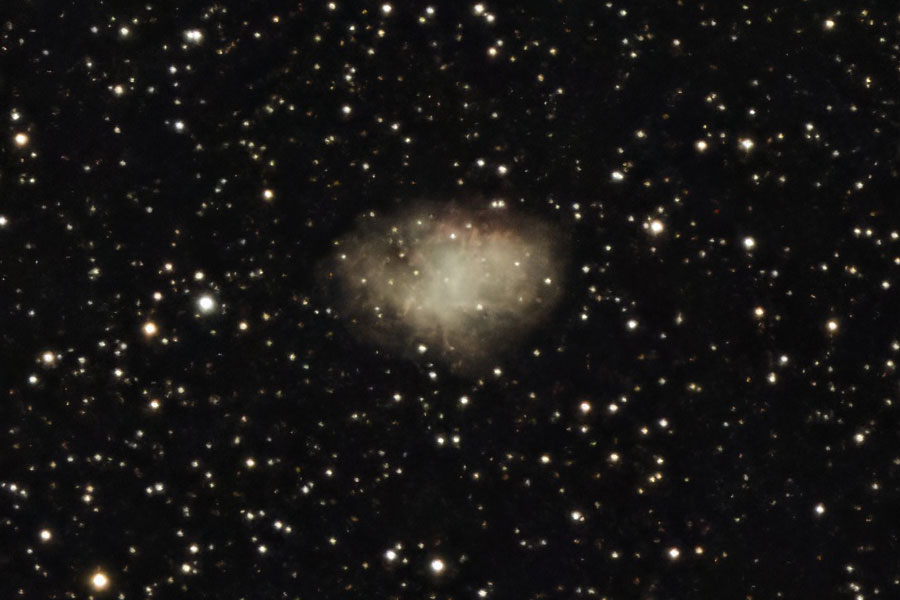
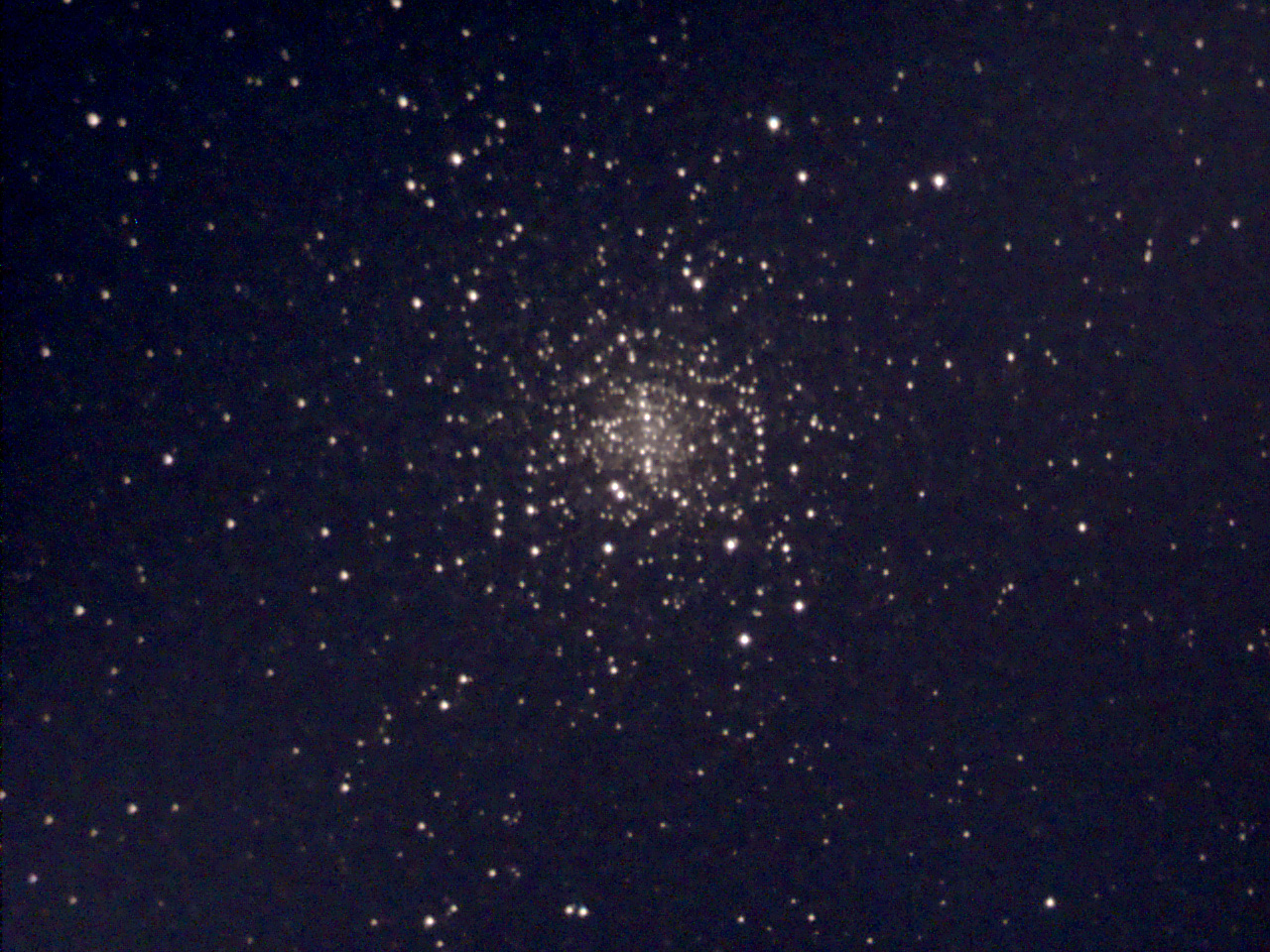
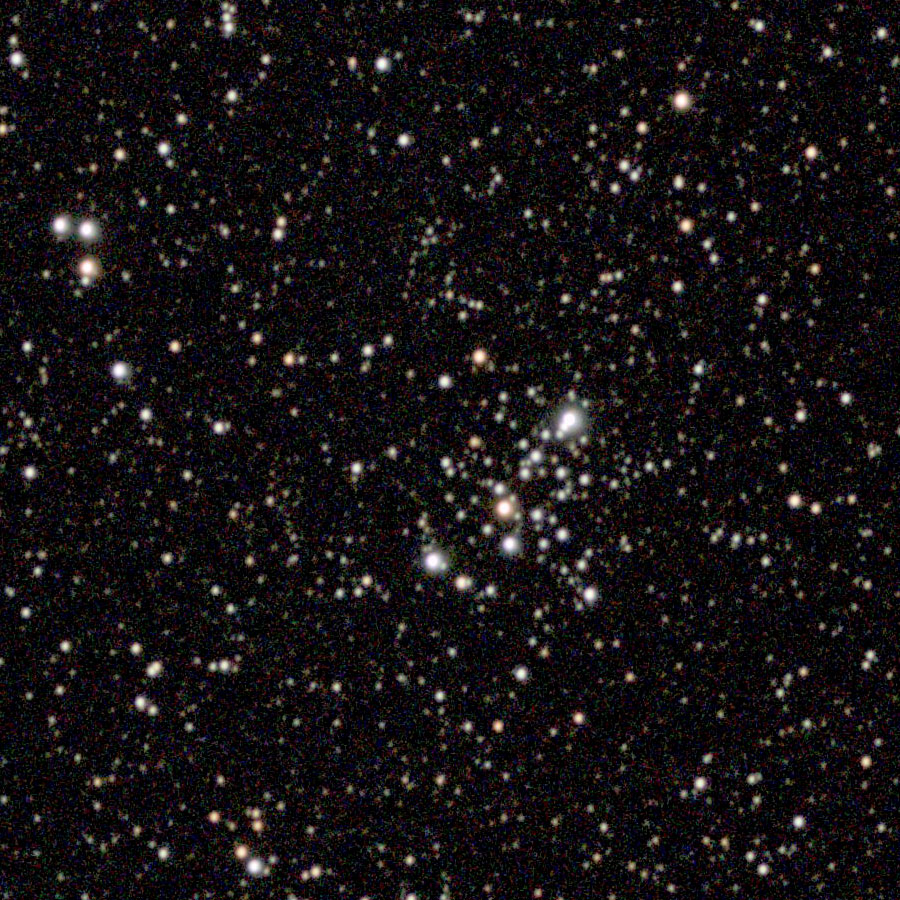
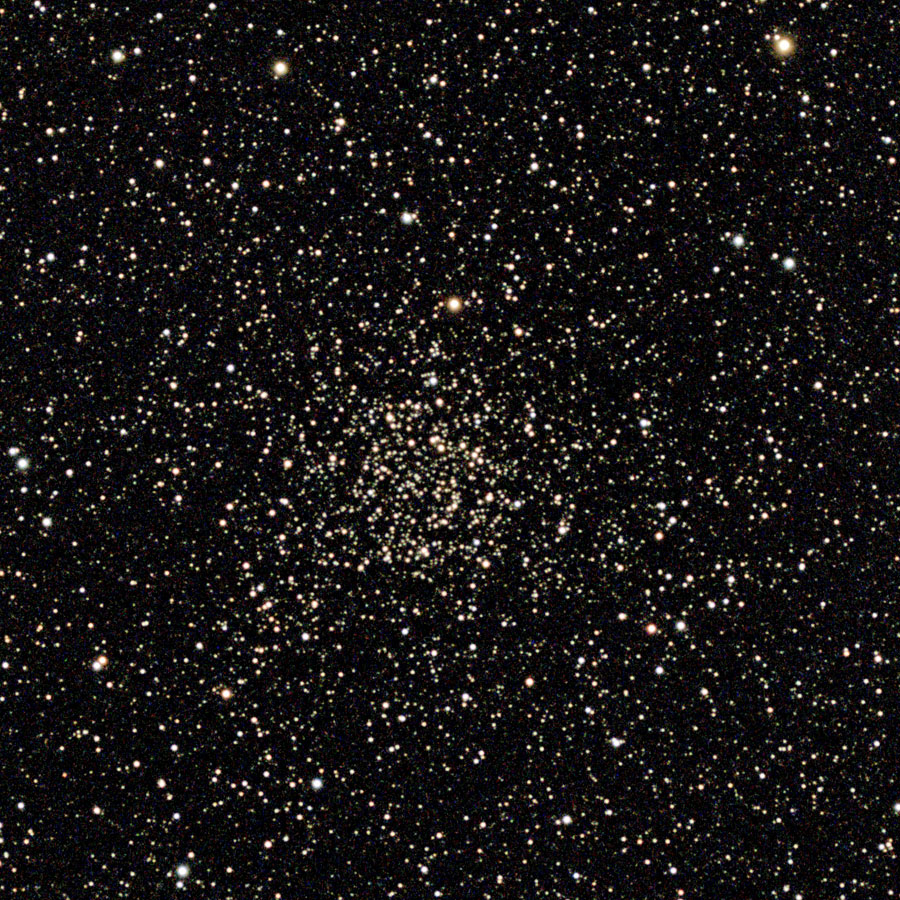
OC: M 11, Aug 30, 2025 - 1200 (6,000 LY) | SR: M 1, Feb 18, 2025 - 1800 (6,200 LY) |
||
 |
 |
 |
||
KS: M 4, May 29, 2020 - (7,200 LY) |
OC: M 103, Mar 5, 2025 - (7,200 LY) |
OC: NGC 7789, Aug 25, 2024 - 1800p (7,600 LY) |
||
 |
 |
 |
||
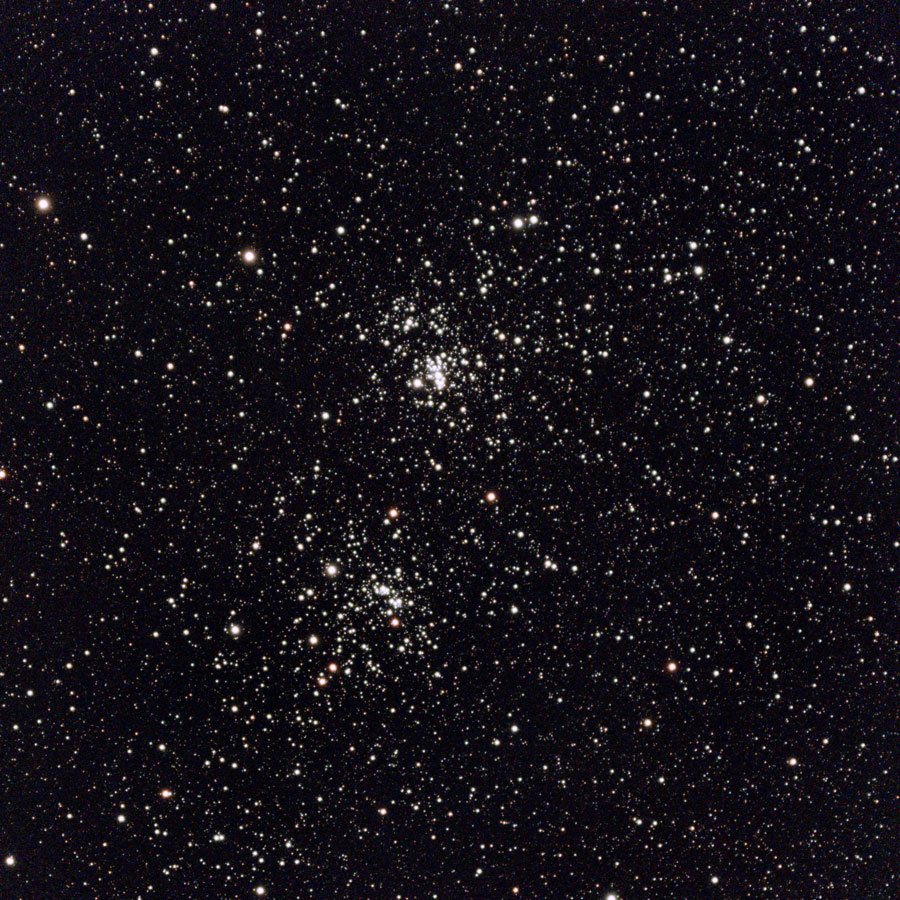
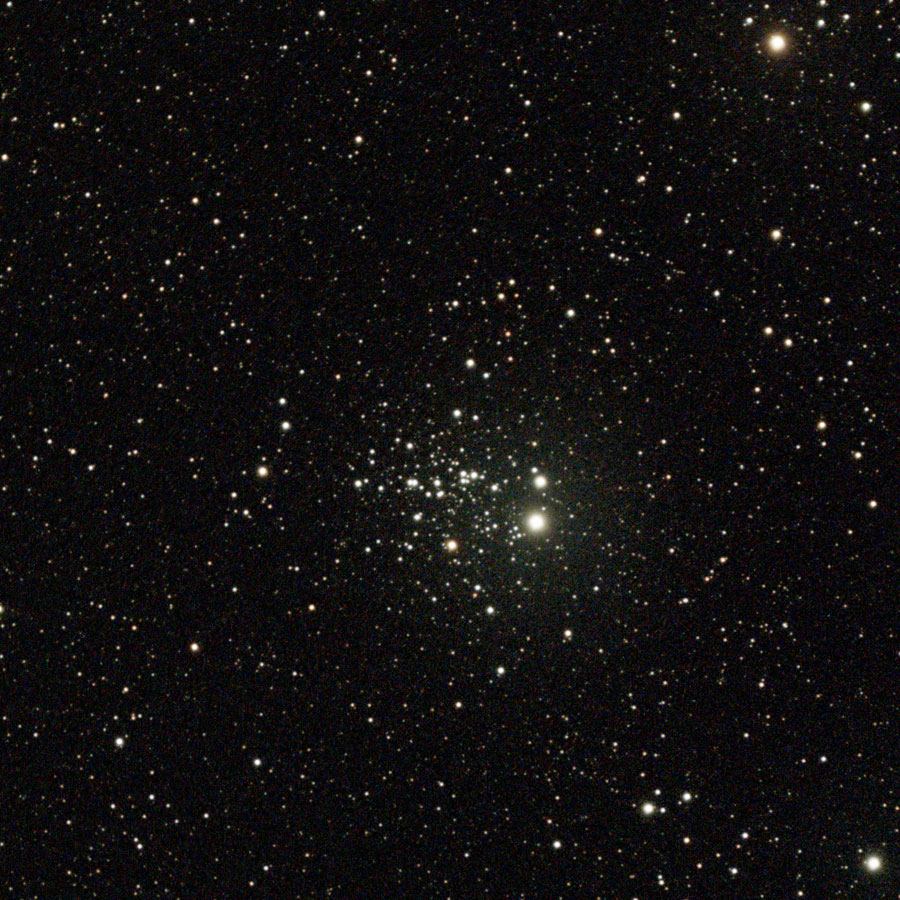
OC: NGC 884/869, Nov 4, 2024 - 2000 (7,600/6,800 LY) |
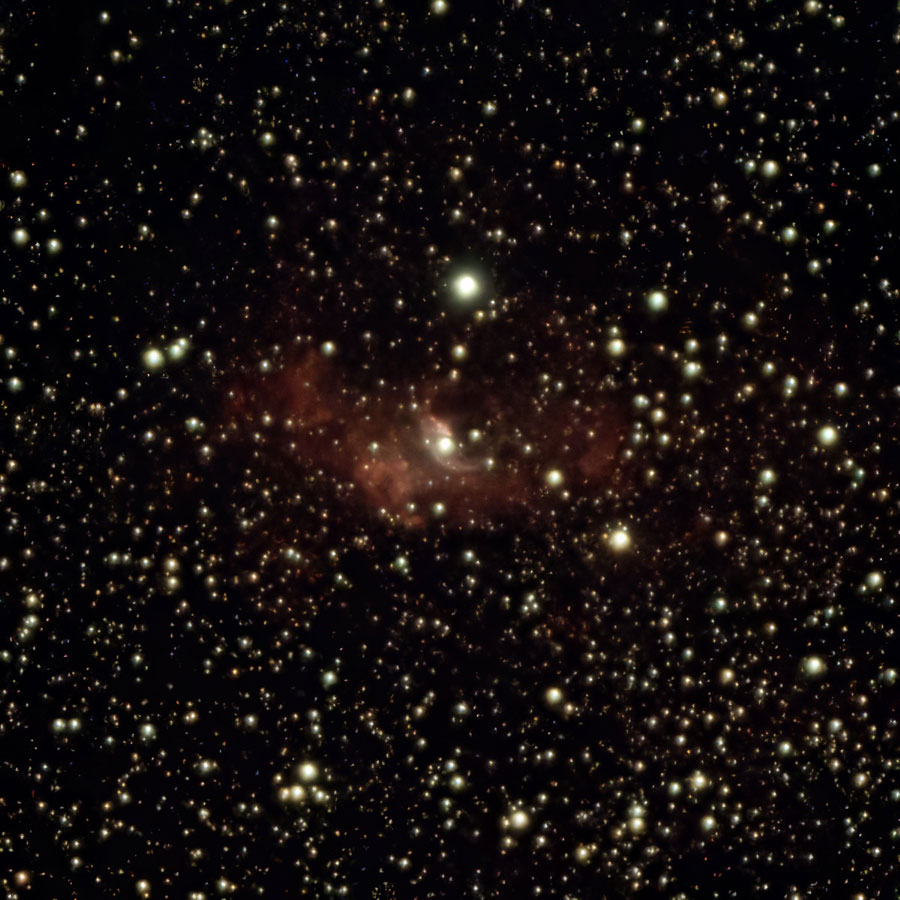
GN: NGC 7635, Aug 31, 2025 - 1200p (8,800 LY) |
OC: NGC 457, Nov 5, 2024 - 2000 (9,400 LY) |
||
 |
||||
NGC 281, Aug 29, 2024 - 1800p (9,500 LY) |
10.000 to 100.000 Light-Years
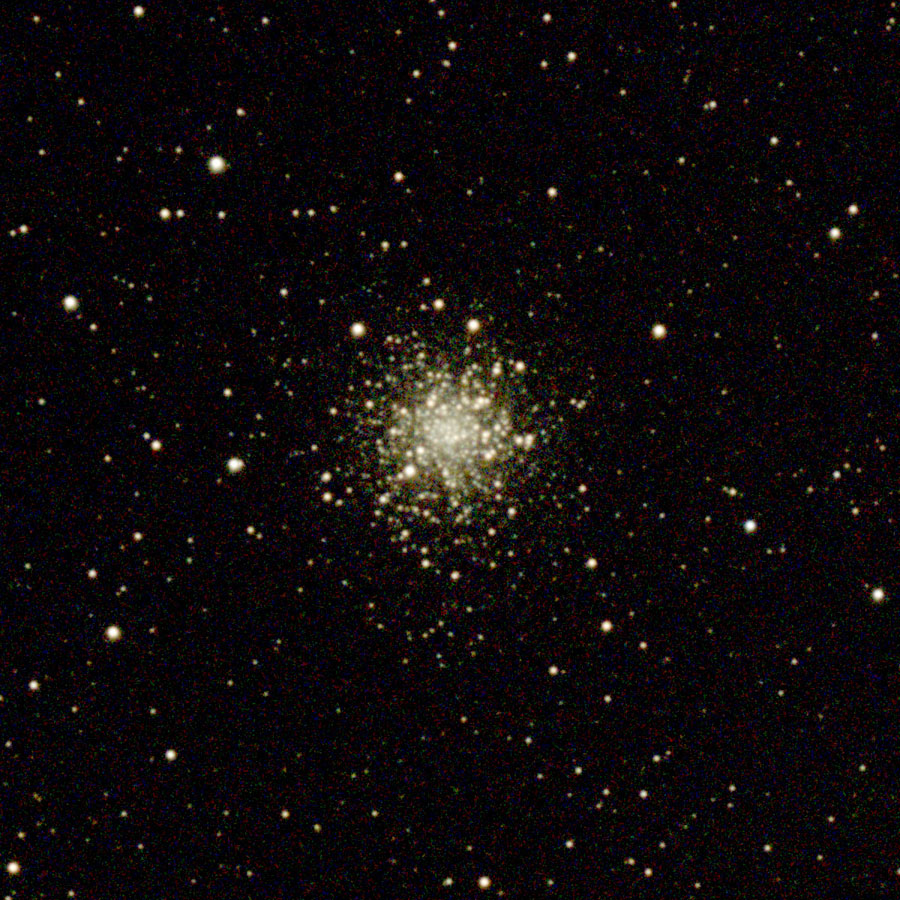
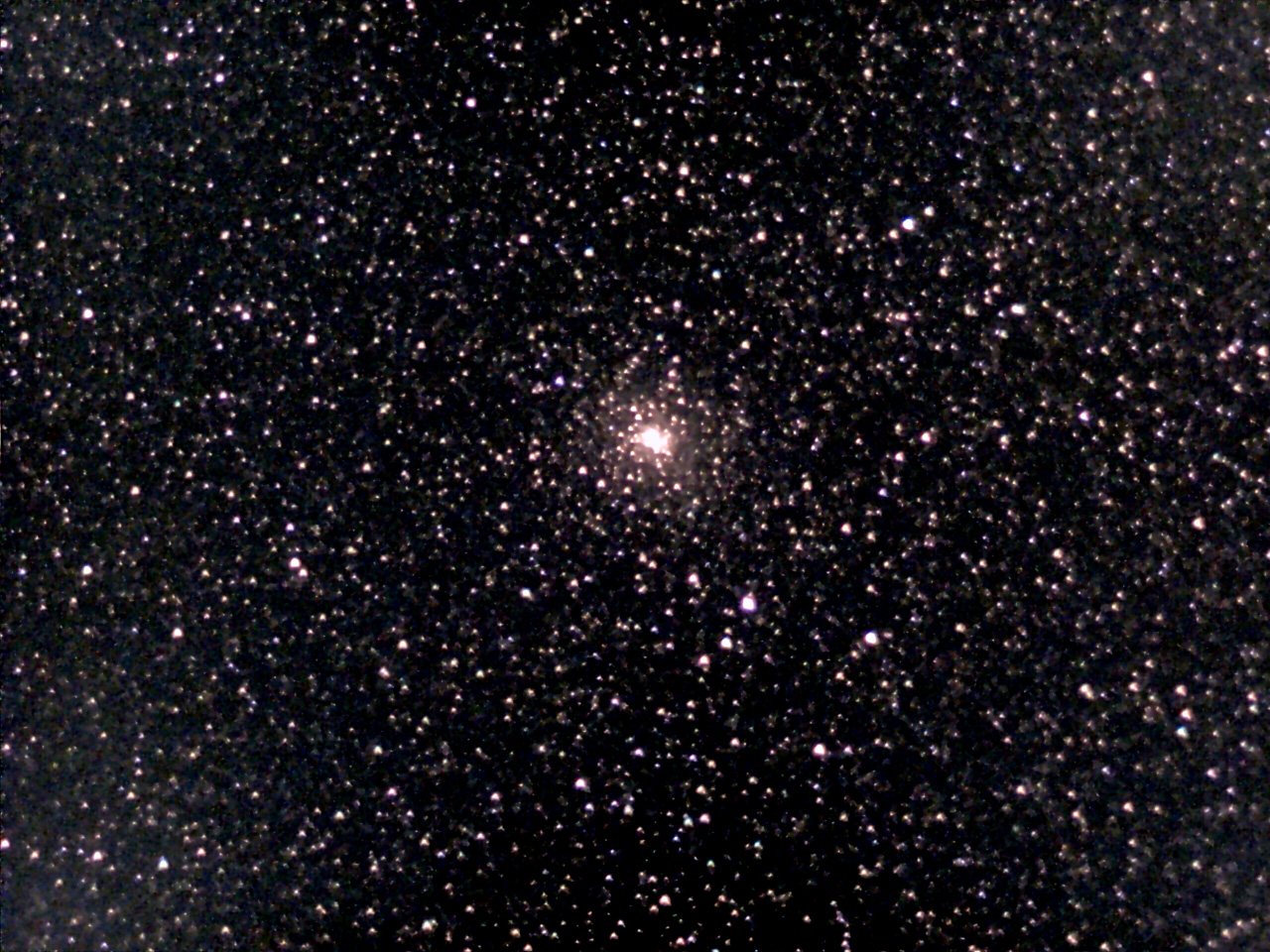
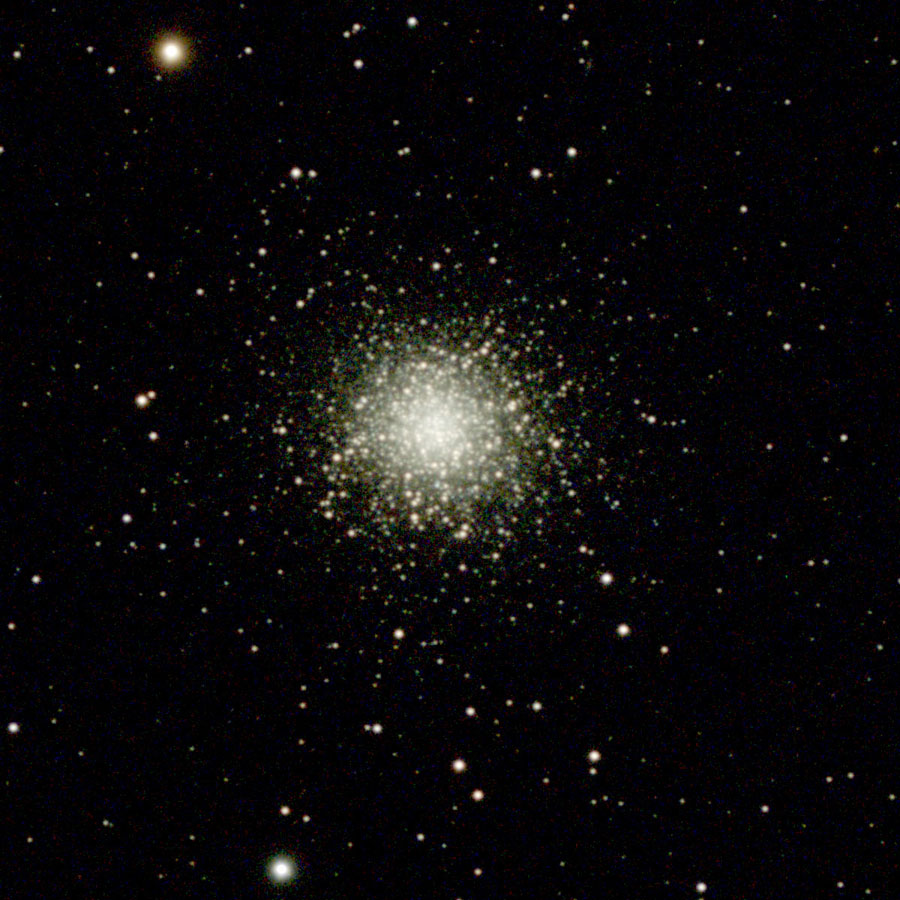
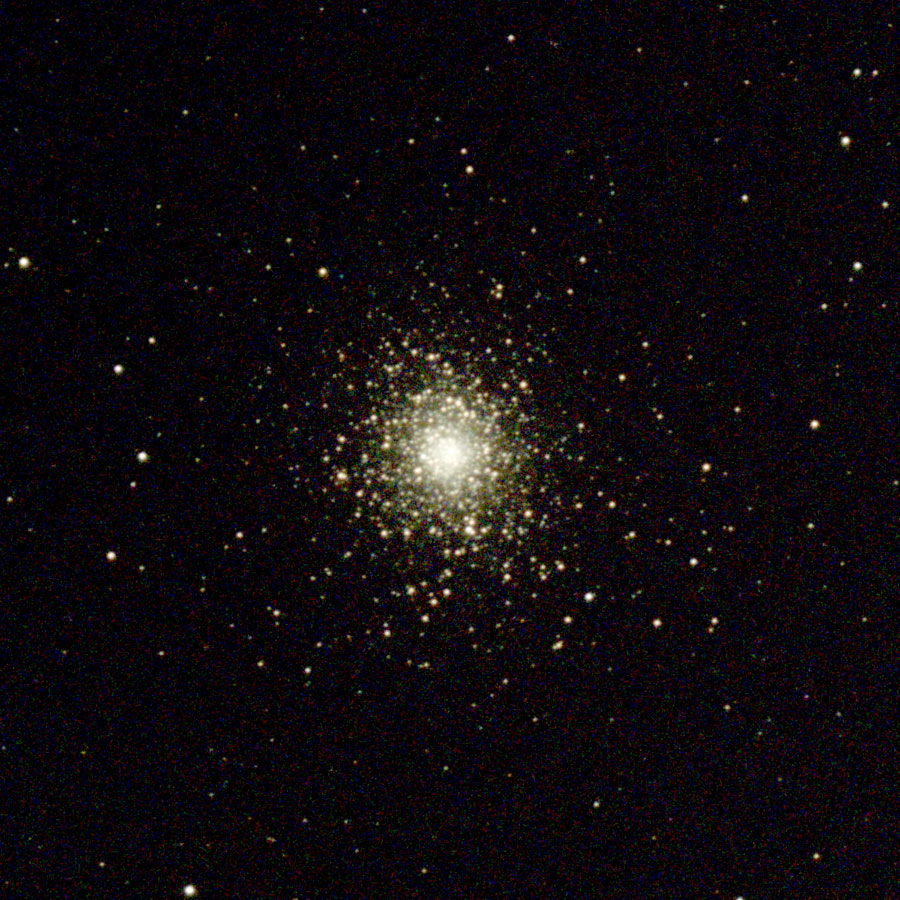
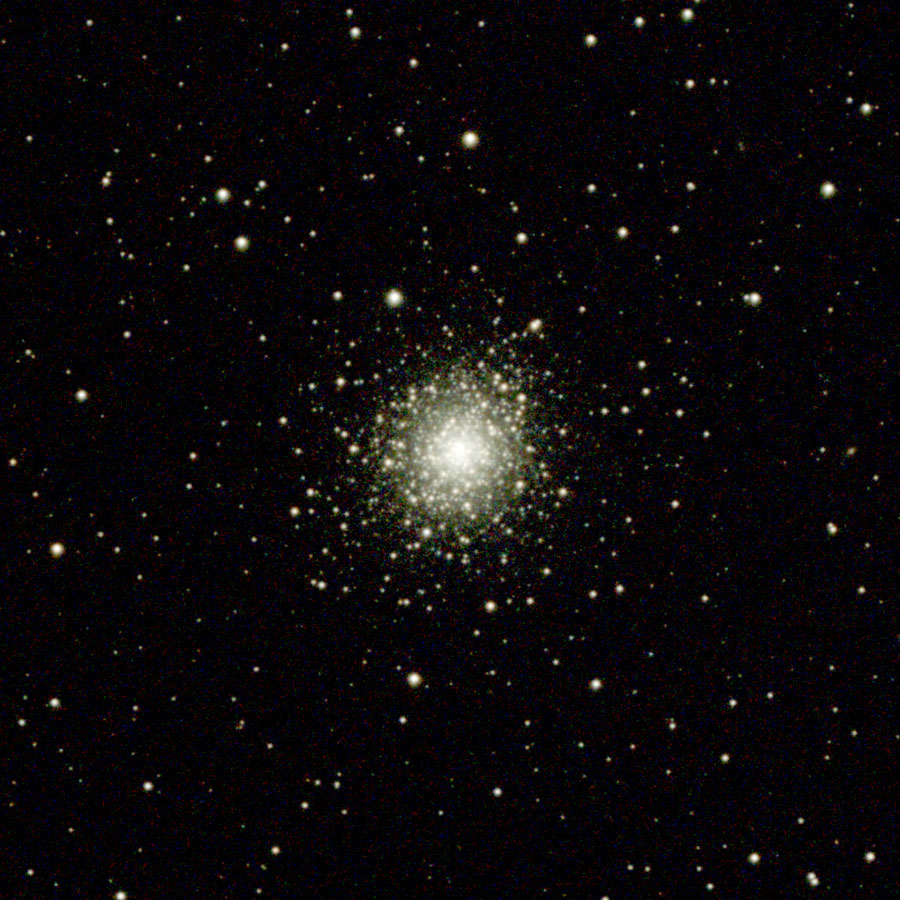
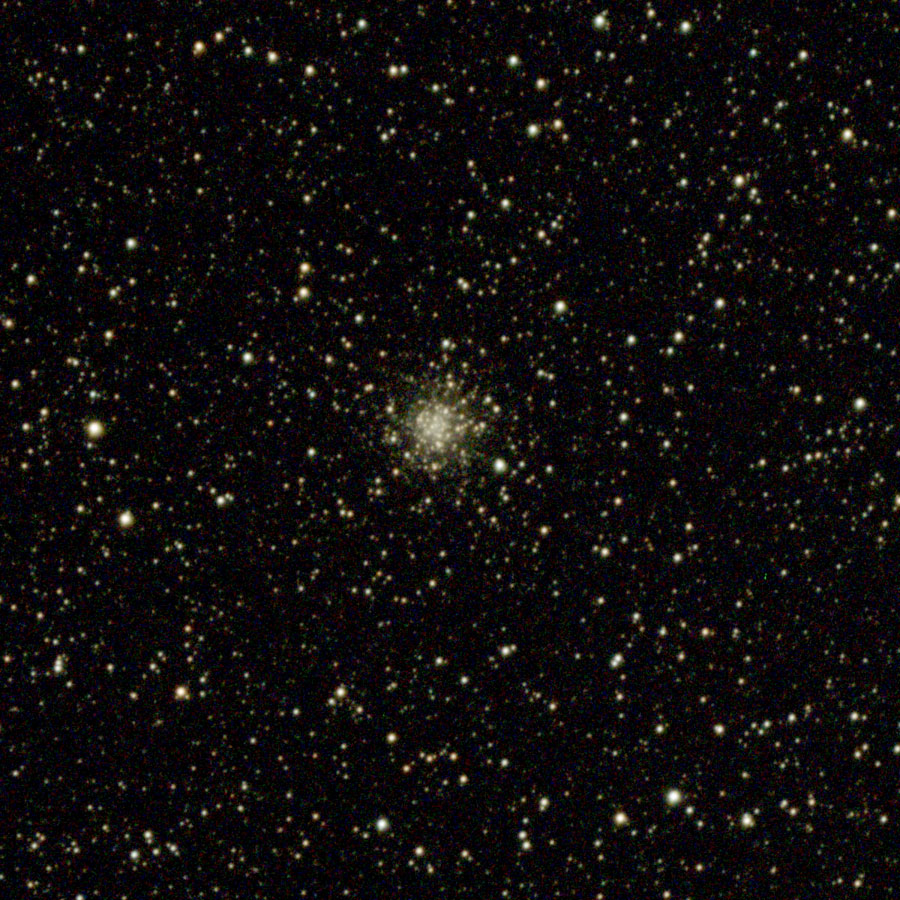
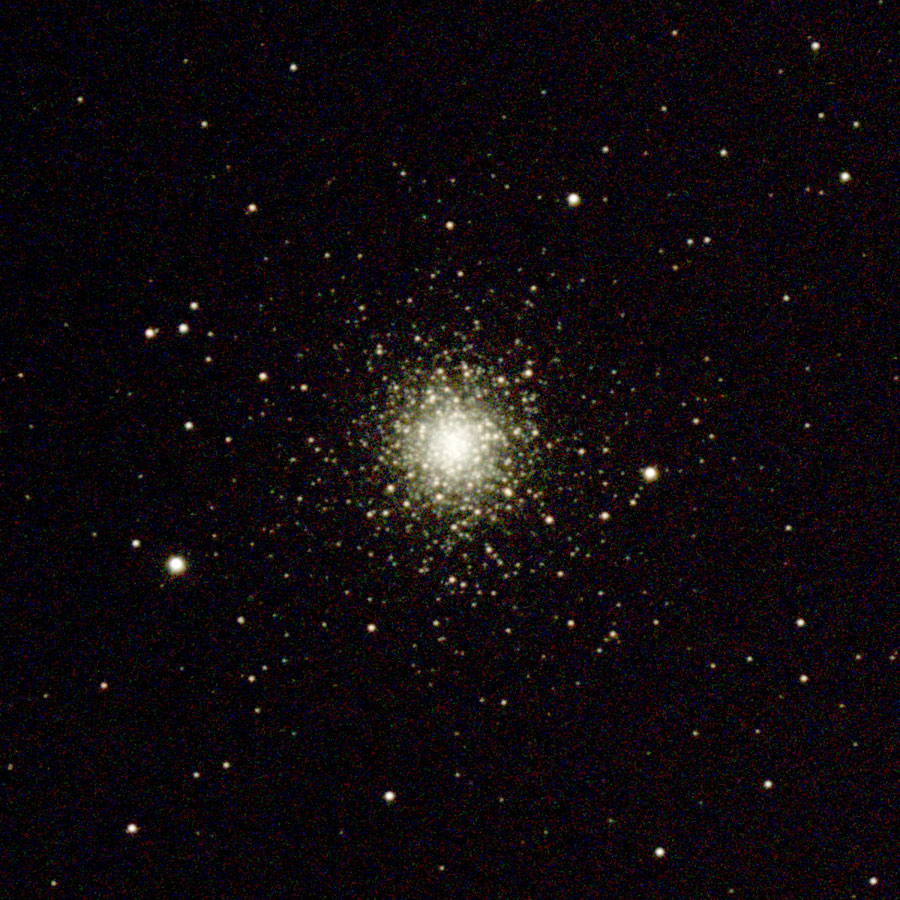
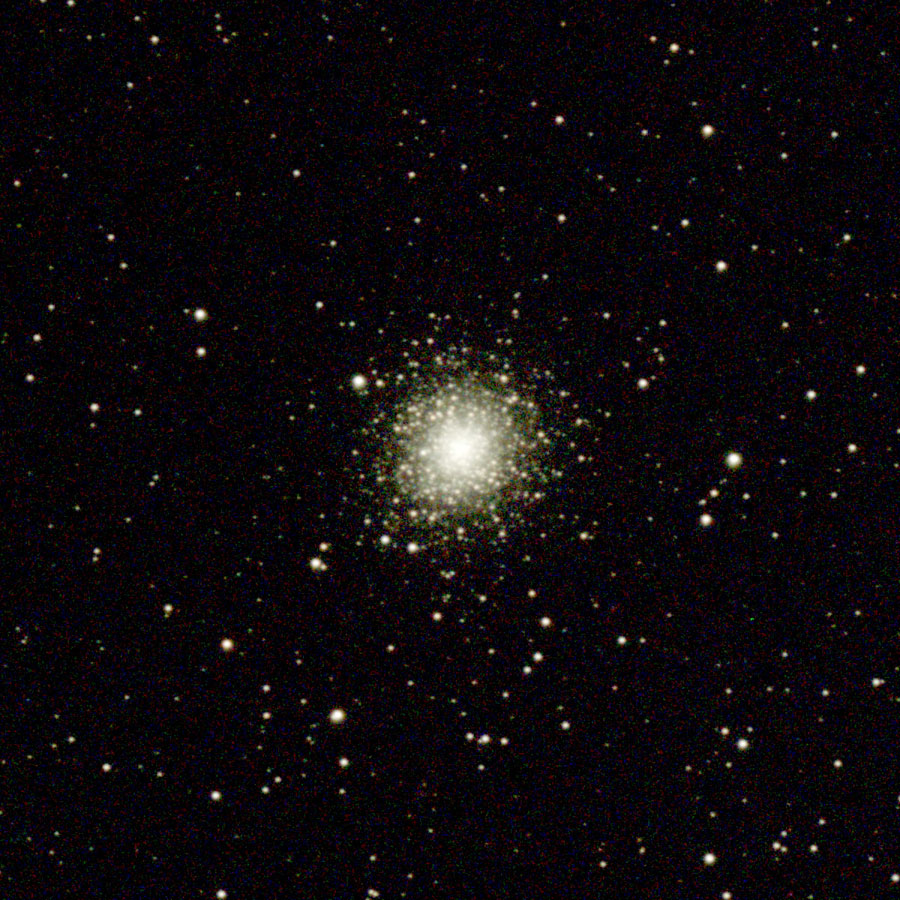
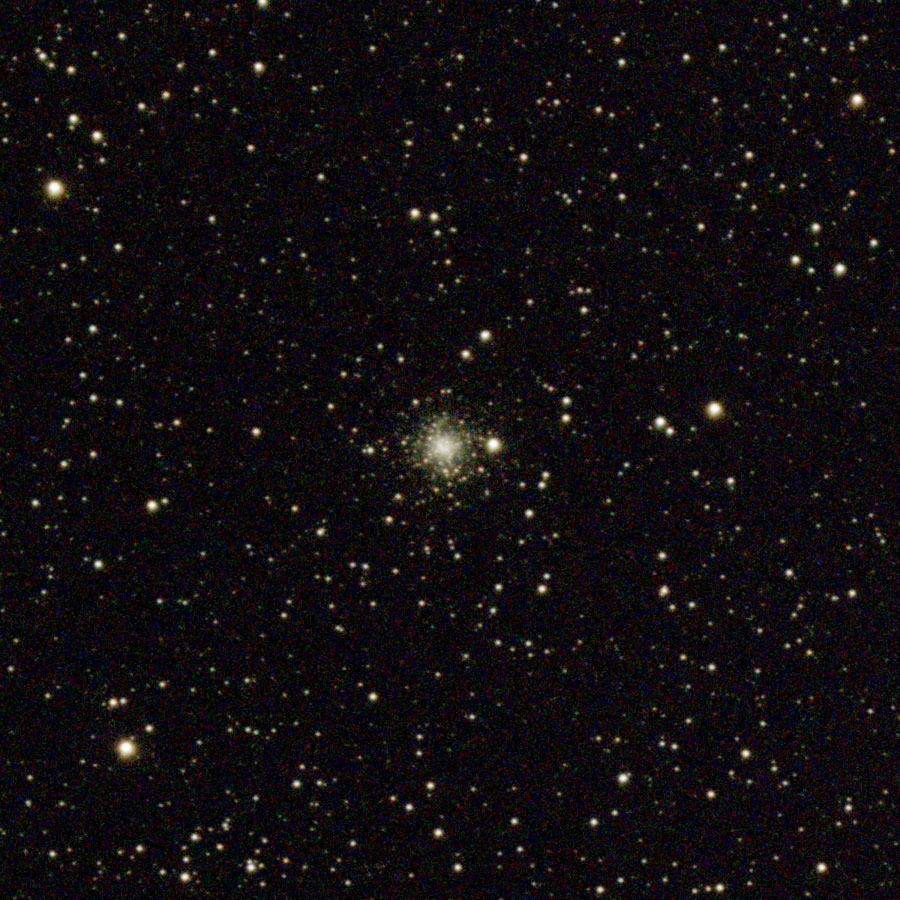
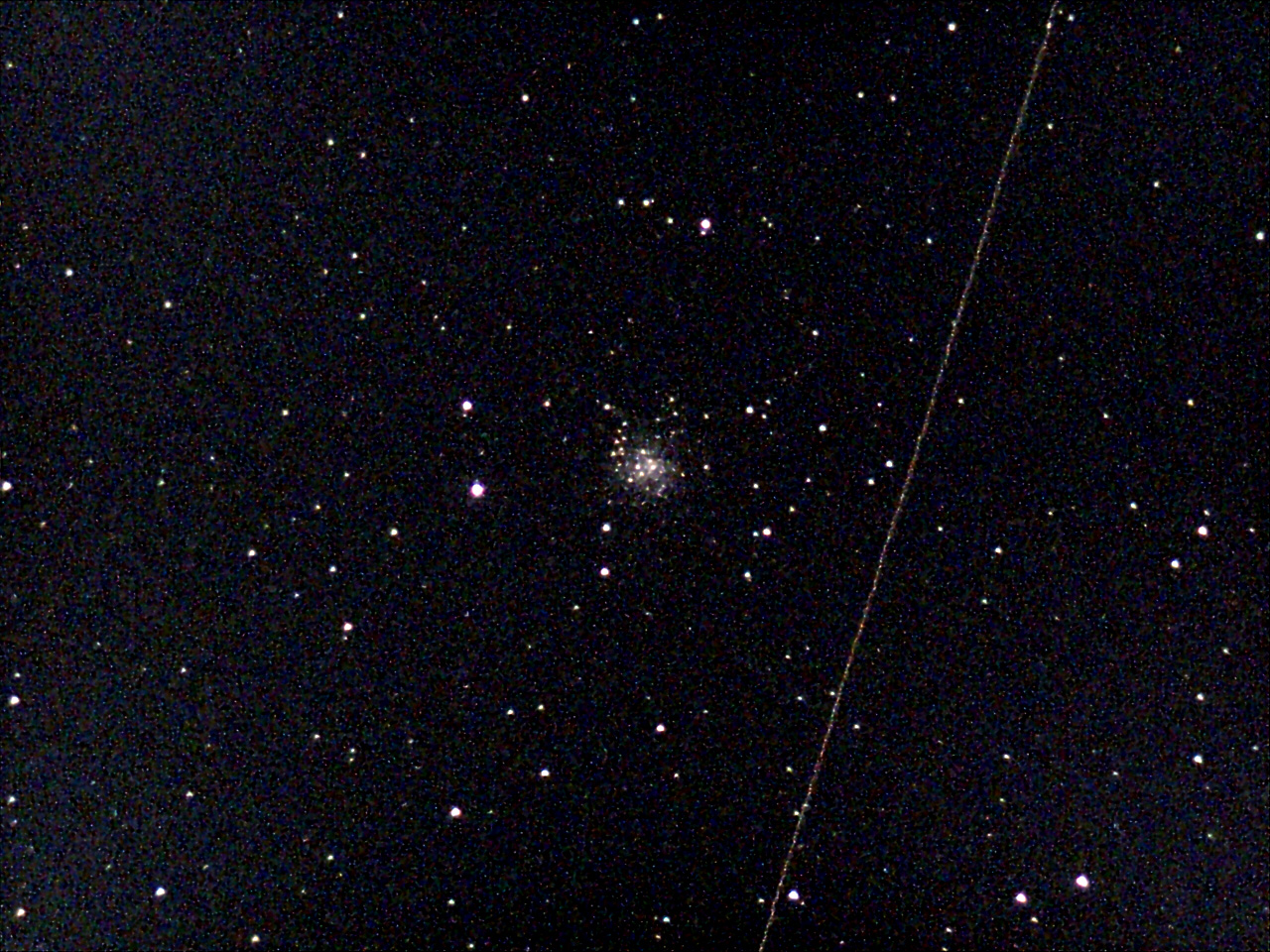
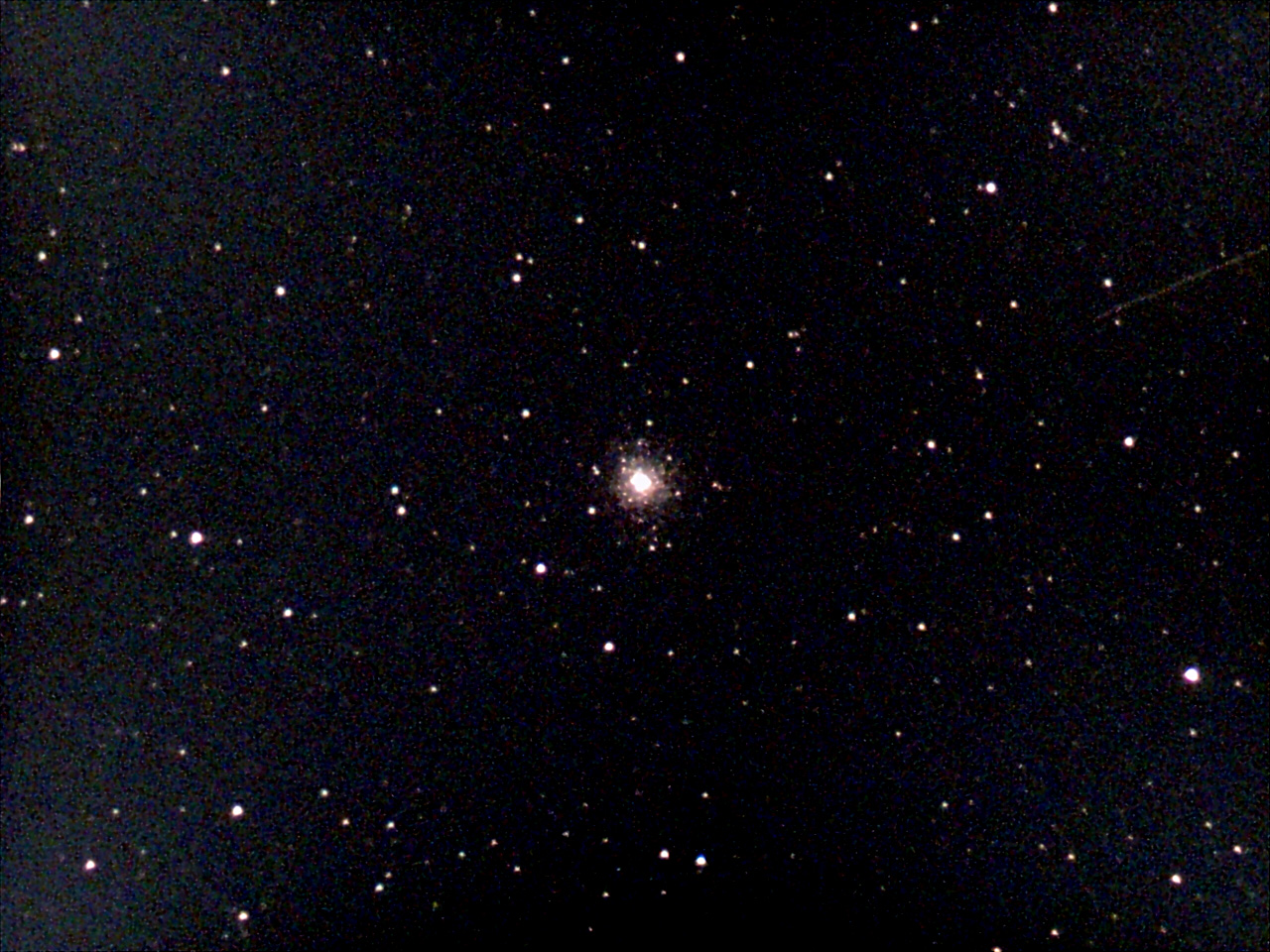
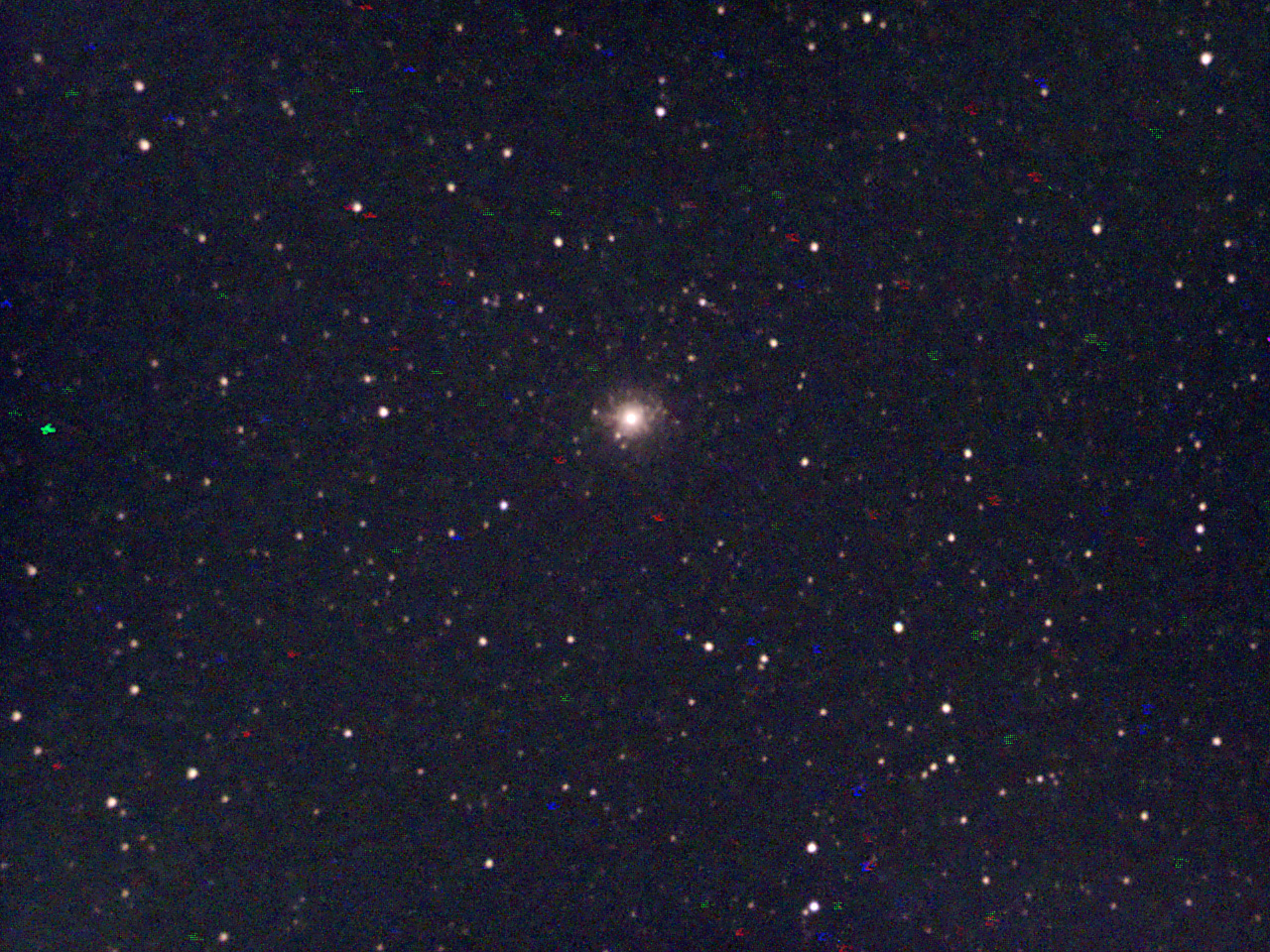
It appears that only globular clusters (GCs) can be found within this range of distances. They are located in the Milky Way’s halo and not in the disk. The (now no longer...) most distant globular cluster is the Intergalactic Wanderer NGC 2419 - it is even farther away (285,000 light-years)! The globular cluster closest to Earth is M 4, located between 1,000 and 10,000 light-years away (7,200 light-years).
 |
 |
 |
||
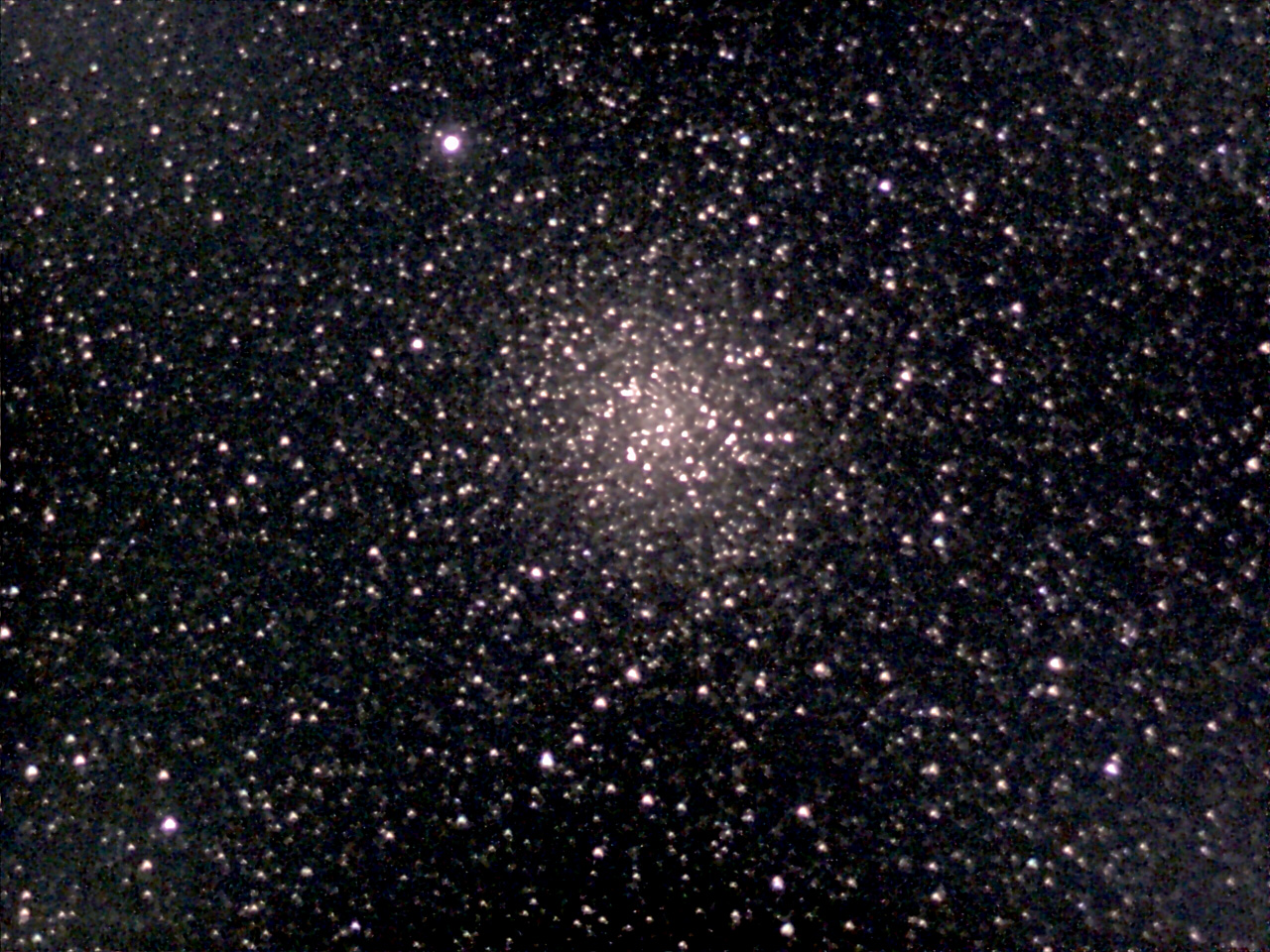
GC: M 22 - Jul 18, 2021 (10,000 LY) |
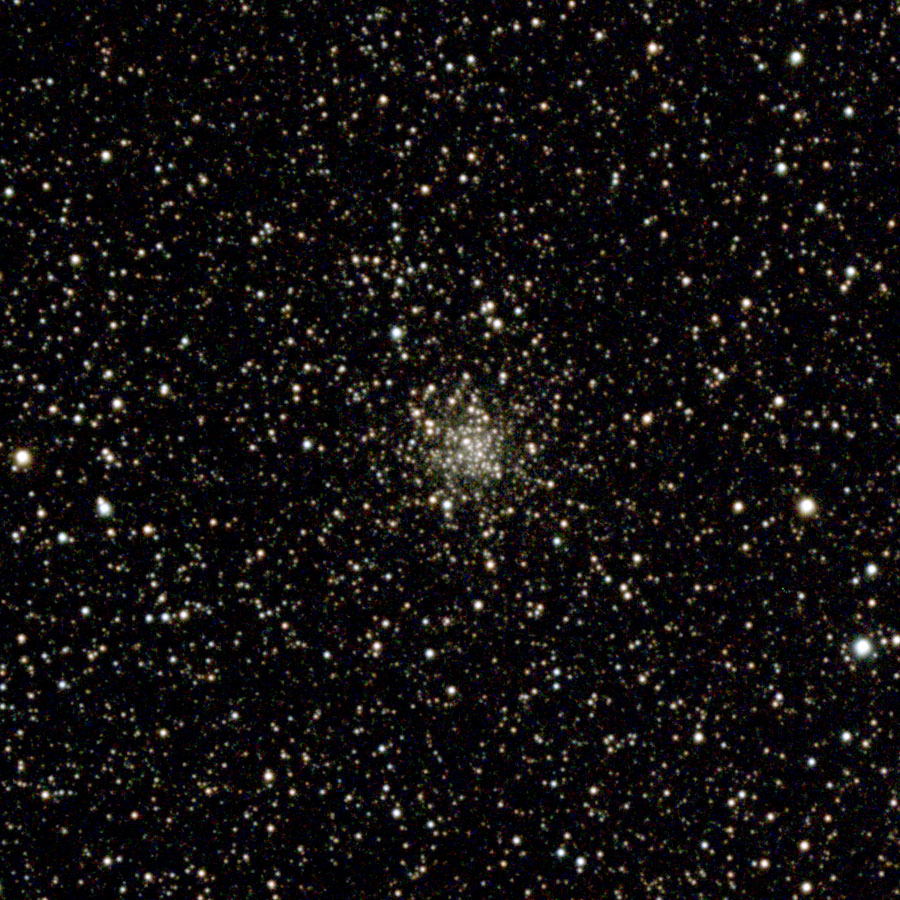
GC: M 71, Aug 25, 2025 - 1200p (13,000) |
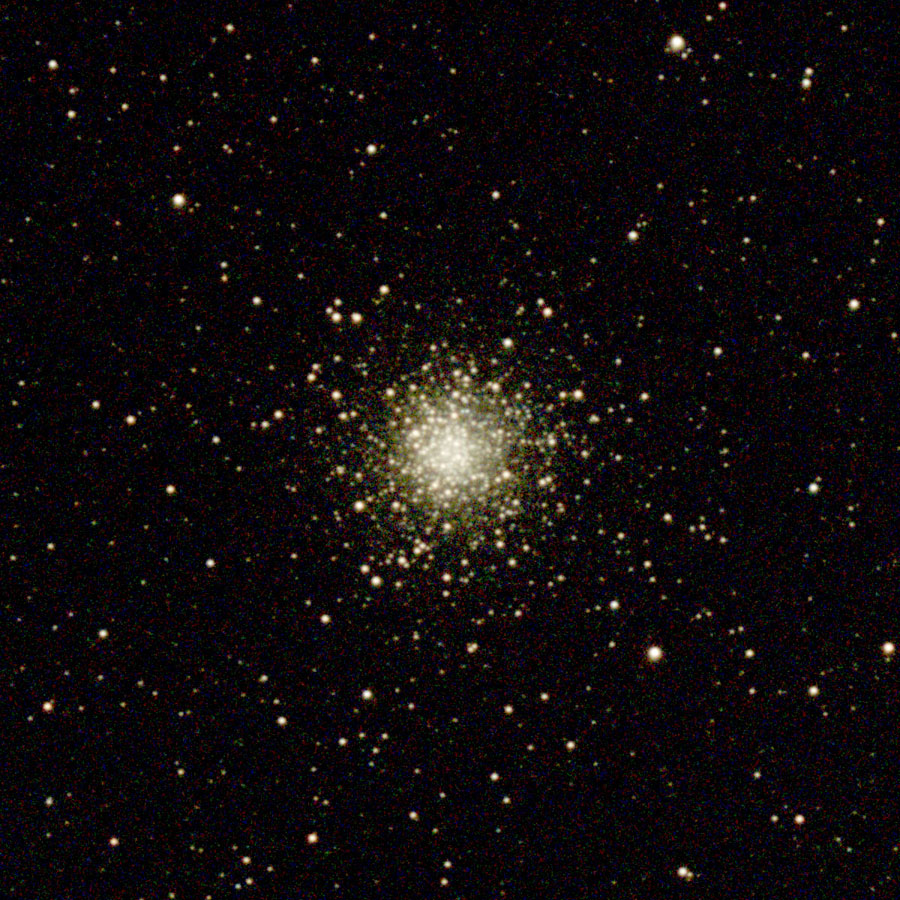
GC: M 10, Aug 25, 2025 - 1200p (14,000 LY) |
||
|
||||
M 35 with NGC 2158, Apr 26, 2026 - original (NGC 2158: 16,200 LY) |
||||
 |
 |
 |
||
GC: M 12, Aug 25,2025 - 1200p (18,000 LY) |
GC: M 28 - Jul 18, 2021 (20,000 LY) |
GC: M 13, Aug 24, 2025 - 1200p (24,000 LY) |
||
 |
 |
 |
||
GC: M 5, Aug 25, 2025 - 1200p (25,000 LY) |
GC: M 92, Aug 24, 2025 - 1200p (25,000 LY) |
GC: M 56, Aug 25, 2025 - 1200p (31,000 LY) |
||
 |
 |
 |
||
GC: M 3, Aug 25, 2025 - 1200p (32,000 LY) |
GC: M 2, Aug 25, 2025 - 1200p (37,000 LY) |
GC: NGC 6934 Aug 25, 2025 - 1200p, (48,000 LY) |
||
 |
 |
 |
||
GC: M 72 - Oct 23, 2021 (55,000 LY) |
GC: M 75 - Oct 23, 2021 (59,000 LY) |
GC: M 54 - Aug 9, 2020 (70,000 LY) |
100,000 - 1 Million Light-Years
Within this range of distances, I have photographed only one globular star cluster: the Intergalactic Wanderer NGC 2419, which was (for a long time) the most distant globular star cluster in our Milky Way; since then, other globular star clusters gravitationally bound to the Milky Way have been discovered that are even farther away than NGC 2419. It was once even assumed that it lay outside the Milky Way (which is not true), hence the name...
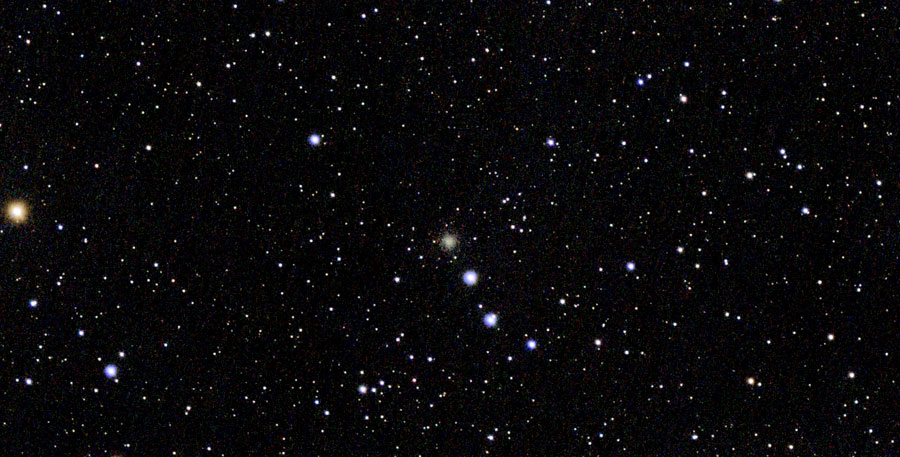 |
GC: NGC 2419, Mar 25, 2024 - large (285,000 LY) |
Our own galaxy, the Milky Way, is surrounded by several dwarf galaxies, of which the Large and Small Magellanic Clouds are the best known. The Large Magellanic Cloud is about 160,000 light-years away, and the Small Magellanic Cloud is about 200,000 light-years away. Both are visible to the naked eye in the southern sky (source).
1 to 5 Million Light-Years
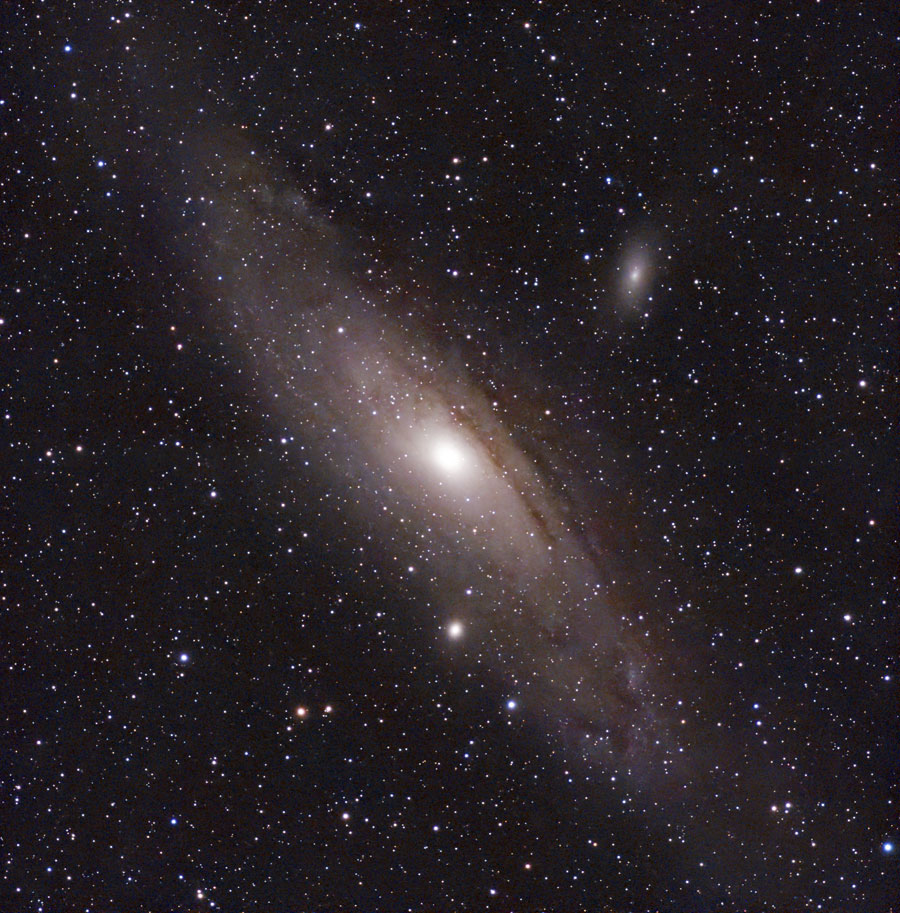
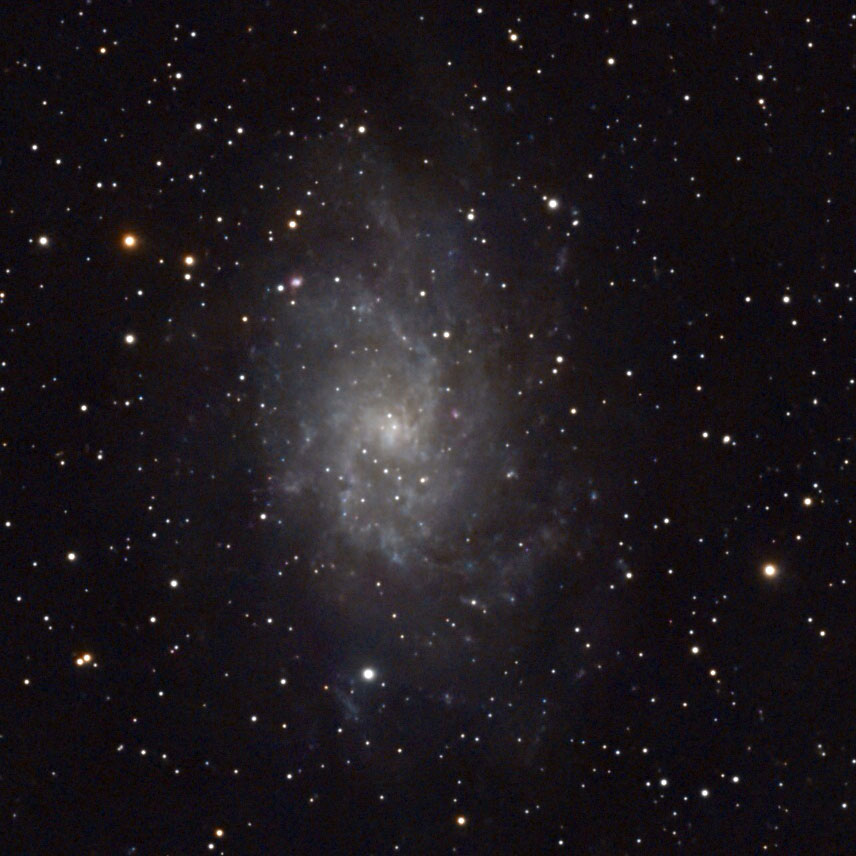
At this distance, only galaxies can be found; however, as mentioned earlier, some smaller galaxies are only a few hundred thousand light-years away. The nearest larger galaxies (the Andromeda Galaxy M 31, and the Triangulum Galaxy M 33), however, are already more than 2 million light-years away. So far, I have not been able to find any other galaxies in this distance range...
 |
 |
|
G: M 31, Feb 5, 2026 - original (2,5 mio. LY) |
G: M 33 - Jan 15, 2026 (2,76 mio. LY) |
5 to 25 Million Light-Years
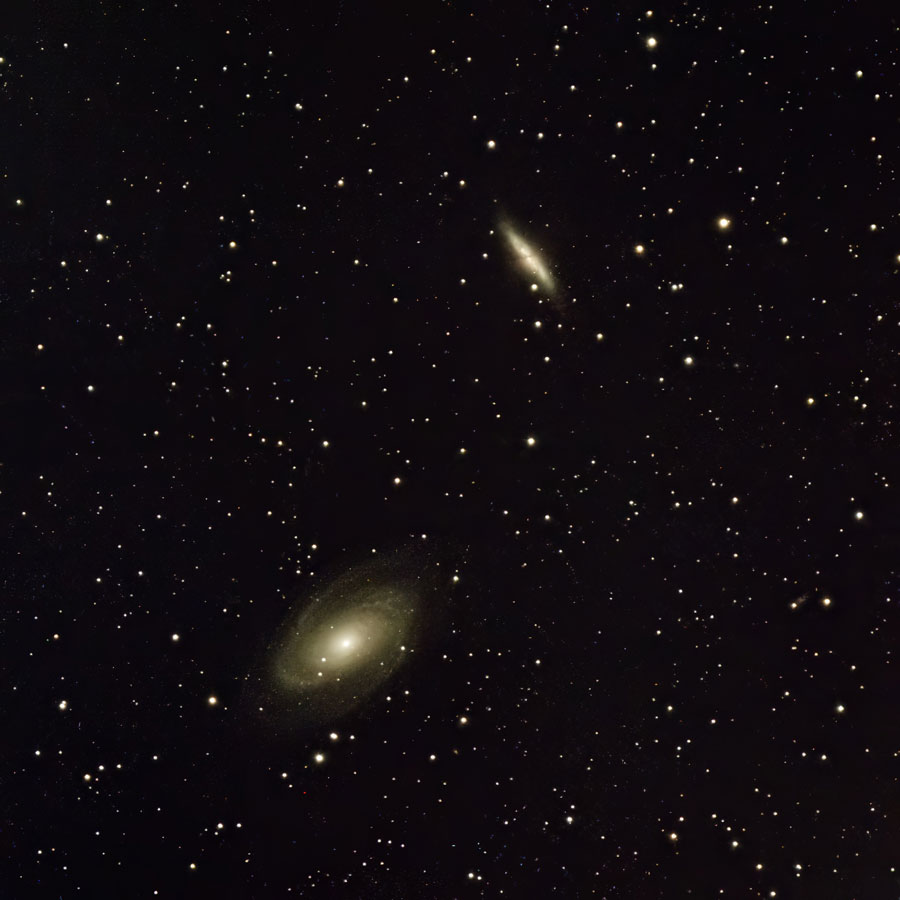
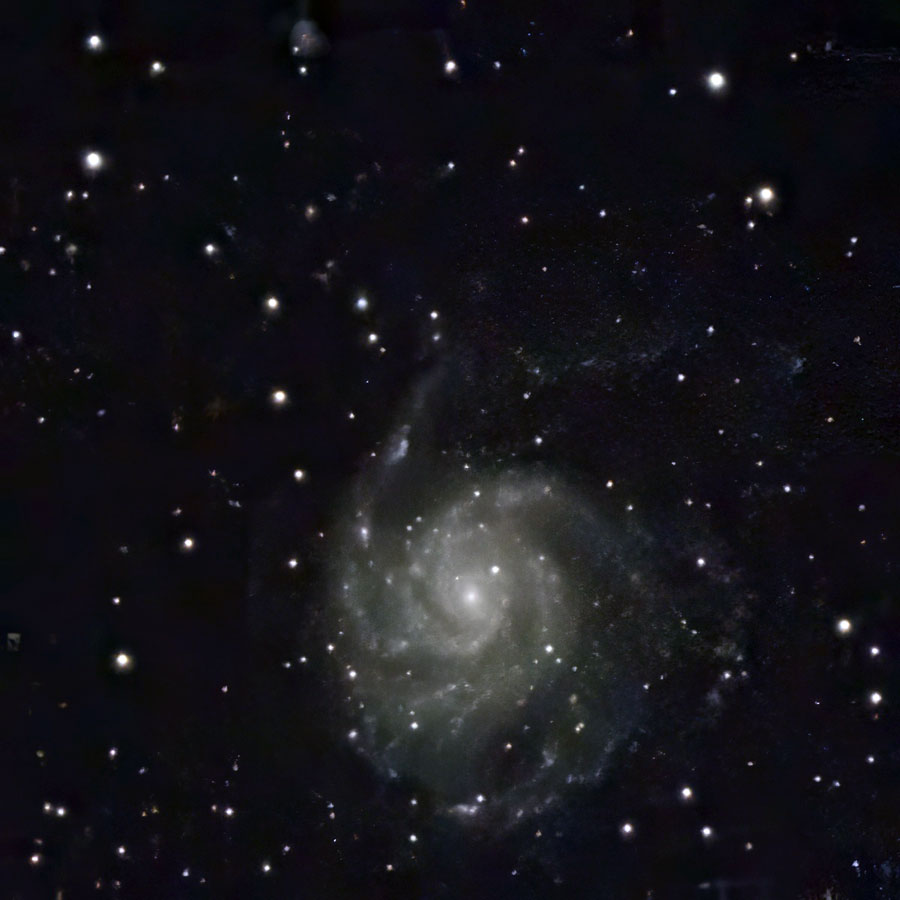
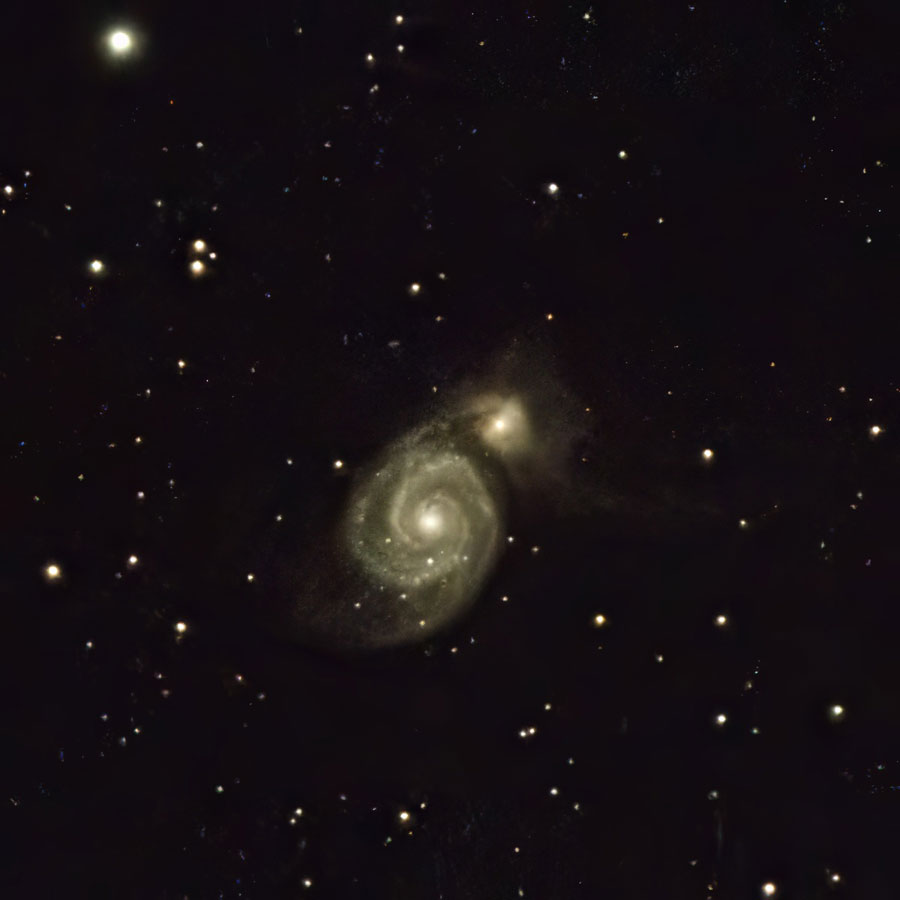
Within this range of distances, there are several large individual galaxies, such as the Pinwheel Galaxy (M 101), the Bode and Cigar Galaxies (M 81/82), and the Whirlpool Galaxy (M 51).
 |
 |
 |
||
G: M 81/82, Aug 31, 2025 - 2000p (both 11 mio. LY)) |
G: M 101, Aug 24, 2025 - 1200p (21.6 mio LY) |
G: M 51, Aug 24, 2025 - 1200p (24/25 mio. LY) |
25 to 100 Million Light-Years
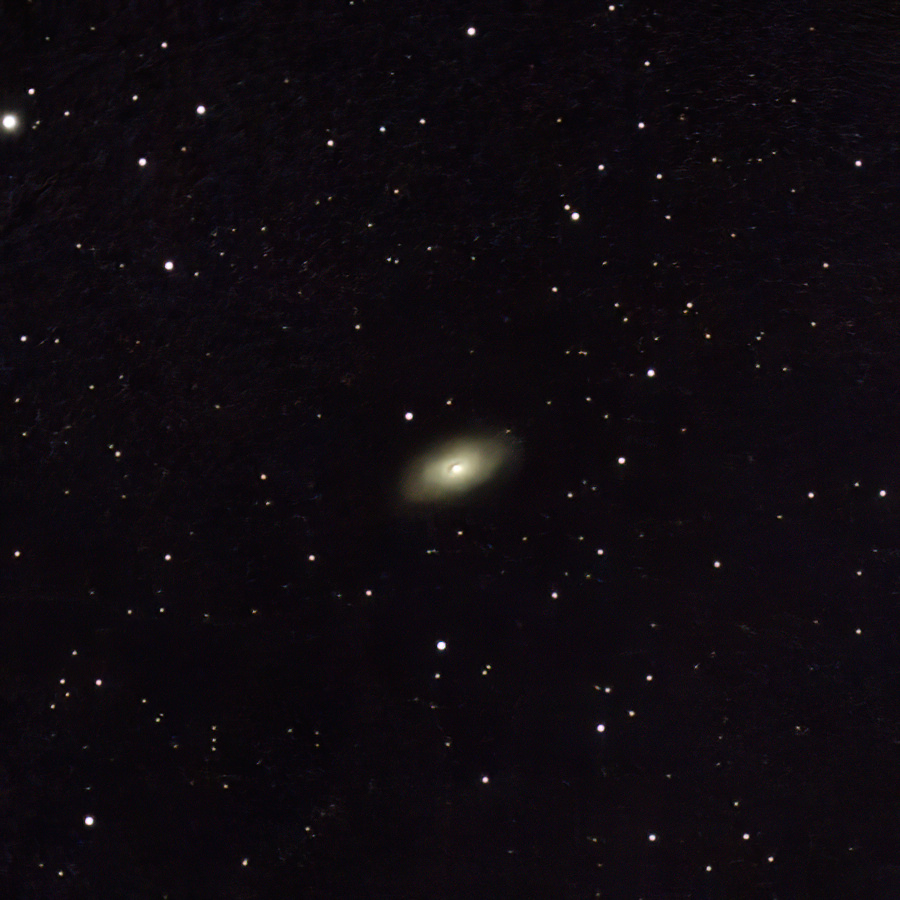
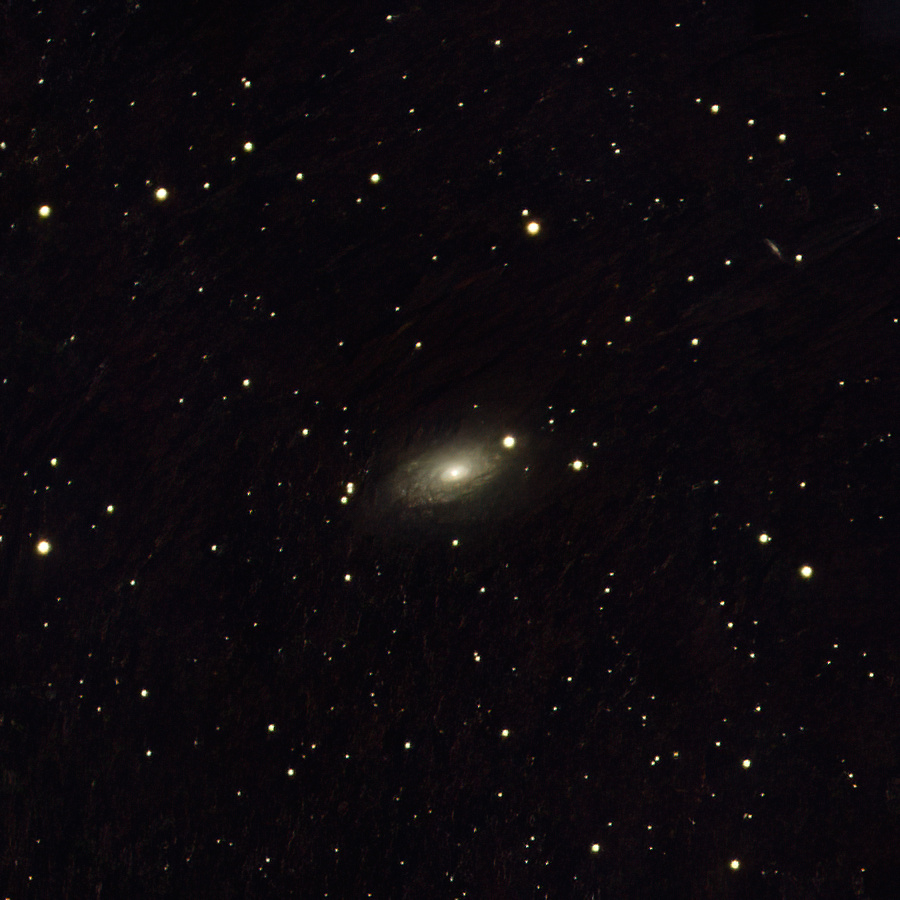
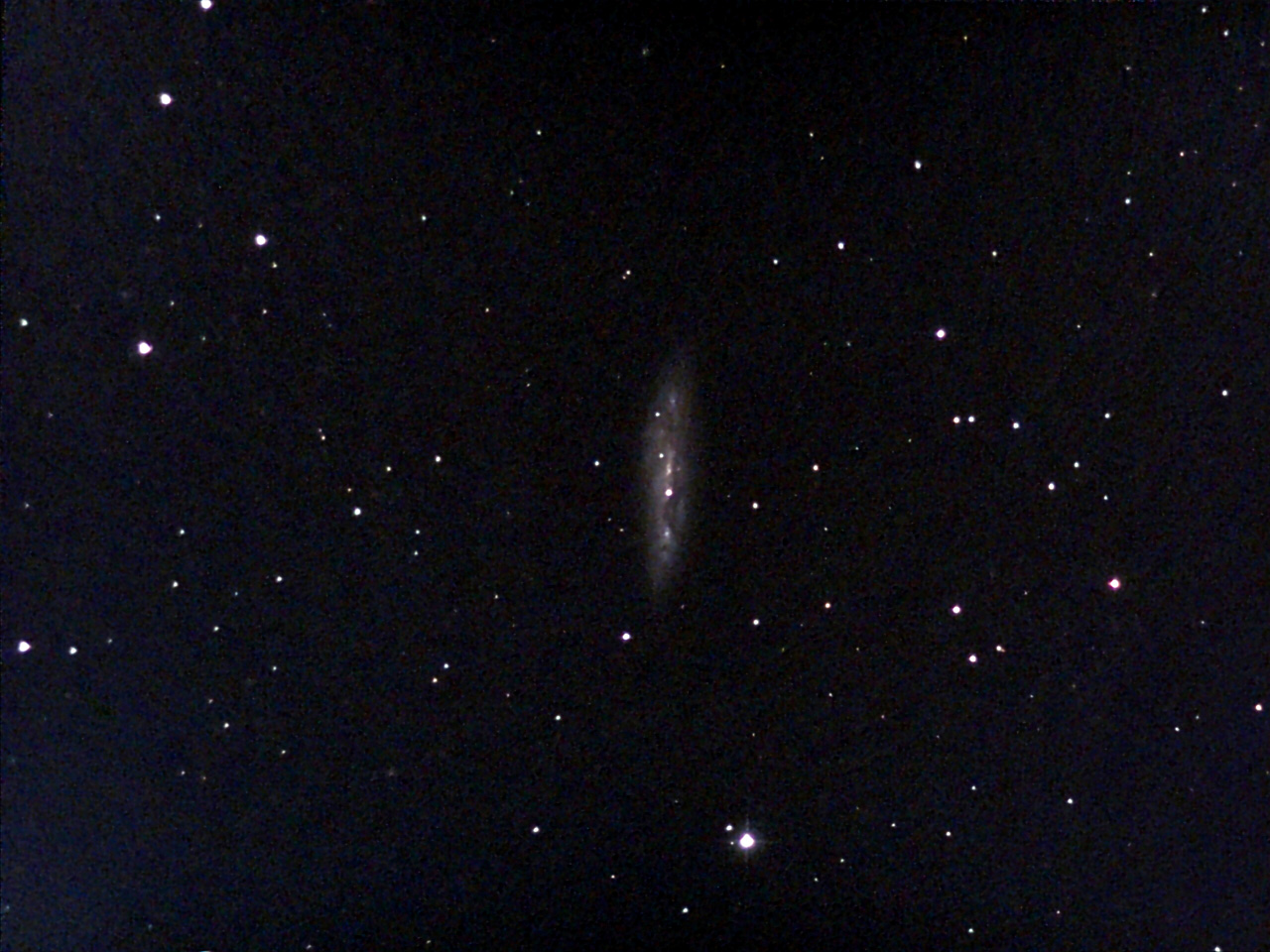
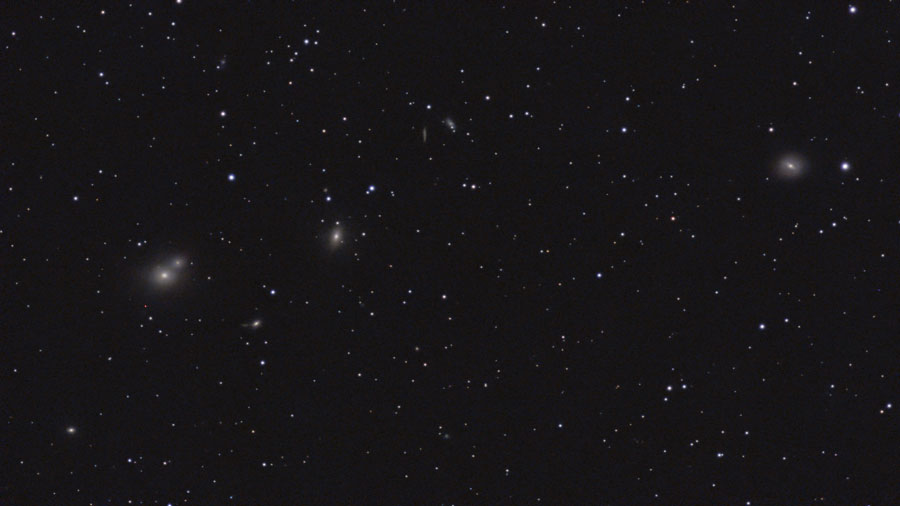
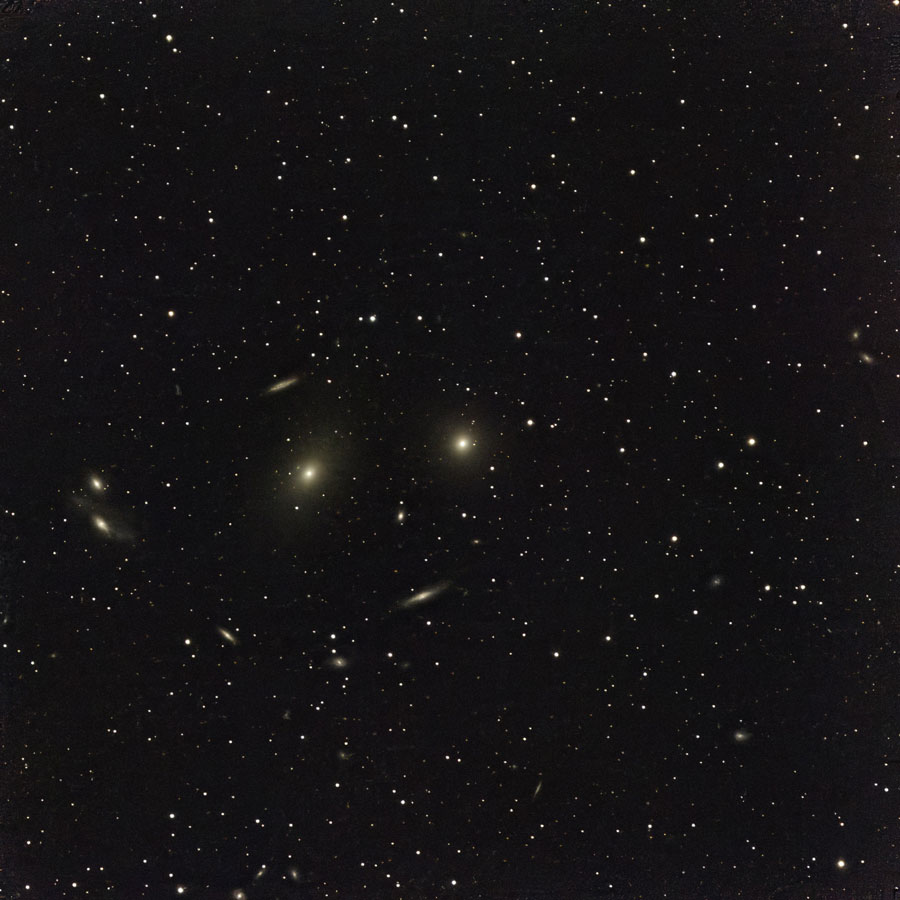
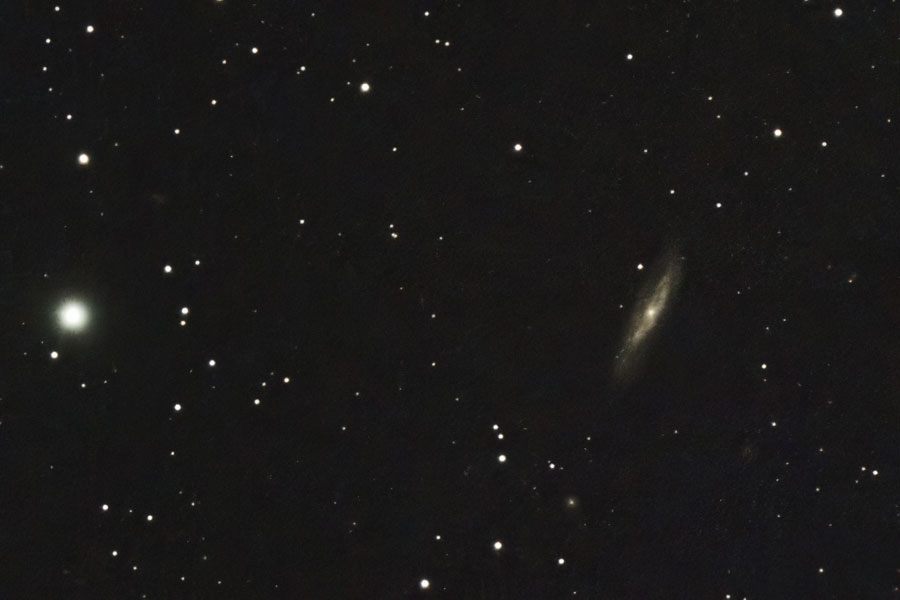
In this distance range, there are still isolated galaxies such as M 108 or the chain of galaxies M 58, M 59, and M 60. Some galaxies are still relatively large. However, some of the galaxies are already small and undifferentiated, although elliptical galaxies - which are common here - are undifferentiated by nature. Many galaxies in this region are located in galaxy clusters, particularly in the Virgo Galaxy Cluster (40–60 million light-years away). Other galaxy clusters, such as the Coma Cluster, are much farther away (300–500 million light-years).
Close to the Pinwheel Galaxy M 101 there are several galaxies at a distance of nearly 100 million light-years: NGC 5422 (87 mio. LY), NGC 5473 (96 mio. LY), NGC 5484 (96 mio. LY), NGC 5485 (92 mio. LY).
 |
 |
 |
||
| G: M 64, May 14, 2024 - 2000p (22 mio. LY) | G: M 63, May 13, 2024 - 2000p (30 mio. LY) |
G: M 108 - Jun 1, 2021 (45 mio. LY) |
||
 |
 |
 |
||
G: M 60, M 59, and M 58, 9.5.2026 - original (66, 52, and 54 mio. LY) |
G: M 84 and 86, Apr 1, 2025 - 2000p (both 60 mio. LY) |
G: M 98, Apr 4, 2025 - 1800 (60 mio LY) |
||
 |
||||
G: M 101 & Co, Mar 27, 2025 - 2000p (87-96 mio. LY) |
100 to 600 Million Light-Years
At these distances, the galaxies become even smaller and are typically found in galaxy clusters such as the Coma Galaxy Cluster (300–500 million light-years away) and the Hercules Galaxy Cluster (500 million light-years away). While I found galaxies in M 101 that are just under 100 million light-years away, I found two galaxies (NGC 5908/05) close to M 102 that are a good 150 million light-years away. Even more distant galaxies are located in the galaxy clusters mentioned above.
150 Million Light-Years close to M 102...
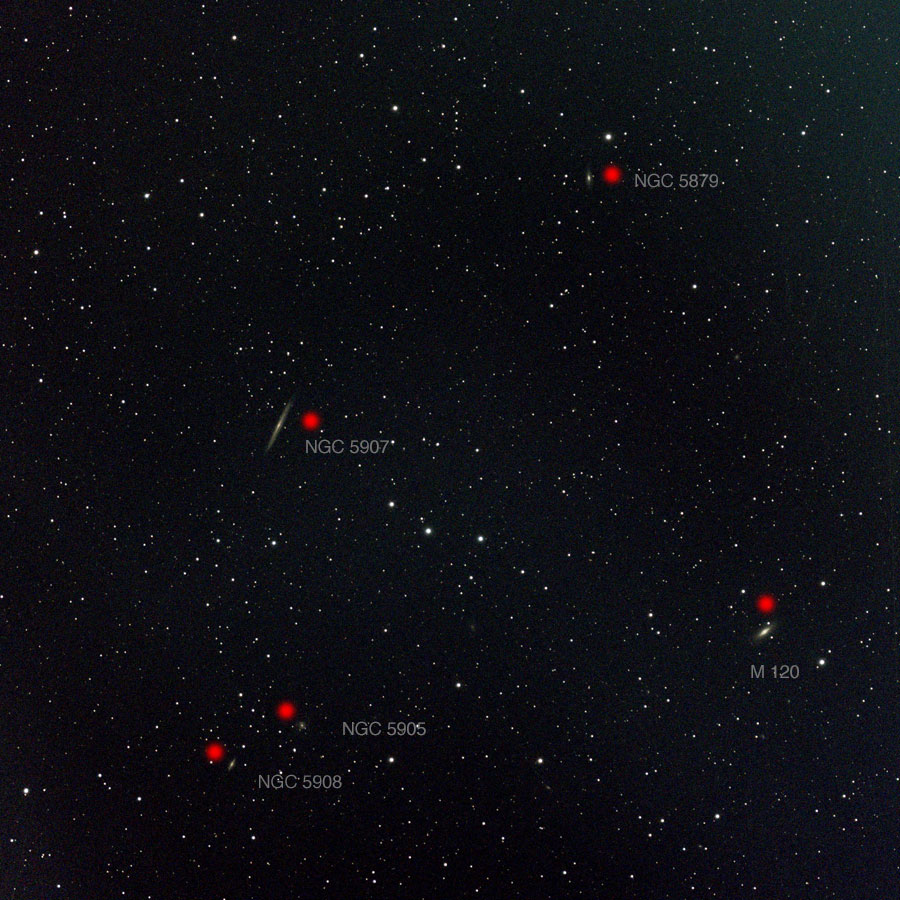 |
G: M 102 with NGC 5908/05, Apr 6, 2025 - 154/158 mio. LY (M 102 40 mio LY) |
Coma Galaxy Cluster (300 Million Light-Years)
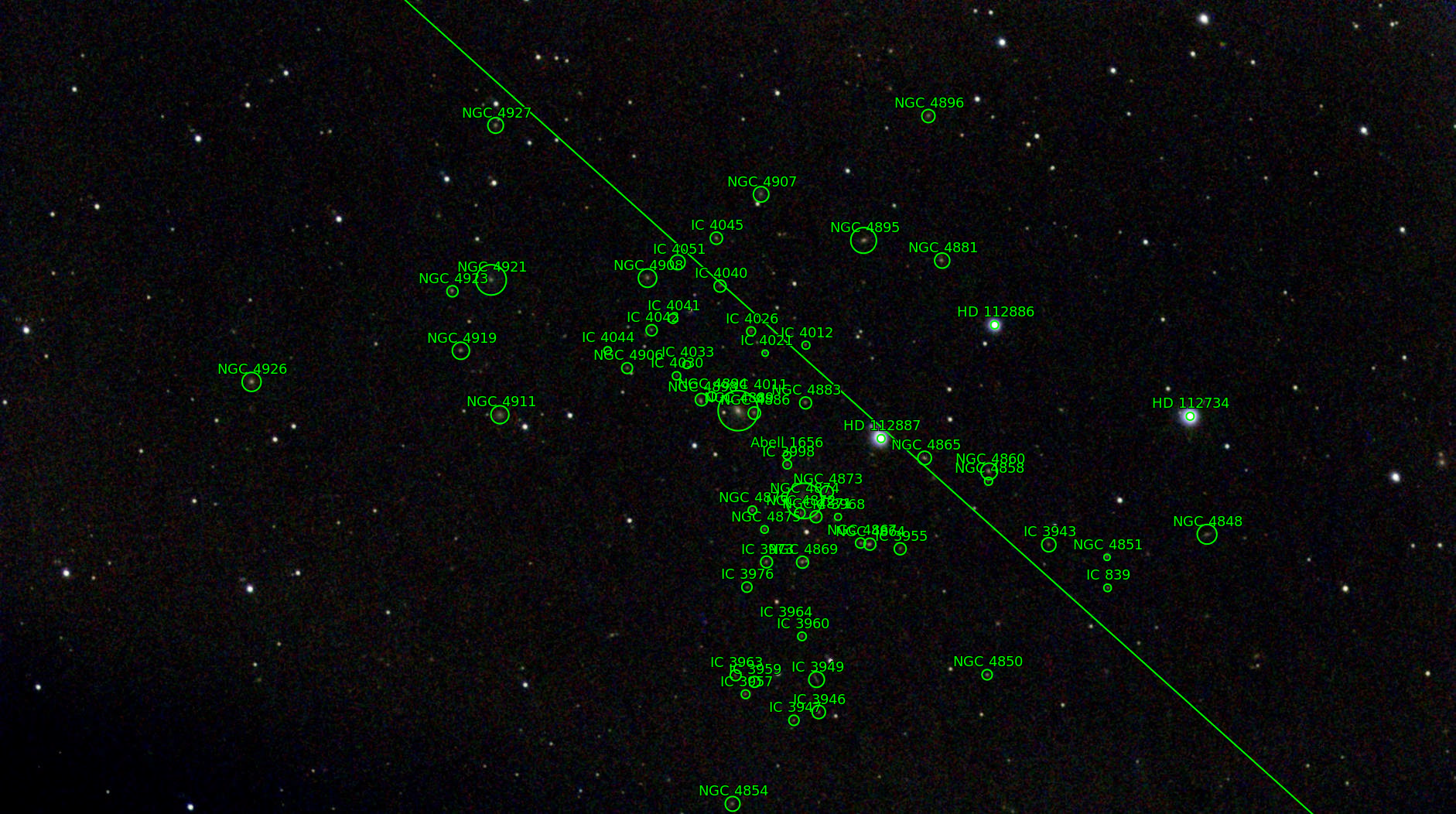
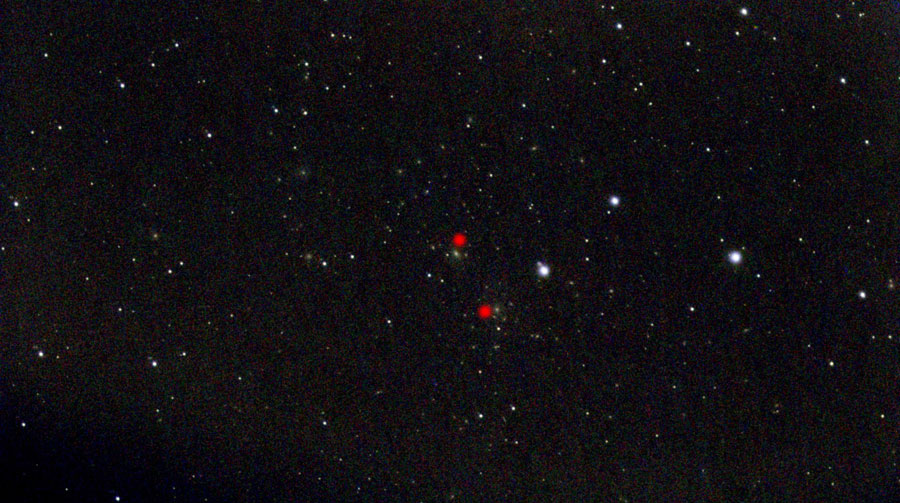
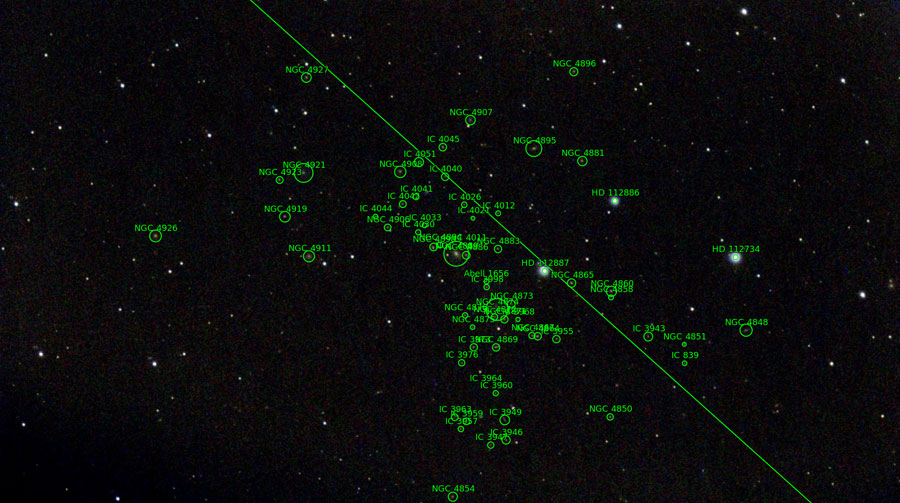
North of the Virgo Group lies the Coma Galaxy Group; this galaxy group is located about 300 million light-years away, and because the group is so extensive, some of its members are even as far as 450 million light-years away. The two main galaxies, NGC 4889 and NGC 4874, are 291 and 321 million light-years away, respectively, and are still clearly visible.
 |
 |
|
G: NGC 4889 and NGC 4874 (lower right) marked (291 and 321 LY) |
Evaluation with nova.astrometry.net - large |
Stephan's Quintet (300 Million Light-Years) and Neighborhood (up to 400 Million Light-Years, nearly 500 Million Light-Years)
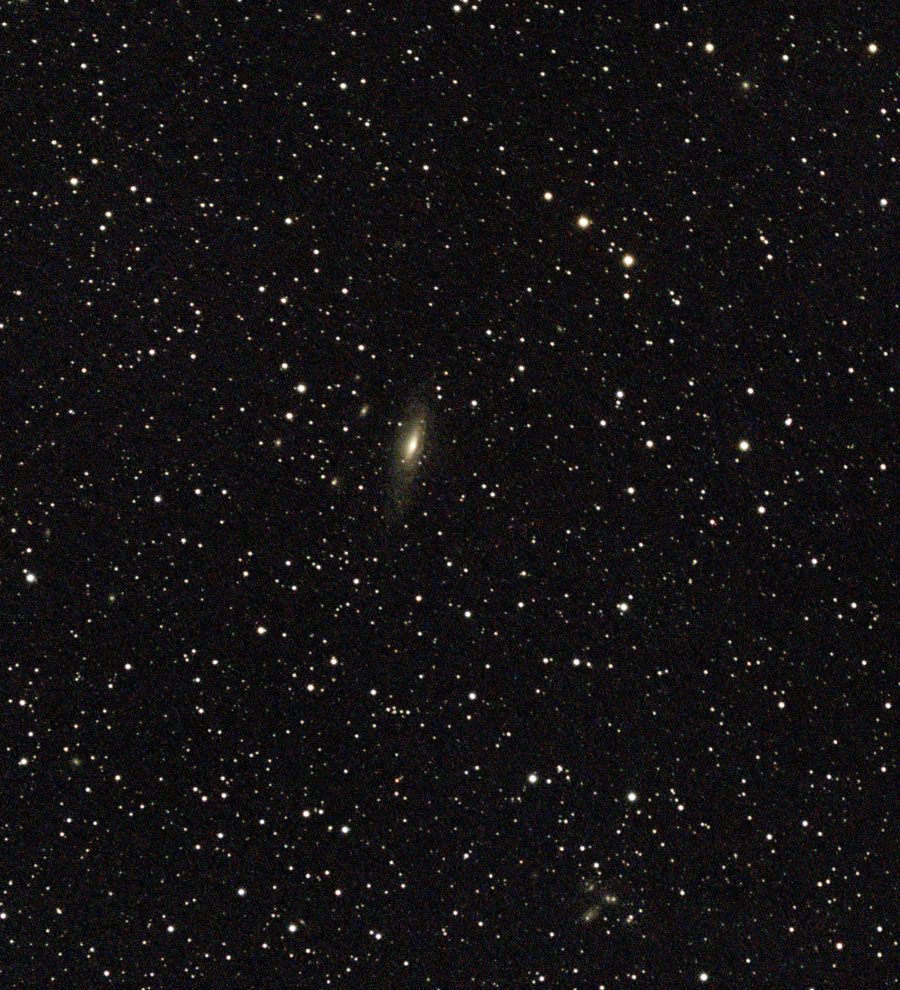
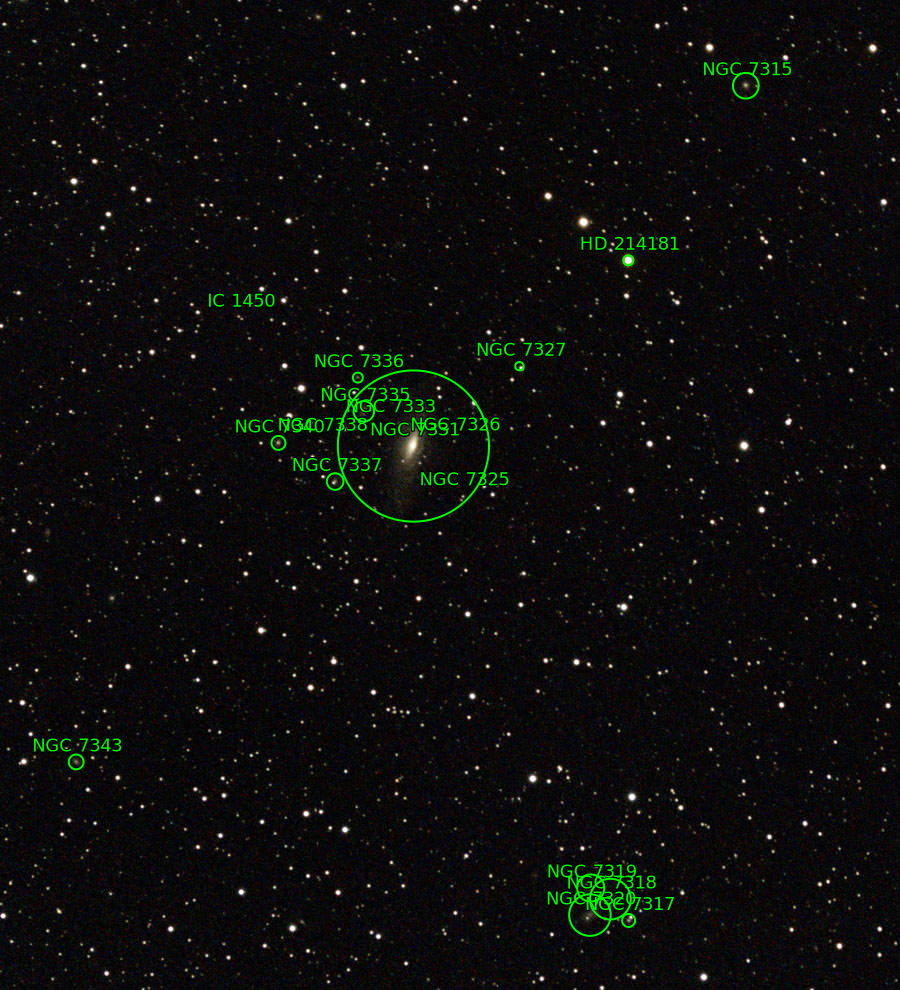
By chance, in March 2026, I discovered several galaxies in the region around 300 million light-years (Stephan’s Quintet) that are visually close to the galaxy NGC 7331 (46 million light-years): NGC 7317 (304 million light-years), NGC 7335 (292 million light-years), NGC 7336 (403 million light-years), NGC 7337 (304 million light-years), and NGC 7340 (296 million light-years). Among them, the galaxy NGC 7336 stands out as an "outlier" at a distance of 403 million light-years.
 |
 |
|
G: NGC 7331 and Stephan's Quintet, Nov 5, 2024 - 2000 (46 mio LY, about 300 Mio. LY) |
Evaluation with nova.astrometry.net |
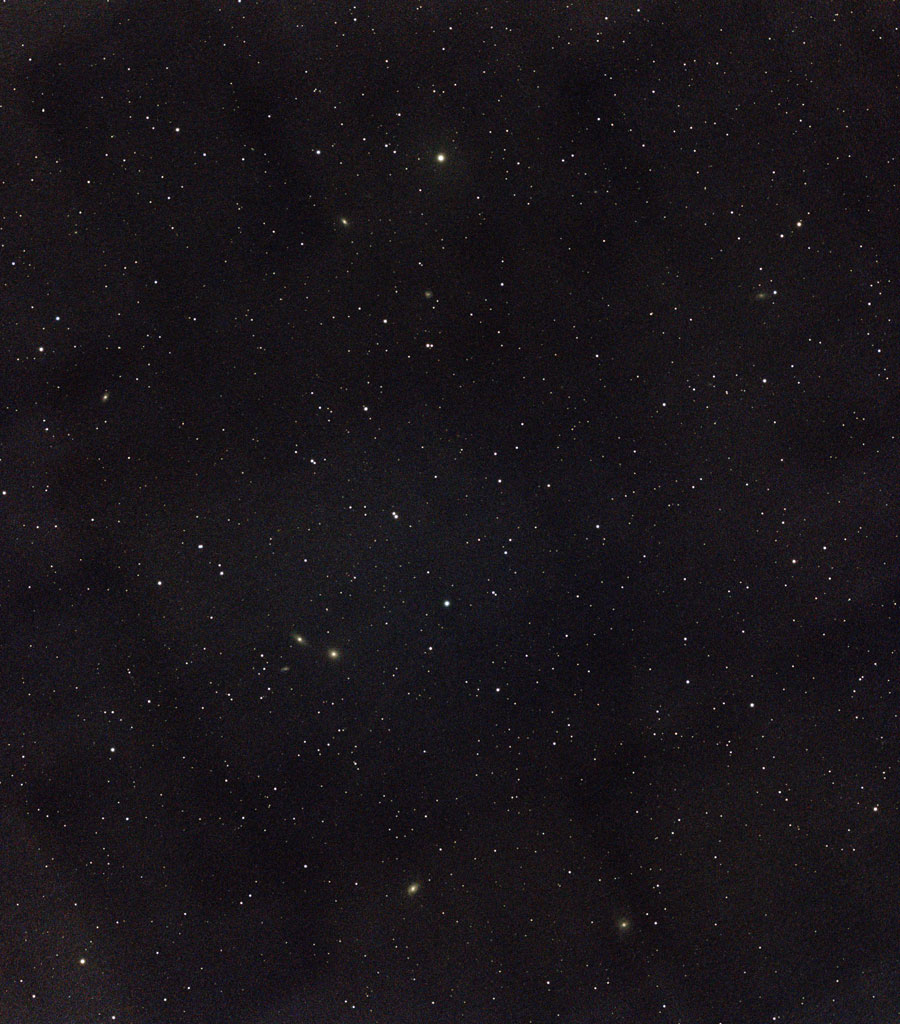
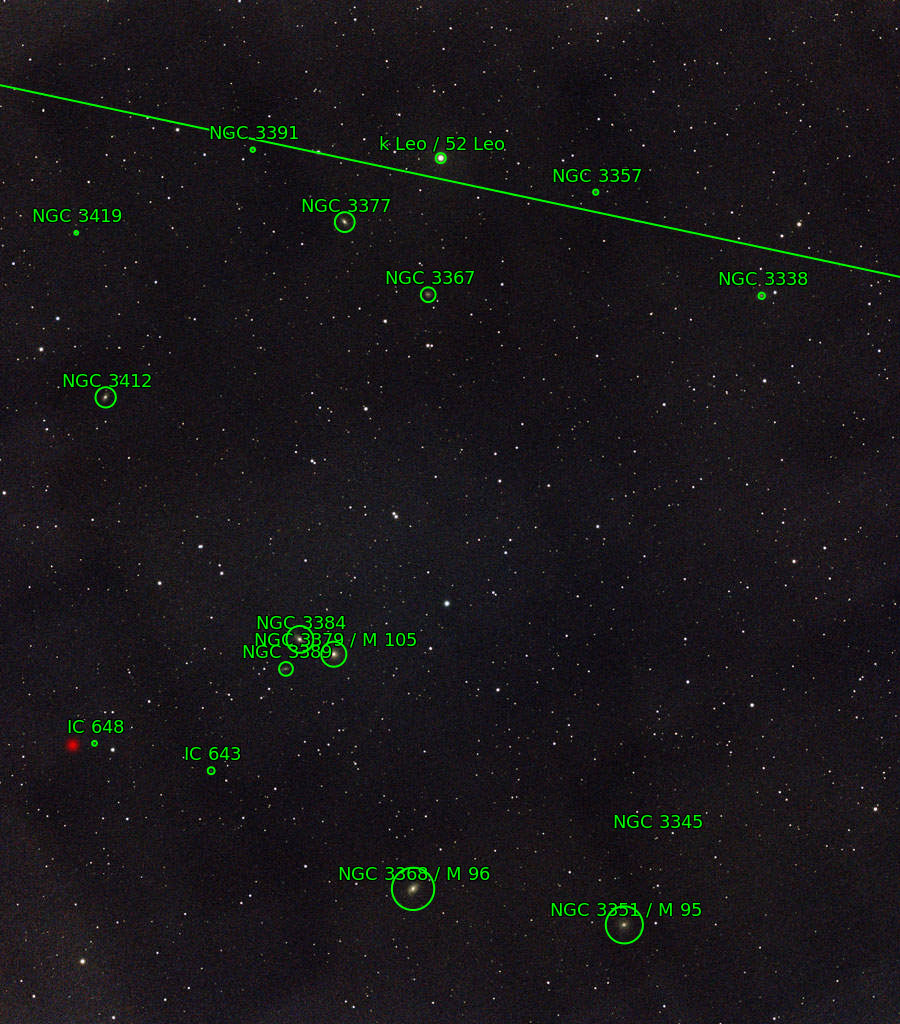
The galaxy IC 648, located near Stephan's Quintet, is said to be as far as 474 million light-years away:
 |
 |
|
G: M 95, M 96, M 105, and more, May 10, 2024, 2000p (474 mio. LY) |
Evaluation with nova.astrometry.net (IC 648 is at the lower left) |
Hercules Galaxy Cluster (Abell 2151, NGC 6041)
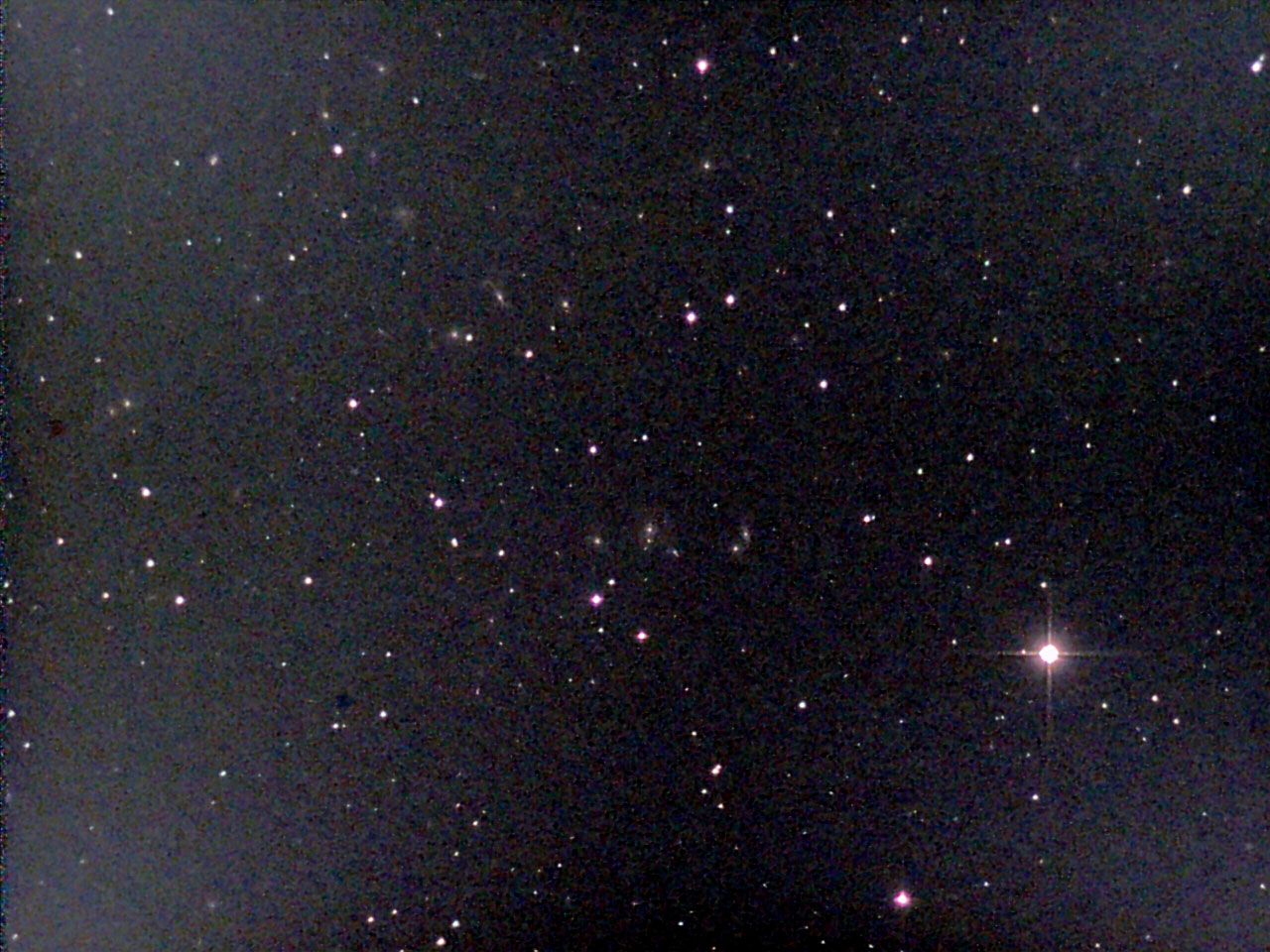
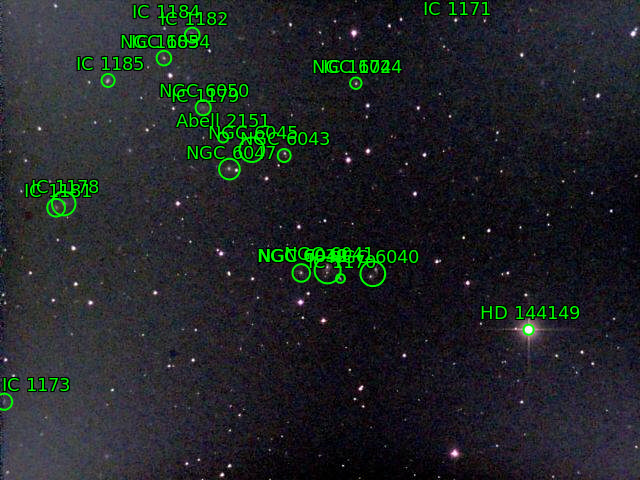
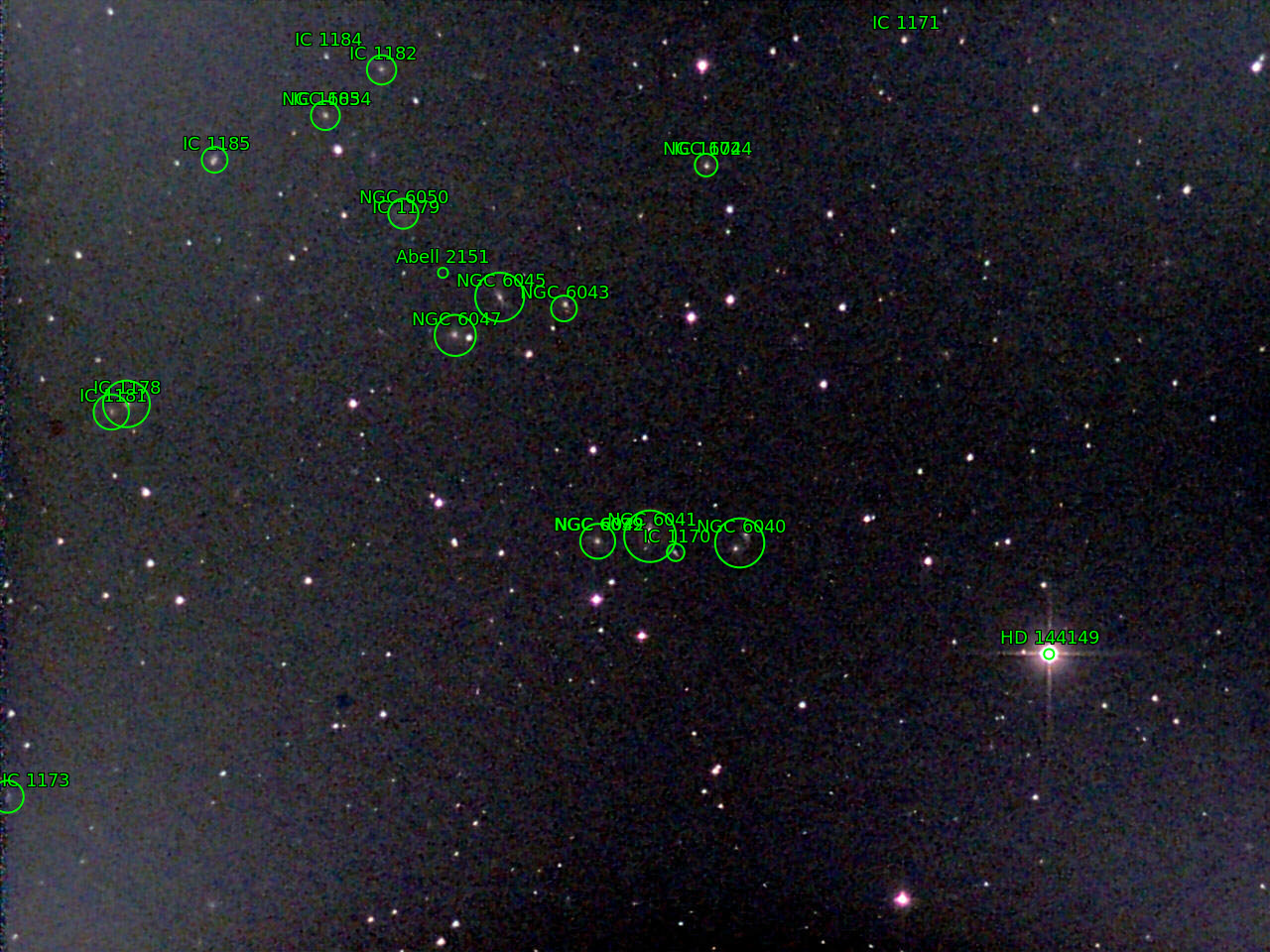
Abell 2151 (A2151 in short), also called Hercules Galaxy Cluster, is a galaxy cluster in constellation Hercules at a distance of about 500 million light-years. A2151 spans about 1° across the sky, has a complex structure, and lacks a central galaxy. Its brightest member is NGC 6041 (472 million light-years away).
 |
 |
 |
||
G: NGC 6041/Abell 2151 - Aug 20, 2021, made brighter |
Evaluation with nova.astrometry.net |
Evaluation with nova.astrometry.net |
600 Million up to more than a Billion Light-Years
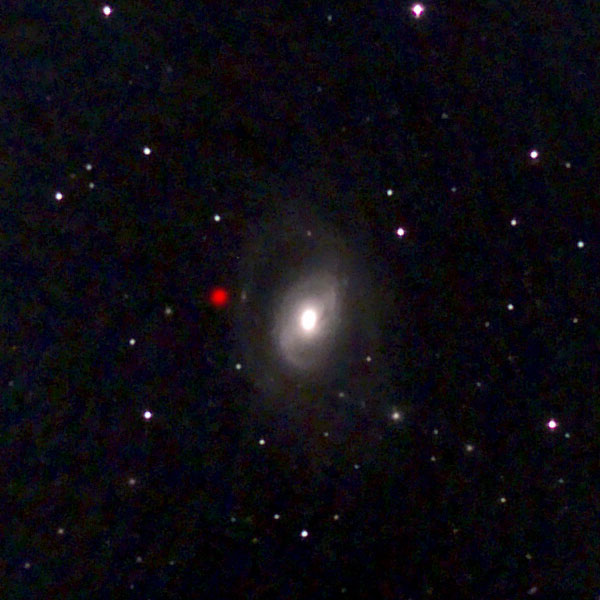
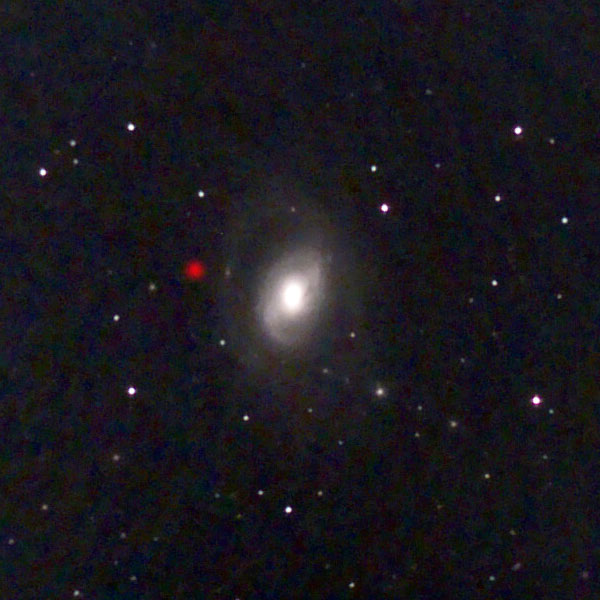
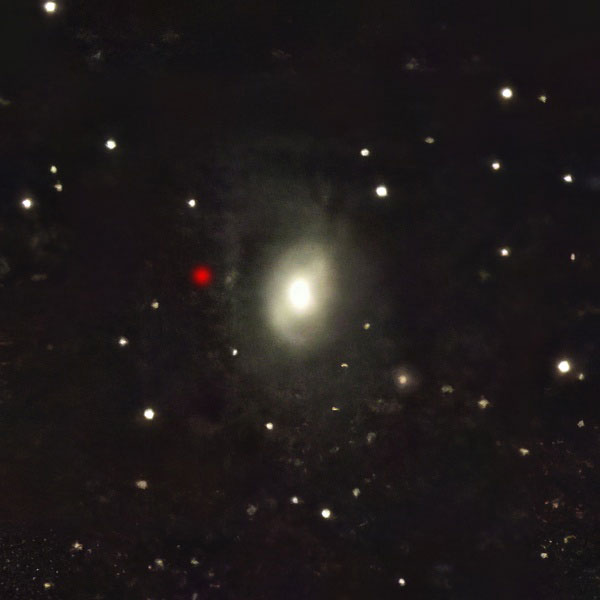
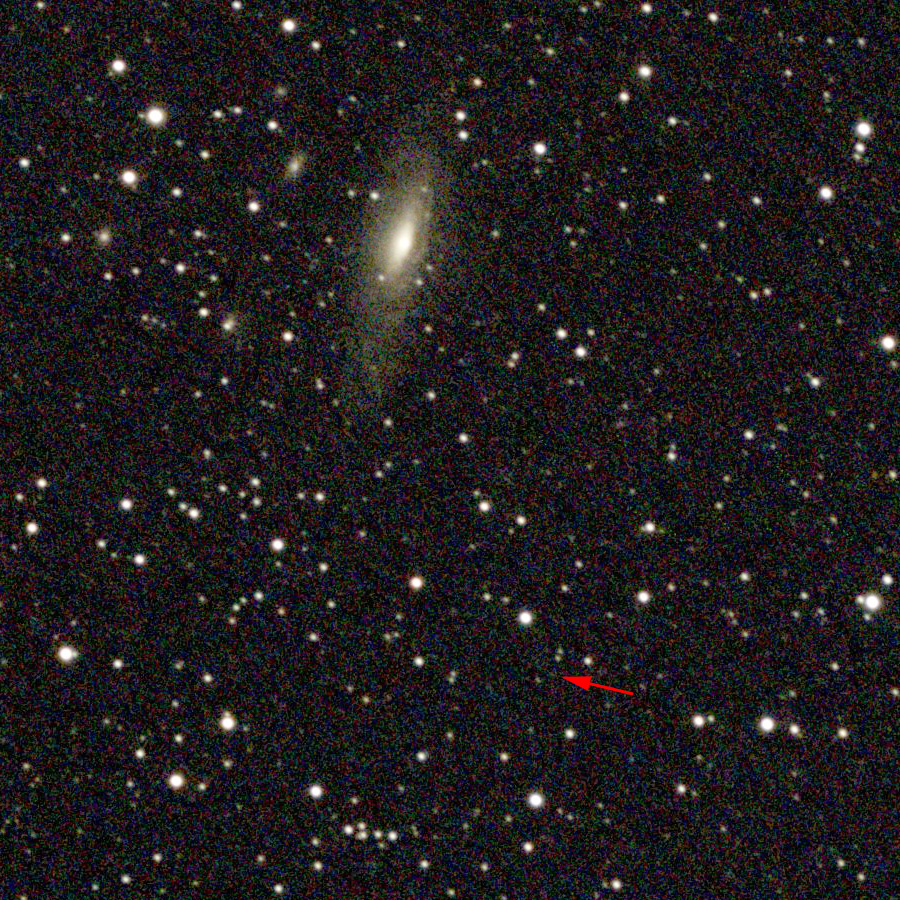
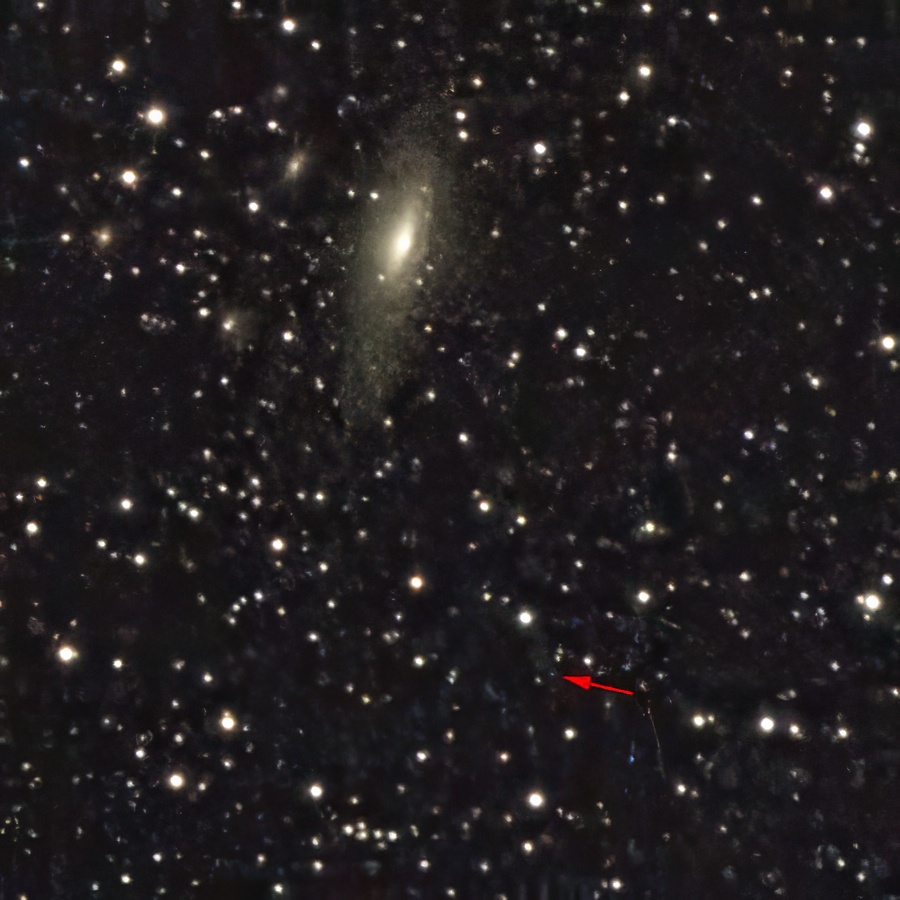
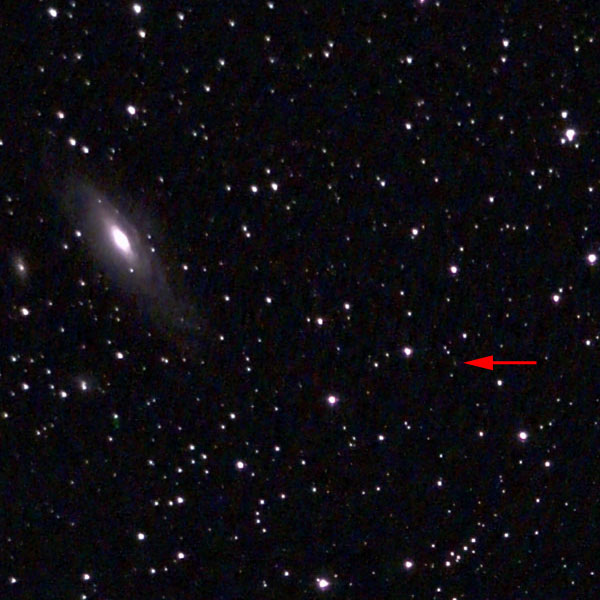
In my photos, galaxies at this distance are visible, at best, as tiny dots - if at all. Nevertheless, I like to think I have even photographed a galaxy located more than 1 billion light-years away (WISEA J223640.87+341319) as well as one just under 800 million light-years away (2MFGC 8391). For details, see the page Farthest Distances of Deep Sky Objects on My Own Photos.
Galaxy 2MFGC 8391 (nearly 800 Million Light Years)
 |
 |
 |
||
G (eVscope): M 96 with 2MFGC 8391 (marked), Mar 8, 2021 (nearly 800 LY) |
G (eVscope): M 96 with 2MFGC 8391 (marked), Mar 8, 2021 (nearly 800 LY) |
G (Vespera Pro): M 96 with 2MFGC 8391 (marked), Feb 19, 2025 (nearly 800 LY) |
Galaxie WISEA J223640.87+341319 (1.09 Billion Light Years)
 |
 |
 |
||
G (Vespera Pro): NGC 7331 with WISEA J223640.87+341319, Nov 5, 2024 (1.09 bio. LY) |
G (Vespera Pro): NGC 7331 with WISEA J223640.87+341319, Nov 5, 2024 (1.09 bio. LY) |
G (eVscope 2): NGC 7331 with WISEA J223640.87+341319 - Sep 6, 2023 (1.09 bio. LY) |
Conclusions
If you look at my distance scale, you can see that most of the objects of interest to (amateur) photographers (nebulae, planetary nebulae, open clusters, stars) are located within a radius of 10,000 light-years, including at least one globular cluster (M 4). In the range from 10,000 to 100,000 light-years, there are only globular clusters, with a few outliers extending even beyond that. Beyond 100,000 light-years, apart from a few globular clusters, one finds only galaxies, which can be seen in varying degrees of detail and whose "inner workings" can sometimes still be revealed, depending on the telescope. Aside from H II regions, I have not been able to discover any other DSOs in distant galaxies. Professional telescopes see significantly more there! With a bit of good will, my "galaxy window" extends to a good billion light-years. However, objects at 300, 500, or even 800 million light-years are - not surprisingly - difficult to make out in my photos.
Ultimately, there do not seem to be any clear rules regarding where nebulae, planetary nebulae, or open star clusters are located. All of these appear to be within 10,000 light-years. Beyond that lie the regions where globular star clusters and galaxies are found.
Links
- H II region (Wikipedia): en.wikipedia.org/wiki/H_II_region
- Open Cluster (Wikipedia): en.wikipedia.org/wiki/Open_cluster
- Globular Cluster (Wikipedia): en.wikipedia.org/wiki/Globular_cluster
- Nebula (Wikipedia): en.wikipedia.org/wiki/Nebula
- Planetary Nebula (Wikipedia): en.wikipedia.org/wiki/Planetary_nebula
- Dark Nebula (Wikipedia): en.wikipedia.org/wiki/Dark_nebula
- Supernova remnant (Wikipedia). en.wikipedia.org/wiki/Supernova_remnant
- Galaxy (Wikipedia): en.wikipedia.org/wiki/Galaxy
- Galaxy Cluster (Wikipedia): en.wikipedia.org/wiki/Galaxy_cluster
- See also my page offering Astronomy Links.